Chapter 7 Pelvis/Femur
 Call Kai
 Learn
 Practice Test
 Spaced Repetition
 Match
 Flashcards
 Knowt Play
1/42

There's no tags or description
Looks like no tags are added yet.
43 Terms
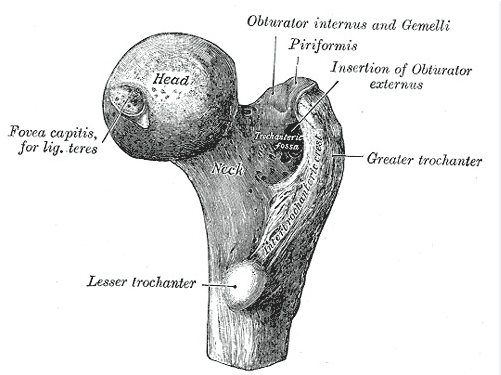
What are the four major parts to the proximal femur?
Head
Neck
Greater trochanter
Lesser trochanter
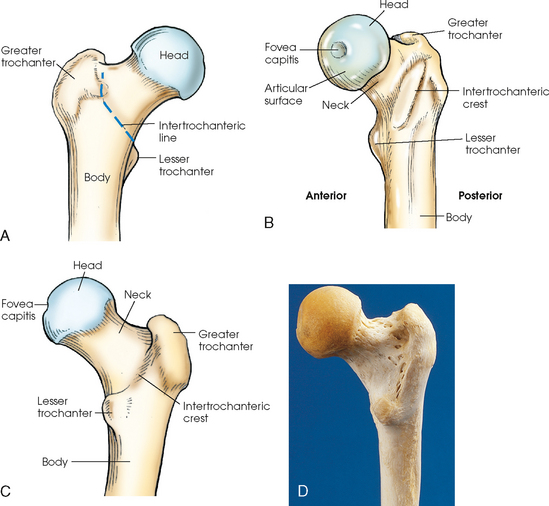
What ridge connects the trochanters posteriorly?
Intertrochanteric crest
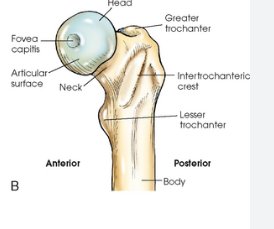
Head of femur
Articulates with acetabulum
Contains the fovea capitis, where ligament capitis femoris is attached
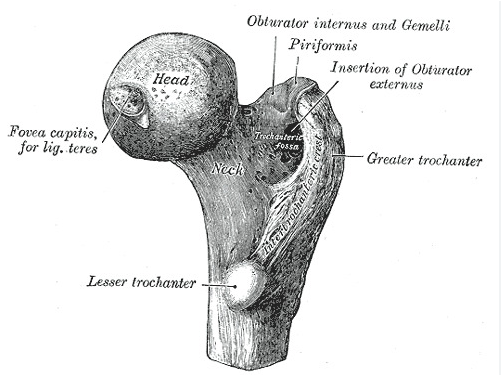
Neck of femur
Connects head to shaft
Located in region of intertrochanteric area
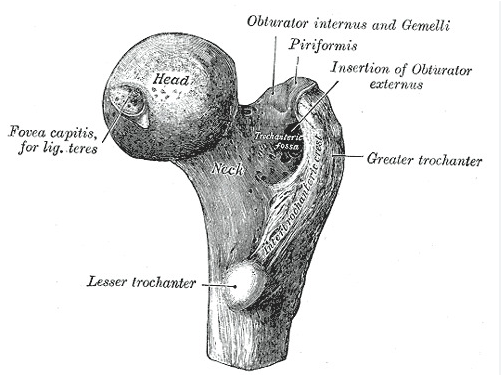
Greater trochanter
Large bony prominence
Located superiorly and laterally to shaft
Important topographic landmark
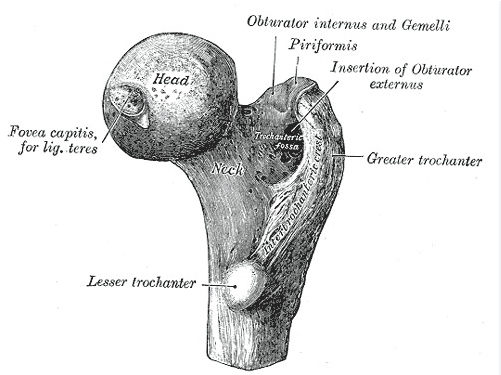
Lesser trochanter
Small, blunt, conical projection
Located posteriorly and medially
Found at junction of neck and shaft
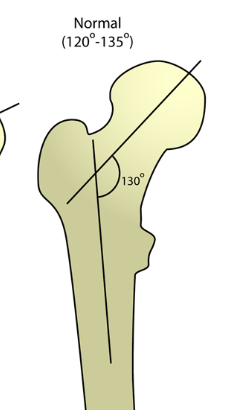
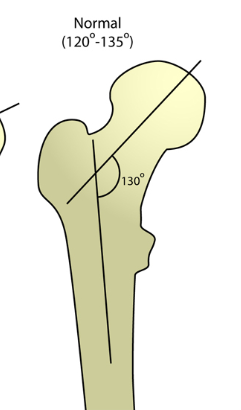
What is the average angle of the neck-shaft femur, and what does it depend on?
Around 125 degrees (±15°)
Depends on width of pelvis and height of person
Shorter person → Smaller angle
Taller person → Larger angle
What is the average angle of the femoral shaft?
10 degrees from vertical
Short person w/ wide pelvis → greater angle
Tall person w/ narrow pelvis → smaller angle (about 5 degrees)
What is the angle of anteversion of the femur head and neck?
15-20 degrees anterior
How do we get a true AP proximal femur?
Femur must be medially rotated to get femoral neck parallel to IR
Meaning of the word “pelvis”
Basin
Main function of the pelvis
Supports the trunk
Pelvis forms connection between what structures?
Spine and lower extremities
Bones of the pelvis
2 hip bones (ossa coxae), sacrum, coccyx
Hip bone divisions
Ilium, Ischium, Pubis
When do hip bones fuse and where?
Fuse into one bone at adulthood at the acetabulum
Largest hip bone
Ilium
Ilium is composed of what?
The ala (wing) and body (closer to acetabulum)
ASIS stands for?
Anterior Superior Iliac Spine
PSIS stands for?
Posterior Superior Iliac Spine
Location of the ischium
Inferior and posterior to the acetabulum
Upper portion of ischium contributes to what?
Acetabulum
Projection ending inferiorly from ischium that supports body weight when sitting
Ischial tuberosity
Projection anterior to the ischial tuberosity
Ischial spine
Notch above ischial spine
Greater sciatic notch
Pubic rami extend in what direction?
Anteriorly and medially
Joint formed by pubic rami
Pubic symphysis (amphiarthrodial)
Largest foramen in the body
Obturator foramen
Plane that divides pelvis into two parts
Pelvic brim
Area above pelvic brim
False (greater) pelvis
What rests on the false pelvis?
Abdominal organs and fetus
Area below pelvis brim
True (lesser) pelvis
Importance of true pelvis
Forms the birth canal
Female pelvis & pelvic inlet eneral shape
Pelvis = Flared ala, shallow and wide
Pelvis Inlet = Round and larger
Pubic arch angle male vs female
Male < 90 degrees
Female > 90 degrees
Male pelvis & pelvic inlet general shape
Pelvis = Less flared, narrower and deeper
Pelvic Inlet = Heart-shaped and narrow
In anatomic position, the femoral neck is
Partially rotated inward
Internal rotation for AP proximal femur
15-20 degrees medial rotation places femoral neck parallel to IR
Toes in, heels out
Lesser trochanters not/barely visible
External rotation for AP proximal femur
Toes outward, heels together
Femoral neck foreshortened
Lesser trochanters visible internally
Typical kVp for pelvis
70-85 kVp
CR for AP Hip
Femoral head and neck
Frog leg lateral centers where?
Femoral head
When is cross table hip used?
Suspected hip fracture