17. Endocrine System: Hypothalamus, Pituitary Gland
 Call Kai
 Learn
 Practice Test
 Spaced Repetition
 Match
 Flashcards
 Knowt Play
1/13

There's no tags or description
Looks like no tags are added yet.
14 Terms
hypothalamus endocrine functions
releases 8 regulatory hormones = regulates release of 7 anterior pituitary hormones
GHRH + GHIH/somatostatin
TRH
CRH
GnRH
PRH + PIH
MIF
produces anti-diuretic hormone (ADH)/vasopressin) + oxytocin
stored in neuron axon terminals of posterior pituitary
contains sympathetic neurons innervating adrenal gland → ⬆ EP + NEP release

pituitary gland
inferior to hypothalamus - attached via infundibulum
within sella turcica (hypophyseal fossa)
2 lobes
anterior
posterior
release of hormones regulated by feedback mechanisms
primarily negative but some positive
anterior pituitary gland
(1) lobe of pituitary gland
3 components
pars distalis
pars tuberalis
pars intermedia
hormone release regulated by hypothalamus hormones
hormone released by pars distalis
growth (GH)
thyroid stimulating (TSH)
adrenocorticotropic (ACTH)
follicle stimulating (FSH)
leutinizing (LH)
prolactin (PRL)

posterior pituitary gland
(2) lobe of pituitary gland + extension of hypothalamic tissue
2 components
pars nervosa
infundibulum
consists of axon terminals of hypothalamic neurons
store + secrete 2 hormones synthesized by hypothalamus
anti-diuretic hormone (ADH/vasopressin)
oxytocin

posterior pituitary hormones
store + secrete anti-diuretic hormone (ADH/vasopressin) + oxytocin BUT do not synthesize
hormones synthesized in neuron cell bodies of hypothalamus
packaged into secretory vesicles → transported within axon to axon terminals in this lobe
APs trigger exocytosis of vesicles → release of hormones

anti-diuretic hormone (vasopressin/ADH)
released by hypothalamus
stored + secreted by posterior pituitary
hypothalamic osmoreceptors detect changes in [blood solute]
functions
⬆ H2O reabsorption by kidneys = ⬇ urine output
constrict blood vessels = ⬆ BP
⬇ H2O loss by sweat glands

oxytocin
released by hypothalamus
stored + secreted by posterior pituitary
functions
⬆ uterine smooth muscle contraction during childbirth
⬆ hormone levels via positive feedback by cervix stretching
ejection of breast milk from mammary glands
⬆ by breast feeding

hypophyseal portal system
ensures hypothalamic hormones are delivered to anterior pituitary to stimulate release of anterior pituitary hormones
anterior pituitary
superior hypophyseal artery = branch of internal carotid artery
delivers blood to primary plexus = network of fenestrated capillaries
primary plexus capillaries porous
hypothalamic regulatory hormones able to access bloodstream
primary plexus capillaries converge = portal vein
travel along infundibulum → anterior pituitary
anterior pituitary associated w/ secondary plexus
hypothalamic regulatory hormones → ⬆ anterior pituitary hormones
anterior pituitary hormones taken up by secondary plexus
hormones brought into systemic circulation via anterior hypophyseal veins
blood drains into cavernous sinuses
(posterior pituitary)
inferior hypophyseal artery = branch of internal carotid artery
delivers arterial blood to plexus
plexus drained by efferent hypophyseal veins
blood drains into cavernous sinus

growth hormone (GH)
released by anterior pituitary
regulated by hypothalamic regulatory hormones
growth hormone releasing hormone (GHRH)
growth hormone inhibiting hormone (GHIH/somatostatin)
targets cells of
liver
skeletal muscle
bone
adipose tisse
functions
growth + maintenance of muscle + bone
⬆ blood glucose → lipolysis, glycogenolysis
⬆ insulin-like growth factor (IGF) synthesis in liver
⬆ circulating IGF = ⬇ GHRH + GH release via negative feedback

thyroid stimulating hormone (TSH)
released by anterior pituitary
regulated by hypothalamic regulatory hormone
thyrotropin releasing hormone (TRH)
functions
⬆ thyroid hormones T3 + T4 synthesis + secretion from thyroid gland
⬆ circulating thyroid hormone = ⬇ TRH + TSH release via negative feedback

adrenocorticotropic hormone (ACTH)
released by anterior pituitary
regulated by hypothalamic regulatory hormone
corticotropin releasing hormone (CRH)
functions
⬆ cortisol synthesis + secretion from adrenal cortex of adrenal gland
⬆ circulating cortisol = ⬇ CRH + ACTH release via negative feedback
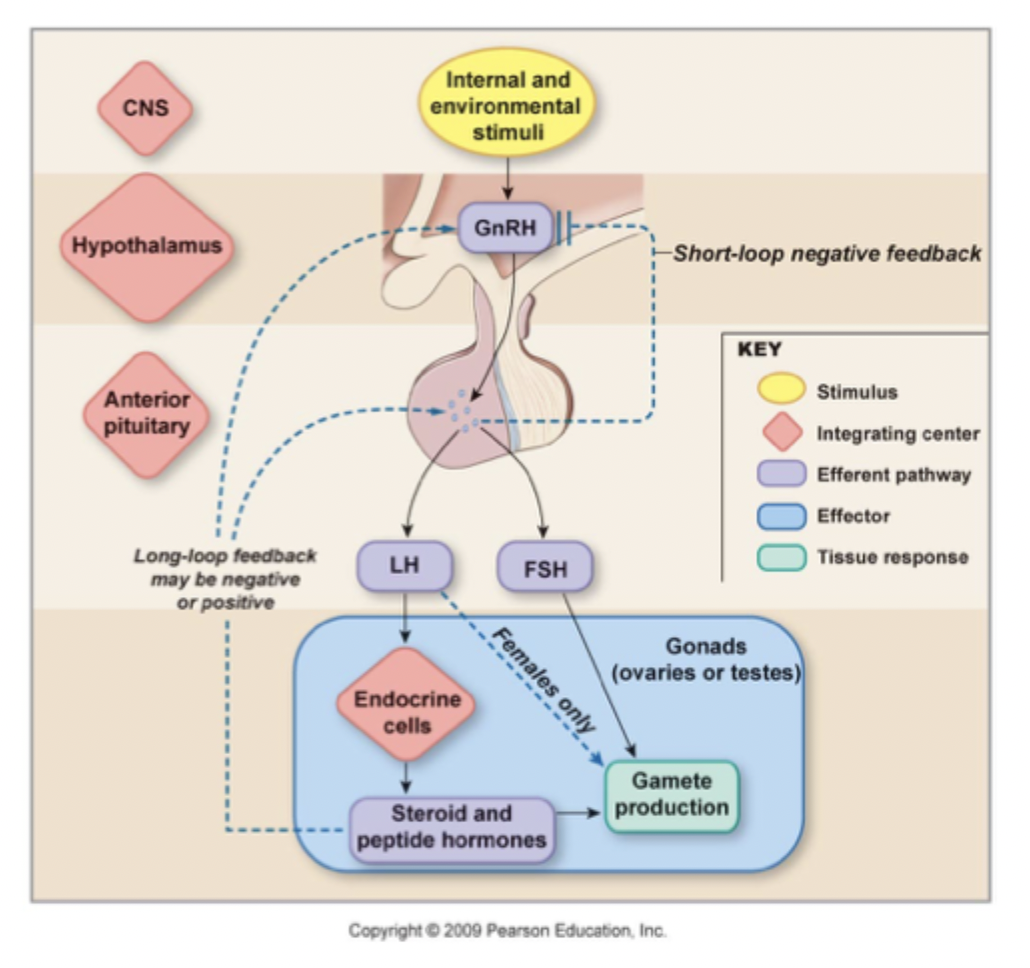
follicle stimulating and luteinizing hormone (FSH and LH)
released by anterior pituitary
regulated by hypothalamic regulatory hormone
gonadotropic releasing hormone (GnRH)
functions
in females = act on ovaries
in males = act on testes
development of gametes + sex hormones
NOTE: in females → estrogen acts via positive feedback to facilitate LH surge at day 14
prolactin (PRL)
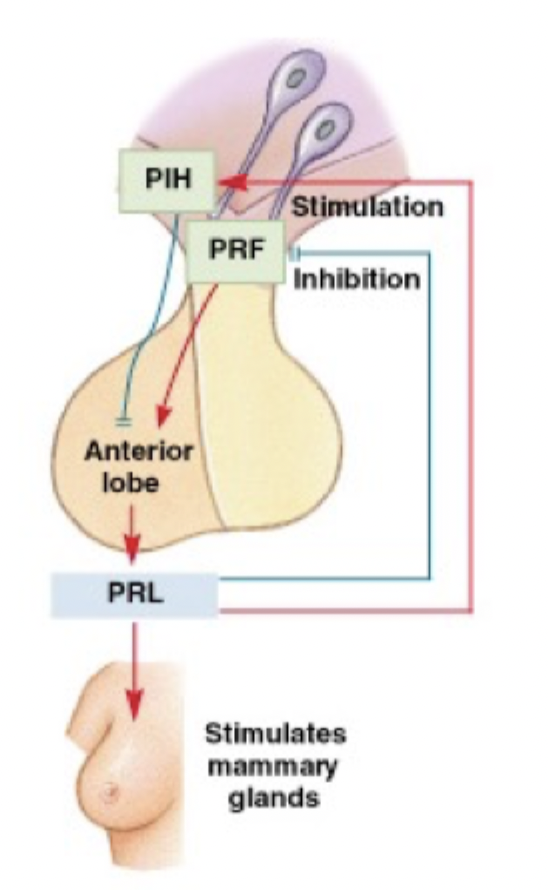
released by anterior pituitary
regulated by hypothalamic regulatory hormones
prolactin releasing hormone (PRH)
prolactin inhibiting hormone (PIH)
functions
regulates mammary gland development + milk production
⬆ circulating PRL = ⬆ PIH release + ⬇ PRF release via negative feedback
melanocyte stimulating hormone (MSH)
released by anterior pituitary
NOTE: only hormone released from pars intermedia
regulated by hypothalamic regulatory hormones
corticotropin releasing hormone (CRH)
melanocyte inhibiting factor (MIF)
functions
exact role in humans unknown → enhances skin pigmentation
lack of significant feedback loop regulating release
