Genetics: Quiz 4
 Call Kai
 Learn
 Practice Test
 Spaced Repetition
 Match
 Flashcards
 Knowt Play
1/16

There's no tags or description
Looks like no tags are added yet.
17 Terms
Autosomal Traits vs. X-linked Traits
Autosomal
traits come from genes on the 22 non-sex chromosomes and affect males and females equally
X-linked
traits come from genes on the X chromosome and more often affect males because they only have one X
X-linked Dominant vs. X-linked Recessive
X-linked Dominant
one mutated X chromosome causes the trait
all daughters are affected
less common than x-linked recessive
X-linked Recessive
two mutated X chromosomes are needed for females, but only one mutated X is needed for males
daughters are usually carriers unless mom has the mutation
Autosomal Dominant vs. Autosomal Recessive
Autosomal Dominant
a person only needs ONE copy of the mutation to be affected
trait often appears in every generation
males and females are affected equally
Ex)
AA = affected
Aa = affected
aa = not affected
Autosomal Recessive
a person needs TWO copies of the mutation to be affected
parents are often healthy carriers
trait may skip generations
males and females are affected equally
Ex)
AA = unaffected
Aa = unaffected
aa = affected

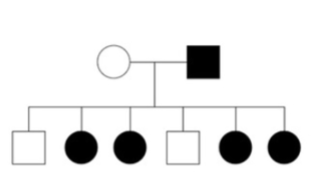
What is this an example of?
a) x-linked dominant
b) x-linked recessive
c) autosomal dominant
d) autosomal recessive
a) x-linked dominant
Reason: father and all daughters are affected
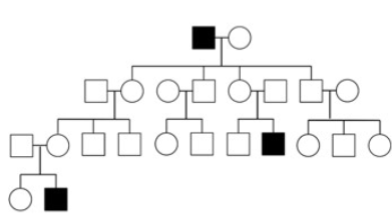
What is this an example of?
a) x-linked dominant
b) x-linked recessive
c) autosomal dominant
d) autosomal recessive
b) x-linked recessive
Reason: mostly males are affected; trait skips generations


What is this an example of?
a) x-linked dominant
b) x-linked recessive
c) autosomal dominant
d) autosomal recessive
c) autosomal dominant
Reason: trait often appears in every generation; males and females are affected equally


What is this an example of?
a) x-linked dominant
b) x-linked recessive
c) autosomal dominant
d) autosomal recessive
d) autosomal recessive
Reason: parents are often health carriers; trait skipped a generation

What is the meaning of Epistasis?
Epistasis: one gene masks the effect of another gene
What are the four types of Epistasis and what are their ratios?
Complementary Gene Action
9:7 ratio
Need both genes working
Recessive Epistasis
9:3:4 ratio
Homozygous recessive masks another gene
Dominant Epistasis
12:3:1 ratio
Dominant allele masks another gene
Duplicate Gene Action
15:1 ratio
Either gene can make the other
Complementation vs Non-complementation
Complementation
mutations occur in different genes
Non-complementation
mutations occur in the same gene

What type of chromosome rearrangement is this?
a) deletion
b) inversion
c) duplication
d) translocation
a) deletion

What type of chromosome rearrangement is this?
a) deletion
b) inversion
c) duplication
d) translocation
b) inversion

What type of chromosome rearrangement is this?
a) deletion
b) inversion
c) duplication
d) translocation
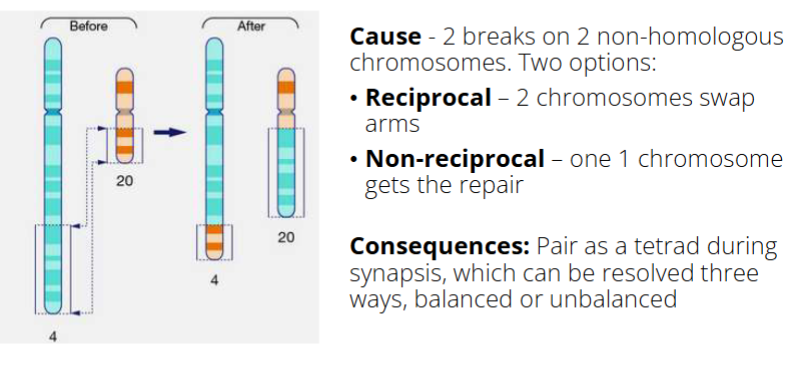
d) translocation

What type of chromosome rearrangement is this?
a) deletion
b) inversion
c) duplication
d) translocation
b) duplication

Paracentric Inversion
no centromere involvement

Pericentric Inversion
involves centromere
What is the difference between reciprocal and non-reciprocal translocations?