Art history china and Japan midterm
 Call Kai
 Learn
 Practice Test
 Spaced Repetition
 Match
 Flashcards
 Knowt Play
1/92

There's no tags or description
Looks like no tags are added yet.
93 Terms
The Neolithic Period was during
7000-1700 BCE

Bowl, from Banpo; Yangshao culture, 5000-4000BCE
coil
placed over burial urns of children

Funerary Jars, from Banshan; Yangshao culture, (c. 2400 BCE)
black and red pigments
spiral motif
coils

Torso of a woman, Hongshan culture (c. 3500 BCE)
likely used in fertility rituals
early ancestor worship

Jade Cong and Bi, Liangzhu culture, (2700-2200 BCE)
jade objects were a status symbol
circlular shape represents heaven

Pig-Dragon; Hongshan, (4th millenium BCE)
jade - took a long time to make because of tedious grinding w abrasive rather than carving
zoomorphic
ritual and funerary significance - found buried, with owners probably
china proper
inner china, traditional core of China, centered around Yellow River
fertility rites
nude female mother-goddess figures, abundance of crops?
nephrite
breaks off of mountains and is washed down to the base
white, but copper, chromium, and iron deposits cause grey-green and yellow red colors
The Shang Dynasty was during
(c. 1650-1050 BCE)
oracle bones
Anyang sacrificial victims
beheaded
offerings to ancestral spirits to appease them
bronze ritual vessels
Shang dynasty
used in sacrificial meals, offerings, food and wine
prestige symbol
ding - 3 leg meat container
piece mold casting
shang dynasty

figure of deity - Shang
probs held elephant tusk
guardian probs
Sangxingdu
Kneeling jade figure - Shang
fu hao’s tomb
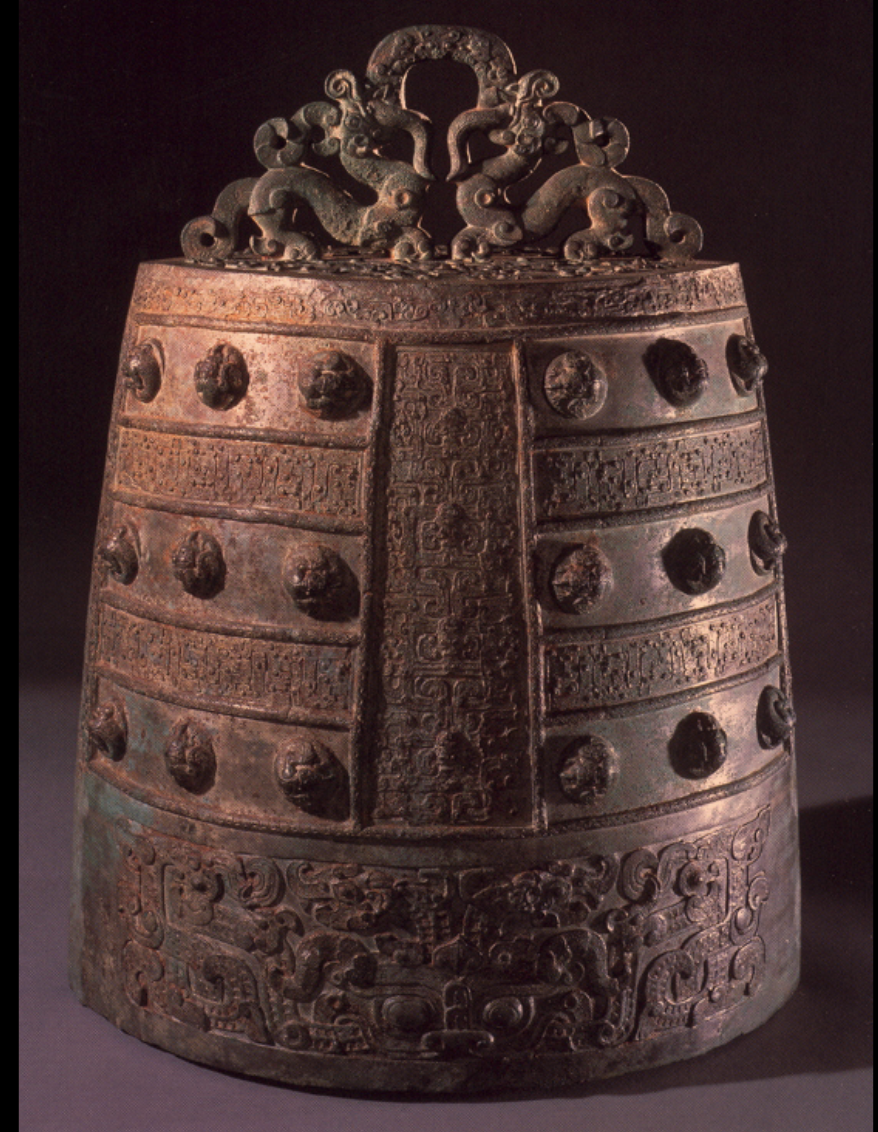
Bronze Bell, 5th cent Zhou
found in Marquis Yi tomb
used in rituals - music
SUPER heavy

Jade linked discs for belt or pendant
Warring states period
status symbol, jade takes so long to carve

Bianhu (flat vessel ) flask
Warring States
silver inlays and bronze cast

Marquis Yi coffin
Warring States
bronze framed wood painted with laquer - sgraffito

Gold plated bronze tiger plaque
warring states
wealth and prestige
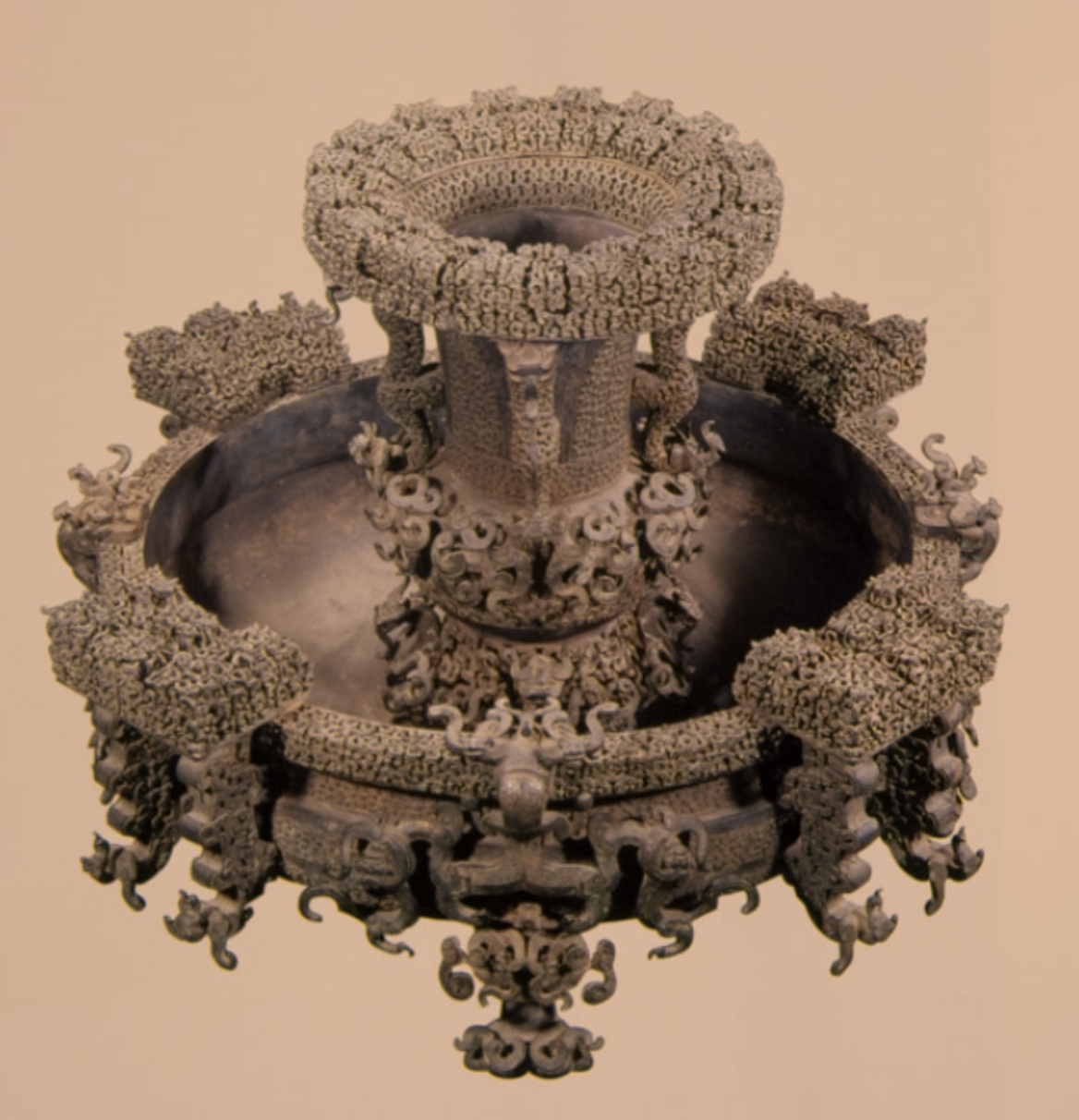
Zun - jar
pan - basin
found in Marquis Yi tomb
Warring states

bronze vessels found in Marquis Yi tomb
1500
displays aspiration for wealth and prestige - wasnt buried with other royals
compared to royals he was insignificant
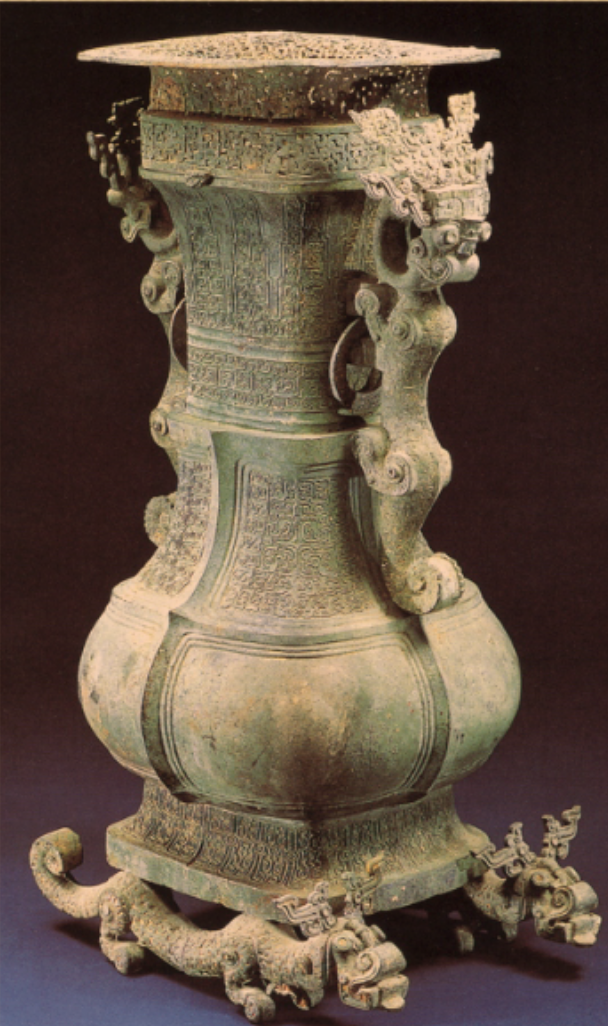
Hu ritual vessel
Zhou period
more graceful, intricate details
some spaces left blank
tall
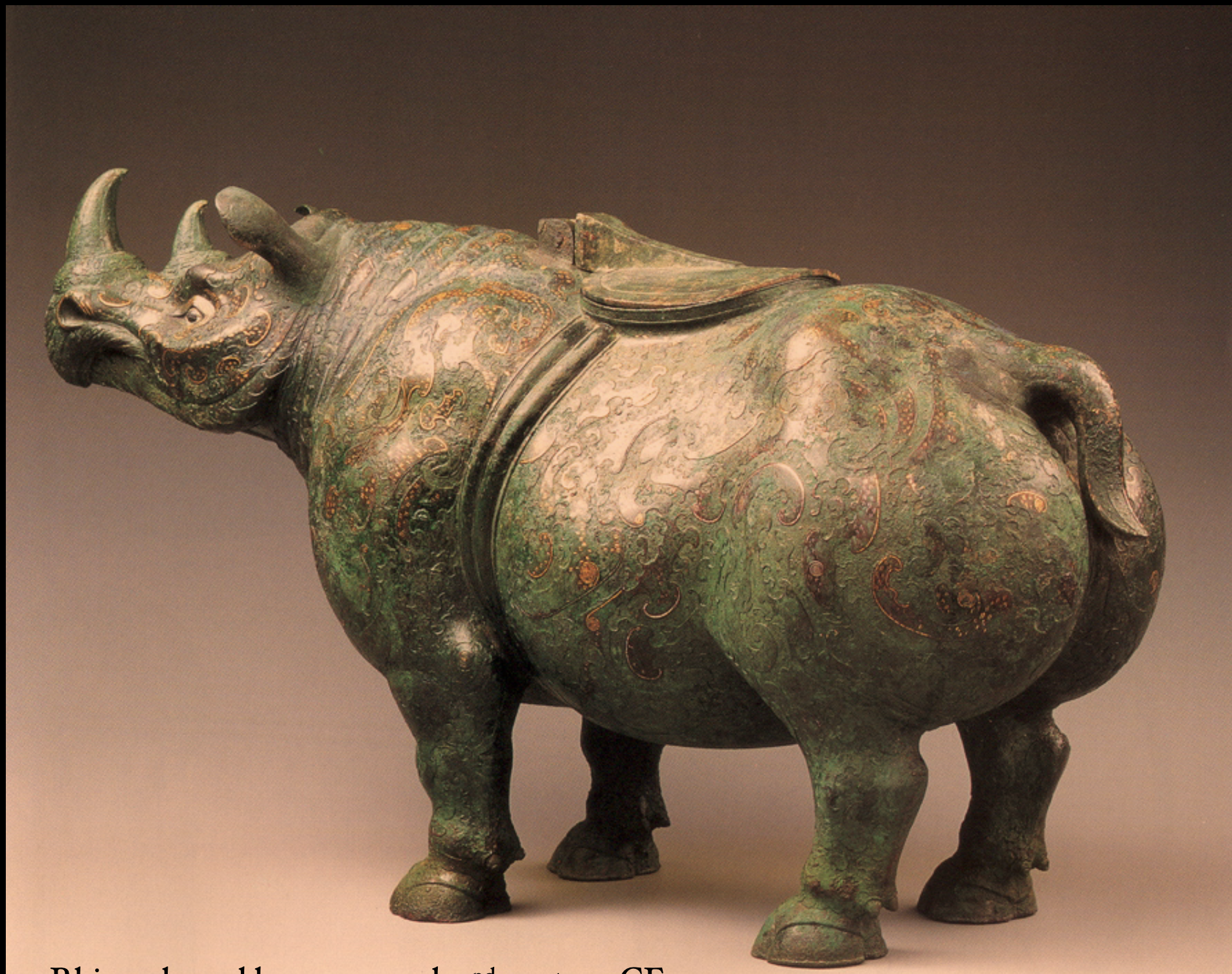
rhino bronze vessel
han dynasty
surface decorations and naturalistic

Mirror with Queen mother of the west and King father of the east
Han dynasty
represents heaven - yin and yang
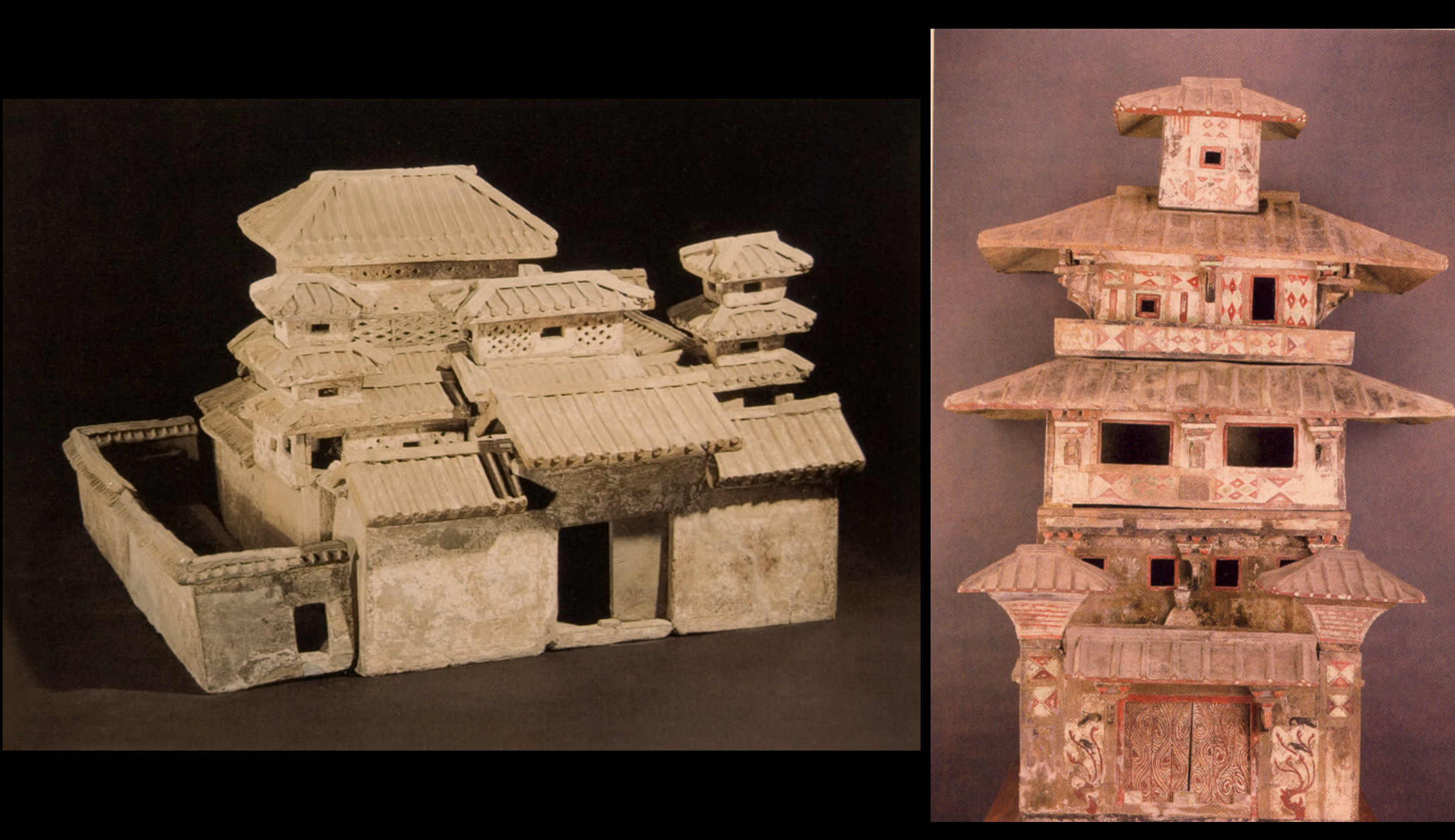
House models
Han dynasty
our only reference for architecture as all buildings were made from wood
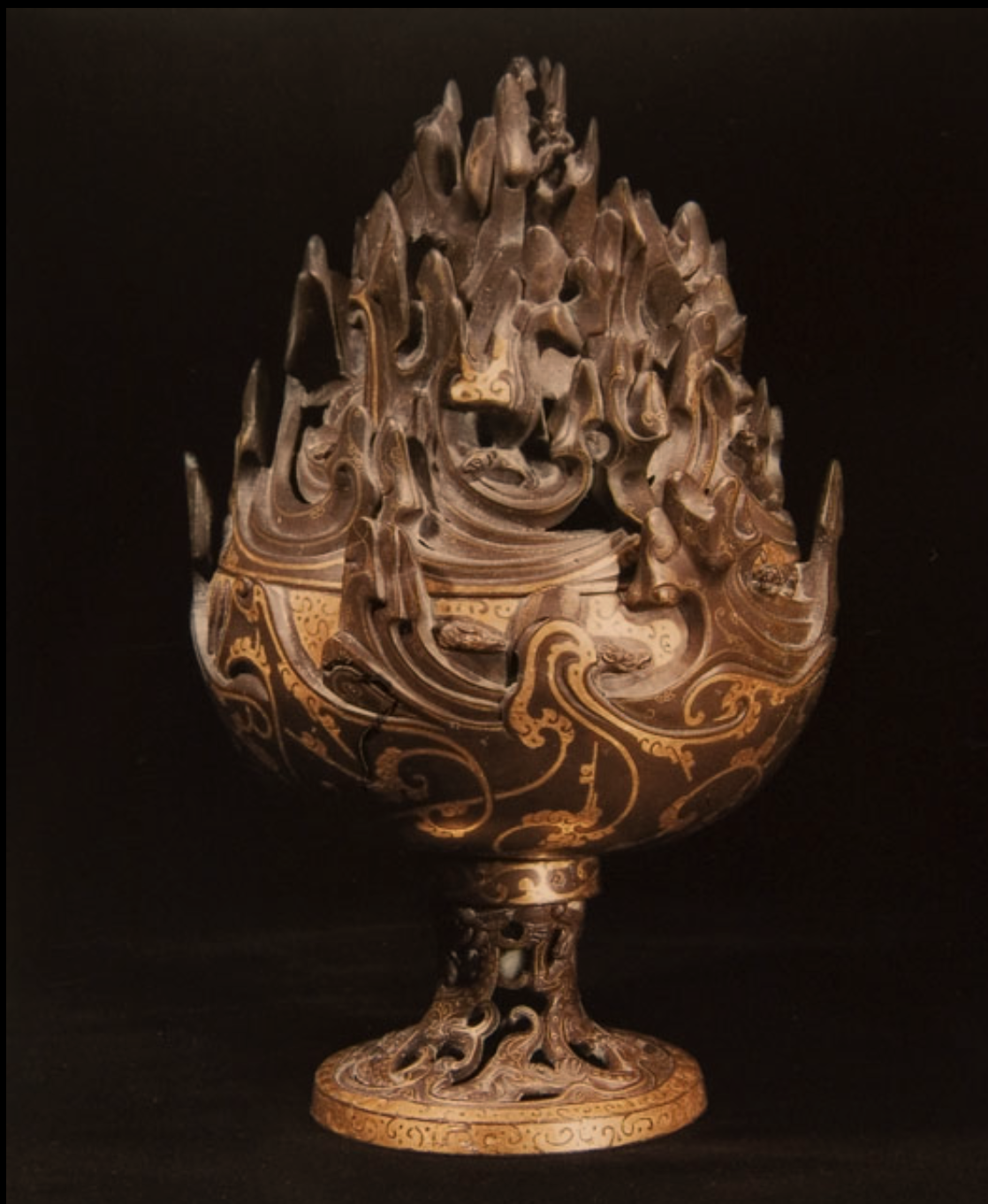
incense burner
Han Dynasty
found in tomb of Prince Liu Sheng
first landscape
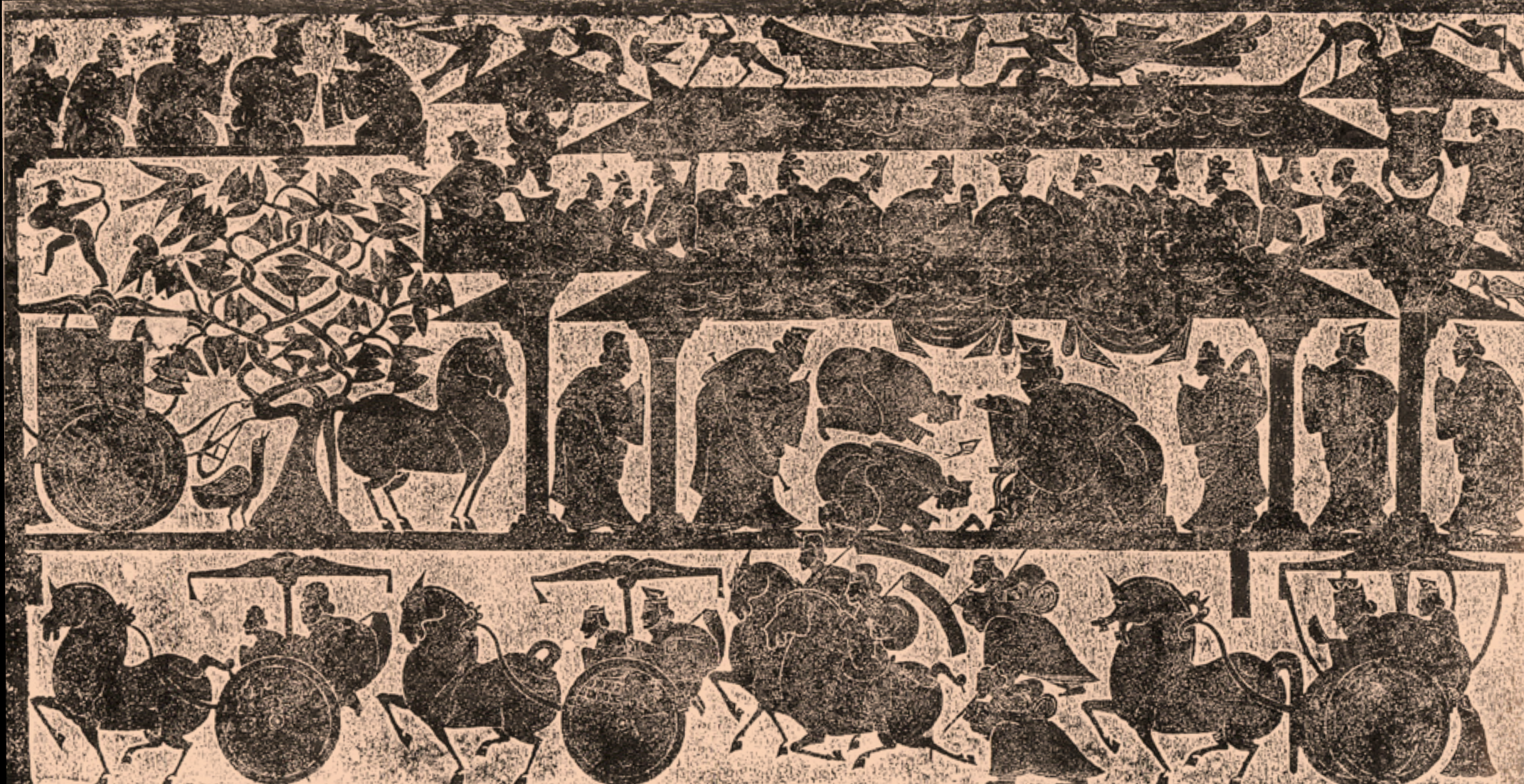
Rubbing from stone relief in shrine of Wu Liang
Han Dynasty

Silk funeral banner
Han Dynasty
tomb #1 - Lady Dai

Jade Horse
Han Dynasty
naturalistic
The wheel of law
represents the teachings and moral order of cosmos
8 spokes represent eightfold path
The Middle Way
life of moderation
Mahayana
branch of buddhism
save all living beings from suffering
mind training
become bodhisattva
Bodhisattva
buddhist that has reached enlightenment but postponed thier ascension to nirvana to help others reach enlightenment
Amitabha/Amida
want to be reborn in western paradise
Pure Land/Western Paradise
a place that buddhists that reach enlightenment are reborn and can study without samsara
Chan/Zen
focus on meditation and the mind rather than directly to dharma
repetitive movements were thought to allow for a clear mind, leading to enlightenment
Marks of the Buddha
ushnisha - top knot
urna - mole between eyes
chakras - on feet, wheel of law
elongated earlobes - reference to wealthy upbringing
hands in mudra
meditation
be not afraid
gift giving
usually sitting on lotus in criss cross
mandorla/halo
maitreya
buddha of the future - bodhisattva
will guide humanity when teachings of Gautama buddha have faded
Lotus Sutra
most influential text in Mahayana Buddhism
contains sermons from Shakyamuni
Guanyin
compassion and mercy boddhisattva
genderfluid
Xie He
six principles of Chinese painting:
spirit consonance
bone method - structural use of brush line work
correspondence to object
color must match object
division and planning - composition
learning by copying
colophon
brief statement at the end of handscroll with additional information, especially when scroll has been through many owneres

Shakyamuni Buddha; North Wei

Shakyamuni Buddha and Prabhutaratna Buddha; North Wei
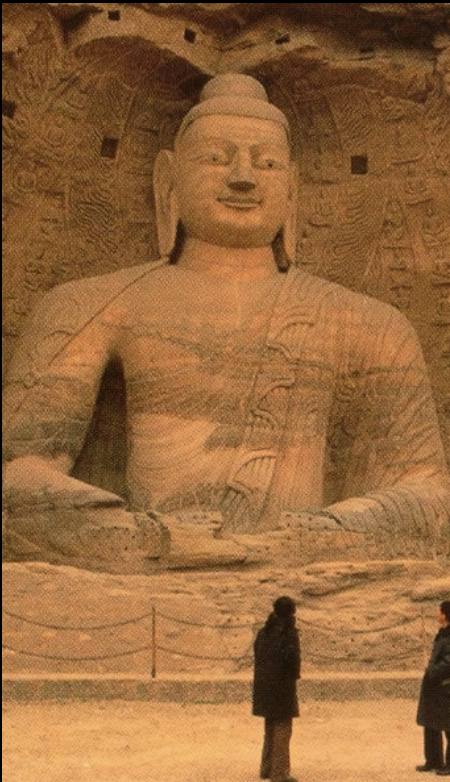
Shakyamuni Buddha, Cave 20, Yungang caves, North Wei
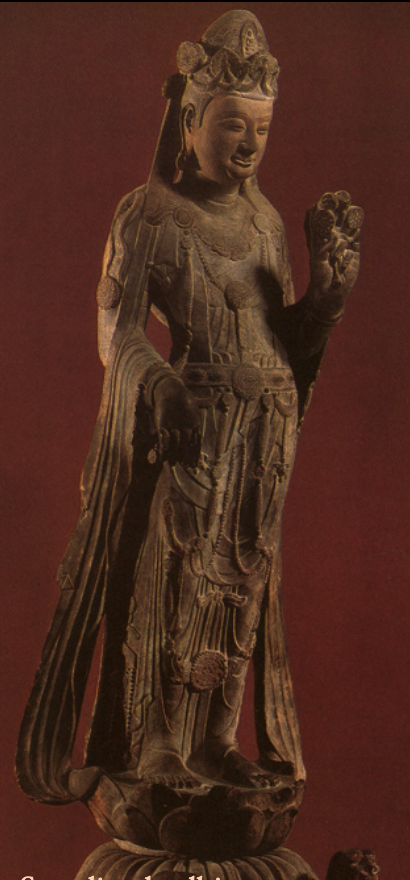
Standing boddhisattva (Guanyin), Northern Zhou
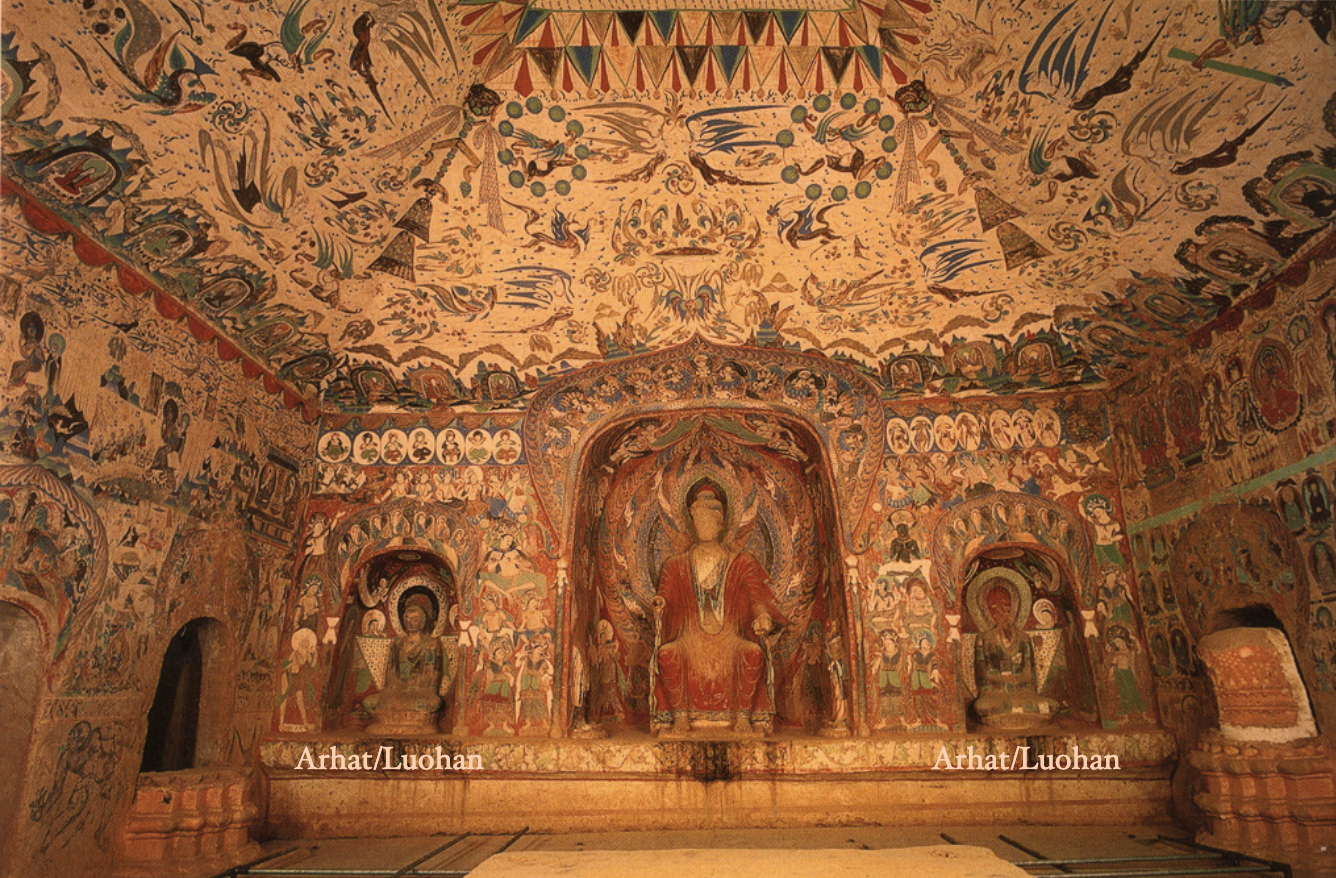
Cave 285, Period of Disunity
Vairocana Buddha/cosmic buddha
transcendant, everything

Lady Feng and the Bear; handscroll, late 4th century
arhats/luohan
disciples, often in pairs, old and young
halo above head
monk clothing

Vairocana Buddha, disciples and boddhisattvas, Longmen caves
Tang dynasty
finished in 675 under Tang emperor
used for lavish ceremonies
nearly 100000 sculpted figures

Paradise of Amitabha, Cave 217, Dunhuang Grottoes, Tang
Wall painting
Buddha in the center, flanked by bodhisattvas, one being Guanyin

Foguang Si (Buddha Radiane Temple)
Tang
post and lintel construction
where buddhist ceremonies took place

Great wild goose pagoda, Tang
Chang’an
largest city in the world - capital of Tang Dynasty
incredibly planned - cardinal directions and gril style

Attributed to Yan Liben, Emperor Xuan and attendants, from the Thirteen Emperor, handscroll Tang
hieratical scaling
higher officials cover hands iwth cloth
figures overlapping
perspective

Hunting scene and scene of Tang officials and foreign envoys, wall paintings from tomb of Prince Zhanghuai, Tang
appreciation of hors

Shining Light of Night, Han Gan - Tang
appreciation of hors
musculature
eye is weird, conveys emotion
stamped by owners

Sancai glazed earthenware horse
found in tomb
sancai
form of glaze that melts before its fused, causes drips
Ananda and Kasyapa
disciples of Gautama Buddha, often flanking buddha in art
Heavenly King and Heavenly Guardian warrior
two additional deities, holds pagoda, steps on evil spirit
guardian has very anmated face n pose, protects shrine from evil spirits
Pashizhi bodihsattva
wisdom
Dashizhi bodihsattva
strength and power
Post and lintel construction
upright element and horizontal element
posts support, not walls
posts not attached to floor
brackets, cermaic tiles
joining wood precisely
weight of building adds stability
sanskrit sutras
sermons attributed to Buddha or his disciples
lead glaze
low firing lead glaze base with Sancai on top allowed for the sancai to melt and create patterns
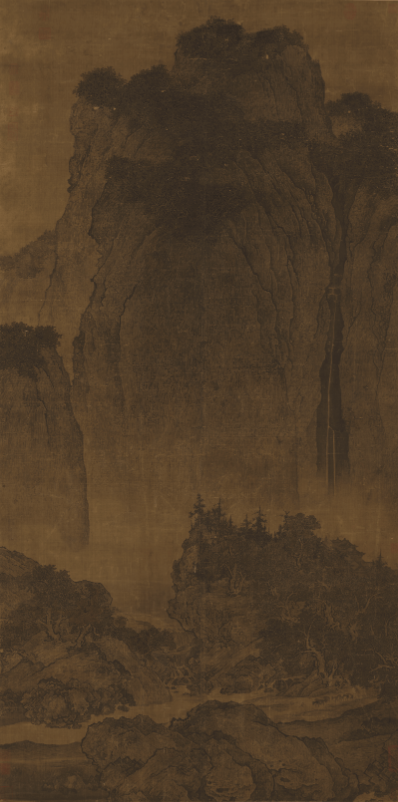
Travelers among Mountains and Streams, hanging Scroll, Northern Song
Silk ground and ink with brush
super tiny figures, shows magnitude of nature
mountains and water
monumental landscape paintings
brushwork
no color

A solitary Temple amid Clearing Peaks; Song Dynasty
architectural
journey thru space
humans tiny compared to nature
Gazing at a Waterfall; Song Dynasty fan painting
lyrical
focused on figures, tells a story, about vastness/beauty of nature
still on silk and ink
Xia Gui, Twelve landscape views handscroll, Song
kind of abstract, misty, shows tiny humans and misty island

Attributed to Emperor, The Five-Color Parakeet handscroll, Song
painting+calligraphy+poetry
representational accuracy
Foguang Si Pagoda, Liao Dynasty
holds Buddha sculptures on every level
Seated Guanyin, Song
polychrome wood
relaxed pose
feminine appearance - genderfluid
rocky plynth - guanyin lived in mountains
aristocratic robes
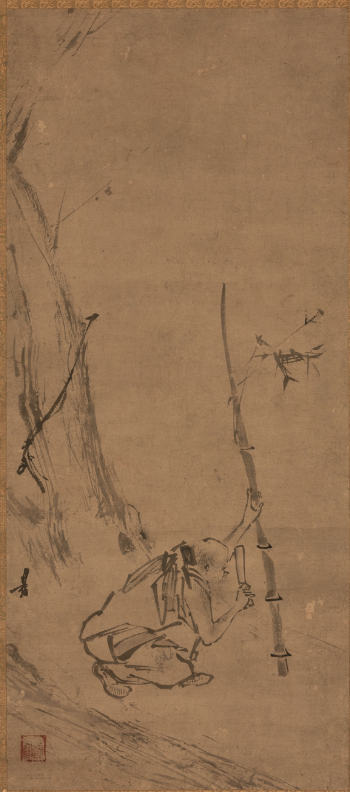
Liang Kai, Sixth Chan Patriarch Chopping Bamboo, hanging scroll; Song Dynasty
encourages repetitive motion as a way to reach enlightenment
Mountain Market in Clearing Mist; Song
extremely abstract, ink suggests peak, with stick figures
inscription

Gui incense burner, Song
shape resembles ritual vessels
crackle glaze
Emperor Huizong
emperor of Song dynasty
artistic genius and patronage
Cun (texture brushstrokes)
brushstrokes that give texture instead of shading
Hanging scroll
scroll that is meant to be seen all at once
Three viewpoints
high: looks from bottom of mountain to its summit
level: looks across
deep: looking past foreground into behind
negative space - breathing room
Dao
the formless, eternal, natural flow of the universe, source and creator of everything
NeoConfucionism
philosophy of nature: balance of Li and Qi, underlying force of universe
Li - order, pattern
Qi - vital force, spirit
Ma-Xia School
filled one corner of painting or one space
atmospheric space, misty
Fan Painting
ink painting, calligraphy, and poetry
Album leaf
small collectible paintings as a bound set, not for public wall display
Imperial Painting Academy
Emperor Huizong - very into the arts
also promoted bird and flower paintings
Bodhidharma
buddhist monk, started Chan Buddhism, first Chinese patriarch
Spontaneous mode
loose, expressive
celadon
green glazed ceramic, mimics look of jade
Chan Patriarchs
foundational early lineage figures that esstablished and transmitted tradition in China