Simple Liquid Dosage Forms
 Call Kai
 Learn
 Practice Test
 Spaced Repetition
 Match
 Flashcards
 Knowt Play
1/196

There's no tags or description
Looks like no tags are added yet.
197 Terms
Simple (monophasic) liquid dosage forms
▪ Homogeneous (single-phase) preparations.
▪ Active drug is completely dissolved in a liquid vehicle.
▪ Commonly used for oral administration, as well as topical and specialized uses.
Complex (multiphasic) liquid dosage forms (overview)
▪ Pharmaceutical preparations containing two or more immiscible (unmixable) phases,
where one phase is dispersed throughout the other.
▪ Contain insoluble active ingredients.
▪ Require special stabilizing agents to ensure the active ingredients are evenly
distributed, at least temporarily, before administration.
classification of monophasic solutions: according to its use
Topical, Oral, Ophthalmic, Nasal
classification of monophasic solutions: according to its composition
▪Syrups
▪ Elixirs
▪ Tinctures
▪ Spirits
▪ Aromatic Waters
▪ Liniments
▪ Collodions
Pharmaceutical solution of monophasic solutions
▪ Contains drug in a suitable solvent, and
▪ Other active ingredients: color, flavors, sweeteners, stability enhancers etc
advantages/disadvantages of solutions
▪ Compliance
▪ Bioavailability problems
▪ Enteral feeding is provided in solution or emulsion forms
▪ Ease of administration
▪ Dose variation
What are the advantages and disadvantages of solutions regarding stability?
Advantage: The drug is already dissolved, so no dissolution step is needed before absorption.
Disadvantage: Drugs in solution may be less chemically stable than in solid dosage forms.
formulations of solutions
▪ Drug
▪ Solvent
▪ Preservative
▪ Sweetener
▪ Thickener, viscosity
enhancer
▪ Color
▪ Flavor
▪ Antioxidant
▪ Buffer
▪ Surface active agent
▪ Tonicity modifier
solvent selection
▪ Dissolution power
▪ Clarity
▪ Toxicity
▪ Compatibility
▪ Palatability, Color, Odor
▪ Price
solvents for pharmaceutical use
Water is commonly used.
▪ Auxiliary solvents, such as alcohol, glycerin and propylene glycol, may be added.
organic solvents for pharmaceutical use
Acetone, isopropyl alcohol – too toxic for internal use.
▪ Useful as solvents in drug development research
fixed oils for pharmaceutical use
corn oil, cotton seed oil, peanut oil and sesame oil may be used as solvents, particularly for oleaginous injections.
all examples of solvents for pharmaceutical use
▪ Purified Water, USP
▪ Alcohol, USP
▪ Diluted Alcohol, NF
▪ Rubbing Alcohol
▪ Isopropyl rubbing alcohol
▪ Glycerin, USP
What is an oral solution?
A liquid dosage form in which the drug is completely dissolved.
Oral solutions examples
oral rehydration solution, oral colonic lavage solution, mouthwashes and gargle
syrups (overview)
Concentrated aqueous preparations of sugar or sugar substitute with or without
medicinal agent and flavoring agent.
▪ Sweet and viscous
▪ Sucrose (60-80% maximum 85%)
▪ Flavored or unflavored (cherry, cocoa, simple)
▪ Used to mask taste and odor of liquid medications
components of syrups (overview)
1) Purified water, USP
2) Sugar (sucrose) or substitutes
• Sorbitol and glycerin, dextrose, non-glycogenic methylcellulose (sweetness + viscosity)
3) Antimicrobial preservative if needed:
• Benzoic acid 0.1 – 0.2%
• Methylparaben, propylparaben 0.1%
4) Flavorants: FDA approved, volatile oil, vanillin
5) Colorant: FDA approved, water soluble, non-reactive, stable
• Simple syrup NF syrup (stable, crystallization resistant) – sucrose 85% w/v
Syrup preparation
1) Solution with the aid of heat
2) Agitation without heat
3) Addition of sucrose to a prepared medicated liquid
4) Percolation of medication or sucrose
SOLUTION WITH THE AID OF HEAT
Quickest method of preparation.
▪ Used for thermostable medications and non-volatile materials.
▪ Sugar is generally added to the purified water, and heat is applied until the sugar is dissolved.
▪ Then, other heat-stable components are added to the hot syrup.
▪ The mixture is allowed to cool, and its volume is adjusted to the proper level by the addition of purified water.
disadvantages of making a solution with the aid of heat
Sugar inversion: Excessive heat should not be used to avoid inversion
▪ Darkening in color due to invert sugar (caramelization).
▪ Sugar decomposed due to excessive heat is susceptible to microbial growth.
▪ Syrups cannot be sterilized by autoclaving.
AGITATION WITHOUT HEAT
Place all ingredients in a vessel larger than the volume of the syrup.
▪ Then agitate the mixture.
▪ Time consuming but maximum stability.
▪ Medication dissolved in the minimum solvent then incorporated into the syrup.
When is sucrose added to a prepared medicated liquid?
When preparing a medicated syrup from a tincture or fluid extract.
Percolation (overview)
▪ Purified water or the source of the medicinal component is passed slowly (percolated) through a bed of crystalline sucrose.
▪ Sucrose dissolves and forms a medicated syrup.
▪ Cylindrical or semi-cylindrical shaped percolator and course
granular sucrose are used.
▪ Useful method when the source of the drug is a
naturally occurring or plant based product.
▪ Example: Ipecac Syrup
Elixirs (overview)
Clear, sweetened, hydroalcoholic solutions intended for oral use and are usually
flavored to enhance their palatability.
▪ Elixirs are less sweet and less viscous than syrups.
▪ Main ingredients:
▪ Alcohol, water, co-solvents (glycerin),
▪ Flavoring/ sweetening agent (sucrose, glycerin, saccharin, volatile oils)
Elixirs are _____ efficient in masking taste than syrups
less
Elixirs have ________ stability and are easier to prepare
more
Elixir content
Their alcohol content ranges from 5% - 40%
▪ Self-preserving if alcohol content is more than 12%
▪ Alcohol content is a disadvantage for children
Elixir preparation
1. Simple agitation
2. Prepare alcoholic solution and aqueous solution then add aqueous to alcoholic
3. Filter if needed
types of elixirs
medicated and nonmedicated
medicated elixir (overview)
for therapeutic benefit
▪ Usually has one therapeutic agent for the ease of dose adjustment.
▪ Antihistaminic Elixirs
▪ Basic amine prepared as salt (by interaction with acid)
▪ pH is critical when diluted.
nonmedicated elixir
Flavored vehicle for extemporaneous compounding or dilution of medicated elixirs
tinctures (overview)
alcoholic or hydroalcoholic solutions prepared from vegetable materials or
chemicals.
▪ Contain alcohol 15 – 80% (for dissolution and preservation).
▪ Tinctures differ by:
▪ Methods of preparation
▪ Strength of drug
▪ Alcoholic content
▪ Mixing with other solutions may cause precipitation.
▪ High alcohol content – should be stoppered and protected from high temperatures.
▪ May contain light sensitive materials – should be stored in light resistant containers.
Explain the advantage and disadvantage of solutions
Discuss the various classification methods of liquid dosage forms
Compare and contrast the various solvents used in the preparation of solutions
Discuss the four methods of syrup preparation and list advantages and
disadvantages of each method
Rank order the simple liquid dosage forms based on their alcohol content
solution (physicochemical term)
Molecular dispersion of two or more substances (solid, liquid, gas)
solution (pharmaceutical term)
Liquid preparations that contain one or more substances dissolved in a suitable solvent or mixture of miscible solvents
solubility
A measure of the maximum amount of a substance that will dissolve in a liquid (at a constant temperature)
Saturated solution
A solution prepared at the maximum solute concentration at a given temperature.
Percent weight in volume: %w/v
Grams of constituent in 100 mL of preparation
(e.g., 1% w/v = 1 g constituent in 100 mL preparation)
percent volume in volume: %v/v
Milliliters of constituent in 100 mL of preparation
(e.g., 1% v/v 1 mL constituent in 100 mL preparation)
Percent weight in weight %w/w
Grams of constituent in 100 g of preparation
(e.g., 1% w/w = 1 g constituent in 100 g preparation)
PROPER ADMINISTRATION OF ORAL LIQUID DOSAGE FORMS
Taken with water.
Measured by calibrated cups or spoons especially for potent medication
Examples of solvents
▪ Purified Water, USP
▪ Alcohol, USP
▪ Diluted Alcohol, NF
▪ Rubbing Alcohol
▪ Isopropyl rubbing alcohol
▪ Glycerin, USP
How much solid content can common tap water contain?
Up to 0.1% w/v solids.
Alcohol is used as ____
solvent or co-solvent, since it has good water miscibility, good dissolution power, antimicrobial properties.
FDA LIMITS OF ALCOHOL USE IN OTC PRODUCTS
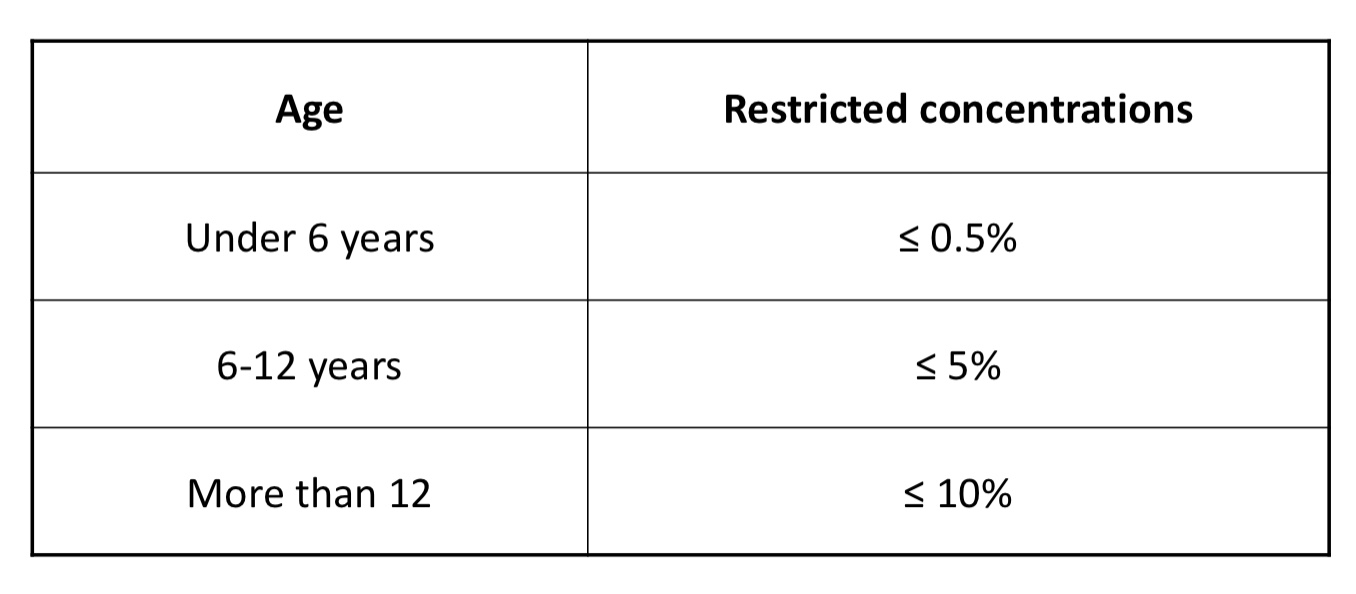
Under 6: < 0.5%
6-12: < 5%
12+: < 10%
What are the components of Diluted Alcohol, NF?
50% Alcohol, USP
50% Purified Water, USP
RUBBING ALCOHOL (overview)
▪ 70% ethyl alcohol by volume and the rest is water and denaturants
▪ Contains bitter substances and organic additives that cannot easily be separated
▪ Rubefacient, soothing rub, germicide for instruments, skin cleaning
▪ Also used as a vehicle for topical preparations
What is the typical concentration of isopropyl rubbing alcohol (IPA)?
70% v/v IPA in water, with or without colors, stabilizers, and perfume oils.
What are the physical characteristics of Glycerin, USP?
A clear, syrupy liquid with a sweet taste.
What are aromatic waters?
Clear aqueous solutions saturated with volatile oils or other aromatic or volatile substances.
What are pharmaceutical spirits?
Alcoholic or hydroalcoholic solutions of volatile substances.
NON-AQUEOUS SOLUTIONS: Liniments
Alcohol-based or oil-based solutions or emulsions of medications that are rubbed onto the skin. They should not be applied to broken skin.
What are collodions?

Clear liquid preparations containing pyroxylin dissolved in a mixture of solvents, with or without added medication.

What is the role of alcohol in an antihistamine syrup?
Co-solvent
which of the following is a quickest method for preparation of a syrup involving a heat labile drug?
addition of sucrose to a prepared medicated liquid
Which preservative is commonly used in syrups at very low (0.1-0.2%) concentration?
Benzoic acid
Which of the following is used as a viscosity enhancer in pharmaceutical solutions?
Cellulose derivatives
What is the minimum alcohol concentration in elixirs that makes them self-preserving?
Above 12%
Collodions leave behind which substance after solvent evaporation?
Pyroxylin
Spirits typically contain what minimum alcohol concentration?
60%
Syrups usually contain sucrose in what concentration range?
60-80%
Which solvent is considered too toxic for internal pharmaceutical use?
Acetone
Which of the following is disadvantage of liquid dosage forms?
Stability among dosage forms
Which of the following best describes monophasic liquid dosage forms?
Homogeneous preparations with drug completely dissolved
Which of the following is NOT a component of syrup formulation?
binder
What is the main disadvantage of tinctures?
Risk of precipitation with mixing
Which preparation method for syrups ensures maximum stability for heat labile drugs?
Agitation without heat
Which of the following is an example of an elixir preparation method?
Simple agitation
Aromatic waters are primarily used as:
Perfuming or flavoring agents
Which of the following best defines bioavailability?
The rate and extent to which a drug reaches the site of action
A solubility range of 0.1 to 1 mg/ml is officially categorized as
poorly water-soluble
A solubility range of 1 to 10 mg/ml is officially categorized as
slightly soluble in water
Simple solution
The drug is already dissolved in a suitable solvent.
elixir
A clear, sweetened hydroalcoholic liquid dosage form.
tincture
An alcoholic or hydroalcoholic solution or extract.
syrup
A concentrated, sweetened aqueous liquid.
tween 80
A nonionic surfactant.
span 80
A nonionic surfactant.
Xanthan gum
A suspending agent that increases the viscosity and slows sedimentation.
NaCl
An electrolyte that can influence the electrical charges surrounding particles; can help promote flocculation.
KCl
An electrolyte that can influence particle interactions.
docusate sodium
A surfactant that reduces interfacial tension and helps water wet drug particles.
BCS classification: class I
high solubility, high permeability
BCS classification: class II
low solubility, high permeability
BCS classification: Class III
high solubility, low permeability
BCS classification: class IV
low solubility, low permeability
dissolution
The drug dissolves in the fluids of the GI tract so that drug molecules are available in solution.
permeability
The dissolved drug molecules cross the intestinal membrane and enter the bloodstream.
What is the main liquid component of syrups?
Purified Water, USP.
What are the main sweetening agents used in syrups?
Sucrose (sugar) or sugar substitutes.
What ingredients can be used as sugar substitutes or to provide sweetness and viscosity in syrups?
Sorbitol
Glycerin
Dextrose
Non-glycogenic methylcellulose
Why might an antimicrobial preservative be added to a syrup?
To prevent microbial growth when needed.
What concentration of benzoic acid can be used as a syrup preservative?
0.1–0.2%.