chem unit 2
 Call Kai
 Learn
Learn Practice Test
 Spaced Repetition
 Match
Match Flashcards
 Knowt Play
1/110

There's no tags or description
Looks like no tags are added yet.
Name | Mastery | Learn | Test | Matching | Spaced | Call with Kai | Chat |
|---|
No analytics yet
Send a link to your students to track their progress
111 Terms
how to determine structure while analyzing light-matter interactions
use absorption and emission spectra to derive information about the structure of matter
electromagnetic radiation
study of how electromagnetic radiation (EM, e.g. light, radio waves, x-ray, etc) interacts with matter, extremely useful in determining structure of matter; there are many types
light-matter interaction types
absorption - when EM radiation passes through substance
emission - when given energy, substance is heated

B because it matches peaks and troughs
electromagnetic radiation
energy traveling through space as waves formed by oscillating electric and magnetic fields
what type of wavelength comes from low frequency
long wavelength
what does this equation mean: 𝜆 x 𝜈=𝑐
wavelength x frequency = speed of light
low frequency and large wavelength
radio waves
high frequency and small wavelength
gamma rays
what happens to chemical substances when light is absorbed
en electron gains energy
a molecule vibrates
a molecule rotates
gives off radiation that can be picked up by a detector

at what wavelength is their an absorption maximum
575nm (rel max) and 600 (abs max)

C because 350nm-750nm is the range within the wavelength graph and visible light spectrum

what color is this substance
yellowish because you look t region that is least absorbed meaning what goes through and can be seen

what is the relationship between absorption and appearance of color
inverse relationship

400-500nm (blue/green)
red-orange (opposite of absorption)
yellow because least absorption in yellow/red region
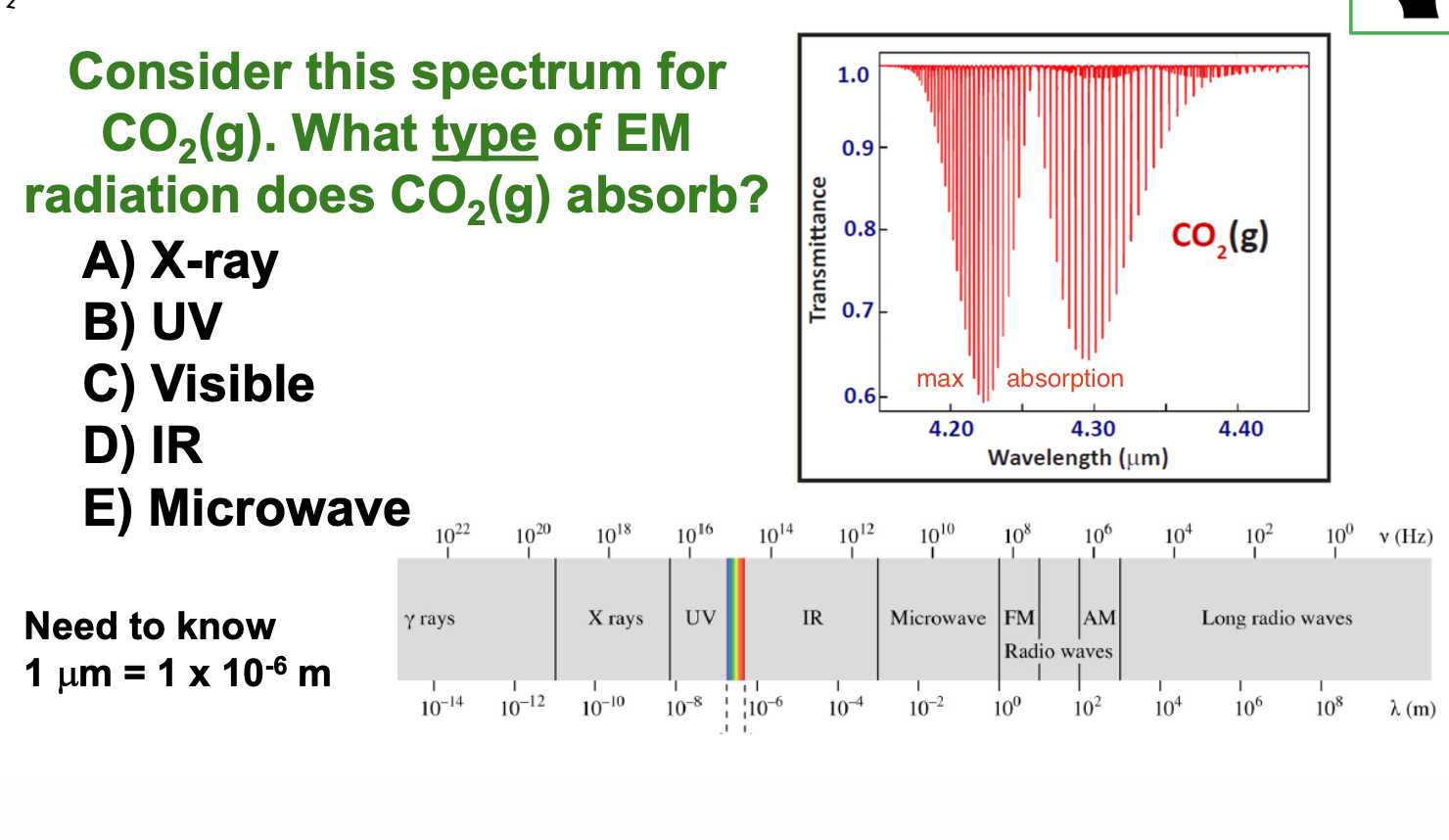
D because max absorption at 4.22nm falls into IR spectrum
emission spectroscopy
Pass a current through pure hydrogen gas and examine the visible light
Something is happening in very discrete intervals
quantization
To explain spectroscopic data, current atomic models that systems of electrons and protons (atoms, molecules, ions) can only exist in specific energy states.
emission
high energy state to low energy state
absorption
low energy state to high energy state
shorter wavelength equals…
higher energy photon jump states and more light particles sent out

C because it has the longest wavelength (distance between peaks and NOT SIZE)


A because jumping energy levels requires energy to be absorbed and used

C because longer wavelengths relate to less amounts of energy used
what are the different electronic states and how are they caused in molecules
rotational due to microwave radiation (different axis=different energy)
vibration due to IR radiation (3 ways)
translational
visible light doesn’t affect molecules
ALL MOTION is quantized
energy scale


UV high to low - water is great UV protection at sufficient depths
mid-high IR radiation is huge contributor to greenhouse gases
high microwave radiation allows you to generate kinetic energy using microwaves
molecular structure
the fundamental clue to determine the identity and properties of substances
what is the structure of a molecule determined by
atomic composition
atom connectivity
covalent bonds
Shared electron density between two nonmetal neutral atoms, all covalent bonds vibrate due to attractive and repulsive forces
what forms the bonds between protons and electrons
electrostatic attraction
what does a bonding model detail
bond length (distance from y-axis)
bond energy (strength of energy well)

B only because B-B has a deeper energy well making it a stronger bond. as for a stable bond, we only know that B-B is more stable than A-A, but not if it’s an actual stable bond

B because B-B has a longe y-axis distance and a deeper well making it longer and stronger

wavenumber
inverse of wavelength and equal to frequency, decrease from left to right

B because Cl is heavier than F, making CCl4 a heavier and longer bond/spring with less energy or a lower wavenumber

A because CCl4 has a peak at 750, and because Br is heavier than Cl, the peak of CHBr3 must be lower in wavenumber/energy than CCl4 due to a longer bond/spring that causes less energy around 650

A because it has a higher wavenumber and therefore more energy OR because it has a higher frequency of vibration which increases with bond strength

C because 1/10^-3=10³ cm^-1 = 1,000cm = C-O bond not O-H
atom connectivity
facilitated by analyzing the bonding patterns of different types of atoms
bonding capacity
the position of the atom in the periodic table
valence
means outer, as in the outer electrons are shared in a bond
periodic property
elements from the same group behave similarly

The elemental analysis of a poison that causes blindness reveals the formula CH4O. Propose how the atoms are bonded to each other in this molecule.


B because C only has 3 bonds and needs another to bond to connect the rest of the molecule unlike the others that are full solved when they’re just fragmented pieces

Chemical formula of C2H5NO2, what is the entire molecular structure?

orbital
a region in 3-D space where you have a probability of finding an electron, can hold up to 2 electrons
electron configuration diagram

what’s the different between a ground state and neutral atom
a ground state is the placement of electrons and a neutral atom is the number of electrons compared to protons in an atom which is equal

C because it gains 3 more electrons and therefore needs more orbital space to hold electrons
atomic radii
derived by measuring the distance between bonded atoms
atomic radii trend on periodic table
decreases to the right because within the same energy level you’re adding protons which pull electrons closer
increases down because energy levels are added increasing distance between protons and electrons
ionization energy
energy required to remove the first electron (low IE means very little energy is required to remove outermost electron)
ionization energy trend on periodic table
generally increases to the right because electrons get closer and have a greater attraction requiring more energy to pull off
generally decreases down because as energy levels are added, electrons become further from protons making it easy to pull off
why does ionization energy trend not always apply
in elements with different energy levels (2s to 2p) it’s easier for 2s to lose electrons than 2p because lower energy level even though it has a higher atomic number
in elements from p3 to p4, p3 will require greater energy to move electrons because all 3 electrons fit in 3 lobes of p whereas p4 will have an extra 1 electron that’s easy to remove although it has a higher atomic number
photoelectron spectroscopy
shoot x-rays at a sample to eject electrons and measure electrons as they hit a detector, serves as evidence of orbitals and how many electrons fell off

B because H and He only have 1 energy level so they have 1 peak whereas Li has 2 energy levels and therefore 2 peaks

B because the 1s peak has 3 protons tugging on 2 electros for Li rather than 2 protons for He making it harder to move and more IE and for the 2s peak Li only has 1 electron while He has 2 electrons so lower IE

C because you can add up all electrons to get 15=P or trace energy levels to find 3p
lewis structure
a set of defined steps that propose how atoms are arranged within a molecule where valence electrons are drawn as a dot
covalent bond
formed by connecting 2 unpaired electrons together
octet rule
most atoms will have 8 valence electrons in their valences, can be duet, sextet, etc.
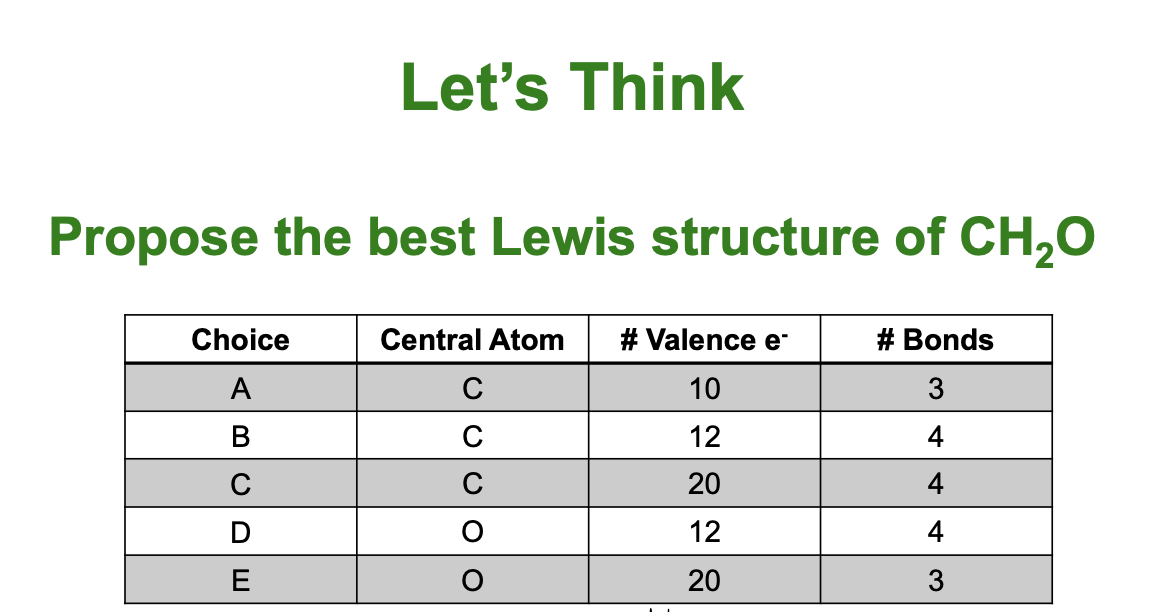
B

Propose the best lewis structure for CO
you must prioritize the octet rule over bonding rule (C should only have 4 and O 6)

radical
very reactive species, are defined by having at least one unpaired election in the structure
lewis structure for NO
octet rule can’t be met, so focus on bonding rule (N-5 and O-6)

what are the exceptions to the octet rule
radical - sum of electrons is an odd number
election deficient - sextet (H, Be, and B)
hypervalent - more than 8 valence electrons (elements from the third row and beyond)


D because the bond length is actually 127.8 because electrons aren’t shared equally but rather try to delocalize electrons in the molecule towards the left atom
resonance
lewis structures are limited and can only account for single/double/triple bonds even when evidence suggests a delocalized bond

A, C, and D because A and D shows the structure after adding an electron to Oxygen, and C displays the resonance

Because sulfur has hyper valency, it can hold 10 valence electrons


structural formula shows structure and connectivity more clearly than molecular formula

isomer
when two or more molecules share the same molecular formula but have different connectivity
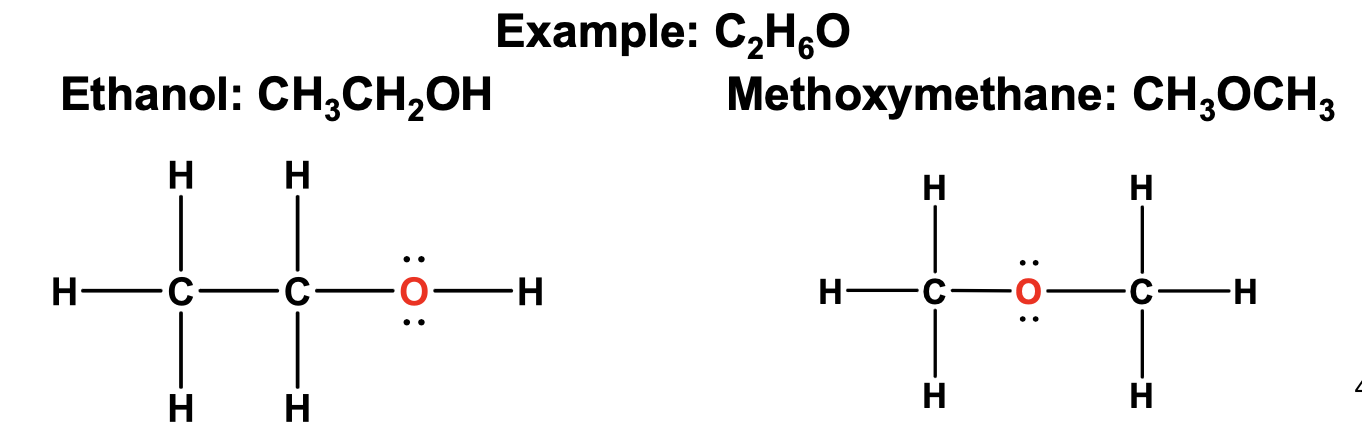
what are representations for molecules
molecular formula
structural formula
lewis structure
ball and stick
electrostatic potential map
line structure - most information with least time taken to complete
line structures


C because definite O and OH attachment, as well as C attachment from straight line
what are three things to keep in mind for lewis structures
balance octet rule
bonding tendencies
electron distributions

Yes
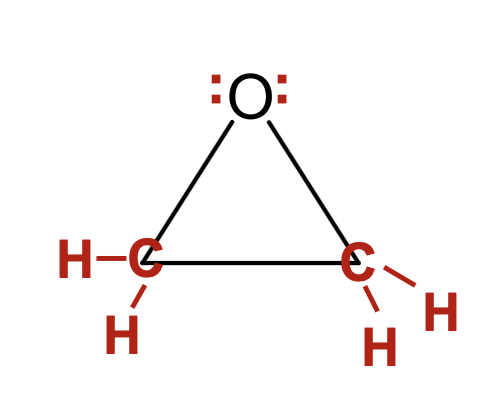

No

molecular geometry
predicting what molecules look like in 3-D

C because B atoms repel apart completely which is at 180 degrees as far away as possible
VSEPR
regions of electron density
valence shell electron pairs repulsion
electron domain groups
how many regions of electron density surround the central atom including bonds and lone pairs

C

give the lewis structure, electron geometry, molecular geometry, and the bond angle for 2 electron domain groups

give the lewis structure, electron geometry, molecular geometry, and the bond angle for 3 electron domain groups

give the lewis structure, electron geometry, molecular geometry, and the bond angle for 4 electron domain groups


functional groups
a cluster of atoms that tend to give rise to similar properties, with rest (R) of molecule attached

ketone lewis structure
C double bonded with O in the middle of molecule

aldehyde lewis structure
C double bonded with O at end of molecule

carboxylic acid lewis structure
C double bonded with O and single bonded with OH at end of molecule

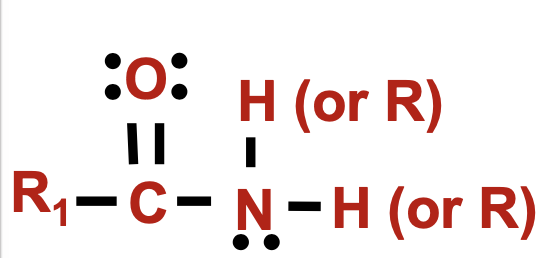
amide lewis structure
N bonded to C
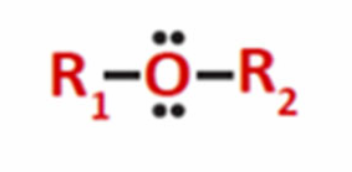
ether lewis structure
COC or O in middle of molecule
amine lewis structure
N attached to two bonds and molecule

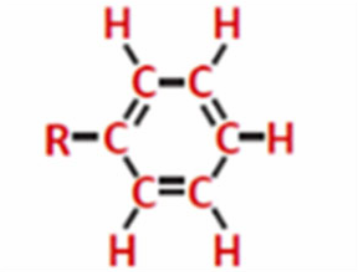
phenyl lewis structure
hexagon shape with alternating single and double bonds attached to rest of molecule
alcohol lewis structure
only OH attached to molecule
