ce3500 exam two
 Call Kai
 Learn
 Practice Test
 Spaced Repetition
 Match
 Flashcards
 Knowt Play
1/69

There's no tags or description
Looks like no tags are added yet.
70 Terms
what are the three main parts of an engineer’s transit
upper plate or alidade assembly
leveling head assembly
lower plate assembly
degree
defined by dividing one complete rotation into 360 equal parts

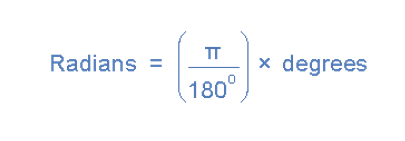
radians
defines an angle using the relationship between the arc length and the radius of a circle
what are the three main parts of a total station
electronic distance measuring (EDM) instrument
an electronic angle measuring component
a computer or microprocessor
what is a total station used for
observing horizontal and vertical angles, and slope distances from a single setup
functions of total station
averages repeated measurements
corrects measurements for prism constant and atmospheric conditions (temp and pressure)
applies curvature and refraction corrections when appropriate
converts slope distance into horizontal and vertical components
computes points elevations using vertical angle distance measurements
computes points coordinates from measured angles and distances
how to set up total station over a point
tripod legs should be equally spaced
tripod head should be approximately level
head should be directly over the point. use the centering screw for sighting the point on the ground
what are horizontal angles usually measured with
a theodolite or total station
for all closed polygons of n sides, the sum of the interior angles will be…
(n - 2)(180 degrees)
for all closed polygons of n sides, the sum of the exterior angles will be…
(n + 2)(180 degrees)
traverse can be solved by…
interior angles
exterior angles
deflection angles
a surveyor’s compass uses a ___ to measure __ (bearings or azimuths)
magnetic needle, magnetic directions
what is used for measuring horizontal and vertical angles or directions and extending straight lines
angles, bearing, and azimuth measurements
what are the two traditional instruments that used to be used for angles, bearing, and azimuth measurements
the engineer’s transit and the theodolite
azimuth
the direction of a line as given by an angle measured clockwise (usually) from the north end of a meridian
bearing
the direction of a line as given by the angle between the line and a meridian
how can a bearing angle be measured
CW or CCW from the north or south end of the meridian
NE bearing=
azimuth
SE bearing=
180 degrees - azimuth
SW bearing
azimuth - 180 degrees
NW bearing=
360 degrees - azimuth
traversing
a rapid convenient method for establishing or extending horizontal control points
what are the main purposes of traverses
property surveys to locate and establish boundaries
supplementary horizontal control for topographic mapping surveys
location and construction layout surveys for highways, railways, and other private or public works
control points
reference points of known geospatial coordinates. it may consist of any known point capable of establishing accurate control of distance and direction (ex: coordinates, elevation, bearings)
what are the advantages of traversing
less reconnaissance and organization
are not subject to the strength-of-figure requirements of triangulation networks
scale errors do not accumulate throughout the traverse
where do open traverses start and end
they start at a point of known position and end at a point of unknown position
open traverses are…
very risky and should be avoided
open traverse checks
no computational checks are therefore possible to detect any errors or blunders in distances or direction
where do closed traverses start and end
they start and end on points of known position
closed traverse checks
since the start and ends points are known, this provides a computational check on the measurements and calculations
systematic errors and blunders in closed traverses can..
be detected in both the distance and direction
to provide known positions for the start and end points in closed traverses…
at least one known bearing or azimuth is also needed
in closed traverses, more than one bearing is required to…
prevent the entire traverse from pivoting about a single known point
errors and blunders in angles and distances can be detected through…
angular and coordinate closure checks
in closed traverses, one known bearing/azimuth…
orients the traverse
in closed traverses, additional known bearing/azimuth…
checks the orientation and angular closure
permissible misclosure
c = k*sqrt(n)
where: k is the traverse order accuracy
n is the number of angles
traverse adjustment steps
adjust interior angles using (n-2)*180
compute all azimuths
adjustment of coordinates
linear methods
bowditch compass rule
transit rule
non-linear methods
least squares
departure
represents the horizontal distance in the east-west direction
latitude
represents the vertical distance perpendicular to departure and along the north-south direction
regularly spaced offsets

well known rule for area calculation
trapezoid
simpson
irregularly spaced offsets

area by coordinates; shoelace formula

what are the three methods used to calculate volumes
cross-section method
unit-area or borrow-pit method
contour-area method
flat topography cross-section
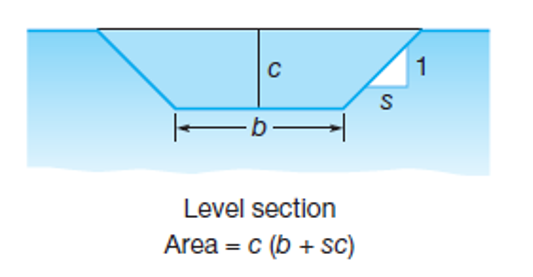
ordinary topography cross-section

required for rough topography cross-section

practical for rough topography cross-section

from cut to fill cross-section

side-hill locations cross-section

traverse ties
requires at least two fixed objects
total station
modernization of theodolite
traverse linear misclosure
difference btwn measured and actual point
engineer’s transit
vernier-reading
centering
optical plummet
traverse network adjustment
least squares method
traverse angle adjustment
balancing
traverse angle measurement
clockwise and counterclockwise
bearing
surveyor’s compassco
coordinates
indirect measurements
the interior angles summation of an 8-angle closed traverse network is
1080 degrees
total station reduce slope distances to __ and __ components
horizontal and vertical
which quadrant has azimuth equal to bearing
the first quadrant (NE)
t/f: the accuracy of the closed traverse relies on balancing the departure and latitude
true
t/f: total station applies various corrections to the observed distances
true
t/f: the total station’s maximum accuracy is 10 times higher than the engineer’s transit
false
t/f: angle between intersecting lines can be calculated by subtracting their azimuths
true
t/f: open and closed traverses should be avoided
false
t/f: the azimuth angle is measured clockwise or counterclockwise
false