6a stimuli and responses
 Call Kai
 Learn
 Practice Test
 Spaced Repetition
 Match
 Flashcards
 Knowt Play
1/25

There's no tags or description
Looks like no tags are added yet.
26 Terms
stimulus
a change in the internal or external environment
taxis
directional movement in response to a stimulus
positive taxis: toward a stimulus
negative taxis: away from a stimulus
kinesis
non-directional movement in response to a stimulus. the intensity of the stimulus affects the response
positive kinesis: moving slowly, turning more often
negative kinesis: moving faster, turning less often
receptor
cells/proteins that detect stimuli. they are specific to one type of stimulus
effector
cells that bring about a response to a stimulus (e.g. muscle cells, cells in glands
the pathway of nervous communication
a stimulus is detected by receptor cells and an electrical impulse is sent along a sensory neurone. when it reaches the end of (any) neurone, neurotransmitters take the information across the synapse to the next neurone, where another impulse is generated. the central nervous system (cns) processes the information and sends impulses along motor neurones to an effector

the reflex arc
the pathway of communication goes through the spinal cord but not through conscious parts of the brain, so the response happens automatically
these help organisms avoid damage to the body
trophism
the response of a plant to a directional stimulus by regulating their growth
positive trophism: towards the stimulus
negative trophism: away from the stimulus
phototrophism
the growth of a plant in response to light. shoots are positively phototrophic and grow towards light. roots are negatively phototrophic and grow away from light
IAA moves to the more shaded parts of roots and shoots, so there is uneven growth

gravitrophism
the growth of a plant in response to gravity. shoots are negatively gravitrophic and grow upwards. roots are positively gravitrophic and grow downwards

auxins and indoleacetic acid
auxins are produced in the tips of shoots and diffuse backwards to stimulate growth in shoots just behind the tips. cell walls become loose so the cells elongate. auxins stimulate growth in shoots but inhibit growth in roots
indoleacetic acid (IAA) is an auxin which moves around the plant to control trophisms via diffusion and active transport. uneven distribution in IAA causes uneven growth of the plant
resting potential
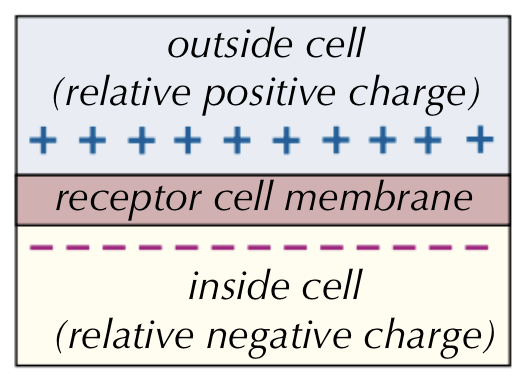
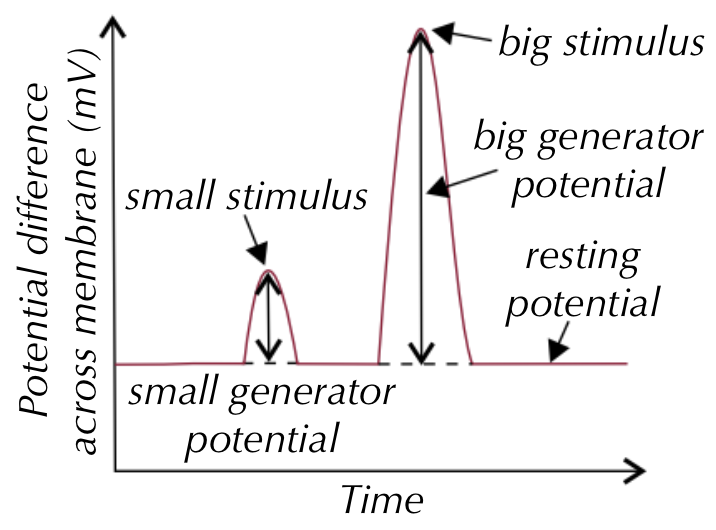
when a nervous system receptor is in its resting state, there’s a difference in charge between the inside and outside of the cell, meaning there’s a voltage (potential difference) across the membrane. the potential difference when a cell is at rest is its resting potential
generator potential
when a stimulus is detected, the cell membrane is excited and becomes more permeable, allowing more ions to move in and out of the cell, altering the potential difference. this is called the generator potential
a bigger stimulus excites the membrane more, causing a bigger movement of ions and a bigger change in potential difference
action potential
if the generator potential is big enough it will trigger an action potential - an electrical impulse along a neurone. the action potential is only triggered if the generator potential reaches the threshold level
action potentials are all one size, so the strength of the stimulus is measured by the frequency of action potentials
pacinian corpuscles
pacinian corpuscles are mechanoreceptors in the skin. they contain a sensory neeve ending surrounded by many layers of lamellae
when it is stimulated, the lamellae are deformed and press on the nerve ending, causing the sensory neurone’s cell membrane to stretch, deforming the stretch mediated sodium ion channels, creating a generator potential

photoreceptors
photoreceptors are found in the retina
light enters the eye, hits the photoreceptors and is absorbed by light sensitive optical pigments, bleaching them. this causes a chemical change, altering the membrane permeability to sodium ions, creating a generator potential. a nerve impulse is sent along a bipolar neurone, connected to the optic nerve, taking impulses to the brain

rods vs cones
rods are mainly located in the peripheral parts of the retina while cones are mainly located in the fovea
rods are black and white, cones are colour
rods share bipolar neurones, cones don’t
rods have high sensitivity to light, while cones have low sensitivity to light
rods give low visual acuity while cones give high visual acuity

sensitivity
rods are sensitive to light because many rods join to one bipolar neurone, so many weak generator potentials combine to meet the threshold and generate an action potential
cones are less sensitive than rods because it takes more light to reach the threshold
visual acuity
visual acuity is the ability to tell apart points that are close together
rods give low visual acuity because the brain doesn’t get separate information about two close points
cones give high visual acuity because cones are close together and join to one bipolar neurone, so the brain gets separate information about two close points
the central and peripheral nervous systems
the cns is made up of the brain and spinal cord
the peripheral nervous system is made up of the neurones that connect the cns to the body. it has teo different systems: the somatic and the autonomic nervous systems
the somatic and autonomic nervous systems
the somatic nervous system controls conscious activities
the autonomic nervous system controls unconscious activities. it is split into the sympathetic and parasympathetic nervous systems and is involved in the control of heart rate
the sympathetic and parasympathetic nervous systems
the sympathetic nervous system is the fight or flight system that gets the body ready for action
the parasympathetic system is the rest and digest system that calms the body down
controlling the heart beat
the cardiac muscle is myogenic (it can contract and relax without recieving signals from nerves)
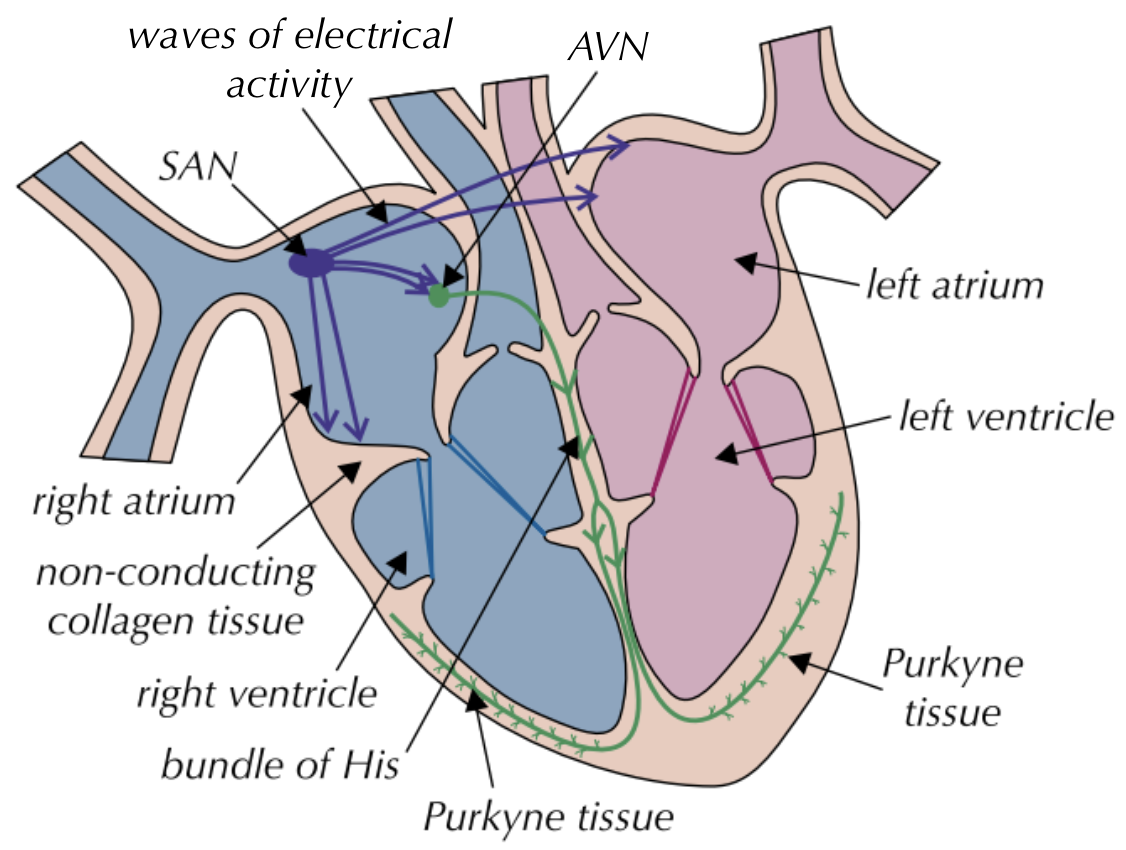
in the sinoatrial node (san), regular waves of electricity are sent out to the atrial walls, setting the rhythm of the heartbeat. this causes the right and left atria to contract at the same time
a band of non-conducting collagen tissue prevents the waves of electrical activity from being passed directly from the atria to the ventricles. instead, these waves of electrical activity are transferred from the san to the atrioventricular node (avn)
the avn passes the waves of electrical activity on to the bundle of His. there’s a slight delay before the avn relax to make sure the atria have emptied
the bundle of His is responsible for conducting the waves of electrical activity between the ventricles to the apex of the heart
the bundle splits into fine muscle fibres in the ventricle walls (purkyne tissue), which carries the waves into the walls, causing them to contract
silly ants have pants!
baroreceptors and chemoreceptors
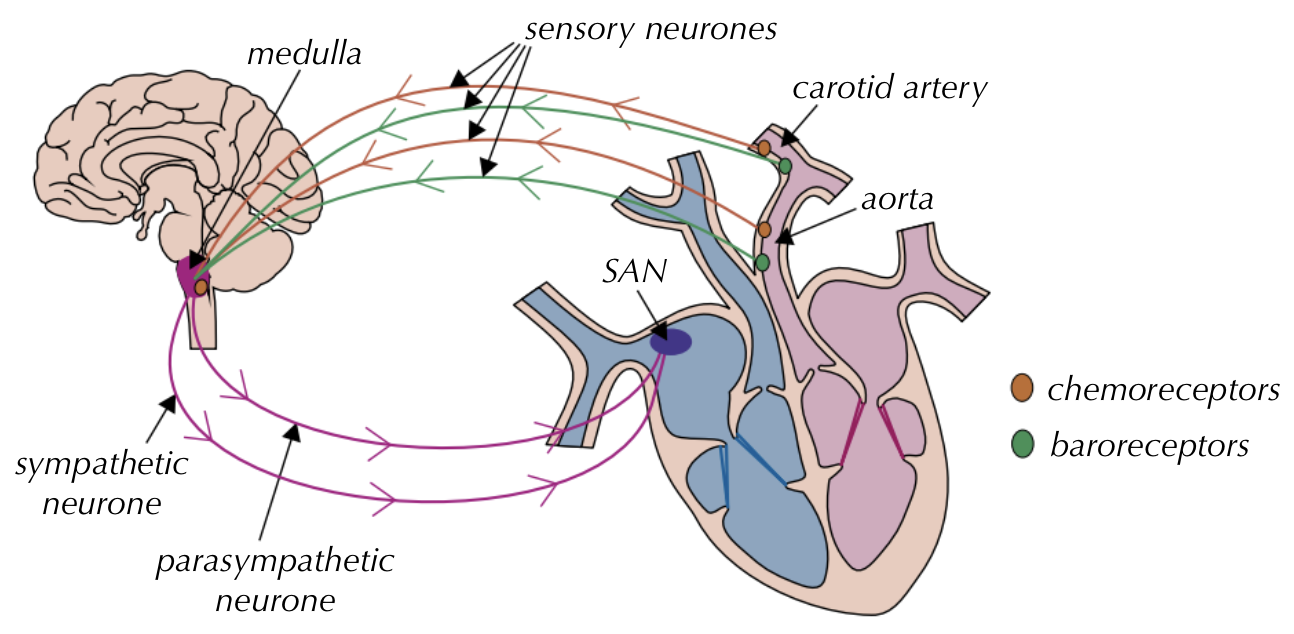
baroreceptors are pressure receptors in the aorta and carotid arteries, stimulated by high and low blood pressure
chemoreceptors are chemical receptors in the aorta, carotid arteries and the medulla, monitoring oxygen level, carbon dioxide level and pH
control of heart rate in response to changes in blood pressure
high blood pressure: baroreceptors detect high blood pressure and send impulses along sensory neurones to the medulla, which sends impulses along parasympathetic neurones. these secrete acetylcholine, which binds to receptors on the san. this causes the heart rate to slow down in order to reduce blood pressure back to normal
low blood pressure: baroreceptors detect low blood pressure and send impulses along sensory neurones to the medulla, which sends impulses along sympathetic neurones. these secrete noradrenaline, which binds to receptors on the san. this causes the heart rate to speed up in order to increase blood pressure back to normal

control of heart rate in response to changes in O₂, CO₂ and pH levels
high O₂, CO₂ and pH levels: chemoreceptors detect chemical changes in the blood and send impulses along sensory neurones to the medulla, which sends impulses along parasympathetic neurones. these secrete acetylcholine, which binds to receptors on the san. this causes the heart rate to slow down in order to reduce O₂, CO₂ and pH levels back to normal
low O₂, CO₂ and pH levels: chemoreceptors detect chemical changes in the blood and send impulses along sensory neurones to the medulla, which sends impulses along sympathetic neurones. these secrete noradrenaline, which binds to receptors on the san. this causes the heart rate to speed up in order to increase O₂, CO₂ and pH levels back to normal