ESAT
 Call Kai
 Learn
Learn Practice Test
 Spaced Repetition
 Match
Match Flashcards
 Knowt Play
1/76

There's no tags or description
Looks like no tags are added yet.
Name | Mastery | Learn | Test | Matching | Spaced | Call with Kai | Chat |
|---|
No analytics yet
Send a link to your students to track their progress
77 Terms
Is respiration exothermic or endothermic?
Exothermic
Can bacteria carry out aerobic and/or anaerobic respiration?
Yes, both
What is between the cell membrane and cell wall in a plasmolysed cell
External solution
Are the DNA of white blood cells the same as normal cells?
No, some have mutations to produce antigens
Bond enthalpy
Left - right
nano (n)
10^-9
micro (u)
10^-6
mili (m)
10^-3
centi (c)
10^-2
deci (d)
10^-1
kilo (k)
10³
mega (M)
10^6
giga (G)
10^9
Which structures are found in both plant and bacterial cells?
cell membrane
ribosomes
nucleus
cell wall
1, 2 and 4
Endocrine glands
Organs that release hormones into the blood (pancreas, liver, testes, ovaries, hypothalamus, pituitary gland, adrenal gland)
T or F: bronchi is a tissue specialised for gas exchange
F: gas exchange does not occur at the bronchi
T or F: small intestine has cilia
F: villi and microvilli are not cilia
T or F: bronchi/alveoli is an organ
F: they are tissues, which are part of the lungs (organ)
1 tonne = ? kg
1000
How to calculate density?
Mass / volume (kg m^-3)
Find x.
(x+1)² - 4 = 0
(x+1)² = 4
(x+1) = ±2
x = -1±2
x = 1 or -3

What is the eq of this graph?
y = x³
(flip the graph to get y = -x³)

What is the eq of this graph?
y = 1/x

What is the total distance travelled of this speed-time graph?
Total area under the curve
Area of a triangle (using sine)
½ABsinC
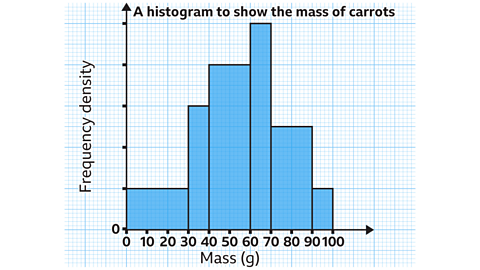
Please know histograms like this exist
Ok
What is relative frequency?
Actual probability from doing the thing (not theoretical)
May ≠ theoretical probability
Does sexual or asexual reproduction require more energy?
Sexual reproduction
Define genotype
The genetic makeup of alleles in a gene
T or F: The environment can cause genetic variation
F (genetic variation)
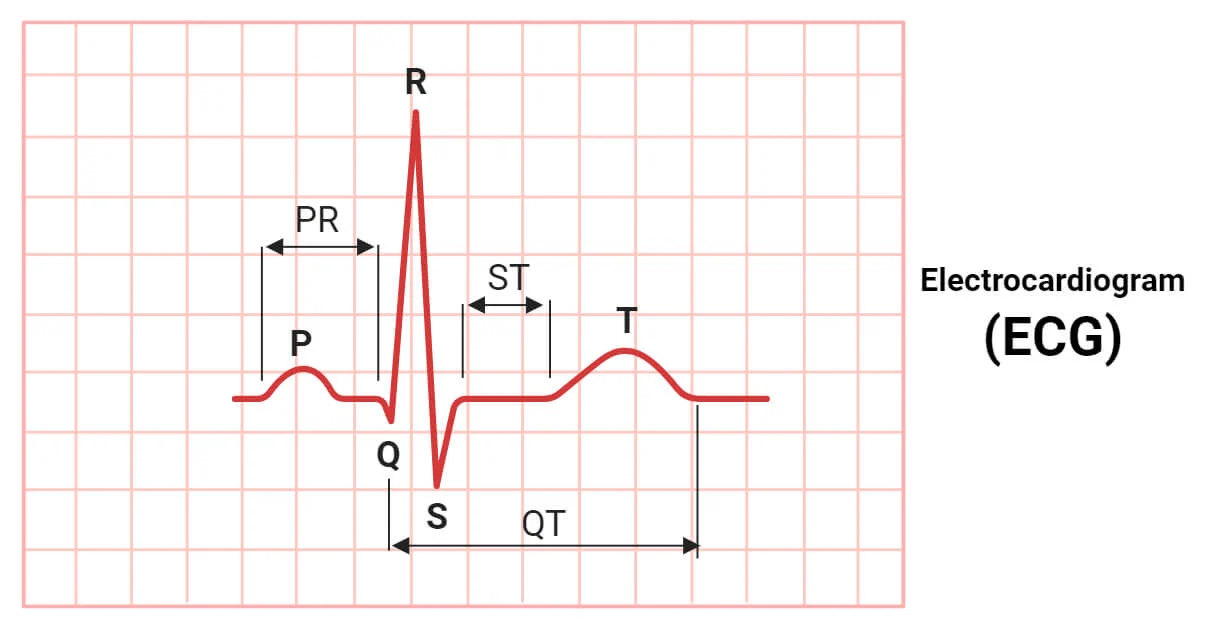
Identify P, QRS and T
P: Atria systole
QRS: Ventricular systole
T: Ventricle diastole
Name all elements in the first period
H, He
A chromatogram produces 1 spot. Must the substance only contain one component?
No. There may be different components on the same spot (very rare)
Unit of specific heat capacity
J kg^-1 C^-1
Are breaking chemical bonds endothermic or exothermic?
Endothermic
Forming chemical bonds are exothermic
Metal ions that are more readily reduced to form metals than H+
Au, Ag, Cu
What is the cathode and what is the anode in electroplating?
Cathode: object
Anode: plating metal
What functional group takes prioirty over alkenes?`
All, except halogens
Alkene + steam
Alcohol (requires high temperature and catalyst)
Pent-1-ene → Pentan-1-ol
Alcohol + Sodium
(eg. CH3OH + Na)
Alkoxide
CH3O-Na+ Sodium methoxide
Why are alloys stronger than pure metals?
Layers of metal cations of diff sizes are distorted → larger force to slide over each other
Do particles move when in solid form?
Yes, they vibrate, but their positions remain fixed
Test for chlorine (litmus paper)
Turn moistened blue litmus paper red → white
Dissolve in water to form HCl and HOCl → bleaching action of HOCl destroys the dye
Colours of AgCl, AgBr, AgI
White, cream, yellow
Order of testing of anions
Test for carbonates: add H+ → CO2 formed turns limewater milky
Ag2CO3 solid formed
BaCO3 solid formed
Test for sulfates: add BaCl2 / H+ → form white ppt (BaSO4)
Test for halides: add AgNO3 / H+ → form coloured ppt
Ag2SO4 solid formed
Testing of metal cations
Add small amount of conc NaOH
1+: soluble
2+: insoluble ppt
Cu(OH)2: blue
Fe(OH)2: green
Fe(OH)3: brown
Add excess conc NaOH: Al(OH)3, Pb(OH)2, Zn(OH)2 redissolves
Flame test (1+ and between calcium / magnesium)
Color of flame test of Li, Na, K, Ca and Cu
Li: crimson
Na: golden yellow
K: lilac
Ca: brick-red
Cu: bluish-green
Test for water
Anhydrous CuSO4
Breakdown of air
78% Nitrogen
21% Oxygen
0.9% Argon
0.04% CO2
3 major greenhouse gases
H2O, CO2, CH4
Treatment of drinking water
Desalination: remove dissolved salts
Sterilisation: remove microorganisms
Add Cl2 gas: kill microorganisms
Add F-: prevent tooth decay
Surface area of a cone
πrl + πr²
Surface area and volume of a sphere
4πr²
4/3 πr³
Simplify loga1/x and logaa
-logax
1
Radius of a circle from its equation (ABCDE)
√[(D/2)² + (E/2)² - F]
Find sin, cos and tan for 0 and 90
sin0 = 0
sin90 = 1
cos0 = 1
cos90 = 0
tan0 = 0
tan90 = undefined
Cosine rule
c² = a² + b² - 2abcosC
T or F: Shells around a nucleus are filled from lowest to highest energy shells.
T
Are only outermost shell electrons delocalised in metals
Yes
What is the change in type of energy in respiration
Chemical → kinetic energy
Form of DNA in the nucleus
Linear chromosomes
Define carrier
Heterozygous individual
Stem cells
Totipotent cells: zygote → balls
Can become anythingPluripotent cells: make up embryo
Can become anything except placentaMultipotent: adult stem cell
Only a small number
- Bone marrow stem cells → blood cells
- Skin stem cells → skin cellsiPSC: made from adult stem cells
Can be from patient’s own body cells → not rejected as foreign
Risk of stem cells
Cancer
Rejection of immune system
Why is inbreeding bad?
Increased risk of inherting homozygous recessive alleles
No variation → reduce ability to adapt to a changing environment, eg. new diseases
4 characteristics of inflammation
Red, hot, swollen, painful
→ more blood, carry more heat
→ more tissue fluid from blood → more pressure on nerves
Secondary immune response
Proliferation and differentiation of lymphocytes
Plasma cells: produce specific antibodies
Memory cells: regcognise pathogens → rapidly produce large amount of specific antibodies
Characteristics of secondary response
Less antigen needed
Shorten latent period
Faster rate
More antibodies
High level stays longer
Crop rotation
Planting something different every round → prevent virus from infecting plants
Are protists single-celled?
Yes, single-celled eukaryotes
Immune vs resistant
Can produce antibody vs Have a gene
Polydactylyl
6 finger 🙂 - autosomal dominant
Clotting
Enzymes convert fibrinogen (a soluble protein) into insoluble fibrin
Mesh of fibres that traps platelets / RBCs and form clot
Bilirubin
Colored pigment of bile
Ureter vs urethra
Tube vs hole
When cold, vaso__
Vasoconstriction
Effect of thyroxine and adrenaline respectively
Thryoxine: increase rate of metabolic reactions → increase heat
Adrenaline:
Increase heart rate
Increase breathing rate
Increase blood flow to muscles
Stimulate liver to break down glycogen into glucose