Cell Division - Mitosis
 Call Kai
 Learn
 Practice Test
 Spaced Repetition
 Match
 Flashcards
1/10

There's no tags or description
Looks like no tags are added yet.
11 Terms

Before mitosis the nucleus contains long uncoiled chromosomes which are difficult to see.
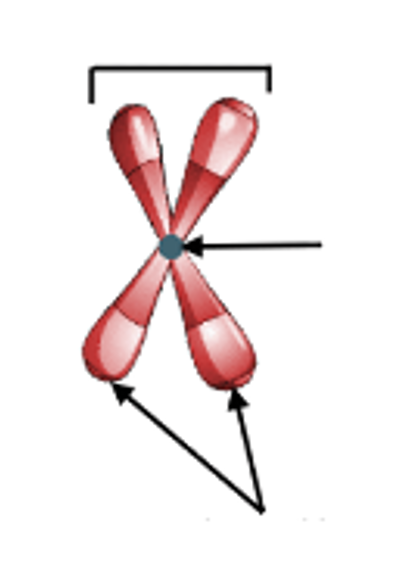
Chromosomes replicate (shorten, thicken and make a copy of the DNA – go from single stranded to X shaped). Each chromosome now consists of two chromatids, joined at a point called the centromere.

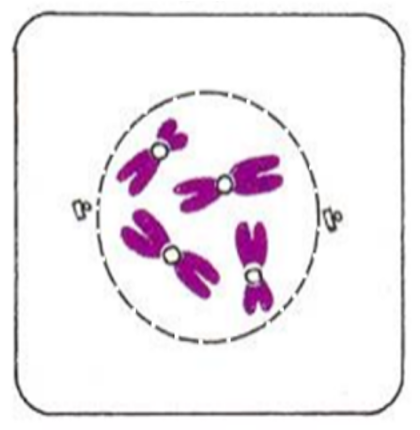
Nuclear membrane disappears and chromosomes line up at the equator of the cell and spindle fibres attach to the centromeres

4. Sister chromatids are pulled apart by spindle fibres. Chromosomes move to opposite poles of the cell.

A new nuclear membrane forms around each set of chromosomes. Cytoplasm begins to divide

2 new genetically identical daughter cells are formed, which have the same diploid chromosome number as the parent cell.
What is mitosis?
Mitosis is the process of cell division. Cells have to be able to divide for growth and repair. Mitosis makes an exact copy of cells.

Where does mitosis occur?
Nucleus
What does diploid mean?
Having 2 matching sets of chromosomes in the nucleus is called DIPLOID. In humans 46 single chromosomes are arranged into 23 matching pairs.
Why is mitosis important?
Mitosis provides new cells for growth, repair of damaged tissues and replacement of dead or damaged cells. It also maintains the diploid chromosome complement. Maintaining the diploid chromosome number is important because so no genetic information is lost.