chem equations and when to use them
0.0(0)
Studied by 0 people Call Kai
 Learn
 Practice Test
 Spaced Repetition
 Match
 Flashcards
 Knowt Play
Card Sorting
1/4

There's no tags or description
Looks like no tags are added yet.
5 Terms
1
New cards
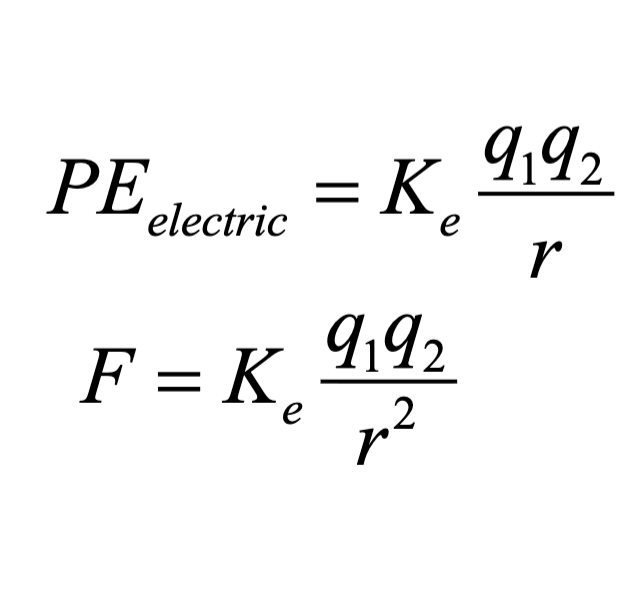
Coulombs law
The electrostatic force of attraction or repulsion
F = electrostatic force (Newtons)
K = Coloumbs constant
q₁ and q₂ electric charges, (C)
r = distance (meters)
2
New cards
energy is directly proportional to frequency
E = energy in Joules
h = plancks constant (J)
v = frequency (Hz)

3
New cards

wave speed
c = speed of light (meters/seconds)
lambda = wavelength (meters)
v = frequency (Hz)
4
New cards

De Broglie wavelength
Wavelength of a moving particle
lambda = wavelength (meters)
h = plancks constant (J x S) (kg x m² x s⁻¹)
m = mass (kg)
v = velocity (m/s)
5
New cards

rydberg equation
wavelength of light emitted or absorbed by an electron as it transitions between energy levels
Rydberg constant =