NB Exam 2: Brodmann Areas (lateral + medial, highlighted)

0.0(0)
Studied by 0 people
call kaiCall Kai
learnLearn
examPractice Test
spaced repetitionSpaced Repetition
heart puzzleMatch
flashcardsFlashcards
GameKnowt Play
Card Sorting

1/44

encourage image

There's no tags or description

Looks like no tags are added yet.

45 Terms

1
New cards
<p>Lateral view: name the Brodmann area at ? and give its function (card 1)</p>

Lateral view: name the Brodmann area at ? and give its function (card 1)

BA 9 (prefrontal) • Function: Prefrontal cortex (BA 9, 10, 11, 12, 45, 46, 47): cognition/executive control, personality, decision making, social behavior. Regions: dorsolateral 9, 10, 46; ventrolateral 45, 47; orbitofrontal 11, 12; medial 24, 25, 32 • Damage: Depressive profile (apathy, abulia/akinesia, perseveration, mutism, depression, hyposexuality) or manic profile (emotional lability, environmental dependency, distractibility, confabulation, mania, hypersexuality)

<p>BA 9 (prefrontal)
• Function: Prefrontal cortex (BA 9, 10, 11, 12, 45, 46, 47): cognition/executive control, personality, decision making, social behavior. Regions: dorsolateral 9, 10, 46; ventrolateral 45, 47; orbitofrontal 11, 12; medial 24, 25, 32
• Damage: Depressive profile (apathy, abulia/akinesia, perseveration, mutism, depression, hyposexuality) or manic profile (emotional lability, environmental dependency, distractibility, confabulation, mania, hypersexuality)</p>
2
New cards
<p>Lateral view: name the Brodmann area at ? and give its function (card 2)</p>

Lateral view: name the Brodmann area at ? and give its function (card 2)

BA 10 (prefrontal) • Function: Prefrontal cortex (BA 9, 10, 11, 12, 45, 46, 47): cognition/executive control, personality, decision making, social behavior. Regions: dorsolateral 9, 10, 46; ventrolateral 45, 47; orbitofrontal 11, 12; medial 24, 25, 32 • Damage: Depressive profile (apathy, abulia/akinesia, perseveration, mutism, depression, hyposexuality) or manic profile (emotional lability, environmental dependency, distractibility, confabulation, mania, hypersexuality)

<p>BA 10 (prefrontal)
• Function: Prefrontal cortex (BA 9, 10, 11, 12, 45, 46, 47): cognition/executive control, personality, decision making, social behavior. Regions: dorsolateral 9, 10, 46; ventrolateral 45, 47; orbitofrontal 11, 12; medial 24, 25, 32
• Damage: Depressive profile (apathy, abulia/akinesia, perseveration, mutism, depression, hyposexuality) or manic profile (emotional lability, environmental dependency, distractibility, confabulation, mania, hypersexuality)</p>
3
New cards
<p>Lateral view: name the Brodmann area at ? and give its function (card 3)</p>

Lateral view: name the Brodmann area at ? and give its function (card 3)

BA 11 (prefrontal, orbitofrontal) • Function: Prefrontal cortex (BA 9, 10, 11, 12, 45, 46, 47): cognition/executive control, personality, decision making, social behavior. Regions: dorsolateral 9, 10, 46; ventrolateral 45, 47; orbitofrontal 11, 12; medial 24, 25, 32 • Damage: Depressive profile (apathy, abulia/akinesia, perseveration, mutism, depression, hyposexuality) or manic profile (emotional lability, environmental dependency, distractibility, confabulation, mania, hypersexuality)

<p>BA 11 (prefrontal, orbitofrontal)
• Function: Prefrontal cortex (BA 9, 10, 11, 12, 45, 46, 47): cognition/executive control, personality, decision making, social behavior. Regions: dorsolateral 9, 10, 46; ventrolateral 45, 47; orbitofrontal 11, 12; medial 24, 25, 32
• Damage: Depressive profile (apathy, abulia/akinesia, perseveration, mutism, depression, hyposexuality) or manic profile (emotional lability, environmental dependency, distractibility, confabulation, mania, hypersexuality)</p>
4
New cards
<p>Lateral view: name the Brodmann area at ? and give its function (card 4)</p>

Lateral view: name the Brodmann area at ? and give its function (card 4)

BA 46 (prefrontal, dorsolateral) • Function: Prefrontal cortex (BA 9, 10, 11, 12, 45, 46, 47): cognition/executive control, personality, decision making, social behavior. Regions: dorsolateral 9, 10, 46; ventrolateral 45, 47; orbitofrontal 11, 12; medial 24, 25, 32 • Damage: Depressive profile (apathy, abulia/akinesia, perseveration, mutism, depression, hyposexuality) or manic profile (emotional lability, environmental dependency, distractibility, confabulation, mania, hypersexuality)
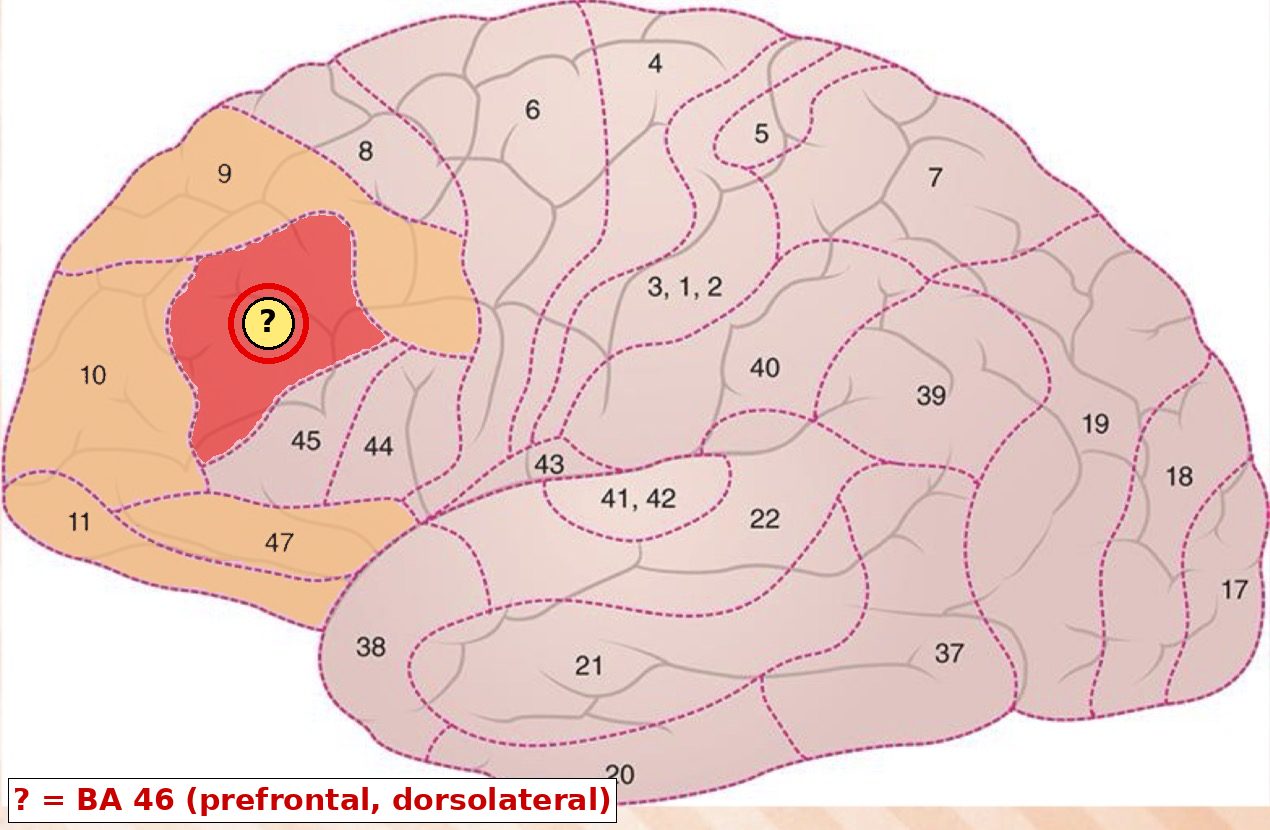
<p>BA 46 (prefrontal, dorsolateral)
• Function: Prefrontal cortex (BA 9, 10, 11, 12, 45, 46, 47): cognition/executive control, personality, decision making, social behavior. Regions: dorsolateral 9, 10, 46; ventrolateral 45, 47; orbitofrontal 11, 12; medial 24, 25, 32
• Damage: Depressive profile (apathy, abulia/akinesia, perseveration, mutism, depression, hyposexuality) or manic profile (emotional lability, environmental dependency, distractibility, confabulation, mania, hypersexuality)</p>
5
New cards
<p>Lateral view: name the Brodmann area at ? and give its function (card 5)</p>

Lateral view: name the Brodmann area at ? and give its function (card 5)

BA 47 (prefrontal, ventrolateral) • Function: Prefrontal cortex (BA 9, 10, 11, 12, 45, 46, 47): cognition/executive control, personality, decision making, social behavior. Regions: dorsolateral 9, 10, 46; ventrolateral 45, 47; orbitofrontal 11, 12; medial 24, 25, 32 • Damage: Depressive profile (apathy, abulia/akinesia, perseveration, mutism, depression, hyposexuality) or manic profile (emotional lability, environmental dependency, distractibility, confabulation, mania, hypersexuality)

<p>BA 47 (prefrontal, ventrolateral)
• Function: Prefrontal cortex (BA 9, 10, 11, 12, 45, 46, 47): cognition/executive control, personality, decision making, social behavior. Regions: dorsolateral 9, 10, 46; ventrolateral 45, 47; orbitofrontal 11, 12; medial 24, 25, 32
• Damage: Depressive profile (apathy, abulia/akinesia, perseveration, mutism, depression, hyposexuality) or manic profile (emotional lability, environmental dependency, distractibility, confabulation, mania, hypersexuality)</p>
6
New cards
<p>Lateral view: name the Brodmann area at ? and give its function (card 6)</p>

Lateral view: name the Brodmann area at ? and give its function (card 6)

BA 8 (frontal eye fields) • Function: Controls eye movements (up, down, left, right); also uncertainty and hope; sometimes counted as PFC • Damage: Eyes deviate toward the side of the injury

<p>BA 8 (frontal eye fields)
• Function: Controls eye movements (up, down, left, right); also uncertainty and hope; sometimes counted as PFC
• Damage: Eyes deviate toward the side of the injury</p>
7
New cards
<p>Lateral view: name the Brodmann area at ? and give its function (card 7)</p>

Lateral view: name the Brodmann area at ? and give its function (card 7)

BA 45 (pars triangularis, Broca's) • Function: Broca's area, inferior frontal gyrus: interpretation of language (syntax/grammar) + planning/programming verbal responses • Damage: Broca's aphasia

<p>BA 45 (pars triangularis, Broca's)
• Function: Broca's area, inferior frontal gyrus: interpretation of language (syntax/grammar) + planning/programming verbal responses
• Damage: Broca's aphasia</p>
8
New cards
<p>Lateral view: name the Brodmann area at ? and give its function (card 8)</p>

Lateral view: name the Brodmann area at ? and give its function (card 8)

BA 44 (pars opercularis, Broca's) • Function: Broca's area, inferior frontal gyrus: coordination of speech organs for language production (the blueprint for speech) • Damage: Broca's aphasia

<p>BA 44 (pars opercularis, Broca's)
• Function: Broca's area, inferior frontal gyrus: coordination of speech organs for language production (the blueprint for speech)
• Damage: Broca's aphasia</p>
9
New cards
<p>Lateral view: name the Brodmann area at ? and give its function (card 9)</p>

Lateral view: name the Brodmann area at ? and give its function (card 9)

BA 6 (premotor) • Function: Selecting and planning complex voluntary movements • Damage: Apraxias: ideational, ideomotor, constructional, gait, dressing (all BA 6)

<p>BA 6 (premotor)
• Function: Selecting and planning complex voluntary movements
• Damage: Apraxias: ideational, ideomotor, constructional, gait, dressing (all BA 6)</p>
10
New cards
<p>Lateral view: name the Brodmann area at ? and give its function (card 10)</p>

Lateral view: name the Brodmann area at ? and give its function (card 10)

BA 4 (primary motor cortex) • Function: Motor strip, precentral gyrus: sends motor plans (from 44 and 6) to the muscles via the pyramidal pathway; motor homunculus • Damage: Loss of voluntary movement; inferior motor strip (behind Broca's) → apraxia of speech

<p>BA 4 (primary motor cortex)
• Function: Motor strip, precentral gyrus: sends motor plans (from 44 and 6) to the muscles via the pyramidal pathway; motor homunculus
• Damage: Loss of voluntary movement; inferior motor strip (behind Broca's) → apraxia of speech</p>
11
New cards
<p>Lateral view: name the Brodmann area at ? and give its function (card 11)</p>

Lateral view: name the Brodmann area at ? and give its function (card 11)

BA 3, 1, 2 (primary sensory cortex) • Function: Sensory strip, postcentral gyrus: touch, vibration, proprioception, stereognosis; sensory homunculus (lips, ears exaggerated) • Damage: Loss of touch, vibration, proprioception, stereognosis (no named disorder on your slides)

<p>BA 3, 1, 2 (primary sensory cortex)
• Function: Sensory strip, postcentral gyrus: touch, vibration, proprioception, stereognosis; sensory homunculus (lips, ears exaggerated)
• Damage: Loss of touch, vibration, proprioception, stereognosis (no named disorder on your slides)</p>
12
New cards
<p>Lateral view: name the Brodmann area at ? and give its function (card 12)</p>

Lateral view: name the Brodmann area at ? and give its function (card 12)

BA 5 (somatosensory association) • Function: Somatosensory association (5, 7): interprets sensory experience during movement to refine motor action; fine speech movements; writing • Damage: Not specified on your slides

<p>BA 5 (somatosensory association)
• Function: Somatosensory association (5, 7): interprets sensory experience during movement to refine motor action; fine speech movements; writing
• Damage: Not specified on your slides</p>
13
New cards
<p>Lateral view: name the Brodmann area at ? and give its function (card 13)</p>

Lateral view: name the Brodmann area at ? and give its function (card 13)

BA 7 (somatosensory association) • Function: Somatosensory association (5, 7): refines motor action with sensory feedback; also part of the dorsal visual stream • Damage: Not specified on your slides

<p>BA 7 (somatosensory association)
• Function: Somatosensory association (5, 7): refines motor action with sensory feedback; also part of the dorsal visual stream
• Damage: Not specified on your slides</p>
14
New cards
<p>Lateral view: name the Brodmann area at ? and give its function (card 14)</p>

Lateral view: name the Brodmann area at ? and give its function (card 14)

BA 40 (supramarginal gyrus) • Function: Sounding out words; stores auditory representations of phonemes (phonology); with 39 forms the inferior parietal lobe • Damage: Phonological dyslexia: trouble with new words/nonwords, decoding, writing single letters

<p>BA 40 (supramarginal gyrus)
• Function: Sounding out words; stores auditory representations of phonemes (phonology); with 39 forms the inferior parietal lobe
• Damage: Phonological dyslexia: trouble with new words/nonwords, decoding, writing single letters</p>
15
New cards
<p>Lateral view: name the Brodmann area at ? and give its function (card 15)</p>

Lateral view: name the Brodmann area at ? and give its function (card 15)

BA 39 (angular gyrus) • Function: Reading and math; metaphors, sense of embodiment; where temporal meets parietal. Right side: visuospatial processing • Damage: Alexia, acalculia, out-of-body experiences; right side → hemispatial neglect

<p>BA 39 (angular gyrus)
• Function: Reading and math; metaphors, sense of embodiment; where temporal meets parietal. Right side: visuospatial processing
• Damage: Alexia, acalculia, out-of-body experiences; right side → hemispatial neglect</p>
16
New cards
<p>Lateral view: name the Brodmann area at ? and give its function (card 16)</p>

Lateral view: name the Brodmann area at ? and give its function (card 16)

BA 41, 42 (primary auditory cortex) • Function: Heschl's gyrus: first cortical stop for sound from CN VIII; processes intensity and frequency; tonotopic (42 is secondary but grouped) • Damage: Auditory processing problems (not tied to a named disorder on your slides)

<p>BA 41, 42 (primary auditory cortex)
• Function: Heschl's gyrus: first cortical stop for sound from CN VIII; processes intensity and frequency; tonotopic (42 is secondary but grouped)
• Damage: Auditory processing problems (not tied to a named disorder on your slides)</p>
17
New cards
<p>Lateral view: name the Brodmann area at ? and give its function (card 17)</p>

Lateral view: name the Brodmann area at ? and give its function (card 17)

BA 22 (Wernicke's area) • Function: Attaches meaning to auditory information • Damage: Wernicke's aphasia: verbal jargon, can't understand others' or own speech

<p>BA 22 (Wernicke's area)
• Function: Attaches meaning to auditory information
• Damage: Wernicke's aphasia: verbal jargon, can't understand others' or own speech</p>
18
New cards
<p>Lateral view: name the Brodmann area at ? and give its function (card 18)</p>

Lateral view: name the Brodmann area at ? and give its function (card 18)

BA 21 (inferior temporal area) • Function: Inferior temporal area (20, 21): auditory and language processing, reading facial emotions • Damage: May play a role in hallucinations

<p>BA 21 (inferior temporal area)
• Function: Inferior temporal area (20, 21): auditory and language processing, reading facial emotions
• Damage: May play a role in hallucinations</p>
19
New cards
<p>Lateral view: name the Brodmann area at ? and give its function (card 19)</p>

Lateral view: name the Brodmann area at ? and give its function (card 19)

BA 20 (inferior temporal area) • Function: Inferior temporal area (20, 21): auditory and language processing, reading facial emotions • Damage: May play a role in hallucinations

<p>BA 20 (inferior temporal area)
• Function: Inferior temporal area (20, 21): auditory and language processing, reading facial emotions
• Damage: May play a role in hallucinations</p>
20
New cards
<p>Lateral view: name the Brodmann area at ? and give its function (card 20)</p>

Lateral view: name the Brodmann area at ? and give its function (card 20)

BA 38 (temporal pole) • Function: Left: semantic processing (word meaning), speech and narrative comprehension. Right: emotion in narratives, familiar voices. Both: theory of mind, empathy • Damage: Semantic variant primary progressive aphasia (PPA)

<p>BA 38 (temporal pole)
• Function: Left: semantic processing (word meaning), speech and narrative comprehension. Right: emotion in narratives, familiar voices. Both: theory of mind, empathy
• Damage: Semantic variant primary progressive aphasia (PPA)</p>
21
New cards
<p>Lateral view: name the Brodmann area at ? and give its function (card 21)</p>

Lateral view: name the Brodmann area at ? and give its function (card 21)

BA 37 (fusiform gyrus) • Function: Remembering and naming seen objects (visual lexicon); part of the ventral 'what' stream • Damage: Anomia, lexical agraphia; superior part → tactile agnosia (astereognosis)

<p>BA 37 (fusiform gyrus)
• Function: Remembering and naming seen objects (visual lexicon); part of the ventral 'what' stream
• Damage: Anomia, lexical agraphia; superior part → tactile agnosia (astereognosis)</p>
22
New cards
<p>Lateral view: name the Brodmann area at ? and give its function (card 22)</p>

Lateral view: name the Brodmann area at ? and give its function (card 22)

BA 19 (visual association) • Function: Visual cortex (BA 17 primary; 18, 19 association): receives and processes information from the eyes. Left visual field → right visual cortex. Dorsal stream (18, 19, 7, 39) = 'where'; ventral stream (18, 19, 37) = 'what' • Damage: Anton syndrome or visual agnosia (e.g., prosopagnosia); common causes: stroke, TBI

<p>BA 19 (visual association)
• Function: Visual cortex (BA 17 primary; 18, 19 association): receives and processes information from the eyes. Left visual field → right visual cortex. Dorsal stream (18, 19, 7, 39) = 'where'; ventral stream (18, 19, 37) = 'what'
• Damage: Anton syndrome or visual agnosia (e.g., prosopagnosia); common causes: stroke, TBI</p>
23
New cards
<p>Lateral view: name the Brodmann area at ? and give its function (card 23)</p>

Lateral view: name the Brodmann area at ? and give its function (card 23)

BA 18 (visual association) • Function: Visual cortex (BA 17 primary; 18, 19 association): receives and processes information from the eyes. Left visual field → right visual cortex. Dorsal stream (18, 19, 7, 39) = 'where'; ventral stream (18, 19, 37) = 'what' • Damage: Anton syndrome or visual agnosia (e.g., prosopagnosia); common causes: stroke, TBI

<p>BA 18 (visual association)
• Function: Visual cortex (BA 17 primary; 18, 19 association): receives and processes information from the eyes. Left visual field → right visual cortex. Dorsal stream (18, 19, 7, 39) = 'where'; ventral stream (18, 19, 37) = 'what'
• Damage: Anton syndrome or visual agnosia (e.g., prosopagnosia); common causes: stroke, TBI</p>
24
New cards
<p>Lateral view: name the Brodmann area at ? and give its function (card 24)</p>

Lateral view: name the Brodmann area at ? and give its function (card 24)

BA 17 (primary visual cortex) • Function: Visual cortex (BA 17 primary; 18, 19 association): receives and processes information from the eyes. Left visual field → right visual cortex. Dorsal stream (18, 19, 7, 39) = 'where'; ventral stream (18, 19, 37) = 'what' • Damage: Anton syndrome or visual agnosia (e.g., prosopagnosia); common causes: stroke, TBI

<p>BA 17 (primary visual cortex)
• Function: Visual cortex (BA 17 primary; 18, 19 association): receives and processes information from the eyes. Left visual field → right visual cortex. Dorsal stream (18, 19, 7, 39) = 'where'; ventral stream (18, 19, 37) = 'what'
• Damage: Anton syndrome or visual agnosia (e.g., prosopagnosia); common causes: stroke, TBI</p>
25
New cards
<p>Medial view: name the Brodmann area at ? and give its function (card 25)</p>

Medial view: name the Brodmann area at ? and give its function (card 25)

BA 4 (primary motor cortex) • Function: Motor strip continues over the top onto the medial surface: sends motor plans to the muscles • Damage: Loss of voluntary movement

<p>BA 4 (primary motor cortex)
• Function: Motor strip continues over the top onto the medial surface: sends motor plans to the muscles
• Damage: Loss of voluntary movement</p>
26
New cards
<p>Medial view: name the Brodmann area at ? and give its function (card 26)</p>

Medial view: name the Brodmann area at ? and give its function (card 26)

BA 3, 1, 2 (primary sensory cortex) • Function: Sensory strip on the medial surface: touch, vibration, proprioception, stereognosis • Damage: Loss of those sensations

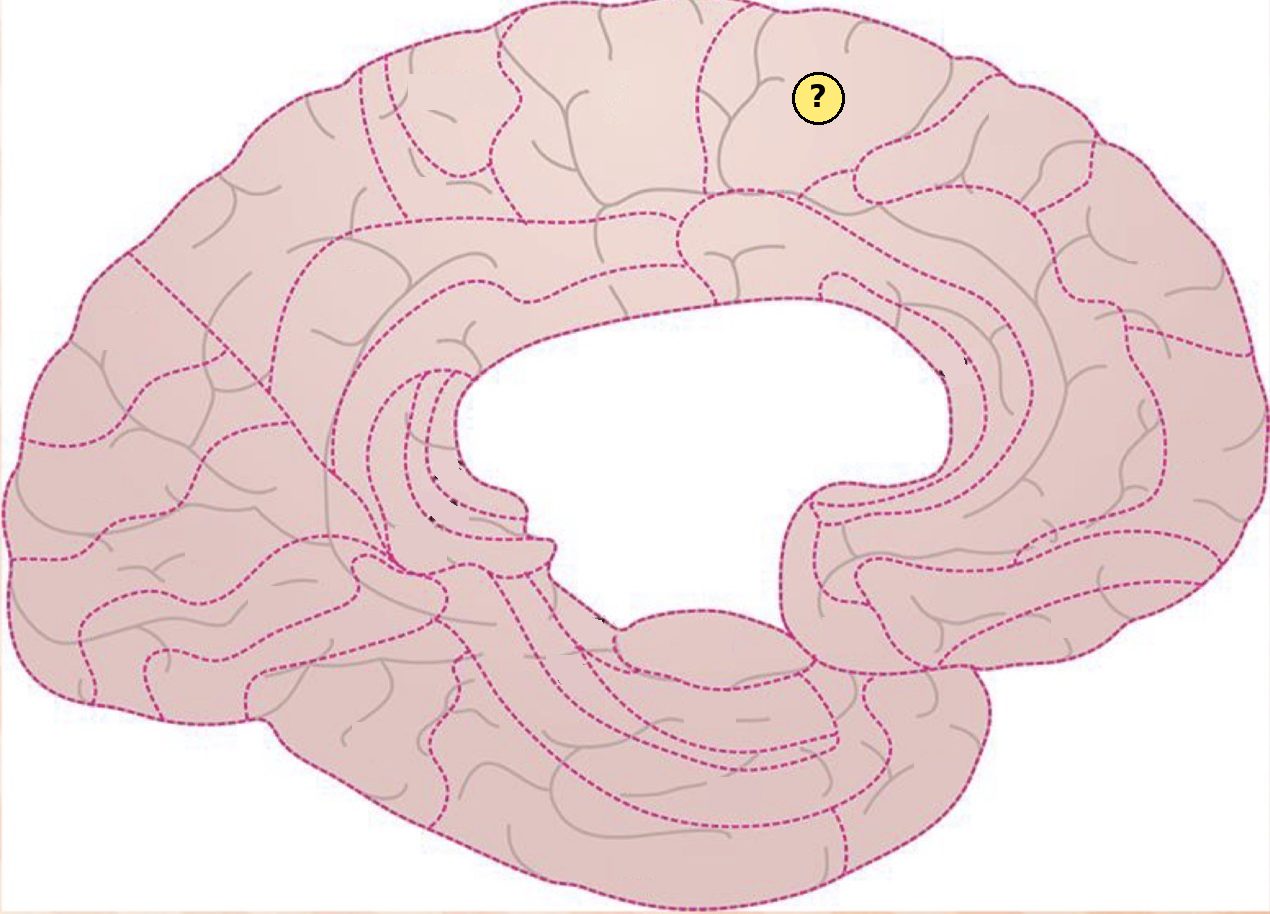
<p>BA 3, 1, 2 (primary sensory cortex)
• Function: Sensory strip on the medial surface: touch, vibration, proprioception, stereognosis
• Damage: Loss of those sensations</p>
27
New cards
<p>Medial view: name the Brodmann area at ? and give its function (card 27)</p>

Medial view: name the Brodmann area at ? and give its function (card 27)

BA 6 (premotor) • Function: Selecting and planning complex voluntary movements • Damage: Apraxias (BA 6)

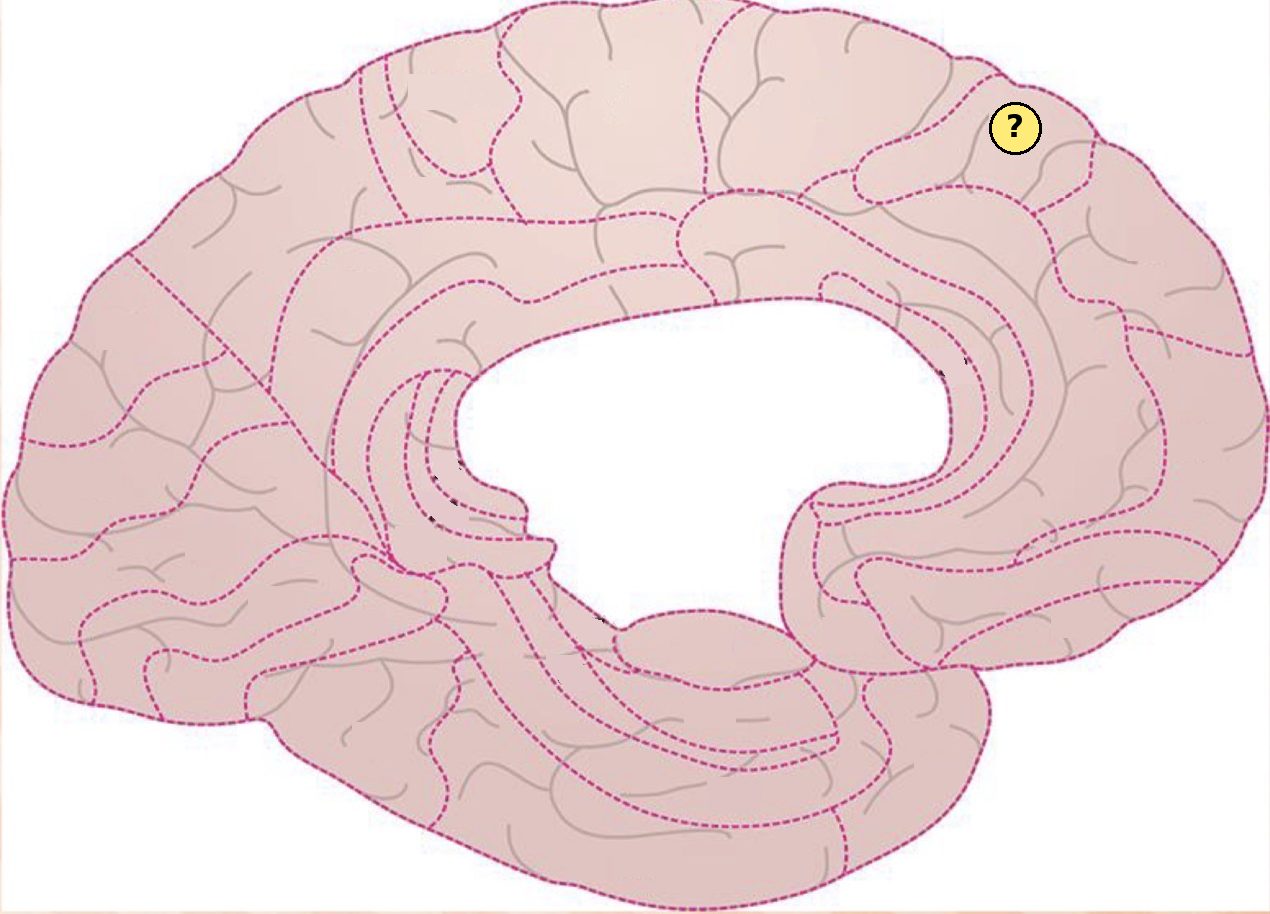
<p>BA 6 (premotor)
• Function: Selecting and planning complex voluntary movements
• Damage: Apraxias (BA 6)</p>
28
New cards
<p>Medial view: name the Brodmann area at ? and give its function (card 28)</p>

Medial view: name the Brodmann area at ? and give its function (card 28)

BA 8 (frontal eye fields) • Function: Eye movements • Damage: Eyes deviate toward the side of the injury

<p>BA 8 (frontal eye fields)
• Function: Eye movements
• Damage: Eyes deviate toward the side of the injury</p>
29
New cards
<p>Medial view: name the Brodmann area at ? and give its function (card 29)</p>

Medial view: name the Brodmann area at ? and give its function (card 29)

BA 5 (somatosensory association) • Function: Refines motor action with sensory feedback • Damage: Not specified on your slides

<p>BA 5 (somatosensory association)
• Function: Refines motor action with sensory feedback
• Damage: Not specified on your slides</p>
30
New cards
<p>Medial view: name the Brodmann area at ? and give its function (card 30)</p>

Medial view: name the Brodmann area at ? and give its function (card 30)

BA 7 (somatosensory association) • Function: Refines motor action with sensory feedback; dorsal visual stream • Damage: Not specified on your slides

<p>BA 7 (somatosensory association)
• Function: Refines motor action with sensory feedback; dorsal visual stream
• Damage: Not specified on your slides</p>
31
New cards
<p>Medial view: name the Brodmann area at ? and give its function (card 31)</p>

Medial view: name the Brodmann area at ? and give its function (card 31)

BA 9 (prefrontal) • Function: Prefrontal cortex (BA 9, 10, 11, 12, 45, 46, 47): cognition/executive control, personality, decision making, social behavior. Regions: dorsolateral 9, 10, 46; ventrolateral 45, 47; orbitofrontal 11, 12; medial 24, 25, 32 • Damage: Depressive profile (apathy, abulia/akinesia, perseveration, mutism, depression, hyposexuality) or manic profile (emotional lability, environmental dependency, distractibility, confabulation, mania, hypersexuality)

<p>BA 9 (prefrontal)
• Function: Prefrontal cortex (BA 9, 10, 11, 12, 45, 46, 47): cognition/executive control, personality, decision making, social behavior. Regions: dorsolateral 9, 10, 46; ventrolateral 45, 47; orbitofrontal 11, 12; medial 24, 25, 32
• Damage: Depressive profile (apathy, abulia/akinesia, perseveration, mutism, depression, hyposexuality) or manic profile (emotional lability, environmental dependency, distractibility, confabulation, mania, hypersexuality)</p>
32
New cards
<p>Medial view: name the Brodmann area at ? and give its function (card 32)</p>

Medial view: name the Brodmann area at ? and give its function (card 32)

BA 10 (prefrontal) • Function: Prefrontal cortex (BA 9, 10, 11, 12, 45, 46, 47): cognition/executive control, personality, decision making, social behavior. Regions: dorsolateral 9, 10, 46; ventrolateral 45, 47; orbitofrontal 11, 12; medial 24, 25, 32 • Damage: Depressive profile (apathy, abulia/akinesia, perseveration, mutism, depression, hyposexuality) or manic profile (emotional lability, environmental dependency, distractibility, confabulation, mania, hypersexuality)

<p>BA 10 (prefrontal)
• Function: Prefrontal cortex (BA 9, 10, 11, 12, 45, 46, 47): cognition/executive control, personality, decision making, social behavior. Regions: dorsolateral 9, 10, 46; ventrolateral 45, 47; orbitofrontal 11, 12; medial 24, 25, 32
• Damage: Depressive profile (apathy, abulia/akinesia, perseveration, mutism, depression, hyposexuality) or manic profile (emotional lability, environmental dependency, distractibility, confabulation, mania, hypersexuality)</p>
33
New cards
<p>Medial view: name the Brodmann area at ? and give its function (card 33)</p>

Medial view: name the Brodmann area at ? and give its function (card 33)

BA 12 (prefrontal, orbitofrontal) • Function: Prefrontal cortex (BA 9, 10, 11, 12, 45, 46, 47): cognition/executive control, personality, decision making, social behavior. Regions: dorsolateral 9, 10, 46; ventrolateral 45, 47; orbitofrontal 11, 12; medial 24, 25, 32 • Damage: Depressive profile (apathy, abulia/akinesia, perseveration, mutism, depression, hyposexuality) or manic profile (emotional lability, environmental dependency, distractibility, confabulation, mania, hypersexuality)

<p>BA 12 (prefrontal, orbitofrontal)
• Function: Prefrontal cortex (BA 9, 10, 11, 12, 45, 46, 47): cognition/executive control, personality, decision making, social behavior. Regions: dorsolateral 9, 10, 46; ventrolateral 45, 47; orbitofrontal 11, 12; medial 24, 25, 32
• Damage: Depressive profile (apathy, abulia/akinesia, perseveration, mutism, depression, hyposexuality) or manic profile (emotional lability, environmental dependency, distractibility, confabulation, mania, hypersexuality)</p>
34
New cards
<p>Medial view: name the Brodmann area at ? and give its function (card 34)</p>

Medial view: name the Brodmann area at ? and give its function (card 34)

BA 24 (anterior cingulate) • Function: Cingulate cortex (BA 23-26, 30-33), limbic: anterior = cognitive control, error and conflict detection, problem solving; posterior = autobiographical memory, managing risky behavior, emotional processing. ACC filters, PCC focuses; also pain perception • Damage: Not specified on your slides

<p>BA 24 (anterior cingulate)
• Function: Cingulate cortex (BA 23-26, 30-33), limbic: anterior = cognitive control, error and conflict detection, problem solving; posterior = autobiographical memory, managing risky behavior, emotional processing. ACC filters, PCC focuses; also pain perception
• Damage: Not specified on your slides</p>
35
New cards
<p>Medial view: name the Brodmann area at ? and give its function (card 35)</p>

Medial view: name the Brodmann area at ? and give its function (card 35)

BA 23 (posterior cingulate) • Function: Cingulate cortex (BA 23-26, 30-33), limbic: anterior = cognitive control, error and conflict detection, problem solving; posterior = autobiographical memory, managing risky behavior, emotional processing. ACC filters, PCC focuses; also pain perception • Damage: Not specified on your slides

<p>BA 23 (posterior cingulate)
• Function: Cingulate cortex (BA 23-26, 30-33), limbic: anterior = cognitive control, error and conflict detection, problem solving; posterior = autobiographical memory, managing risky behavior, emotional processing. ACC filters, PCC focuses; also pain perception
• Damage: Not specified on your slides</p>
36
New cards
<p>Medial view: name the Brodmann area at ? and give its function (card 36)</p>

Medial view: name the Brodmann area at ? and give its function (card 36)

BA 32 (cingulate / medial PFC) • Function: Cingulate cortex (BA 23-26, 30-33), limbic: anterior = cognitive control, error and conflict detection, problem solving; posterior = autobiographical memory, managing risky behavior, emotional processing. ACC filters, PCC focuses; also pain perception • Damage: Not specified on your slides
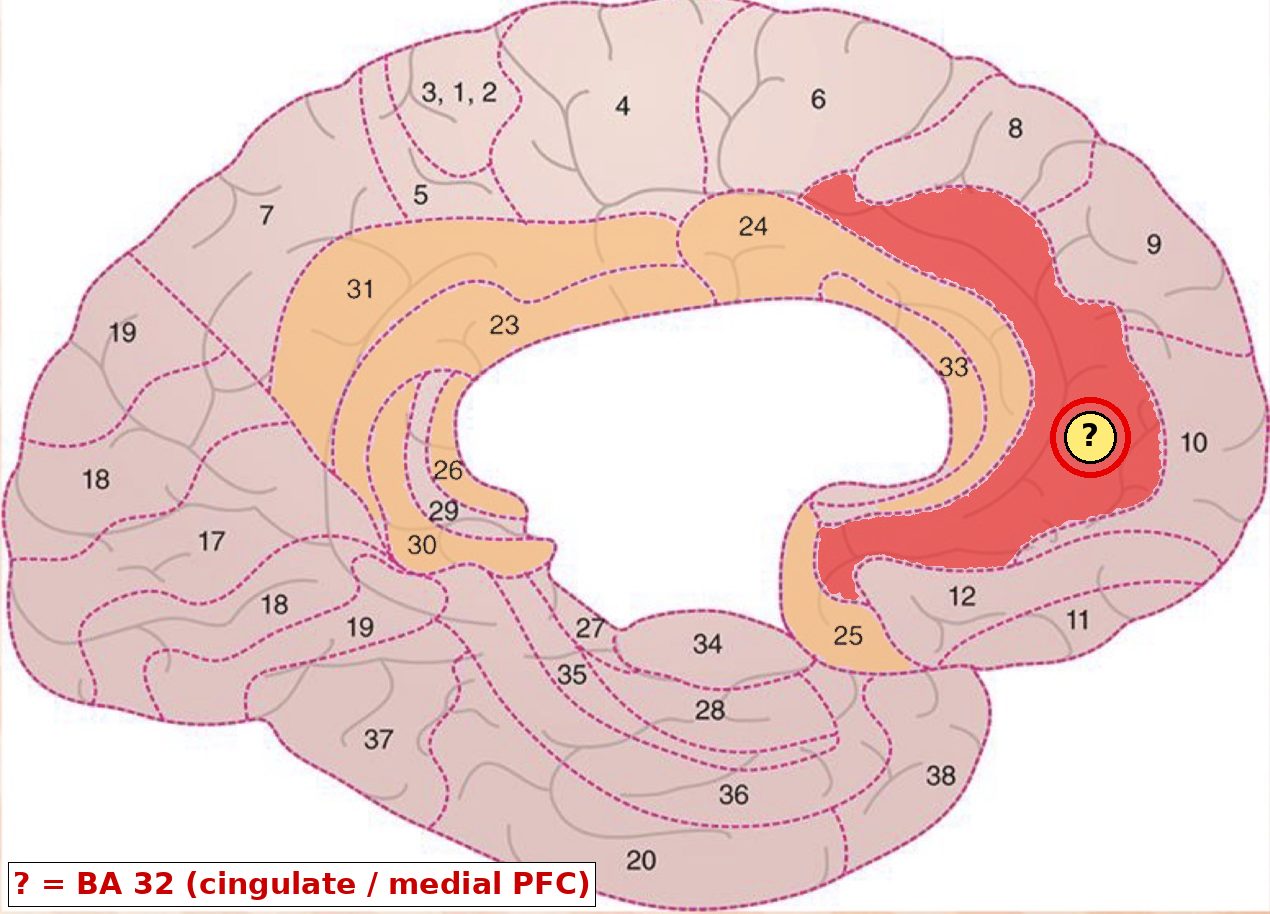
<p>BA 32 (cingulate / medial PFC)
• Function: Cingulate cortex (BA 23-26, 30-33), limbic: anterior = cognitive control, error and conflict detection, problem solving; posterior = autobiographical memory, managing risky behavior, emotional processing. ACC filters, PCC focuses; also pain perception
• Damage: Not specified on your slides</p>
37
New cards
<p>Medial view: name the Brodmann area at ? and give its function (card 37)</p>

Medial view: name the Brodmann area at ? and give its function (card 37)

BA 36 (parahippocampal gyrus) • Function: Parahippocampal gyrus (BA 27, 28, 34, 35, 36), medial temporal: memory. Hippocampus = declarative memory; entorhinal cortex (28, 34) = relay between cortex and hippocampus • Damage: Declarative memory problems

<p>BA 36 (parahippocampal gyrus)
• Function: Parahippocampal gyrus (BA 27, 28, 34, 35, 36), medial temporal: memory. Hippocampus = declarative memory; entorhinal cortex (28, 34) = relay between cortex and hippocampus
• Damage: Declarative memory problems</p>
38
New cards
<p>Medial view: name the Brodmann area at ? and give its function (card 38)</p>

Medial view: name the Brodmann area at ? and give its function (card 38)

BA 28 (entorhinal cortex) • Function: Parahippocampal gyrus (BA 27, 28, 34, 35, 36), medial temporal: memory. Hippocampus = declarative memory; entorhinal cortex (28, 34) = relay between cortex and hippocampus • Damage: Declarative memory problems

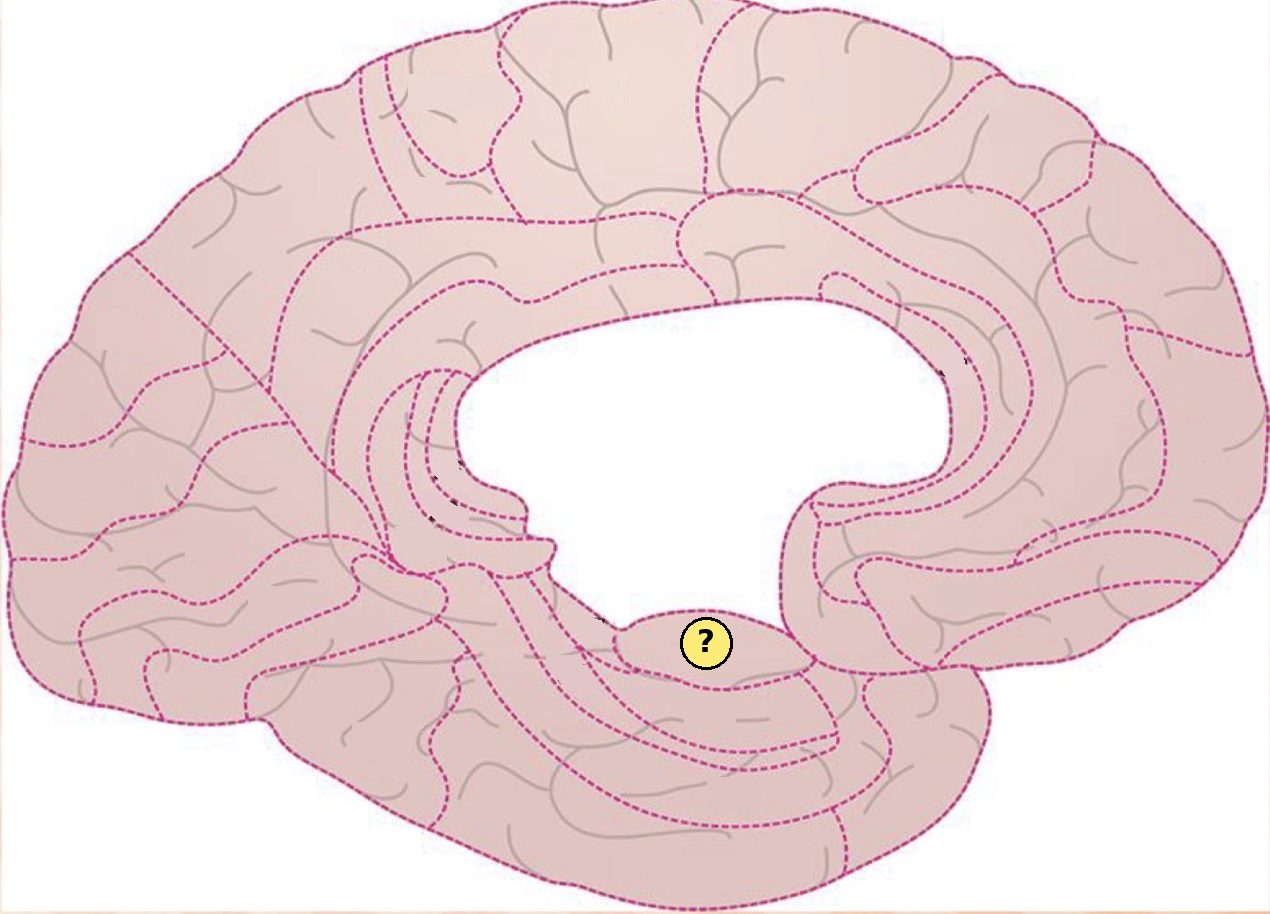
<p>BA 28 (entorhinal cortex)
• Function: Parahippocampal gyrus (BA 27, 28, 34, 35, 36), medial temporal: memory. Hippocampus = declarative memory; entorhinal cortex (28, 34) = relay between cortex and hippocampus
• Damage: Declarative memory problems</p>
39
New cards
<p>Medial view: name the Brodmann area at ? and give its function (card 39)</p>

Medial view: name the Brodmann area at ? and give its function (card 39)

BA 34 (entorhinal cortex) • Function: Parahippocampal gyrus (BA 27, 28, 34, 35, 36), medial temporal: memory. Hippocampus = declarative memory; entorhinal cortex (28, 34) = relay between cortex and hippocampus • Damage: Declarative memory problems

<p>BA 34 (entorhinal cortex)
• Function: Parahippocampal gyrus (BA 27, 28, 34, 35, 36), medial temporal: memory. Hippocampus = declarative memory; entorhinal cortex (28, 34) = relay between cortex and hippocampus
• Damage: Declarative memory problems</p>
40
New cards
<p>Medial view: name the Brodmann area at ? and give its function (card 40)</p>

Medial view: name the Brodmann area at ? and give its function (card 40)

BA 17 (primary visual cortex) • Function: Visual cortex (BA 17 primary; 18, 19 association): receives and processes information from the eyes. Left visual field → right visual cortex. Dorsal stream (18, 19, 7, 39) = 'where'; ventral stream (18, 19, 37) = 'what'; lies along the calcarine sulcus • Damage: Anton syndrome or visual agnosia (e.g., prosopagnosia); common causes: stroke, TBI

<p>BA 17 (primary visual cortex)
• Function: Visual cortex (BA 17 primary; 18, 19 association): receives and processes information from the eyes. Left visual field → right visual cortex. Dorsal stream (18, 19, 7, 39) = 'where'; ventral stream (18, 19, 37) = 'what'; lies along the calcarine sulcus
• Damage: Anton syndrome or visual agnosia (e.g., prosopagnosia); common causes: stroke, TBI</p>
41
New cards
<p>Medial view: name the Brodmann area at ? and give its function (card 41)</p>

Medial view: name the Brodmann area at ? and give its function (card 41)

BA 18 (visual association) • Function: Visual cortex (BA 17 primary; 18, 19 association): receives and processes information from the eyes. Left visual field → right visual cortex. Dorsal stream (18, 19, 7, 39) = 'where'; ventral stream (18, 19, 37) = 'what' • Damage: Anton syndrome or visual agnosia (e.g., prosopagnosia); common causes: stroke, TBI

<p>BA 18 (visual association)
• Function: Visual cortex (BA 17 primary; 18, 19 association): receives and processes information from the eyes. Left visual field → right visual cortex. Dorsal stream (18, 19, 7, 39) = 'where'; ventral stream (18, 19, 37) = 'what'
• Damage: Anton syndrome or visual agnosia (e.g., prosopagnosia); common causes: stroke, TBI</p>
42
New cards
<p>Medial view: name the Brodmann area at ? and give its function (card 42)</p>

Medial view: name the Brodmann area at ? and give its function (card 42)

BA 19 (visual association) • Function: Visual cortex (BA 17 primary; 18, 19 association): receives and processes information from the eyes. Left visual field → right visual cortex. Dorsal stream (18, 19, 7, 39) = 'where'; ventral stream (18, 19, 37) = 'what' • Damage: Anton syndrome or visual agnosia (e.g., prosopagnosia); common causes: stroke, TBI

<p>BA 19 (visual association)
• Function: Visual cortex (BA 17 primary; 18, 19 association): receives and processes information from the eyes. Left visual field → right visual cortex. Dorsal stream (18, 19, 7, 39) = 'where'; ventral stream (18, 19, 37) = 'what'
• Damage: Anton syndrome or visual agnosia (e.g., prosopagnosia); common causes: stroke, TBI</p>
43
New cards
<p>Medial view: name the Brodmann area at ? and give its function (card 43)</p>

Medial view: name the Brodmann area at ? and give its function (card 43)

BA 37 (fusiform gyrus) • Function: Remembering and naming seen objects (visual lexicon) • Damage: Anomia, lexical agraphia

<p>BA 37 (fusiform gyrus)
• Function: Remembering and naming seen objects (visual lexicon)
• Damage: Anomia, lexical agraphia</p>
44
New cards
<p>Medial view: name the Brodmann area at ? and give its function (card 44)</p>

Medial view: name the Brodmann area at ? and give its function (card 44)

BA 38 (temporal pole) • Function: Left: semantics; right: emotion in narratives, familiar voices; both: theory of mind, empathy • Damage: Semantic variant PPA

<p>BA 38 (temporal pole)
• Function: Left: semantics; right: emotion in narratives, familiar voices; both: theory of mind, empathy
• Damage: Semantic variant PPA</p>
45
New cards
<p>Medial view: name the Brodmann area at ? and give its function (card 45)</p>

Medial view: name the Brodmann area at ? and give its function (card 45)

BA 20 (inferior temporal area)

• Function: Auditory and language processing, reading facial emotions

• Damage: May play a role in hallucinations

<p>BA 20 (inferior temporal area)</p><p>• Function: Auditory and language processing, reading facial emotions</p><p>• Damage: May play a role in hallucinations</p>



