Ancient Greek and Aegean Art & Archaeology
 Call Kai
 Learn
 Practice Test
 Spaced Repetition
 Match
 Flashcards
 Knowt Play
1/29

Earn XP
Description and Tags
Vocabulary practice flashcards covering Neolithic, Bronze Age Aegean (Cycladic, Minoan, Mycenaean), Dark Age, Geometric, Archaic Greek art, architecture, and Persian iconography.
30 Terms

Polychrome vase from Dimini, A multi-colored ceramic vessel dating to the Late Neolithic period (5300–3300 BCE) from Dimini. Signify: Demonstrates early domestic craft production and sedentary agricultural storage[1]. Connect to Hippocrates: Illustrates early human settlement and dietary storage practices, framing the environmental and lifestyle factors central to Hippocratic medical theory regarding human health and environment.

Megaron, A large central building, exemplified by the Late Neolithic architectural complex at Dimini dating to ca. 4800–4500 BCE. Signify: Center of Bronze Age Minoan palace administration and regional trade networks[1].
Connect to The Odyssey: Represents the wealthy, sea-faring palatial civilization of Crete, frequently referenced in Odysseus’s "false tales" and maritime lore.

Cycladic Figurine from Island of Naxos, A marble sculptural figurine measuring 20in in height, originating from the Island of Naxos and dating to 2600–2400 BCE. Signify: Early Bronze Age Aegean mortuary sculpture reflecting minimalist aesthetic ideals[1].
Connect to Lyric Poems: Evokes the Cycladic island environment that later birthed early lyric poets (e.g., Archilochus of Paros), mirroring early artistic explorations of sacred form and solitude.

Minoan Throne Room, A primary chamber located off the central court in the Minoan palace complex at Knossos, identified in architectural plans. Signify: Center of Bronze Age Minoan palace administration and regional trade networks[1]. Connect to The Odyssey: Represents the wealthy, sea-faring palatial civilization of Crete, frequently referenced in Odysseus’s "false tales" and maritime lore.

Bull's Head Rhython, A carved ritual pouring vessel from Knossos fashioned in the shape of a bull's head, dating to 1550–1500 BCE. Signify: High-status ritual vessel used for ceremonial pours in Minoan religion[1]. Connect to The Odyssey: Reflects ritual sacrifice and libation customs performed throughout the epic to honor divine powers like Poseidon.

Knossos statue of a woman / goddess, A sculpture discovered at Knossos depicting a female figure or goddess holding snakes or rope. Signify: Minoan religious iconography associated with chthonic divine authority or domestic ritual[1]. Connect to Lyric Poems: Prefigures powerful female divine figures invoked in Archaic lyric poetry, such as Sappho’s hymns to Aphrodite.

Frescoes from Akrotiri, Wall paintings uncovered at the site of Akrotiri, featuring women in flounced skirts gathering saffron crocuses amidst rocky landscape settings. Signify: Aegean ritual or rite-of-passage scene depicting agricultural gathering[1]. Connect to Hippocrates: Highlights human interaction with natural botanical resources; crocus/saffron was valued for its medicinal properties in ancient Greek pharmacology.

Fisherman Fresco, A wall fresco discovered at Akrotiri, Thera, depicting a young male fisherman holding bundles of fish by string in each hand. Signify: Depicts Aegean maritime subsistence and daily island life[1]. Connect to The Odyssey: Visualizes the intimate maritime lifestyle, seafaring diet, and coastal environment that frame Odysseus’s wanderings.

West House Fresco, A wall painting uncovered at the site of Akotiri displaying nautical vessels, warriors marching in armor, and drowned figures adrift at sea. Signify: Advanced Aegean naval technology, seafaring, and maritime travel[1]. Connect to The Odyssey: Directly illustrates the Bronze Age nautical tradition, ships, and seafaring culture central to the epic’s travel narratives.

"Lion hunt" Dagger, A luxury ceremonial blade made by the Mycenaeans dating to ca. 1550–1500 BCE, constructed of bronze with inlays of gold, silver, and niello. Signify: Prestige weapon representing Mycenaean martial ethos and aristocratic hunting culture[1]. Connect to The Odyssey: Embodies the martial valor and warrior imagery celebrated in Homeric epic similes comparing heroes to hunting lions.

Grave circle A, A monumental circular royal burial enclosure located at Mycenae dating to ca. 1600–150G BCE. Signify: Marks the rise of Mycenaean elite warrior dynasties[2]. Connect to The Odyssey: Physical mortuary site of "Gold-Rich Mycenae," home of Agamemnon, whose tragic return (nostos) shadows Odysseus’s story.

Mycenaean tomb - A masonry tholos burial structure entered through a stone-lined dromos passage with a lintel supported by a corbeled relieving triangle. Signify: Peak Mycenaean architectural engineering dedicated to royal burial[2]. Connect to Antigone: Reflects the supreme cultural necessity of formal mortuary architecture and sacred burial rites for royal bloodlines.

Ring depicting women before a Shrine - A gold signet ring from the Tomb of the Griffin Warrior at Iklania (near Pylos), dating to c. 1450 BCE and measuring approximately 1in.Signify: Elite Bronze Age administrative sealing showing female religious leadership[2]. Connect to Lyric Poems: Mirrors sacred female processions and personal religious devotion found in Archaic maiden-songs (partheneia).

Lefkandi: A major archaeological site featuring a large monumental building dating from the Greek Dark Age. Signify: Proves monumental construction and social hierarchy persisted into the post-palatial Dark Age[2].Connect to The Odyssey: Provides physical archaeological evidence for chieftain halls (megara) and hero-burials matching Homeric descriptions.

Centaur from Toumba cemetery - A hollow terracotta centaur figurine from Lefkandi dating to the 10th century BCE, decorated with geometric dog tooth patterns, broken in two, and buried in separate graves. Signify: Earliest visual representation of a mythological hybrid creature in post-collapse Greece[2]. Connect to The Odyssey: Visualizes early Greek mythical monsters, bridging Dark Age oral storytelling with visual heroic art.

Trojan Horse - The mythological wooden horse constructed by the Greeks during the Trojan War to secretly gain entrance into Troy. Signify: Earliest surviving visual depiction of the fall of Troy[2]. Connect to The Odyssey: Direct depiction of Odysseus’s famous stratagem, sung by the bard Demodocus in Book 8.

Nestor's cup - An Iron Age drinking cup found at Pither Coussai (Pithekoussai) in the Bay of Naples, dating to ca. 725 BCE. Signify: Early evidence of Greek alphabetic writing used for poetic and drinking contexts[2]. Connect to The Odyssey: Explicitly names King Nestor of Pylos (a major character in Books 3–4), showing how Homeric tradition was integrated into Archaic drinking parties (symposia).

Dipylon Amphora - A monumental Greek Geometric funerary vase from Athens measuring 3ft,6in in height, dating to 765–730 BCE. Signify: Rebirth of monumental art in Athens dedicated to aristocratic mourning[2]. Connect to Antigone: Visually demonstrates the sacred obligation of female family members to perform funeral rites and public lamentation.

Building C - A temple constructed over Megaron B (which had previously served as a ruler's apsidal residence), which itself had replaced Megaron A. Signify: Physical proof of long-term architectural and religious continuity across historical eras[2][3]. Connect to Herodotus: Illustrates historical evolution and religious continuity in Greek sacred spaces across time.

A 16.5in tall ceramic storage jar ("Amaphora") from Eleusis (near Athens) dating to c. 670–650 BCE, depicting Odysseus ("Odyssers") blinding Polyphemus the Cyclops from Book 9. Signify: Early visual narrative of Homeric myth on Archaic ceramics[3]. Connect to The Odyssey: Direct depiction of Book 9, where Odysseus uses cleverness (metis) to defeat Polyphemus.

Perseus killing Medusa: A mythological decorative relief on a temple dating from the mid-6th century BCE, depicting Perseus slaying the Gorgon Medusa. Signify: Architectural sculpture illustrating hero myth and divine assistance[3]. Connect to Herodotus: Connects to Herodotus’s accounts of hero genealogies (Perseus as ancestor of Greek and Persian lines) and divine intervention.

Bronze Statuette of Spartan women running - A small bronze athletic figurine measuring 4.5in in height, dating to ca. 525 BCE. Signify: Illustrates unique Spartan physical training for young women (parthenoi)[3]. Connect to Lyric Poems: Directly mirrors Spartan lyric poetry, specifically Alcman’s Partheneion(Maiden Songs), celebrating female athletic choruses.

Ivory panel from Sanctuary of Artemis Orthia - A 7th century BCE ivory panel possibly depicting the abduction of a woman by a ship (Paris taking Helen?). Signify: Spartan votive offering combining luxury trade material with epic myth[3]. Connect to Herodotus: Mirrors Herodotus’s opening argument tracing East-West conflict to legendary abductions of women (like Helen).

Laconian bronze hoplite warrior Statuette - A small bronze sculptural figurine of a hoplite warrior dating to the 6th century BCE. Signify: Visual symbol of Spartan hoplite phalanx warfare[3]. Connect to Lyric Poems: Embodies the martial elegies of Tyrtaeus, who urged Spartan soldiers to stand firm in the hoplite rank.
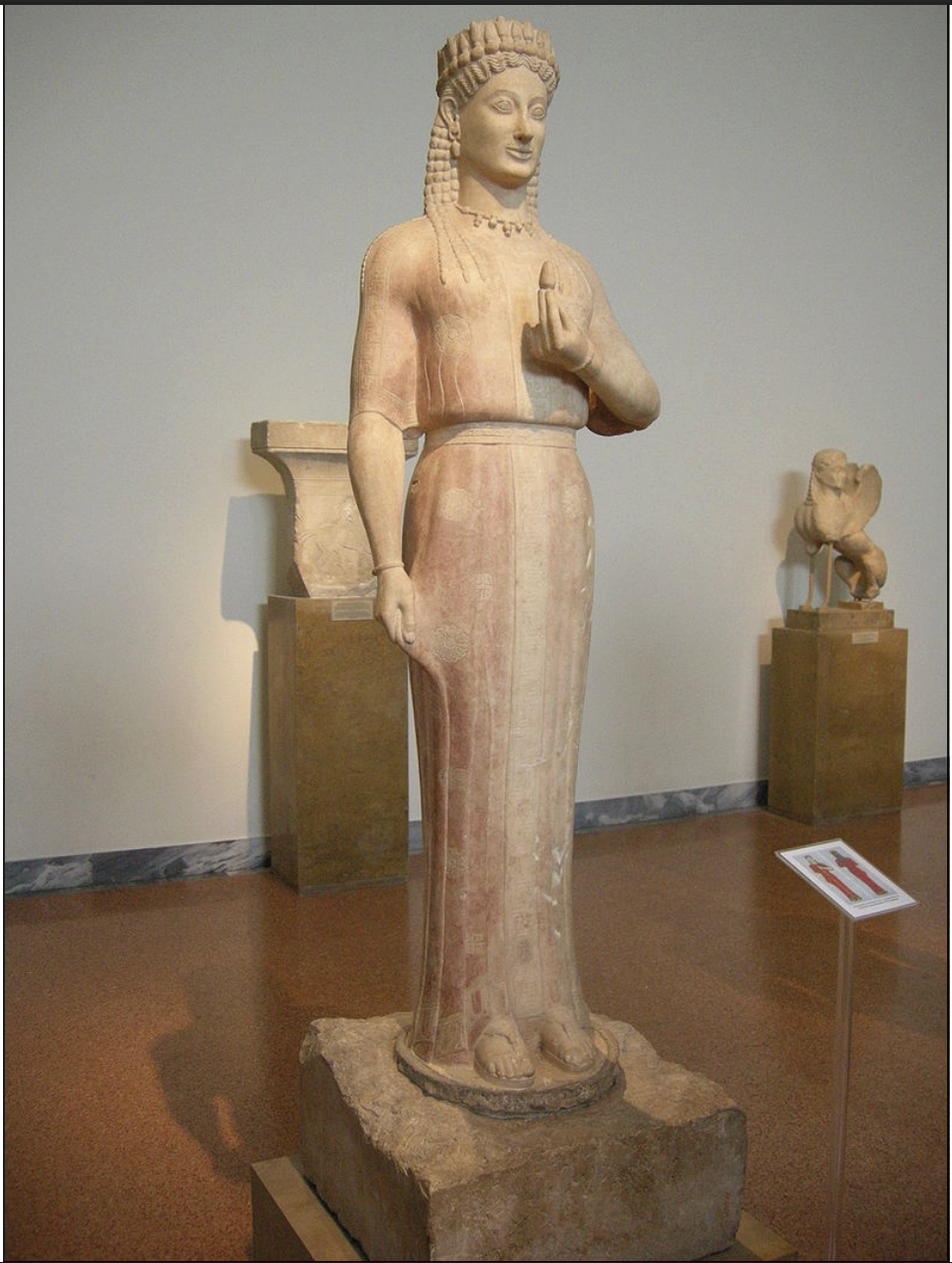
Phrasikleia: An Archaic funerary kore statue from Attica dating to 550–540 BCE, crafted by the sculptor Aristion of Paros. Signify: Funerary monument marking a life cut short before marriage[3][4].Connect to Antigone: Deeply connects to Antigone’s tragic lament that she is sent to her tomb unwed, becoming a "bride of death."
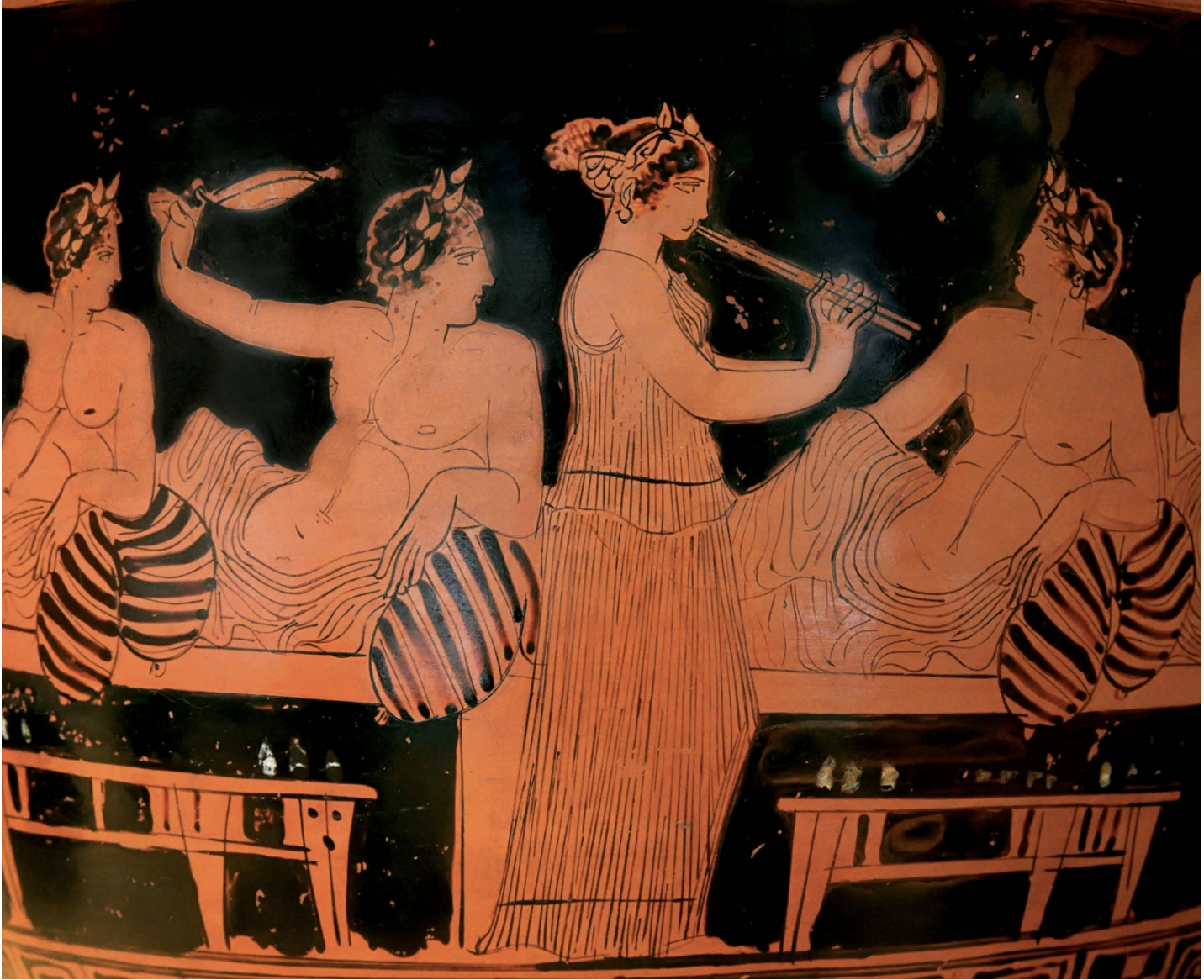
A large ceramic mixing bowl intended for the dilution and serving of wine during a sympotic gathering. Signify: Depicts the symposium, the primary venue for Archaic and Classical social life[4]. Connect to Lyric Poems: The symposium was the original performance context for lyric poets (like Alcaeus and Theognis) writing on politics, love, and wine.

Prothesis - The formal laying out or exposure of a deceased body, depicted on an Attic pinax (tablet) by the Gela Painter dating to ca. 580 BCE. Signify: Visualizes the ancestral Greek obligation of female family members to perform funeral rites, prepare the body, and lead public mourning to ensure the soul passes peacefully to the underworld[1][2] Sophocles' Antigone (Primary Connection): Directly mirrors the central conflict of the play. Antigone risks her life to perform burial rites and pour libations for her brother Polyneices, arguing that the unwritten divine laws (nomoi) requiring proper mourning supersede Creon's autocratic decree.

Ostraka - Inscribed pottery shards used in the process of ostracism, instituted during the Cleisthenes Era reforms after tyranny as a check on potentially power-hungry individuals. Signify: The ultimate visual symbol of Cleisthenes’ democratic reforms—a preventative check on political ambition designed to prevent the rise of a new tyrant[1]. Herodotus (Primary Connection): Directly illustrates Herodotus’s historical account of the overthrow of the Peisistratid tyranny in Athens, the democratic reforms of Cleisthenes, and the political exiles of major leaders during the Persian Wars.
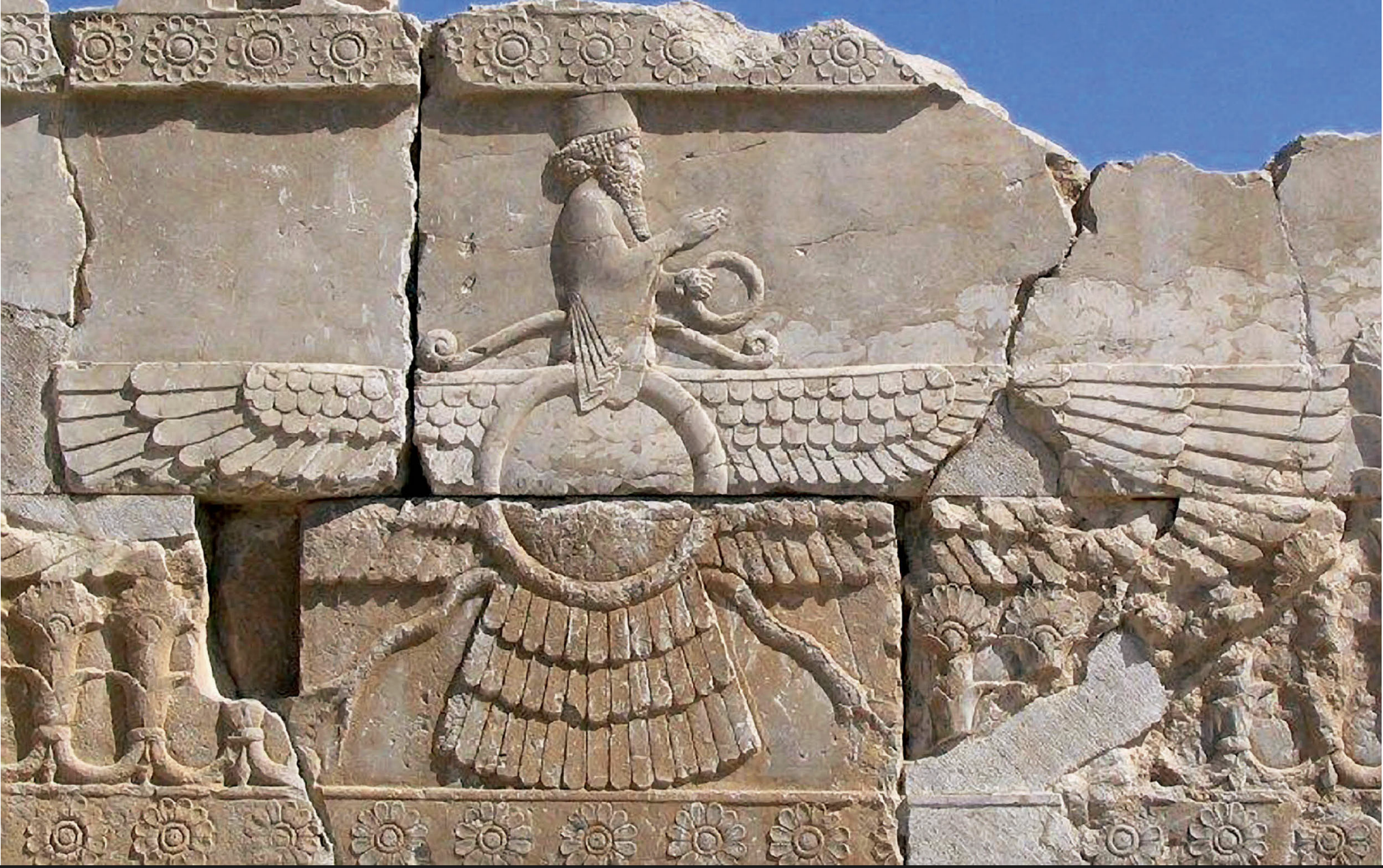
Faravahar -The winged symbol and representation of Ahura Mazda (the supreme god of Zoroastrianism), carved at Persepolis and dating to 486–65 BCE. Signify: Athenian visual propaganda celebrating victory in the Persian Wars[4]. Connect to Herodotus: Direct visual representation of the main subject of Herodotus’s Histories: the conflict between the Greek cities and Persia.

Red-figure wine jug depicting a Greek fighting a Persian - A painted ceramic oinochoe or wine jug dating to 450 BCE illustrating combat between an armed Greek warrior and a Persian opponent. Signify: Athenian visual propaganda celebrating victory in the Persian Wars[4]. Connect to Herodotus: Direct visual representation of the main subject of Herodotus’s Histories: the conflict between the Greek cities and Persia.