Physics Exam 3 Content
 Call Kai
 Learn
Learn Practice Test
 Spaced Repetition
 Match
Match Flashcards
 Knowt Play
1/50

There's no tags or description
Looks like no tags are added yet.
Name | Mastery | Learn | Test | Matching | Spaced | Call with Kai | Chat |
|---|
No analytics yet
Send a link to your students to track their progress
51 Terms
what is the difference between electrostatic and electricity
electrostatic: slow moving or charges are at rest
electricity: fast moving
who discovered electricity
Benjamin Franklin
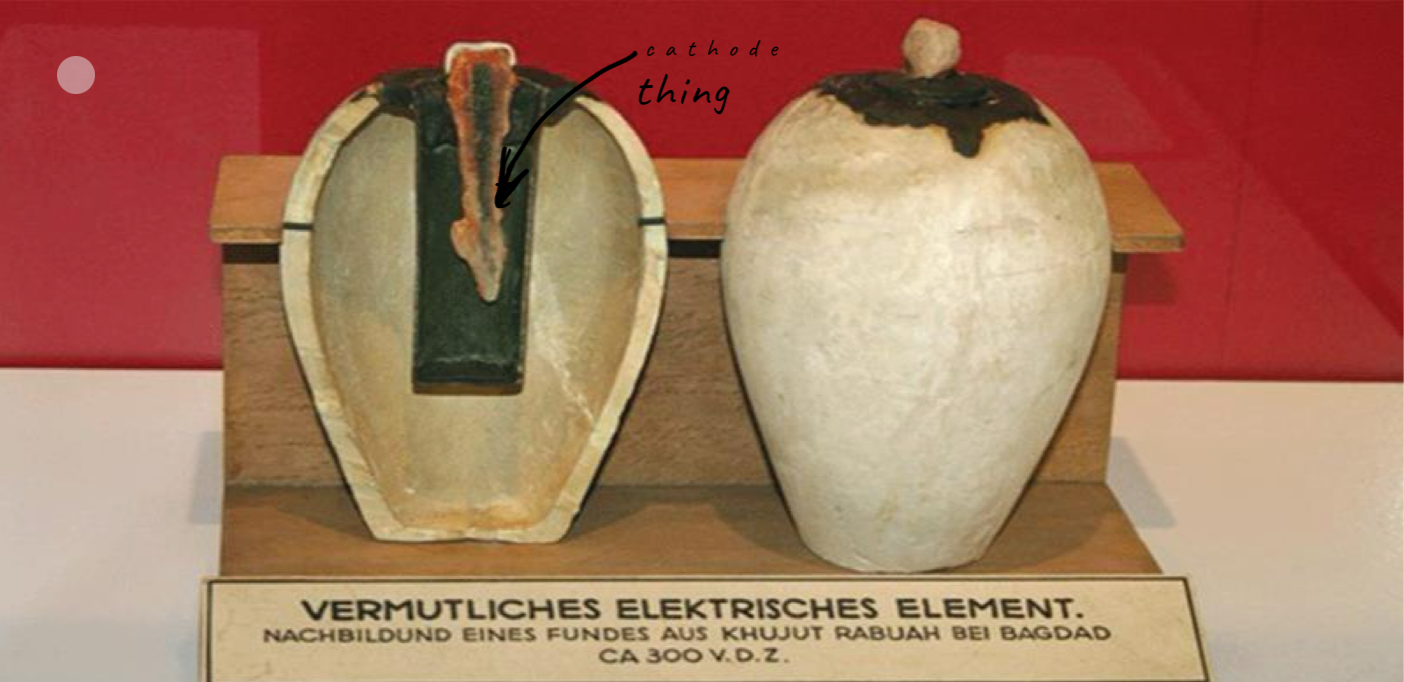
what is the significance of the Baghdad Battery mystery
because a clay pot and its content (had a cathode in it) were able to produce an electric current
why are dams having a height difference important in terms of transformation of energy
a height difference is necessary so that we can have a fall (high potential energy here). when it is moving, this is work. the water can flow through turbines to turn mechanical energy into electric energy
what is a battery
a device that uses chemical energy to separate positive and negative charges, producing a potential difference between its terminals
what does the potential difference in a battery create
a current (needs to be moving fast enough)
does there need to be a big or small potential energy difference for electric current?
there needs to be a high potential difference for electric current

how does a flashlight work
it has a battery, switch, and lightbulb. the switch breaks to circuit, creating the on and off effect. when the switch is “open”, the circuit is broken=no light. when the switch is “closed”, electrons can flow through the circuit=light


which side has the greater potential energy
the positive side
how do you draw a capacitor vs a resistor

what is the direction of electron current flow
it goes from the negative terminal to the positive one
what is the direction of conventional current
opposite of electron current so positive to negative side
what is the definition of electric current (formula)

what is 1 ampere (A)
1 ampere = 1 C/s
describe the movement of electrons in a conductor
they move in random motion/have free movement. there is some resistance/lots of collisions (it is hard for the electron to enter)
compare the drift speed vs the electric signal propagation in a conductor
drift speed is low due to collisions and resistance BUT electric signal propagates more quickly
what will happen to the drift speed of electrons if you increase the surface area
there is more space→less collisions→electron drift speed will increase
if the drift speed of electrons is so slow, how does the light turn on in an instant?
electron drift is limited by collisions to 10^-4 m/s, but when electrons move away from the battery, they exert a force on their neighbors→they all move in the same direction→the effect is the electrons move through the wire at nearly the speed of light
how do you find number of electrons if you only know charge


what is epsilon equal to in this context
it is battery emf but it is the same as voltage

how do you find work of electric current

describe the direction of conventional current vs flow of electrons
current: + to -
electron: - to +

how are velocity and current the similar
they are both a unit over time (m/s vs C/s)
charges inside the conductor oppose or match the outside
oppose
how does surface area affect flow of electrons
increase in surface area increases the flow of electrons
what is a resistor
a passive two-terminal electric component that limits or regulates the flow of electrical current in a circuit
why does a wire to a home require need to be thicker vs a phone charge
the home wire has a larger charge so needs a larger surface area to prevent electron collisions
describe the motion of electrons in metal wires
they move with ease and freely BUT they experience resistance to their motion
what is needed for electric current to flow through a resistor
a potential difference
what is the difference between resistance and required potential difference for electron flow
the greater the distance the greater the required potential difference
what is Ohm’s law
V=IR (relating voltage to the current)
can Ohm’s law be applied to all materials
nope, it can only be applied to some materials, like metallic conductors. not every material is good with voltage
based on Ohm’s law, what is the relationship between voltage and current
they are proportional (V=IR). if current increases, voltage increases
what is SI unit for Ohm’s
Ohm=volt/ampere
what does resistance measure
how easily electrons flow through an electrical component
how do we find resistance using resistivity
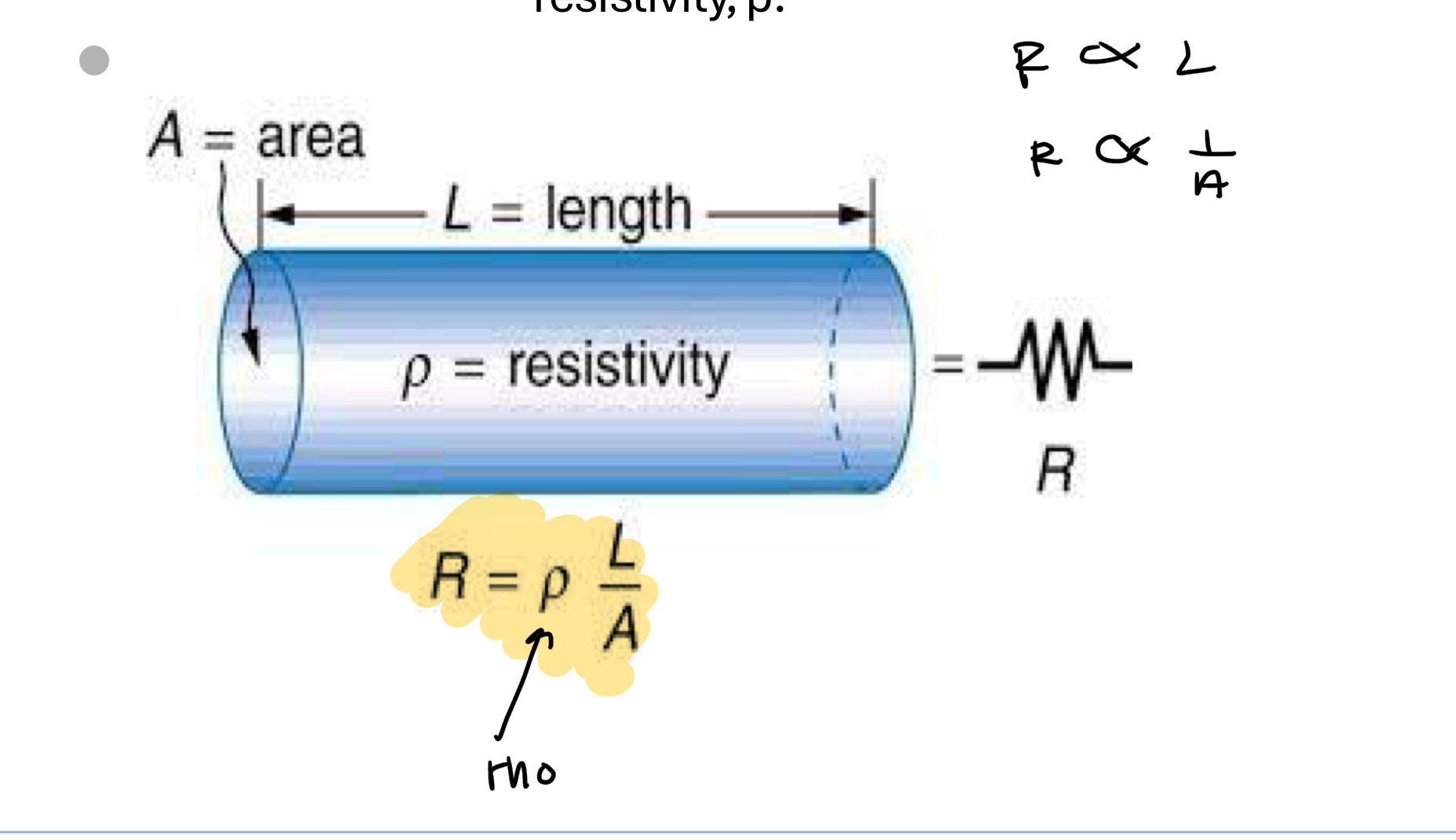
what is the definition of resistivity
The material quantity that characterizes the resistance of a given material. it considers the geometry of the component and its properties.
which has a greater resistivty: conductors or insulators
insulators have a greater resistivity while conductors have a lower resistance
in general what is the relationship between resistance and temperature? is this the same for all materials
the resistance goes up as temperature goes up due to thermal effects, but semiconductors actually have decreased resistivity as temperature increases
what are semiconductors
a material that can conduct electricity under certain conditions but also blocks it in others (not a full conductor but not a full insulator)
what classifies a superconductor
a material that has a resistivity that drops to zero at a finite temperature: critical temperature
describe the relationship between attraction and repulsion in superconductors
it is happening at the same time (think of bullet trains where it creates that levitating effect)
are superconductors the same as semiconductors
IMPORTANT: nope!!! both materials conduct electricity, but superconductors can conduct electricity with ZERO resistance at very low temperatures. Semiconductors have a conductivity that falls between conductors and insulators. the electrical flow is very controlled depending on temperature and doping levels (aka there will be resistance)
what are the two ways to combine resistors
either in a parallel or series fashion
what can we infer about potential difference and current for resistors in a series
potential difference between points is the same no matter which way you go around the circuit, and you can find the total by adding the individual components
current is the same throughout


are these resistors in a series or parallel
series!!!! (all run through same connection to the battery)

is this resistor in a series or parallel fashion
parallel (notice how they each have an individual connection to the battery)
what can we infer about potential difference and current for resistors in a parallel fashion
voltage or potential difference is the same between individual points and the total
circuit between the points is not the same as the total, and the total can be found by adding the individual components

how do you find total resistance of resistors in a series

how do you find resistance for resistors in a parallel fashion

which experiences a lower resistance: resistors in a series or parallel fashion
parallel