Week 7: Pharmacotherapy (Lam)
 Call Kai
 Learn
Learn Practice Test
 Spaced Repetition
 Match
Match Flashcards
 Knowt Play
1/161

There's no tags or description
Looks like no tags are added yet.
Name | Mastery | Learn | Test | Matching | Spaced | Call with Kai | Chat |
|---|
No analytics yet
Send a link to your students to track their progress
162 Terms
What forces cause TBI?
acceleration, deceleration, acceleration-deceleration, and rotational forces after blunt or penetrating trauma
What happens during rapid deceleration?
skull stops first; the brain continues moving, causing stretching, shearing, tearing, and possible opposite-side impact
Examples of penetrating head trauma?
gunshot wounds, nail guns, knives, and other sharp objects
What functions are associated with the frontal lobe, parietal lobe, temporal lobe, and occipital lobe?
Frontal: judgment/reasoning/attention
Parietal: sensation
Temporal: hearing/memory
Occipital: vision
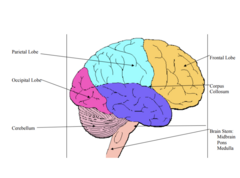
What may occur with frontal lobe injury?
personality changes, impulsivity, agitation, and outbursts
Why are brainstem injuries especially devastating?
the brainstem regulates vital functions including heart rate, blood pressure, and respiration
What are the 3 meningeal layers?
dura mater, arachnoid mater, and pia mater
Where are the epidural, subdural, and subarachnoid spaces?
Epidural: above dura
Subdural: below dura
Subarachnoid: below arachnoid and contains CSF

How do epidural and subdural hematomas differ?
Epidural: above dura, often arterial and rapidly expanding
Subdural: below dura, usually venous; acute, subacute, or chronic

How do subarachnoid and intracerebral hemorrhages differ?
SAH: bleeding in subarachnoid space
ICH/IPH: bleeding within brain tissue; even ~5 mL may cause neurologic symptoms

What are cerebral contusions and diffuse axonal injury (DAI)?
Contusion: brain bruising with bleeding/edema
DAI: stretching/shearing of neurons from acceleration/deceleration/rotation
How is DAI typically diagnosed?
clinically; usually not seen on CT and is better visualized on MRI
What is primary TBI?
injury occurring during initial trauma as energy transfers to the brain/CNS, causing axonal shearing, contusions, swelling, and dysregulation
What causes secondary TBI?
minutes-days later, glutamate overstimulation → Na+/Ca2+ influx → necrosis/apoptosis plus BBB disruption and inflammation
What other factors contribute to secondary brain injury?
hypoxia, hypotension, hypercarbia, hyperexcitation, cerebral edema, and increased ICP
Monroe-Kellie doctrine
the fixed cranial vault contains ~80% brain, 10% CSF, and 10% blood
What happens when one intracranial component increases?
another must decrease or ICP rises; causes include masses, blood, CSF, and cerebral edema
What happens when intracranial compensatory mechanisms are exhausted?
ICP rises steeply and brain tissue may shift, causing herniation

What is normal ICP, and when is treatment recommended?
Normal 5-15 mmHg
Treat ICP >22 mmHg
How does the brain compensate to maintain normal ICP?
displaces/absorbs CSF, decreases CSF production, compresses cerebral veins, and reduces cerebral blood volume
What are early signs of increased ICP?
altered LOC/restlessness, nausea/vomiting, headache, and decreased pupillary response
What are late signs of increased ICP?
depressed LOC, unequal pupils, posturing, seizures, abnormal respirations, and altered pupil size/responsiveness
What is Cushing's Triad, and what does it indicate?
widened pulse pressure, bradycardia, irregular breathing; a late sign of increased ICP and impending herniation
What is cerebral herniation?
increased pressure shifts brain tissue into another space, compressing structures/blood supply and carrying a poor prognosis
What defines brain death?
irreversible loss of all brain and brainstem function: coma, absent brainstem reflexes, and inability to breathe despite adequate stimulus
What is CPP and how is it calculated?
cerebral perfusion pressure
driving force for cerebral blood flow; CPP = MAP − ICP
What CPP is targeted in severe TBI?
60-70 mmHg; normal ~50-90 mmHg and
Why isn't CPP routinely increased above 70 mmHg?
artificially targeting >70 has been associated with worse outcomes
What is cerebral autoregulation?
vasoconstriction/dilation that maintains stable cerebral blood flow despite systemic BP changes
Over what CPP range can normal cerebral autoregulation maintain blood flow?
~50-140 mmHg
[Slide + Transcript] Q:
cerebral blood flow becomes directly dependent on CPP/BP, so BP and ICP changes directly affect cerebral flow
What is the gold standard for ICP monitoring and what can it do?
external ventricular drain (EVD); measures ICP, drains CSF therapeutically, and allows CSF sampling
What are important EVD risks?
hemorrhage along the catheter tract, infection, and ventriculitis
How do intraparenchymal transducers compare with an EVD?
less invasive but cannot drain CSF or be recalibrated after placement; infection/hematoma risks remain
How accurate are subdural and epidural ICP monitors?
less accurate than EVDs or intraparenchymal monitors
What does the Glasgow Coma Scale assess?
level of consciousness using the best eye-opening, motor, and verbal responses
Major GCS response scores?
eye 1-4, verbal 1-5, motor 1-6; total GCS ranges 3-15

How is TBI classified by GCS?
mild >12; moderate 9-12; severe 3-8
What can interfere with accurate GCS assessment?
intubation, sedation, paralytics, and preexisting language difficulties
A patient opens eyes to pain, makes incomprehensible sounds, and has abnormal flexion. What is the GCS?
E2 + V2 + M3 = 7 → severe TBI
How does GCS relate to "good outcome" after TBI?
GCS 12-14: 90-100%; GCS 6-11: 60-75%; GCS 3-5: 20%
How does GCS relate to mortality?
GCS 11-15: 6%; 8-10: 25%; 5-7: 55%; 3-4: 80%
IC is a 45 year old male with no past medical history is admitted to
the surgical intensive care unit after an unhelmeted motorcycle
crash at 45 miles per hour. Injuries: IPH, SAH,
rib, clavicle, skull, facial fractures, and pelvic
fractures. GCS 6; intubated/sedated with EVD.
Based on IC's Glasgow Coma Scale, his traumatic brain injury would be classified as:
Severe
What are the features of Cushing's Triad?
Widened pulse pressure, bradycardia, irregular breathing
IC's ICP readings in the chart have been 12, 15, 23, and 30 and CPP readings of 40, 52, 64, and 71. Which CPPs and ICPs are considered within normal range?
ICP: 12, 15 / CPP 64, 71
Guidelines for severe TBI/ICP management?
Seattle International Severe TBI Consensus, Brain Trauma Foundation, and ACS guidelines
What basic supportive interventions are used for severe TBI?
ICU care, intubation/ventilation, serial neuro checks, HOB 30-45°, midline head, and unobstructed venous return
What pharmacist-directed Tier Zero measures help prevent secondary injury?
adequate analgesia/sedation, treat fever, seizure prophylaxis ×1 week, CPP ≥60, avoid hyponatremia, SpO₂ ≥94%
Why is HOB elevation limited to about 30-45°?
improves venous/CSF drainage, but >45° may decrease CPP
What sodium/fluids are preferred in neurologic injury?
maintain Na ≥135, preferably high-normal; avoid hypotonic fluids because they may worsen cerebral edema
Which common fluids are hypotonic vs preferred isotonic fluid in neuro injury?
D5W and ½NS are hypotonic; NS (154 mEq/L Na) is preferred
LR may be treated as hypotonic in neurologic injury
What are the 2 main hyperosmolar therapies for elevated ICP?
mannitol and hypertonic saline (HTS)
HTS concentrations and typical bolus doses used?
23.4% ~30 mL; 5% ~150 mL; 3% ~233 mL; 2% ~350 mL

How does vascular access affect HTS selection?
continuous ≥3% generally requires central access; 2% may run peripherally; urgent 3-5% boluses may be peripheral per protocol
What practical factors guide HTS selection?
access, institutional policy, concentration/dose allowed, and which product can be administered fastest
What is the immediate effect of HTS?
↓ blood viscosity → plasma expansion → ↑ CBF/oxygen delivery → vasoconstriction if autoregulation intact → ↓ ICP
What is the delayed osmotic effect of HTS?
creates an osmolar gradient pulling cerebral water into vasculature, "dehydrating" the brain and lowering ICP; lasts 90-min to 6 hrs or more
What other properties does HTS have?
immunologic/antioxidant effects; unlike mannitol, it is not a diuretic
Why might continuous HTS be used?
to maintain supraphysiologic Na and theoretically reduce edema, ICP, and interventions; not to acutely treat an ICP spike
What is a theoretical drawback of continuously elevated sodium?
a smaller osmotic gradient may reduce response to later HTS boluses
What are major metabolic/renal complications of HTS?
hypernatremia, hyperchloremic metabolic acidosis, and increased AKI risk
How can chloride exposure from HTS be reduced?
use balanced chloride:acetate solutions; consider switching as Cl approaches ~110-115 mEq/L
When is osmotic demyelination syndrome a concern?
rapid sodium correction in chronic hyponatremia; generally limit correction to ~4-6 mEq/L/24 h
What other complications can occur with HTS?
phlebitis with concentrated peripheral HTS (>2%) and rebound cerebral edema if continuous HTS is stopped rapidly
What is mannitol?
renally excreted, nonmetabolized sugar alcohol and osmotic diuretic; 20% is most commonly used
What preparation issue is important with mannitol?
crystallization; visually inspect before use and administer through a 0.22-micron filter
How does mannitol lower ICP?
immediate ↓ viscosity/vasoconstriction plus delayed (within 15 min) osmotic movement of cerebral water into serum
What is mannitol's approximate onset/peak and duration?
peak ~30-120 minutes; duration ~1-6 hours
How is mannitol typically dosed and administered?
0.5-1 g/kg IV over ~10-30 min; faster in herniation but with greater hypotension risk
Why are mannitol boluses preferred over continuous infusion?
continuous infusion is less effective; intermittent boluses are preferred
What are important adverse effects of mannitol?
potent diuresis, hypovolemia/hemodynamic instability, hypokalemia, and AKI (~6-12%)
How should renal safety of mannitol be monitored?
prefer osmolar gap; ≤20 is commonly accepted for clearance
***mannitol is contraindicated in oliguric renal failure
What increases risk of mannitol-associated AKI?
age, HTN, sepsis, hypovolemia/hypotension, nephrotoxins, and preexisting renal disease
What does the osmotic reflection coefficient (σ) represent?
BBB impermeability: 0 = freely permeable; 1 = completely impermeable; closer to 1 is preferred
What are the reflection coefficients of sodium, mannitol, and urea?
Sodium 1.0; mannitol 0.9; urea 0.59, assuming an intact BBB
Why can mannitol theoretically cause rebound intracranial hypertension?
it can cross a damaged BBB, accumulate in brain tissue, and create a reverse osmotic gradient drawing water inward
How is mannitol rebound risk minimized?
avoid prolonged/repeated use >2-3 days when possible and monitor osmolar gap
How do HTS and mannitol compare for ICP treatment?
HTS may lower ICP slightly faster, but neither shows better mortality or neurologic outcomes
How should HTS vs mannitol be selected?
individualize to patient factors, IV access, drug availability, sodium/chloride/osmolality, and hemodynamic status
Why are adequate analgesia and reduced stimulation important in TBI?
pain/agitation/coughing increase cerebral metabolic demand and ICP; pretreat cares and minimize stimulation
Which opioids are commonly used for TBI analgesia?
IV fentanyl or hydromorphone by bolus and/or continuous infusion
Why is propofol generally first-line sedation?
fast onset/offset; monitor hypotension/CPP and triglycerides
What are limitations of midazolam and lorazepam?
longer half-life/accumulation delays neuro exams; lorazepam also contains propylene glyco
What RASS levels correspond to common sedation depths?
0 to −1 light/ideal when possible; −2 to −3 moderate; −4 to −5 deep sedation
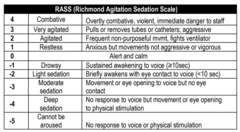
What sedation may be used for refractory ICP?
deep sedation (RASS −4 to −5) with propofol or benzodiazepine infusion
What is propofol infusion syndrome (PRIS)?
severe acidosis, rhabdomyolysis, AKI, bradycardia/arrhythmias, hypotension, renal failure, hyperkalemia, and hyperlipidemia
What increases PRIS risk?
>67 mcg/kg/min, infusion >48 h, vasopressors, steroids, mitochondrial disorders, low glycogen, or neurologic compromise
What are major Tier 1 interventions for elevated ICP?
CPP 60-70, ↑ analgesia/sedation, PaCO₂ 35-38, intermittent HTS/mannitol, CSF drainage/EVD, 1-week ASM, and EEG

What happens when Tier 1 does not adequately control ICP?
reassess causes/contraindications and escalate selectively to Tier 2; all Tier 1 therapies do not have to be exhausted first

What extracranial factors should be corrected when ICP rises?
airway obstruction, hypoxemia/hypercarbia, pain/HTN, coughing/straining, neck compression, pneumothorax, fever, abdominal distension, or hypo-osmolality

How does hyperventilation reduce ICP?
↓ PaCO₂ → cerebral vasoconstriction → ↓ cerebral blood flow/volume → ↓ ICP
Why is mild hypocapnia only a temporizing measure?
it decreases cerebral oxygen delivery; prolonged use worsens outcomes. Avoid PaCO₂
When can neuromuscular paralysis help refractory ICP?
ventilator dyssynchrony, coughing, or shivering; it reduces metabolic demand
How should paralysis be initiated?
give a nondepolarizing bolus first and assess response before continuous infusion; discontinue ASAP
What are major risks/requirements of neuromuscular paralysis?
critical illness polyneuropathy/myopathy; ensure deep sedation and adequate analgesia first
What are Tier 3 options for refractory ICP?
pentobarbital/thiopentone coma, secondary decompressive craniectomy, and mild hypothermia 35-36°C
How do barbiturates lower ICP?
GABA-A effects suppress cerebral metabolism → ↓ metabolic demand, cerebral blood flow, and ICP
Eisenberg pentobarbital protocol
10 mg/kg over 30 min → 5 mg/kg/hr ×3 h → 1 mg/kg/hr; titrate ICP response up to EEG burst suppression
Maximum pentobarbital administration rate?
50 mg/minute or less due to hypotension
What monitoring is essential during pentobarbital therapy?
continuous EEG; do not exceed the dose producing burst suppression and avoid hypotension