Respiratory & Urinary Systems
 Call Kai
 Learn
 Practice Test
 Spaced Repetition
 Match
 Flashcards
 Knowt Play
1/247

There's no tags or description
Looks like no tags are added yet.
248 Terms

Upper respiratory tract
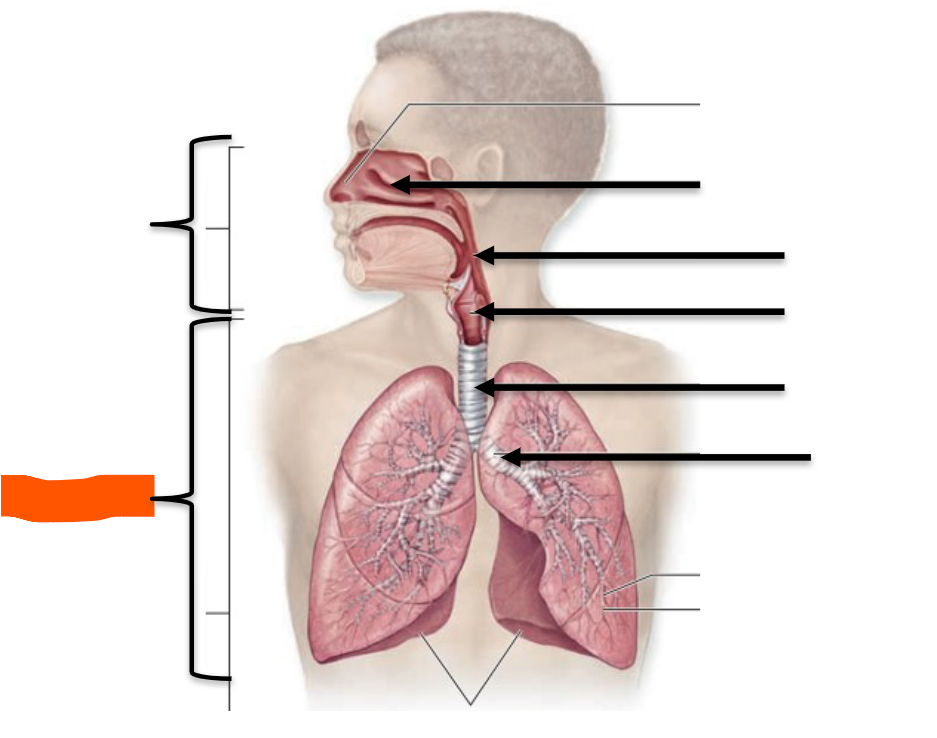
Lower respiratory tract

Nasal cavity

Pharynx

Larynx

Trachea

Bronchus

Bronchiole
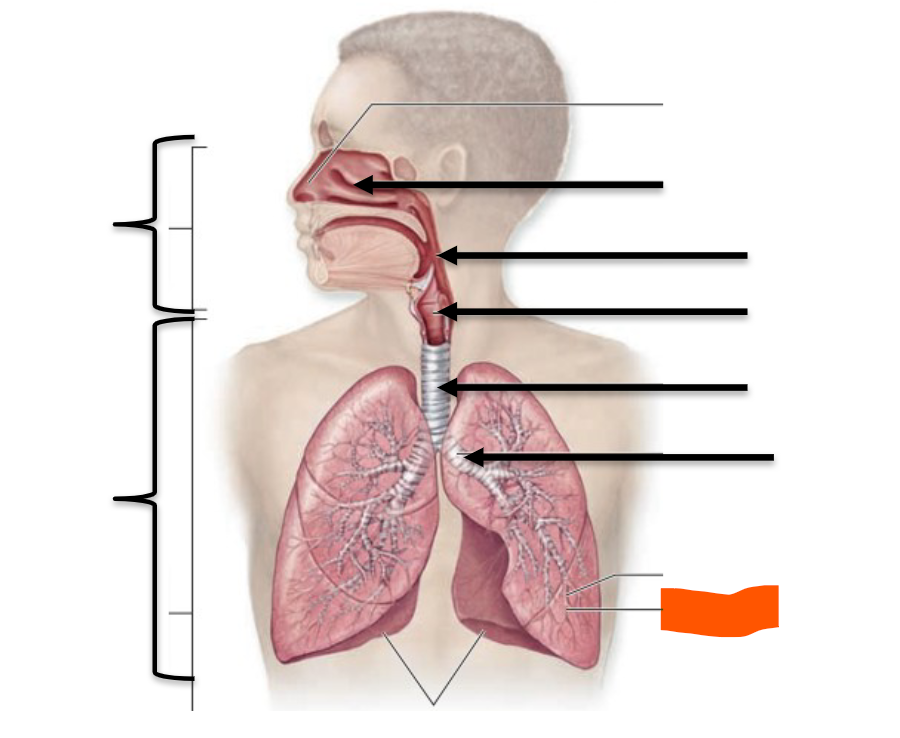
Terminal bronchiole

Lungs

Nasal cavity

Pharynx

Larynx

Trachea
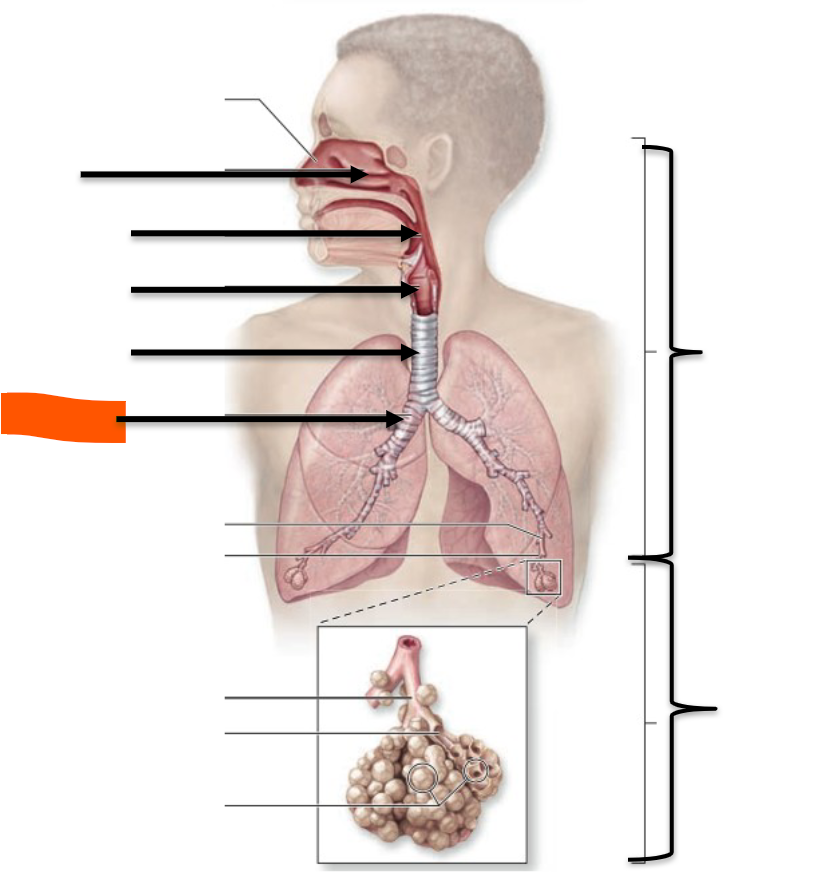
Bronchus

Conducting zone

Respiratory zone

Bronchiole

Terminal bronchiole
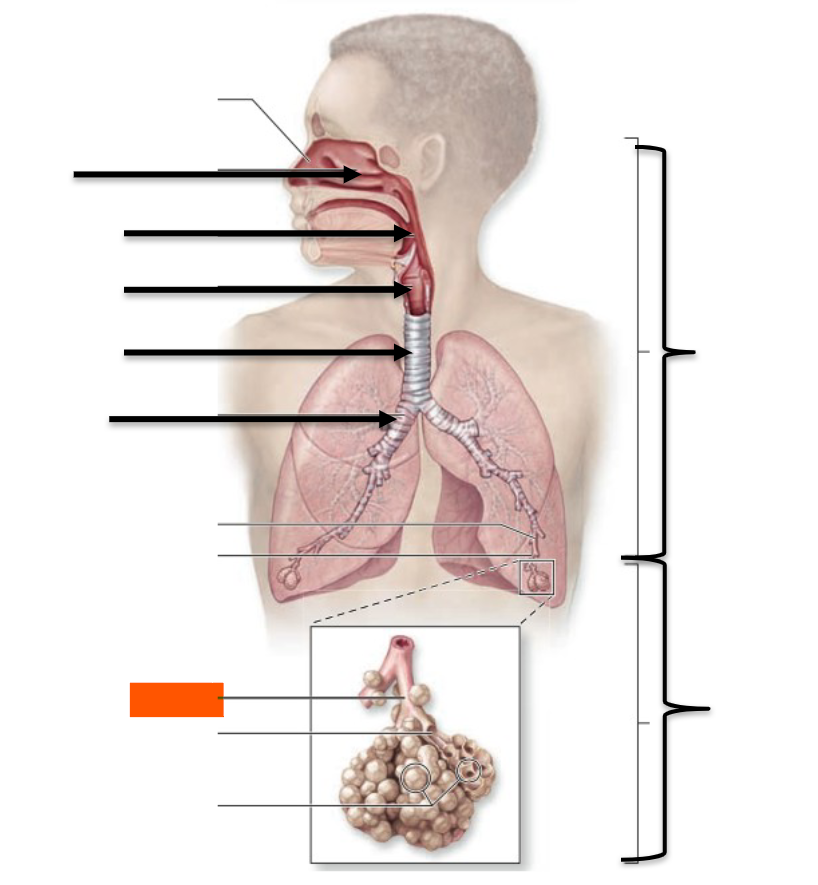
Respiratory bronchiole

Alveolar duct
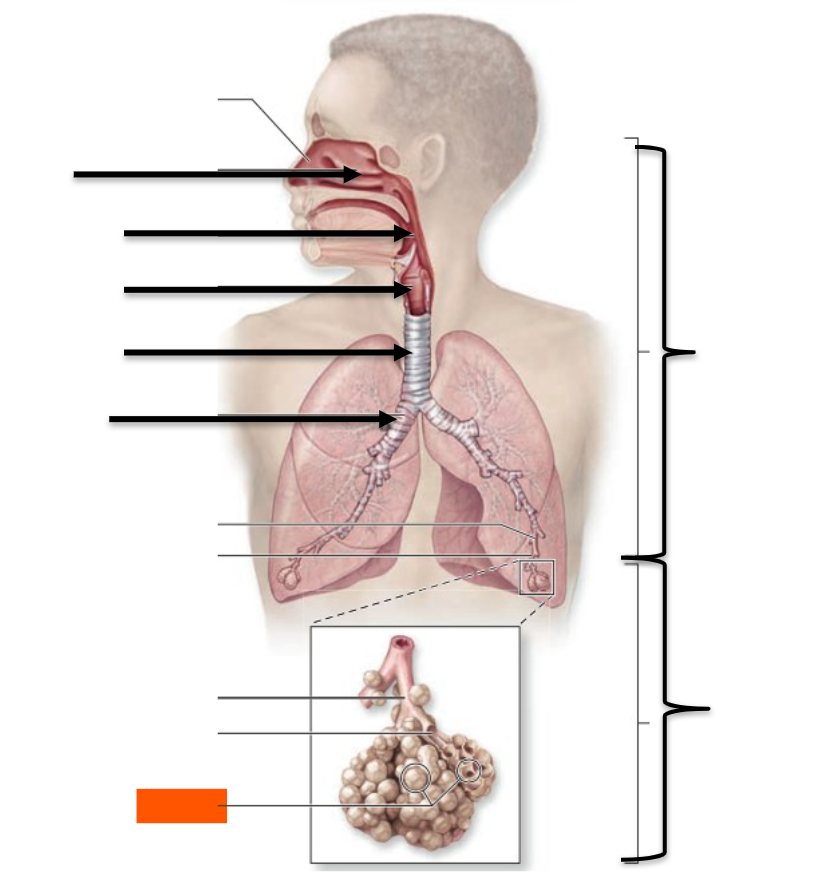
Alveoli
Which type of epithelium is mostly found in the upper conducting zone?
Pseudostratified ciliated columnar epithelium
Which type of epithelium lines the segmental bronchi, smaller bronchi, and large bronchioles?
Simple ciliated columnar epithelium
Which type of epithelium lines the terminal and respiratory bronchioles?
Simple ciliated cuboidal epithelium
Which type of epithelium forms the alveolar ducts and alveoli?
Simple squamous epithelium
Which type of epithelium lines the oropharynx, laryngopharynx, and the superior portion of the larynx?
Nonkeratinized stratified squamous epithelium
Why are the oropharynx, laryngopharynx, and the superior portion of the larynx lined with a different epithelium than other areas of the conducting zone?
They are more subject to abrasion

Superior nasal concha

Middle nasal concha

Inferior nasal concha

Superior nasal meatus

Middle nasal meatus
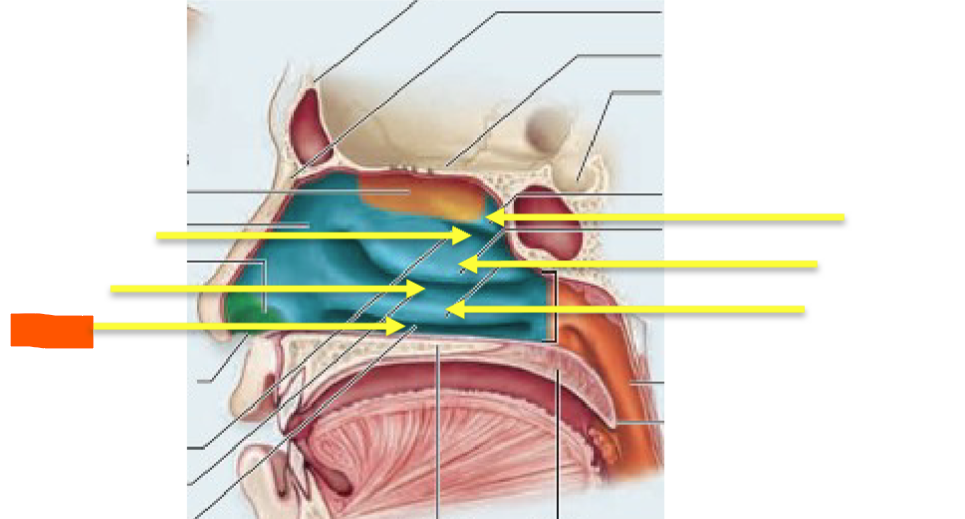
Inferior nasal meatus
Extends from the nostrils to paired openings called..?
Choana
What are the hairs lining the nasal vestibule called?
Vibrissae
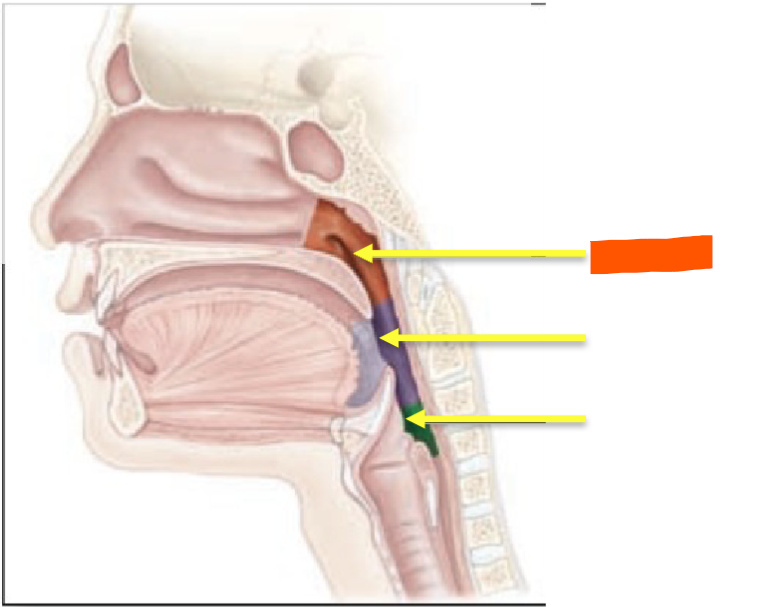
Nasopharynx

Oropharynx

Laryngopharynx
What are the functions of the Larynx? (5)
Passageway for air
Blocks materials from entering respiratory tract
Produce sound
Help increase abdominal pressure
Sneezing/coughing reflex

Epiglottis
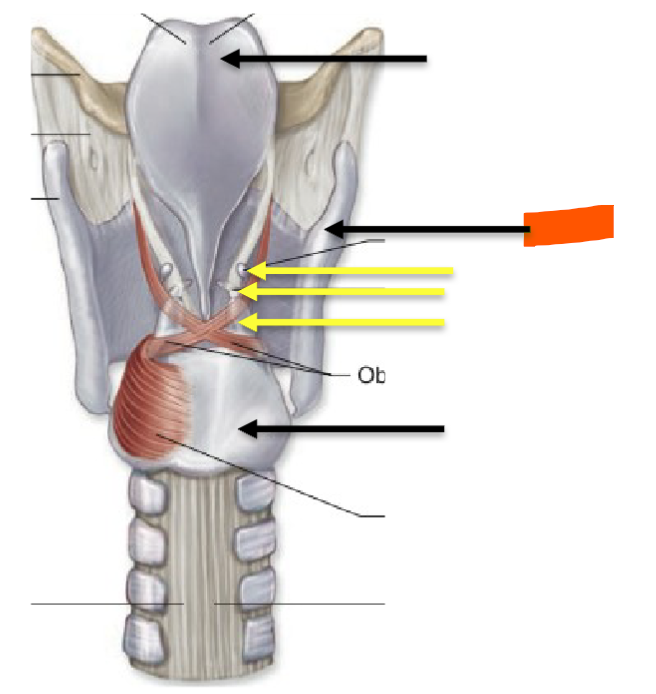
Thyroid cartilage

(paired)
Cuneiform cartilage

(paired)
Corniculate cartilage

(paired)
Arytenoid cartilage
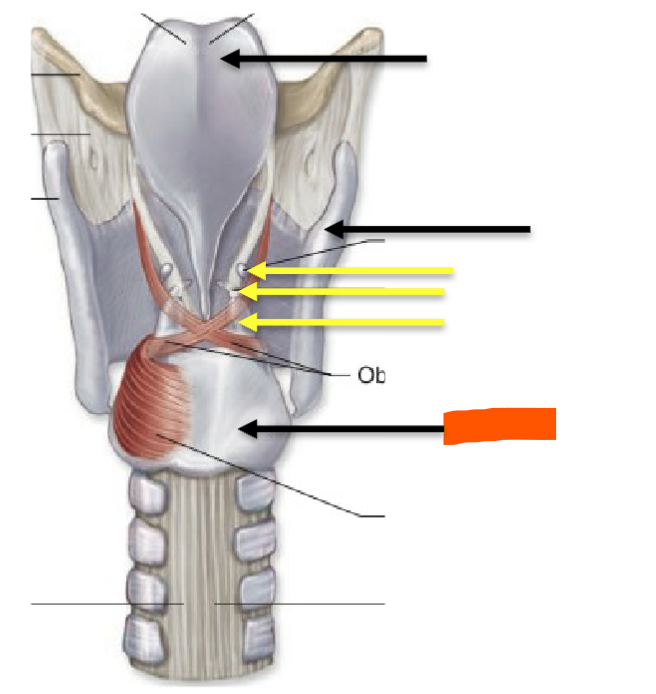
Cricoid cartilage

Epiglottis
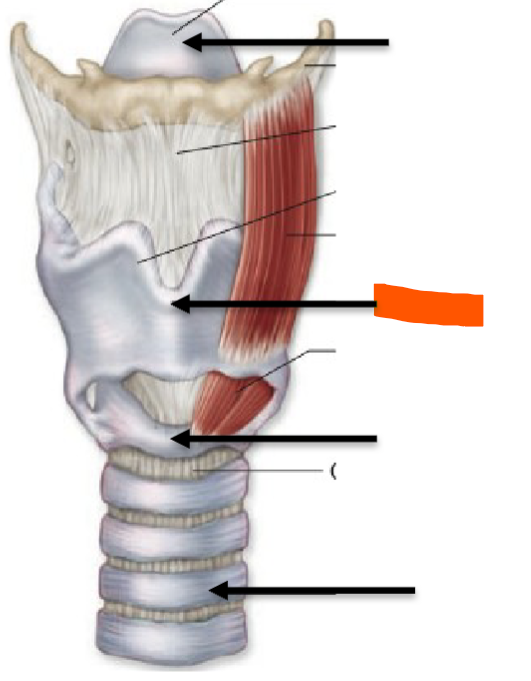
Laryngeal prominence
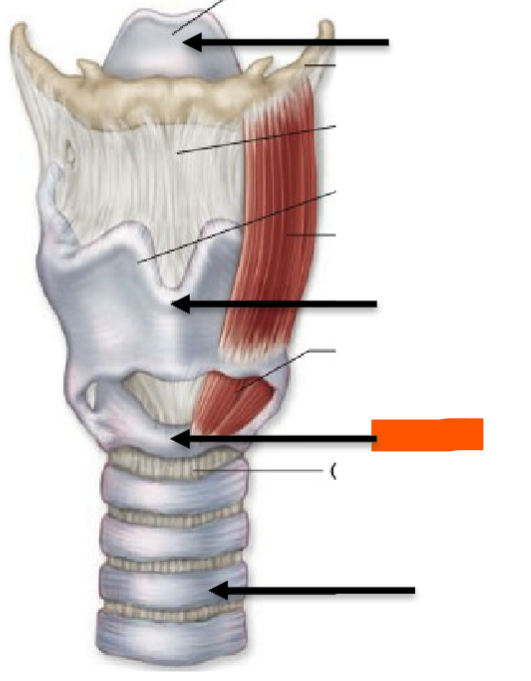
Cricoid cartilage
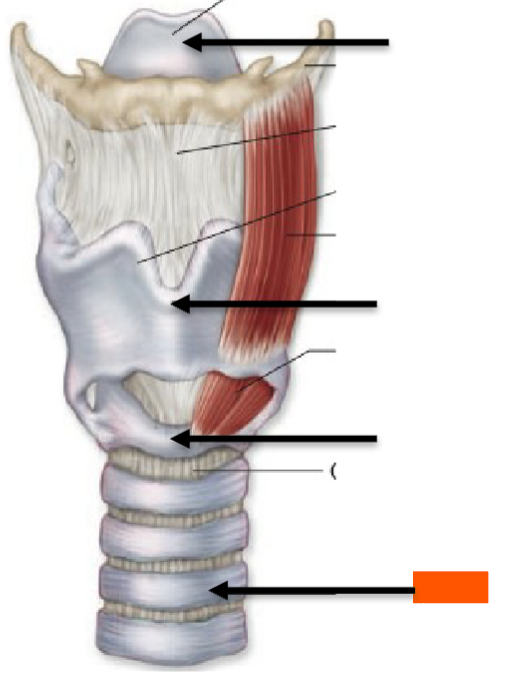
Trachea
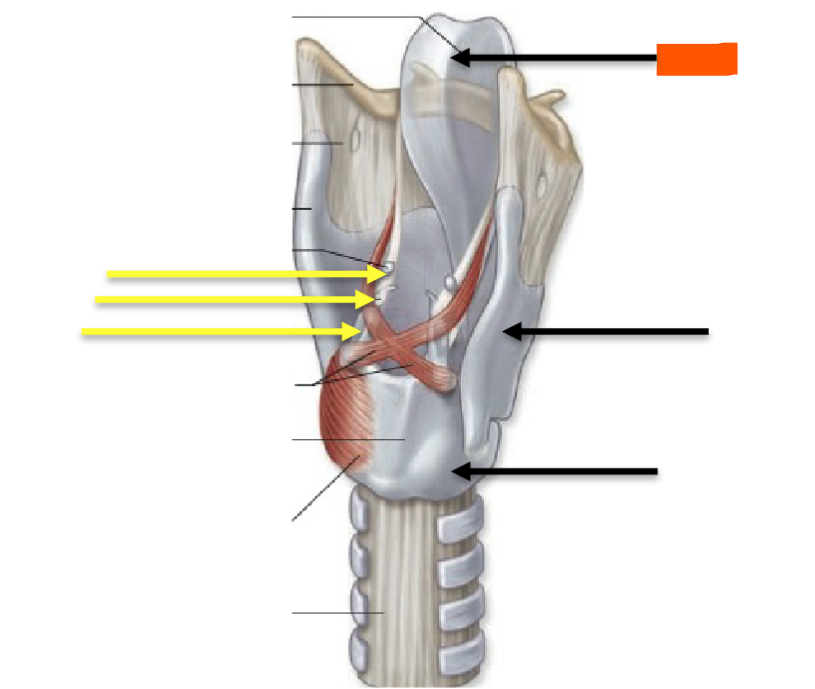
Epiglottis

Thyroid cartilage

Cricoid cartilage

(paired)
Cuneiform cartilage
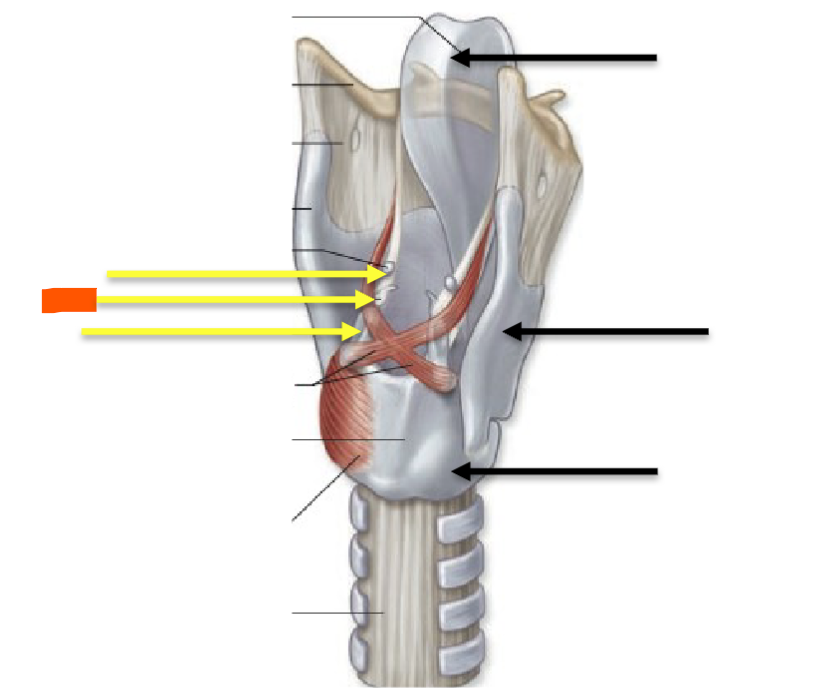
(paired)
Corniculate cartilage

(paired)
Arytenoid cartilage
What type of cartilage is the epiglottis made out of?
Elastic cartilage
What type of cartilage are the Laryngeal cartilages, EXCEPT the epiglottis, made of?
Hyaline cartilage

Thyroid cartilage
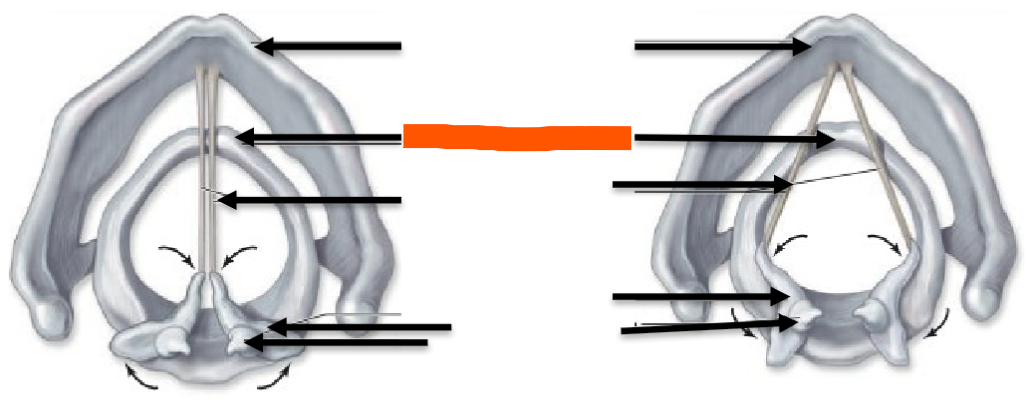
Cricoid cartilage

(intrinsic)
Vocal ligaments
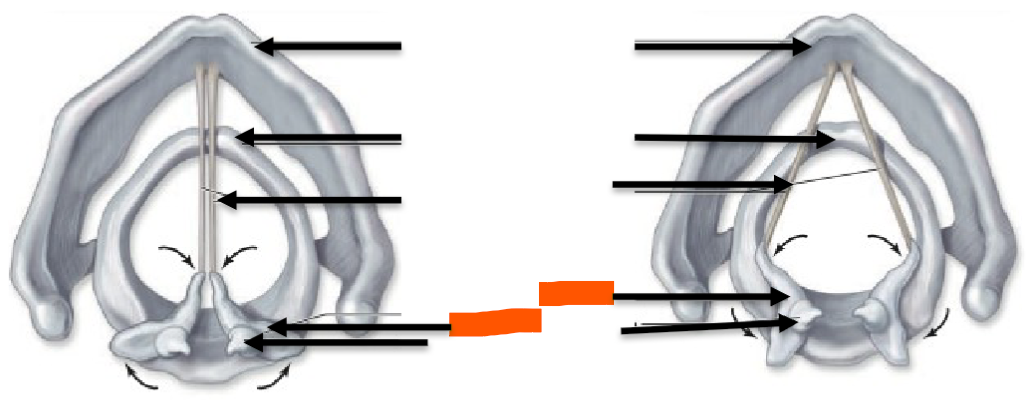
Arytenoid cartilage

Corniculate cartilage
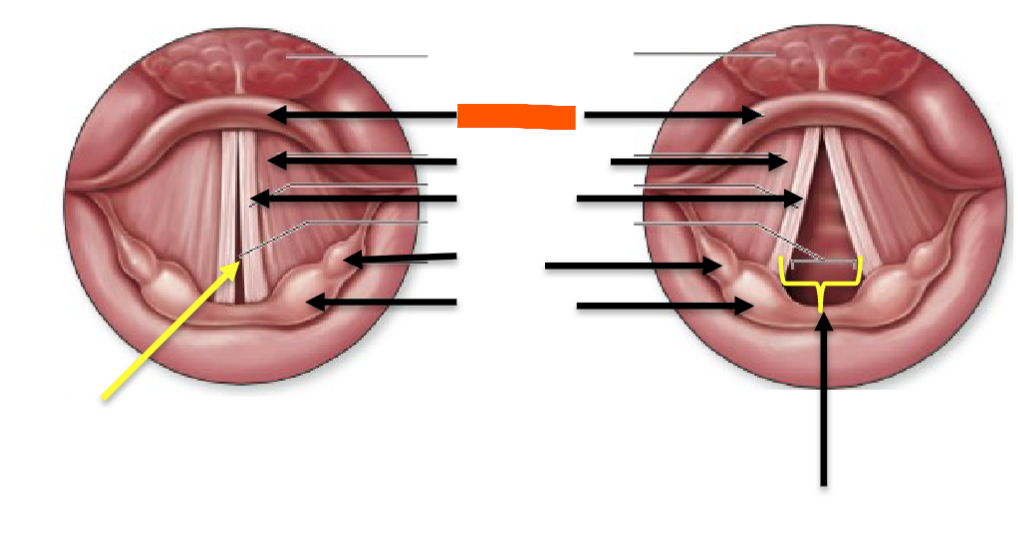
Epiglottis

Vestibular folds
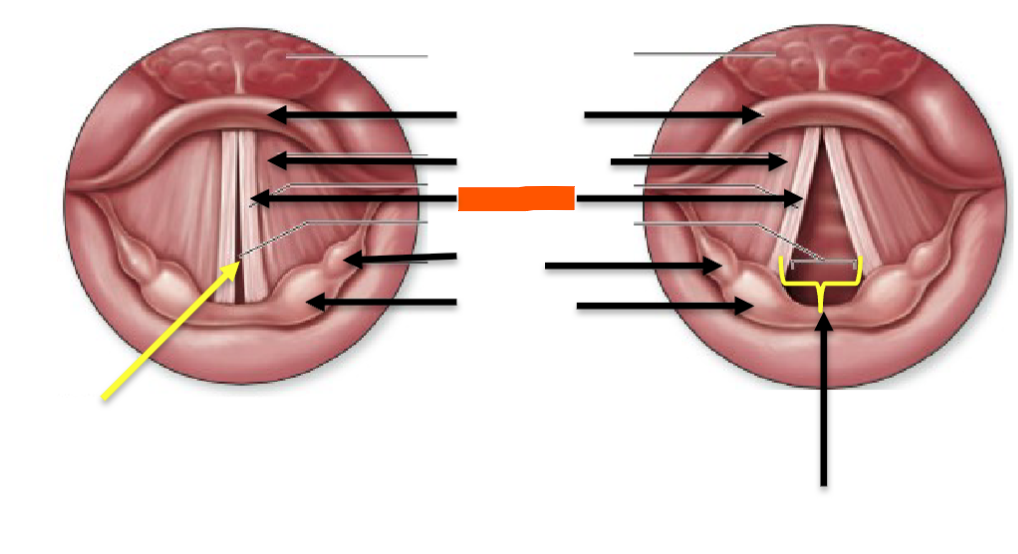
Vocal folds

Cuneiform cartilage

Corniculate cartilage

Rima glottidis

Rima glottidis

Mucus

Goblet cell
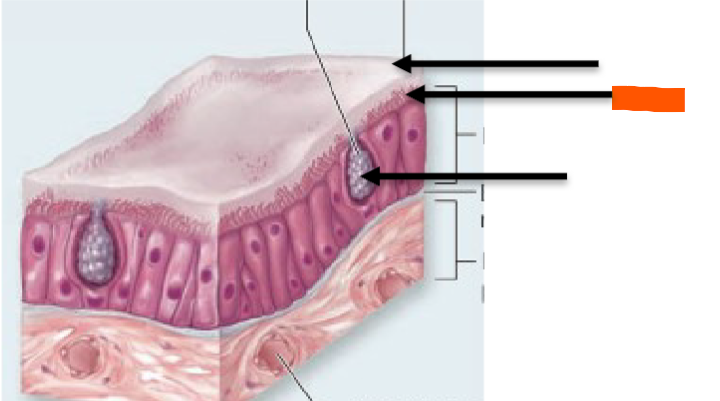
Cilia

Mucus

Cilia

Goblet cell
What is the protein needed for mucus?
Mucin

What is located here? (internally)
Carina

Trachea

Main bronchi

Lobar bronchi

Segmental bronchi

Trachea

Main bronchi

Lobar bronchi
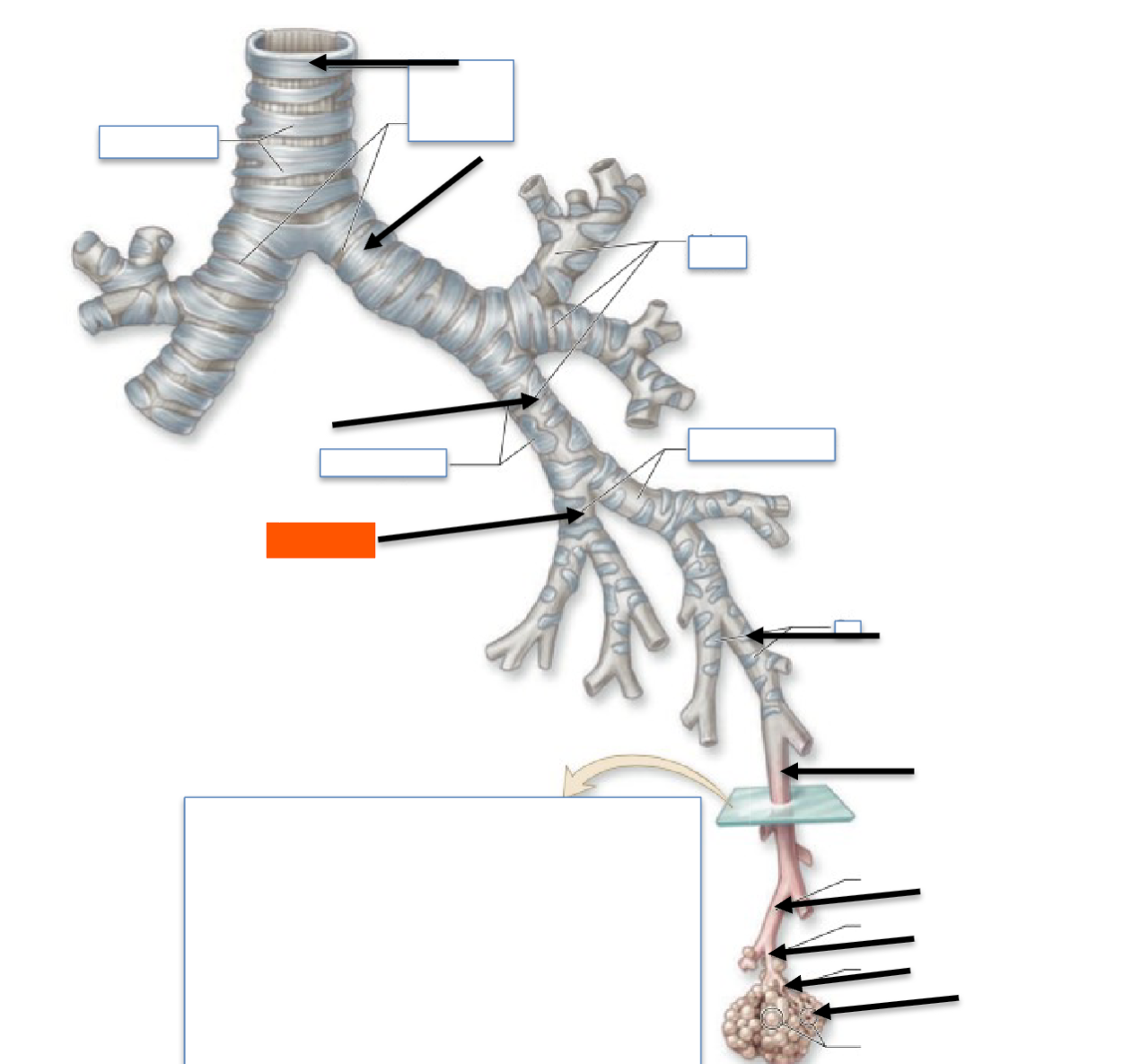
Segmental bronchi
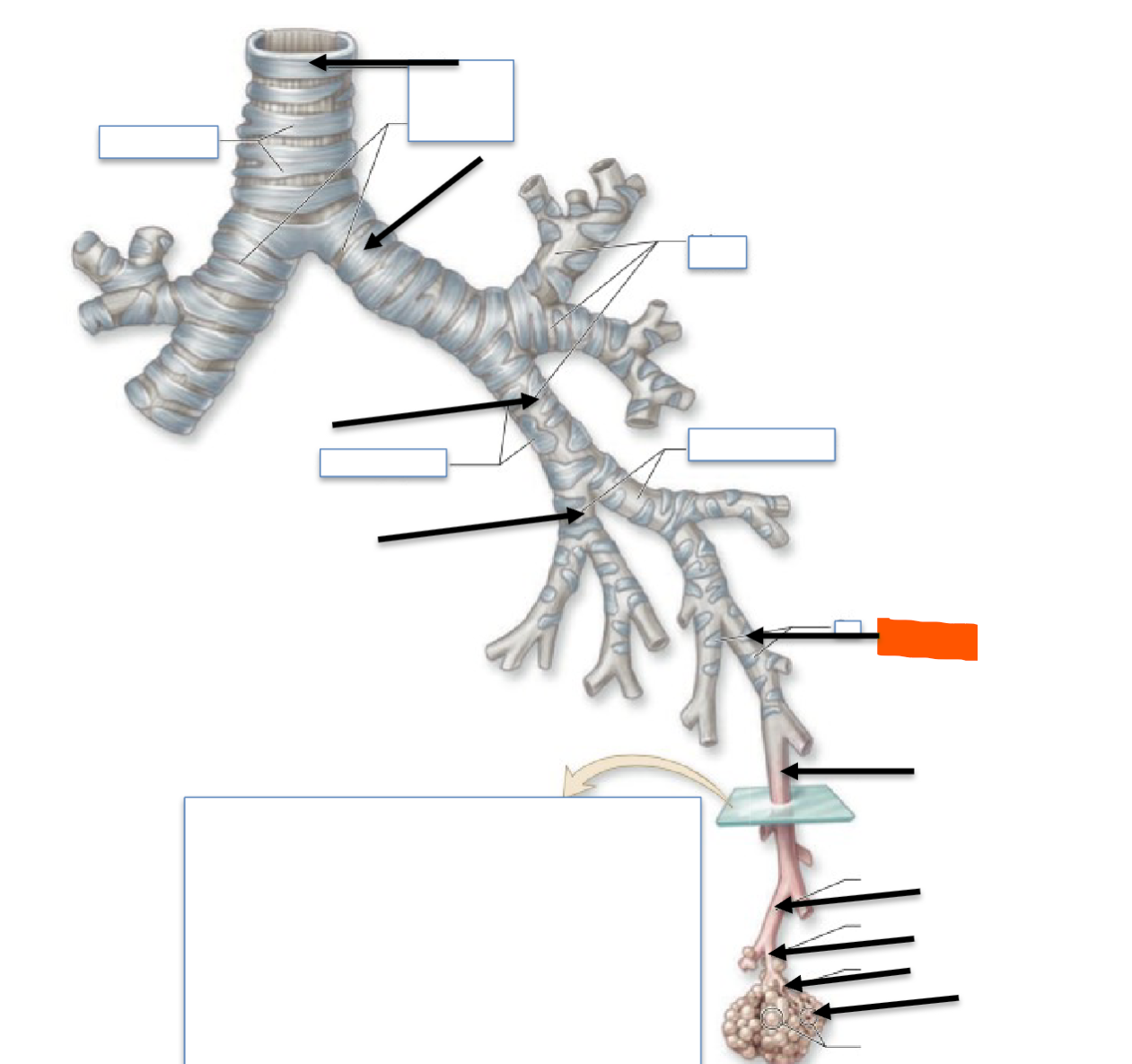
Smaller bronchi

Bronchiole

Terminal bronchiole
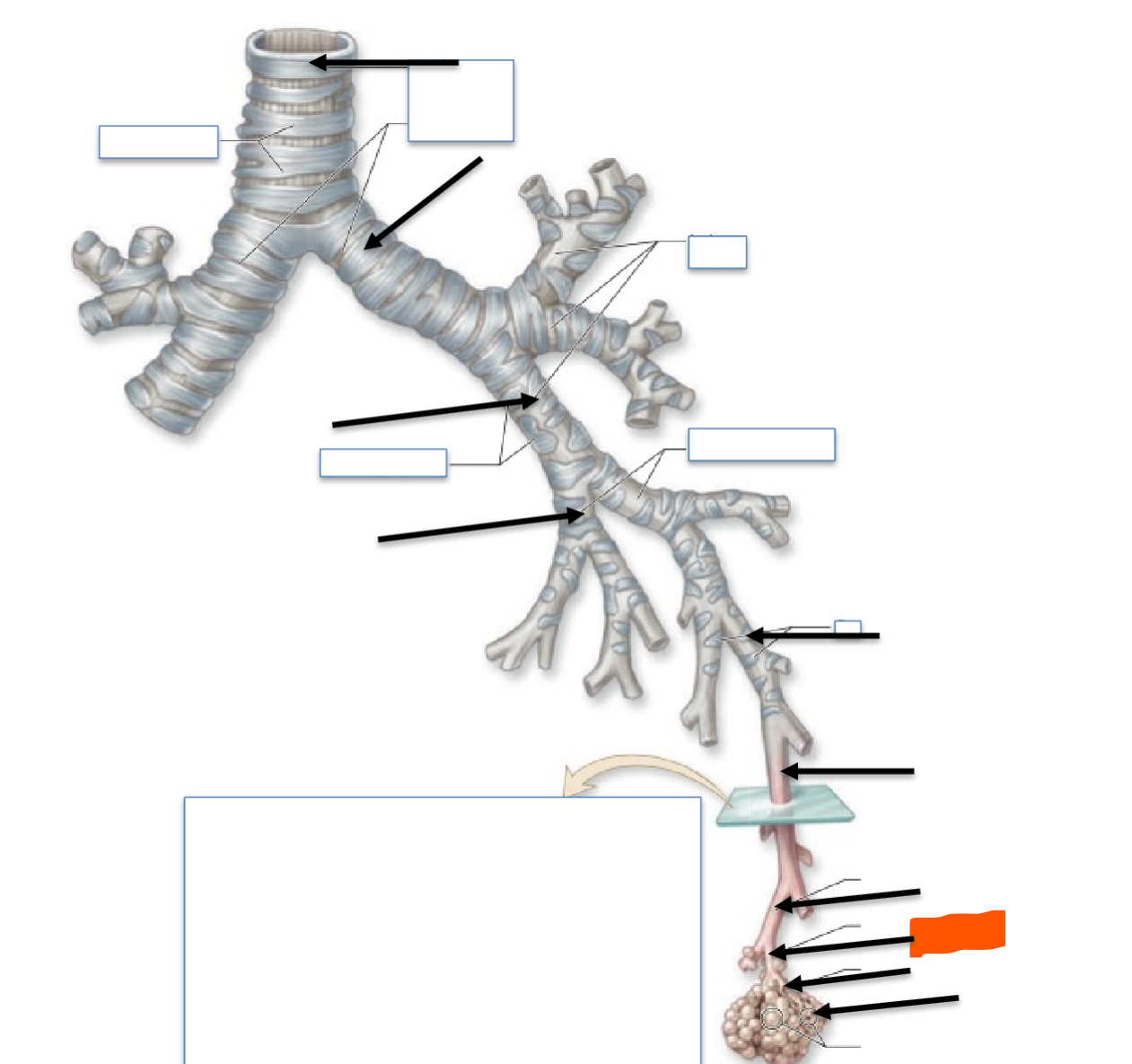
Respiratory bronchiole
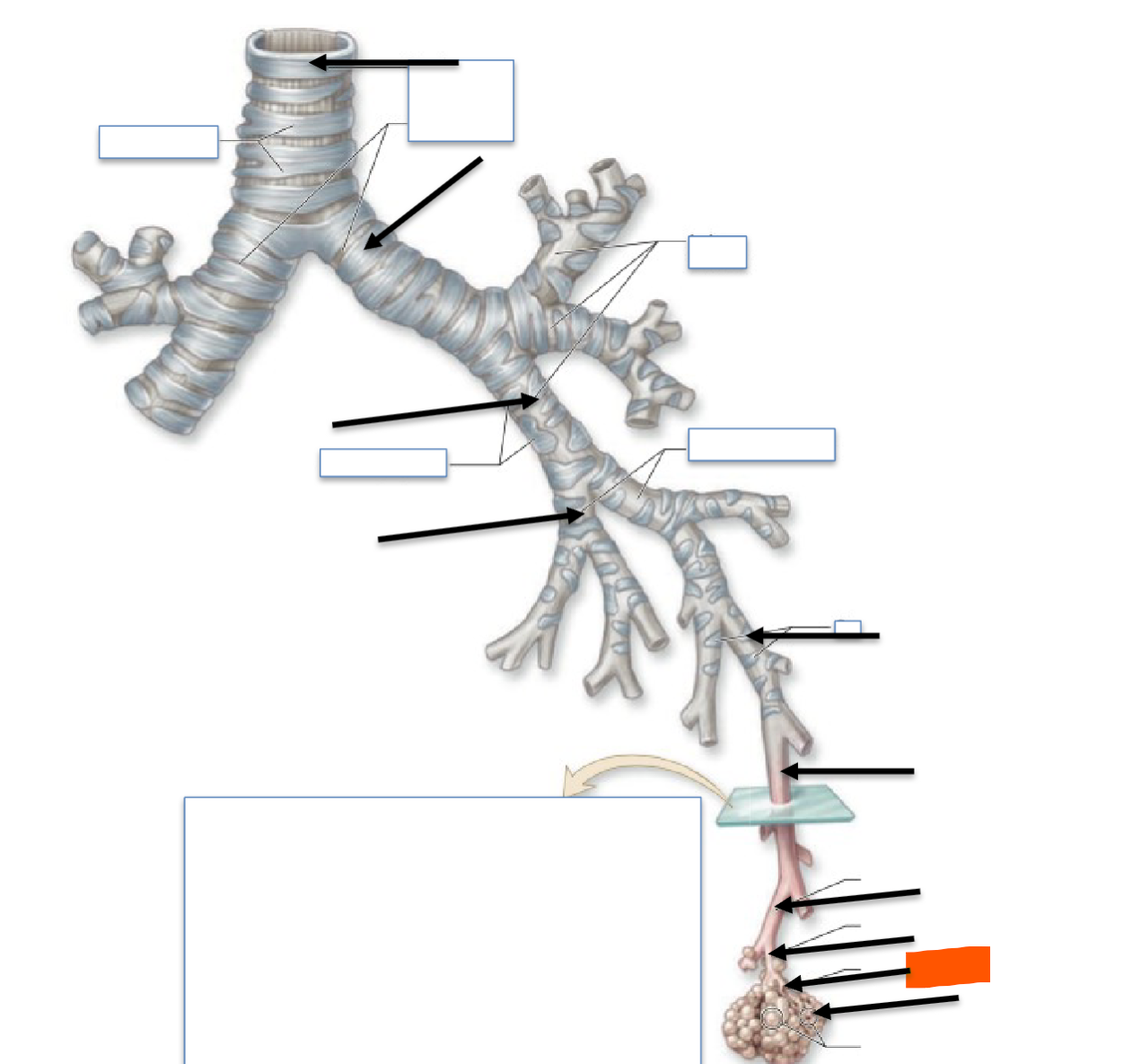
Alveolar duct

Alveoli
How many lobar bronchi does the Right Lung have?
3
How many lobar bronchi does the Left Lung have?
2
How many segmental bronchi does the Right Lung have?
10
How many segmental bronchi does the Left Lung have?
8-10
What prevents the collapse of bronchioles?
A proportionally thick layer of smooth muscle
Why do bronchi have rings of hyaline cartilage?
To prevent collapse from air pressure

Pulmonary artery
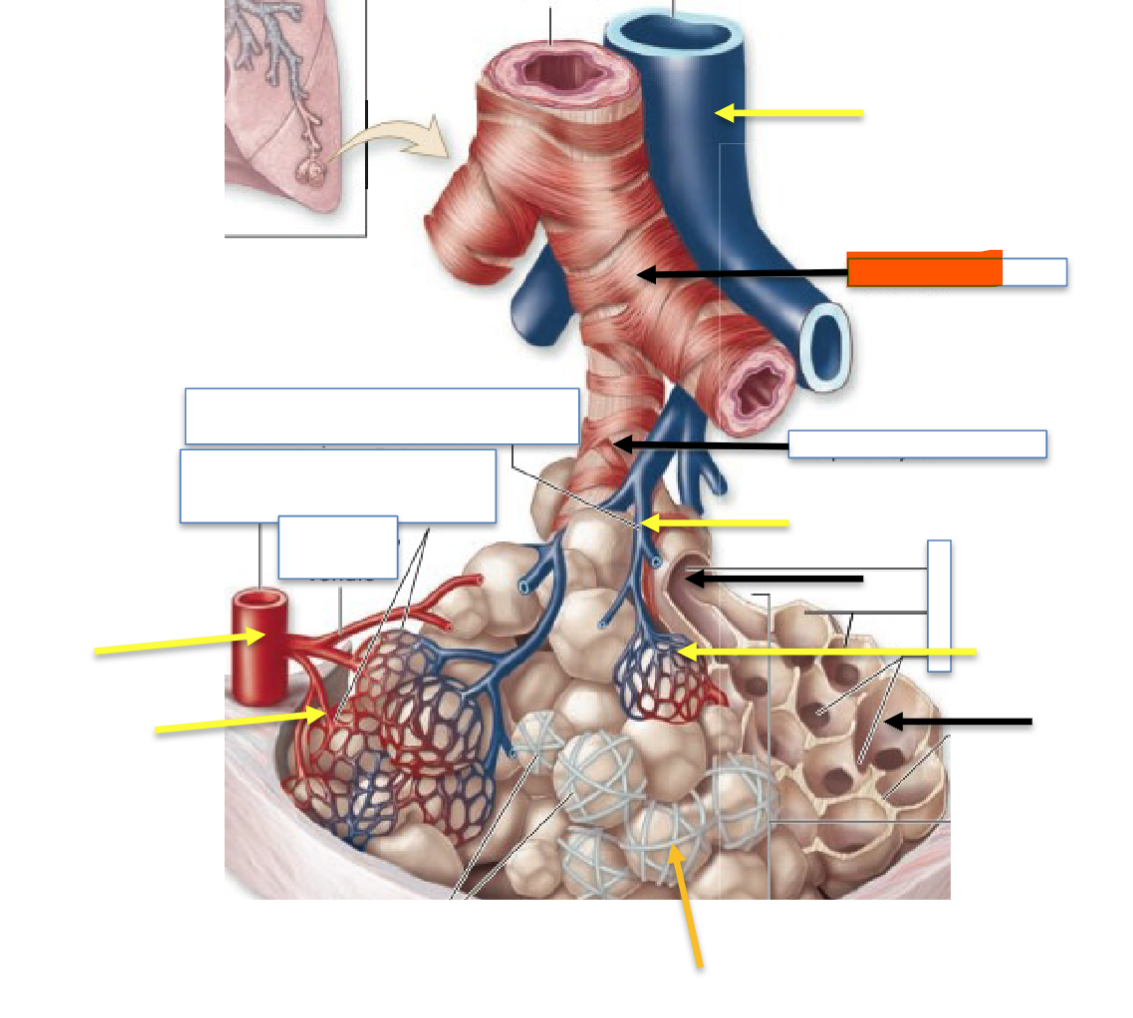
Terminal bronchiole