Art History (Sumer, Egypt, Greece, Rome)
 Call Kai
 Learn
 Practice Test
 Spaced Repetition
 Match
 Flashcards
 Knowt Play
1/24

There's no tags or description
Looks like no tags are added yet.
25 Terms

Great Ziggurat
at Ur, ca. 2100 BCE
Located in modern day iraq
Dedicated to the moon goddess Nanna
meant to be climbed + a way to connect/communicate to the gods

Votive statuettes
Tell Asmar (modern day Iraq, ca. 2900 BCE)
Made of alabaster, gypsum and limestone (not native to this area of sumar)
buried under the floor of a temple to Abu or Placed in the temple at the top of a ziggurat

Stepped pyramid of King Djoser
(saqqara, Egypt ca. 2600 BCE)
Earliest known egyptian pyramid
Very brittle + susceptible to tomb robbing

Great Pyramids
Giza Egypt ca. 2500 BCE
built by pharaohs Kufu, Khafre, Menkaure
used to be covered in a smooth marble
Why:
1. Protect mummy of the pharaoh
2. Keep alive the memory of the pharaoh

Inner Coffin of King Tut
ca. 1320 BCE

Mask of Tutankhamen
c. 1320 BCE
made of Solid gold + lapis comes from Afghanistan

Funerary krater from the dipylon cemetery
Athens ca. 750 BCE
used as a tomb stone
2 friezes on vase:
top on is a scene of mourning → corpses laid out with figures surrounding it, in mourning
Bottom is a scene showing the man’s life (warrior/warfare imagery)
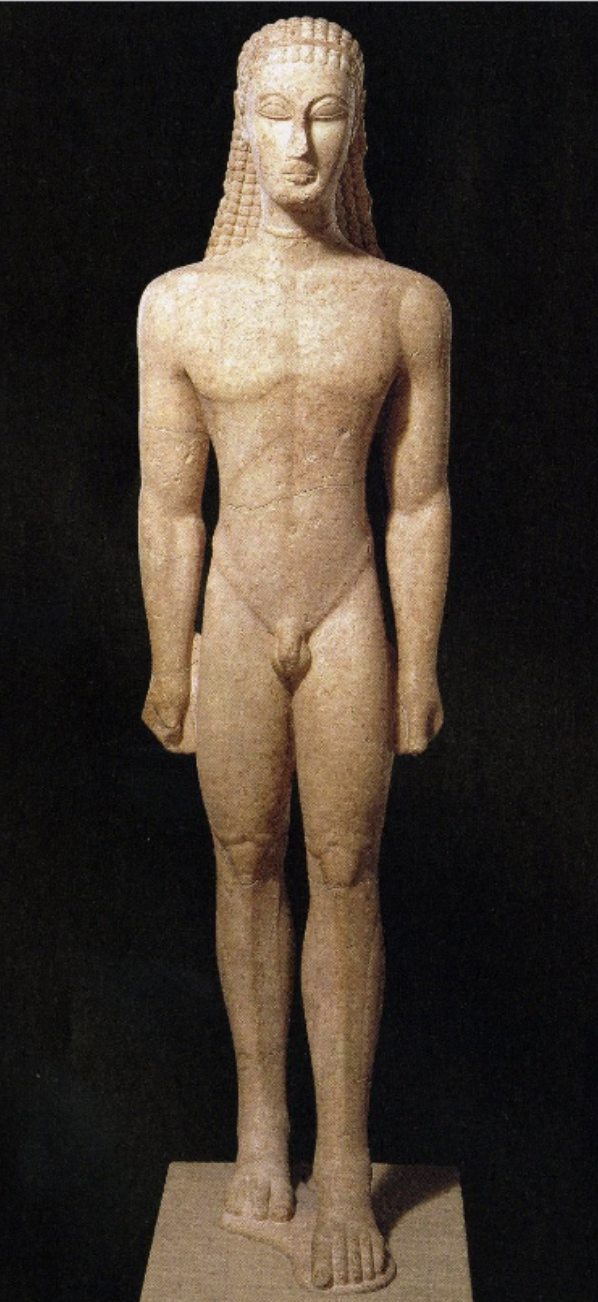
Kouros
from Attica ca. 600 BCE
Nude Free standing statue representing male youth (created with a pink marble)
Over life size + stepping pose + the greeks embraced nudity

Kritios Boy
Athens ca. 470 BCE
representing nude male youth
Carved from marble, he represents an athlete, significant change
beginning of contapposto/ asymmetry
more realistic shift in weight + more lifelike representation

Charioteer of Delphi
ca. 470 BCE (central greek)
apart of a much larger group of statues that included horses
chariot driver after winning a chariot race
Shows self- restraint, opposite of hybris, (shift away archaic art style)
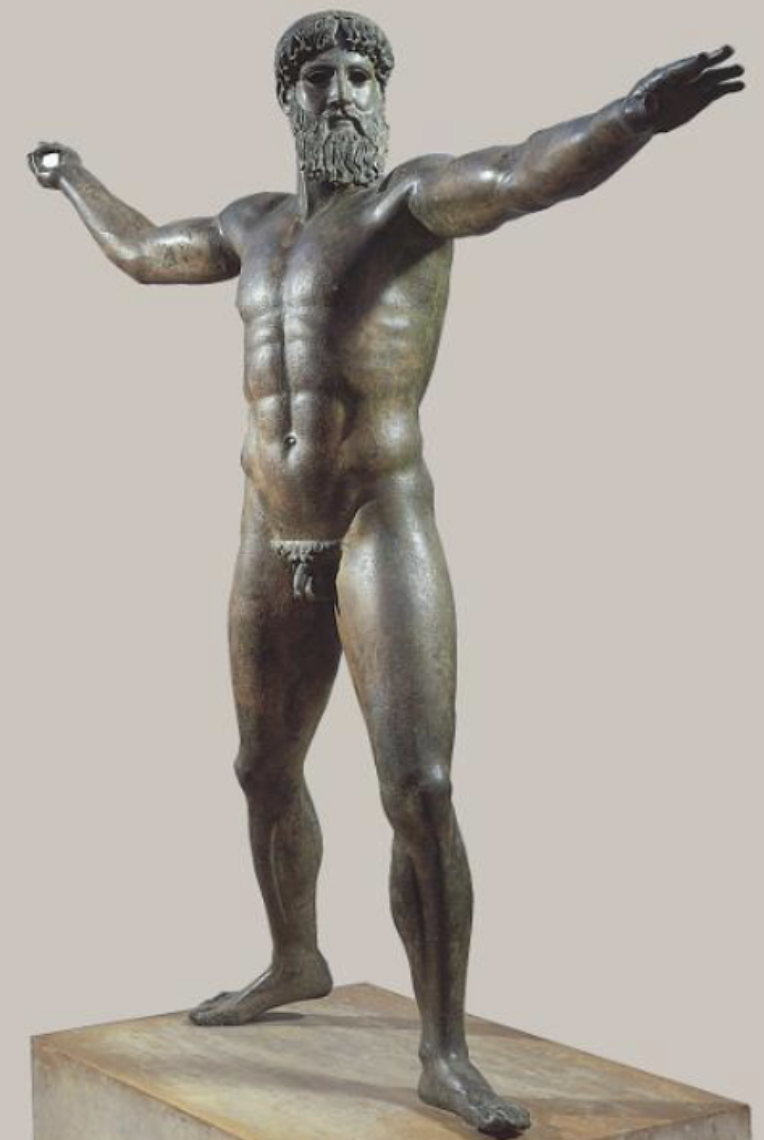
Zeus from Artemision
ca. 460 BCE
Bronze statue recovered from a shipwreck
More advance depiction of musculature
Artist still exaggerates certain features

Discobolus (discus thrower)
original of ca, 450 BCE
Artist: Myron
Wanted to express the idea of overcoming limitations of the human body

Doryphoros (spear-bearer)
ca. 440 BCE
Artist: Polykleitos
Similar to the “Kritios Boy”

The Parthenon
Athenian Acropolis 447-432 BCE
Most famous + largest greek temple
built on the acropolis by Iktinos + Kallikrates
Parthenon included more doric and ionic
Held the statue of athena parthenos

Statue of Athena Parthenos
by Phidias (438 BCE)
Colossal sculpture
Statue itself was burned, but we have a reconstruction

Temple of Portunus
Rome, late 2nd c. BCE
Maybe devoted to Portunus (unsure)
Familiar elements to the parthenon (Rectangular plan, triangular roof, columns, post + lintel)

Ront du Gard, Nimes
Nimes (france), late 1st c, BCE
roman aqueduct

Sanctuary of Fortuna
Palestrina, c. 100 BCE
Built on natural hillside
Created 7 terraces
Used concrete + added greek columns (classicizing)
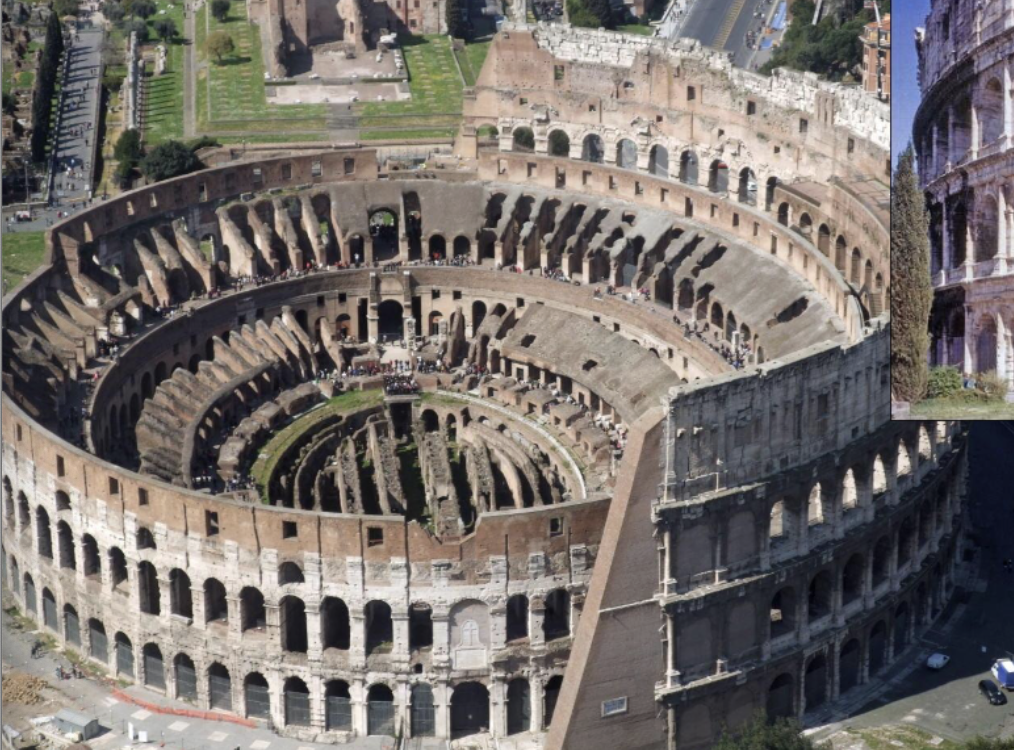
“Colosseum” (Amphitheater of the Flavians)
Rome, 80 CE
many columns on every level, (lower levels are doric, next level are ionic, top level are corinthian)
Several stories of semicircular barrel vaults → used to support seats
largest amphitheater in the roman world
system of elevators
used these battles as a spectacle or punishments

Pantheon
Rome, 125 CE
Temple to ALL the gods
Romans were interested in the psychological impact of architectural space
At the top there is a rounded dome, pierced at the top with an “oculus” (eye), open to the elements


