ExtraOral and Intraoral Exam and Techniques
 Call Kai
 Learn
 Practice Test
 Spaced Repetition
 Match
 Flashcards
 Knowt Play
1/89

There's no tags or description
Looks like no tags are added yet.
90 Terms
Purpose of oral exam
Identifying conditiond that migght require special treatment considerations
Deferral of routine care
Diagnostic testing
Special treatment adaptation
Provide a baseline/record of our treatment and diagnoses

what is this
Squamous cell carcinoma - cancer cell
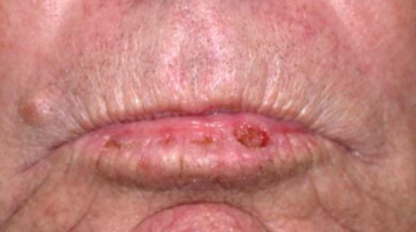
what is this
Squamous cell carcinoma - cancer cell

pustule absess

pustule/fistula - the pus is flowing
What does oral exam identify conditions that might require diagnostic test
Clinical or physical signs of
abscess
Pt reports pain/sensitivity
Pustule/fistula
What is needed to do or start the intraoral exam
Antimicrobial pre-rinse
Mouth mirror/tongue depressor
Gauze
Perio probe
Patient’s chart and/or dental history
Black ink pen
What are the initial steps to do an extraoral exam
Visual: observe
Palpation: feel
Auscultation: listen for sound
Patient response: question patient about symptoms
Starting with a visual exam
Observe for:
Color - face/ sick/ health
Form
Surface appearance
Symmetry
Size
Exudate
Movement - getting up from chair/walking
for the palpation step feel for:
Size
Shape - measured with probe or a common sized item
Symmetry
Consistency - hard/soft/bumpy/smopth
Mobile/fixed - free movement is mobile/ moves with muscle - fixed
Tissue loss
Relationship to adjacent structures - say near the tooth and what direction
Types of palpation
Digital - one finger
Bi-digital - between two fingers
Bi-manual - between two hands
Bi-lateral - same structure on opppostie side of the body
Ausculatation
Listen for sound produced
by certain body activities
Ex. Tmj click/pop
PATIENT RESPONSE - Question patients about
Habits
Symptoms
History of findings
What is the Exam Sequence for oral exams
Call patients name in waiting room
Review medical history and previoys exam records
Inform patients that you will ne preforming an oral cancer screening
Extra oral exam
Wash hands
Clean gloves
Pre-rinse - can’t be alcohol-free - regualr listen
Intraoral Exam
Alchola free presince does not
kill the microbials in the mouth
What is ppe needed for extra oral
glasses, mask, gloves
What is ppe needed for intral oral exam
wHY DO YOU DO A SEQUESe for oral screening exam
So you are less likely to make mistakes, make things more timely, and help to maintain a professional atmosphere
How to classify conditions
Normal
Not normal
Atypical - ex; pits - Something that deviates from the normal but is not the
result of disease or trauma
Abnormal - ex;cheek bit, cancer - Something that deviates from the normal and is the result of disease or trauma
How do we describe lesion descriptions BY attached
Pedunculated: attached by stem or narrow connector
Sessile: attached by broad base
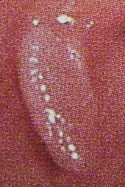
sessile lesion

papilaary

verrucose

eythema lesion - systemic, chemical
petchia
broken tiny blood vesual

Indurated- lesion

ketosis - is just a calcus on the tounge

macule - similar to a frecal

papule - mot fluid fiiled
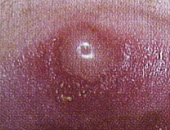
vesicle - is fluid filled like cold sores
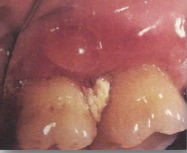
bulla

pustule

ulcer
What is a way to determine which type of lesion are you looking at look at elevated lesion flow chart - study these all sticks out of the skin
How to determine a depressed lesion - look at depressed flow chart
flat lesion flow chart
How do we record our finding dor lesions
A. Asymmetry
B.Border Irregularity
C. Colour variegation
D. Diatmeter
E. Evolving
The extraoral examination begins once you see the patient in the waiting room. What should you be observing when you are getting your patient?
general appearance, skin, facial symmetry
For the general appearance when looking at you patient what should you be paying attention to?
posture, facial expression, eyes- clear, cloudy, yellow, red, weight- can affect medical considerations, hair-specifically women, extermities
What is the palpation method of examining lymph nodes
bilateral palpation
How does an active infection make the lymph nodes feel
Palpable, tender,
mobile.
How do chronic infections in the lymph nodes feels
Palpable, mobile.
How does cancer lymph nodes feel
Stony hard, palpable, fixed- not moving to much
What are all the lymph nodes that need to be checked
preauricular, postauricular, occipital, superficial, deep, posterior, supraclavicular, submental and submandibular
What are all the lymph nodes in the head area?
preauricular, postauricular, occipital, submental, submandibular
What are all the lymph nodes on the cervical area
superficial, deep, posterior, supraclavicular
what is the palation method used for salvatory gland extraoral examiniation
bilateral palpation
Bimanual palpation
What parts should be felt when palpating the salivary gland bilaterally and bimanually
bilaterally: parotid, submandibular and submaxillary
Bimanually - sublingual
When doing the extraoral exam on the thyroid gland what is the technique that should be used?
While the patient is swallowing, check for the following:
rise/fall of the thyroid cartilage
growths or swellings
When doing the thyroid gland for the extraoral exam we are using the -_____, ___ method
bimanual palpations
When doing the TMJ for the extraoral exam we are using which methods
Observe - range of motion, how it opens,
Palpate
Listen for sounds' - does it make a clicking sound
Question patients
What are examples of abnormal conditions
leukoplakia, keratinization, linea alba, nicotine stomatitis, ulcerations

what is the abnormal condition
Nicotine stomatitis

what is this abnormal condition on the sublingual area
leukoplakia

what is the atypical condition on the cheek area
fordyce granules

what is the atypical condition in the sublingual area
tunge tie

what is the in the soft palate
epa glotis
What are the first few things we do for all the oral exams
Review records - if the patient is on record; if not, go through the medical history
Provide a pre-rinse between each exam
Once in the mouth, look first and then touch
For the intraoral examination, what areas are we observing?
Oral habitis, occulsion, lips, frenuli, vestiblue, stenson ducts, gingiva, hard oalate, tonsillar, soft palate. tounge, sublingual area, whartons duct, sublingual lymph nodes, oral habits
What do we look for on the lips
changes in tissue color, texture, size, shape, blisters, ulcers, traumatic lesions, and pheltrom
How do we palpate the lips
bidigitally
How do we palpate/inspect the frenuli
freedom of tongue and cheek, grab lip and pull it way back upwards
What do we look for on the frenuli
maxillary labial, mandibular labial, buccal frenula, and sublingual frenula during observation of the tongue
Occlusion types - make sure to observe and record
Normal/Ideal Occlusion
•a.k.a. PERFECT!
•Class I Neutroclusion
•Class II Distoclusion
•Class III Mesioclusion
How do you paplate buccal muscosa
bidigitally - feel for masses, hardened tissue
What do you look for on the buccal mucosa
color, texture, ulcerations, growths, effects of smokeless tobacco, abrasions, traumantic lesions, check biting

What is this on the buccal mucosal
lenaalba -

what is this in the buccal mucosal
cheek biting

what is this on the buccal mucosal
lip niting
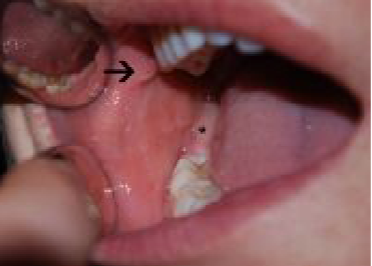
what is this
stensen duct - try miliking the duct - see if salvia comes out
What do we look for on the hard palate
general appearance, look at height, contour, color, rugae, incisive papilla
What motions do we use for paplate on the hard palagte
Palpate via finger sweep to observe any tori or growths
What do we look for on the soft palate, uvula area and tonsilar area
look for variations, Tonsil status, trauma, and petechia
What do we observe on the tongue
color, texture, shape, size, papilla, fissures, coating, mobility induration, masses or enlargements
what do we observe for in the sublingual area
lingual frenum, wharton’s duct, mucosal lining, lesions, growths
How to palpate the sublingual area
palpate bimanually and digitally
What do we palpate bimanually as well as digitally for the sublingual area
Bimanually - feel for masses, indurations on the floor
digitally - feel for tori by running your index finger along the alveolar ridge
Smell their breath while talking and observe
fruity breath is maybe diabetes, really bad breath may be tonsils, not having
When observing the gingiva look for
free and attached, inflammed ginigival tissue, abnormal pigmetation

What is an ex: of abnormal oigmentation
amalgam tattoo
When checking for oral habits look for -
Tobacco Use, Bruxism – Clenching, Mouth Breathing, Tongue Thrust, Nail Biting, Cheek Biting, Other