Geography Coastal Development
 Call Kai
 Learn
Learn Practice Test
 Spaced Repetition
 Match
Match Flashcards
 Knowt Play
1/39

There's no tags or description
Looks like no tags are added yet.
Name | Mastery | Learn | Test | Matching | Spaced | Call with Kai | Chat |
|---|
No analytics yet
Send a link to your students to track their progress
40 Terms
Waves , what causes them?
Waves are the movement of energy through water, caused by wind that blows the surface of the sea , causing the water to ripple due to friction.

Crest
The highest point of the wave

Trough
The lowest point of the wave

Wavelength
The distance from the crest to crest or trough to trough
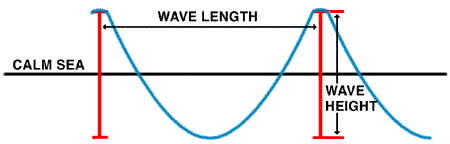
Wave height
The vertical distance from the crest to trough
Factors affecting size and formation of waves
wind speed , wind duration , fetch
What is fetch?
The uninterrupted distance of water over which the wind blows to create waves
How does wind duration affect waves?
Wind duration is how long the wind blows; the longer it blows continuously, the larger and more stable the waves become.
How does fetch affect size and formation of a wave?
Fetch is the distance of open water over which the wind blows; a longer distance gives waves more room to build up size and strength.
How does wind speed affect size and formation of the wave?
Fast wind pushes the water hard, making the waves bigger and taller.
What is swash?
When waves move up to the beach
What is backwash?
when waves retreat back down the beach
Which water movement is pulled down by gravity?
Backwash
What is a constructive wave?
Constructive waves have a low height, a long wavelength, swash is stronger to carry material, 6-9 waves per minute(infrequent), and they increase the gradient of the beach.
What is destructive wave?
A wave with high wave height, short wavelength , backwash is stronger so material is carried back into the sea, they are frequent waves at a rate of 10 and 14 per min.
Which wave is low in energy?
Constructive waves
What are the three non stop shaping physical processes?
Erosion, Transportation , deposition
What is erosion?
The wearing away of material
What is transportation?
The movement of eroded material
What is deposition?
The dropping of the material in sheltered areas where waves lose energy

What are the 4 types of erosion?
Hydraulic action , abrasion , attrition , solution (HAAS)
What is Hydraulic action?
Powerful waves that crash against the coastline , forcing water and air into cracks and rock. This puts pressure on the rock causing it to loosen up and break.
Found during stormy conditions

What is Abrasion?
When sand , pebbles and stones carried by waves are thrown at the shoreline when waves crash onto the beach. The pebbles collide with the shoreline , wearing it away like sandpaper.

What is Attrition?
Chunks of rock being carried in the water are constantly knocking and rubbing against eachother , causing them to wear away into smaller and rounder bits - forming sand and shingle

What is a Shingle?
shingle simply means pebbles , gravel and small rounded stones found on the beach
What is Solution?
When sea salts, acids and other chemicals dissolve away rocks. The waves take away these minerals as they move
What are the factors affecting rate of erosion?
Geology- if the rock is harder it will eroded at a slower pace
Fetch- A longer fetch gives the wind more time and distance to build up larger, more powerful waves, which crash against the coast with more energy and cause faster erosion.
Angle of slope- Steep slopes erode more frequently and violently
Weather conditions- freezing temps and heavy rain increase rate of erosion.
Amount of vegetation- presence of vegetation helps stabilise slopes
Amount of human interference- if there are no man made structures , the coast is more vulnerable to attack.
What are the 4 transportation methods?
Traction
saltation
suspension
solution
(TSSS)
What is suspension?
When fine material like clay and sediment is carried by the sea.
What is Solution? (transportation)
dissolved minerals that are carried away by sea
What is traction?
Large pebbles that are rolled along the sea bed.
What is Saltation?
Small stones, pebbles and salt bounces along the sea bed.
What is weathering?
The breaking down of rocks and other materials on the earths surface by the atmosphere, water, or living organisms.
What is the breakdown of rock in situ mean?
The rock breaks down where it is, rather than moving.
What are the 3 types of weathering?
Physical/mechanical
Chemical
Biological
What is biological weathering?
When animals and plants wear away rocks.
Animals can dig into cracks , weeds can grow in cracks and walking with boots and shoes can wear away rocks.
What is physical weathering?
Weathering causes by physical changes in temp , freezing , effects of wind, rain and waves.
ex. freeze-thawFreeze-thaw weathering occurs when water seeps into rock cracks, freezes and expands, and forces the rock to split apart over time.
What is Chemical weathering?
The weathering caused by chemicals , for example acid rain.
What is acid rain?
Acid rain is caused when fossil fuels like coal or oil is burned, releasing carbon dioxide and sulpher dioxide , which mixes with the cloud and makes rainwater more acidic.