Anatomy 5 (Nervous System)
 Call Kai
 Learn
 Practice Test
 Spaced Repetition
 Match
 Flashcards
 Knowt Play
1/93

There's no tags or description
Looks like no tags are added yet.
94 Terms
Nerve Tissue Function
Sense change
Interpret change
React to change
Central Nervous System
Visceral
Somatic
Visceral
Targets involuntary organs
Parasympathetic or sympathic response
Somatic
Targets voluntary muscles and skin
Motor response
Afferent (Sensory)
Information coming in
Visceral
Somatic
Efferent (Motor)
Info going out
Somatic
Autonomic
Sympathetic
Parasympathetic
Peripheral
Afferent
Efferent
Soma
Neuron body
Nissel Body
Modified neuron ER
Neurofibril
Fiber in dendrites
Lipofuscin
Aging pigment
Synaptic Bouton/Axon Terminal
End of axon branch

Hillock
Connects body to axon
Initial Segment
Proximal end of axon where action potentials are triggered
Collaterals
Axon branches
Telondria
End of the axon before the terminal
Axon
Side that sends info
Myelin sheaths
Dendrite
Side that receives signal
Axolemma
Neuron cell membrane
Nerve
Bundle of parallel neuron axons
Epineurium
Dense irreg; surrounds entire nerve
Perineurium
Dense irreg; wraps bundles of axon
Endoneurium
Areolar; wraps indiv axon
Neuroglia Cells
Support cells for neurons
CNS Neuroglia
Oligodendrocytes
Astrocytes
Microglia
Ependymal
PNS Neuroglia
Schwan Cells
Satellite Cells
Oligodendrocytes
Myelinate neurons to decrease ion leakage and increase speed of conduction
Astrocytes
Form scar tissue
Direct neuron growth
Cover capillaries to make blood brain barrier
Microglia
Survey environment in the brain and surround damaged sites
Ependymal Cells
Make CSF
Cube/column along ventricles
Schwan Cells
Wrap around axon to myelinate
Satellite Cells
Regulate, support, and stabilize the chemical microenvironment around neuron cell bodies
Forebrain
Cerebrum
Diencephalon
Midbrain
Mesencephalon
Hindbrain
Cerebellum
Pons
Medulla
Cerebrum
Conscious activity, cortical function, memory etc.
2 hemispheres + Basal ganglia
Longitudinal Fissure
Divides L/R cerebrum
Central Sulcus
Seperates frontal and parietal
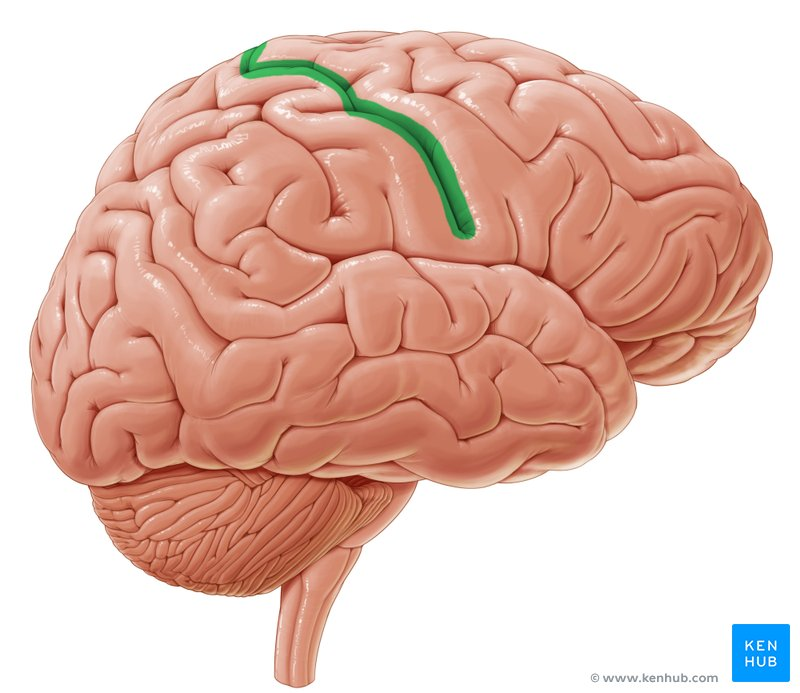
Precentral Gyrus
Primary motor cortex
Posterior frontal lobe

Postcentral Gyrus
Primary somatosensory cortex
Lateral parietal lobe

Lateral Fissue/Sylvian Sulcus
Largest lateral groove

Calcarine Sulcus
Groove on medial occipital lobe

Corpus Callosum
Fiber connection between R/L hemispheres of the cerebrum

Anterior Commissure
Smaller connection between the R/L hemispheres of the cerebrum

Cerebrum Lobes
Frontal
Parietal
Temporal
Occipital
Insula
Cingulate
Pre Motor Cortex
Motor function
Frontal lobe
Humunculus
Broca’s Area
Speech
Frontal lobe
Parietal Lobe
Sensation/perception + represent the external world spatially
Math estimation
Occipital
Vision processing
Insula
Taste
Temporal Libe
Olfaction, auditory, memory
Hippocampus
Parahippocampal Gyrus
Fornix
Amygdaloid Body
Hypothalamus
Hippocampus
Memory
Temporal/Limbic

Parahippocampal Gyrus
Surrounds hippocampus
Temporal/Limbic

Fornix
Connects hippocampus to hypothalamus
Temporal/Limibc

Amygdala
Rage, fear, anxiety
Temporal/Limbic

Limbic System
Establishes emotional states
Hippocampus
Parahippocampal Gyrus
Fornix
Amygdala
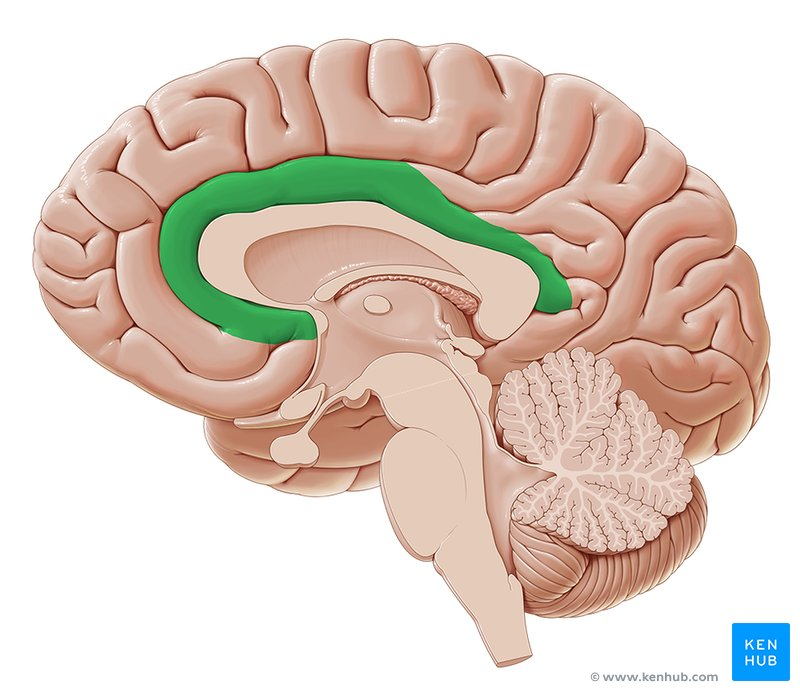
Cingulate Gyrus
Cingulate Gyrus
Above the corpus callosum, surrounding the end of the hippocampus; emotions and agression
Limbic
Basal Nuclei
Paired masses of grey matter for motor activity
Caudate
Claustrum
Putamen
Globus Pallidus
Cuadate Nucleus
Head and tail motor function
Claustrum Nucleus
Visual processing and patterns
Putamen Nucleus
Regulates movement and influences learning
Globus Pallidus
Adjusts muscle tone
Epithalmus/Pineal Gland
Produces melatonin
Diencephalon

Thalamus
All sensory input (excpet olfactory) is processed here 1st; fine motor
Diencephalon
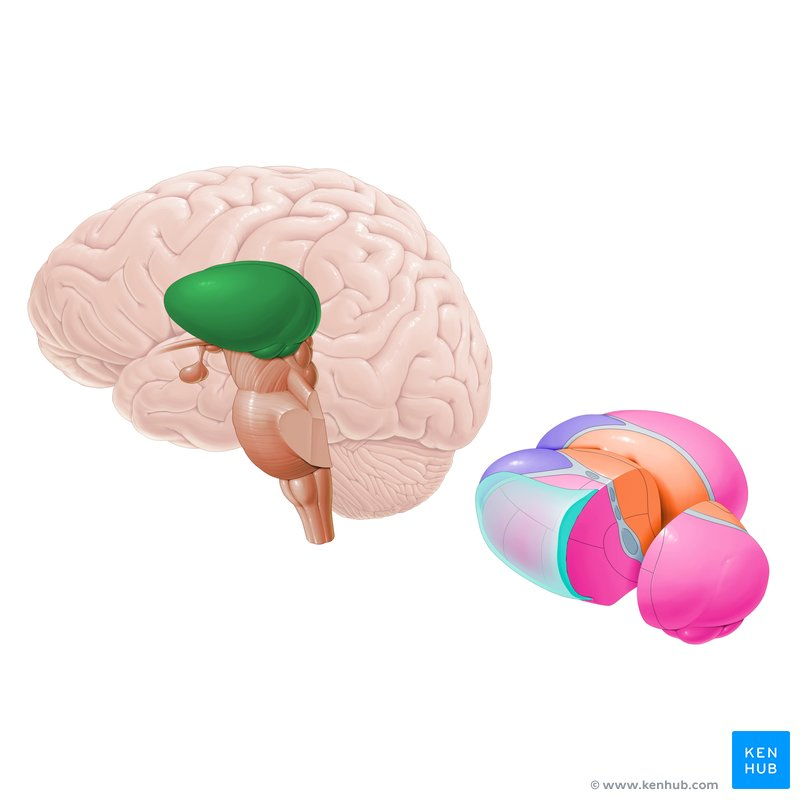
Lateral Geniculate Nuclei
Visual processing
Thalamus
Medial Geniculate Nuclei
Auditory processing
Thalamus
Hypothalamus
Feeding, fighting, fleeing, mating
Diencephalon

Pituitary Gland
Anterior: Endocrine portion that prod/releases its own hormones
Posterior: Neural portion that stores/releases hormones from the hypothalamus

Mammilary Body
Limbic system relay? Memory
Diencephalon

Corpa Quadrigemini
4 bulges at the top of the midbrain that are sensory reflex centers
2 Superior Colliculi: Vision
2 Inferior Colliculi: Auditory

Reticular Formation
Consciousness
Mesencephalon

Substantia Nigra
Regulates basal nuclei
Mesencephalon

Cerebral Peduncles
Connect the cerebrum to the brainstem
Mesencephalon

Pons
Bridges the midbrain and the medulla
Start of cranial nerves 5-8
Respiratory centers
Hindbrain
Medulla
More reticular formation, reflexes
Hindbrain

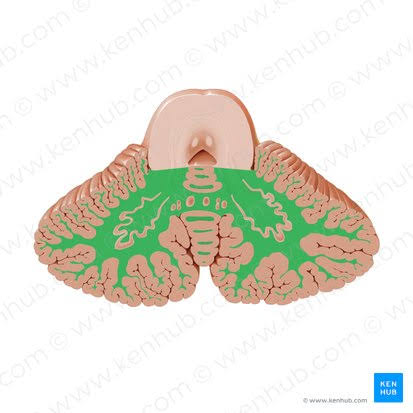
Cerebellum
Learned/voluntary movements, balance, posture
Hindbrain

Vermis Connector
“Worm” like connector in the center of the cerebellum

Arbor Vitae
Branched white matter in the cerebellum
Cranial Nerves
Part of the peripheral nervous system that connects your brain to your body without the spinal cord
0 (Anterior) to 12 (Posterior)
“Sex” CN 0
Detects pheromones
Olfactory CN 1
S: Scent
Optic CN 2
S: Vision
Oculomotor CN 3
M: Eye muscles that aren’t via 4 and 6
Trochlear CN 4
M: Superior oblique
Trigeminal CN 5
S: Face and teeth
M: Mastication
Abducent CN 6
M: Lateral rectus muscles
Facial CN 7
S: Taste
M: Face
Vestibulocochlear CN 8
S: Auditory and spatial
Glossopharyngeal CN 9
S: Posterior tongue, tonsils, pharynx
M: Pharynx
Vagus CN 10
S: Heart lungs, GI, external ear
M: Heart, lungs, GI
Accessory CN 11
M: Sternocleidomastoid, traps
Hypoglossal CN 12
M: Tongue
Oh, oh, oh, to touch and feel Valerie’s good V, ah heaven
Olfactory, optic, oculomotor, trochlear, trigeminal, abducent, facial, vestibulocochlear, glossopharyngeal, vagus, accessory, hypoglossal
Sensory, motor, or both mnemonic
Some say marry money, but my brother says big Bs matter more