Toad Skeletal System Skull
 Call Kai
 Learn
 Practice Test
 Spaced Repetition
 Match
 Flashcards
 Knowt Play
1/40

There's no tags or description
Looks like no tags are added yet.
41 Terms
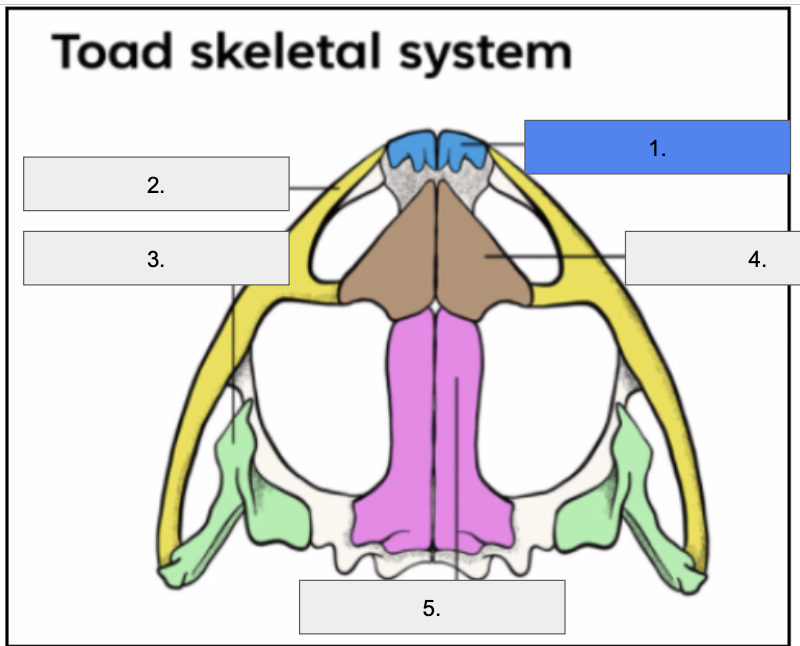
Premaxilla

Maxilla

Squamosal

Nasal
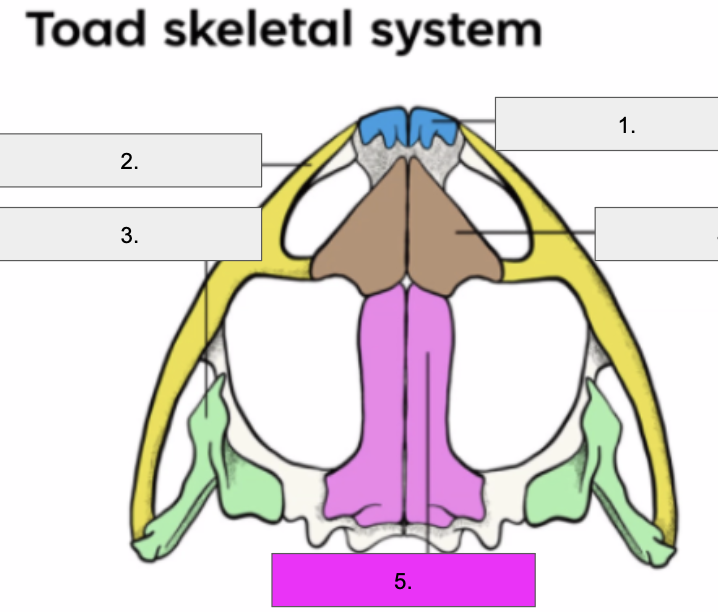
Fronto-parietal

Atlas

Vertebra

Amphicoelous

Sacral Verterbra

Urostyle

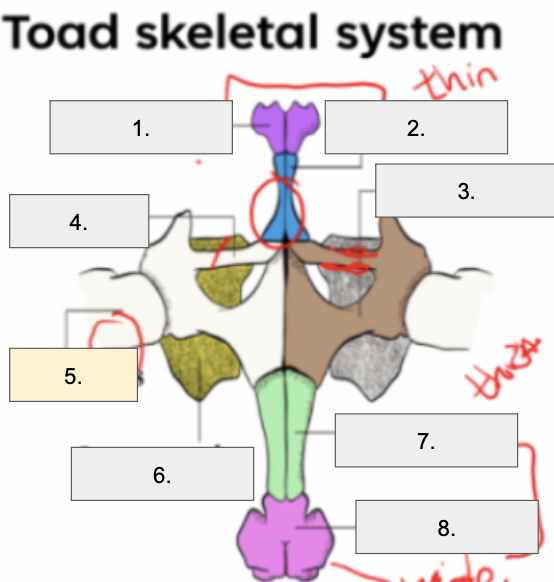
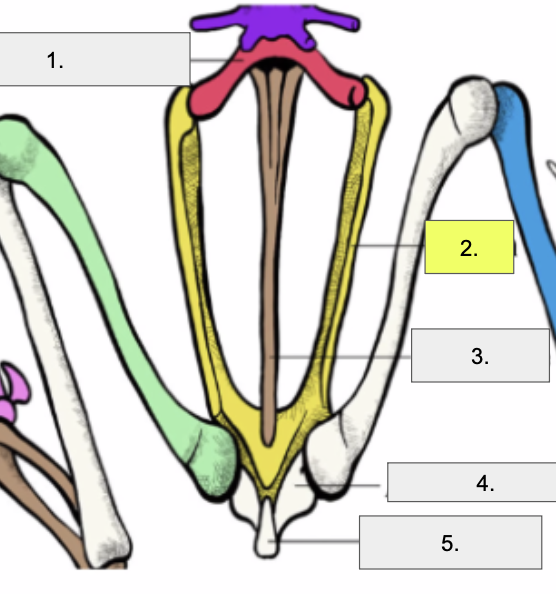
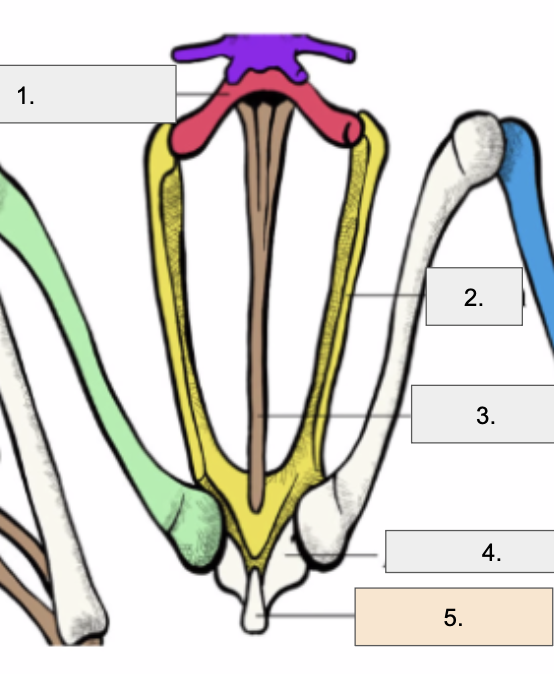
Episternum

Omosternum
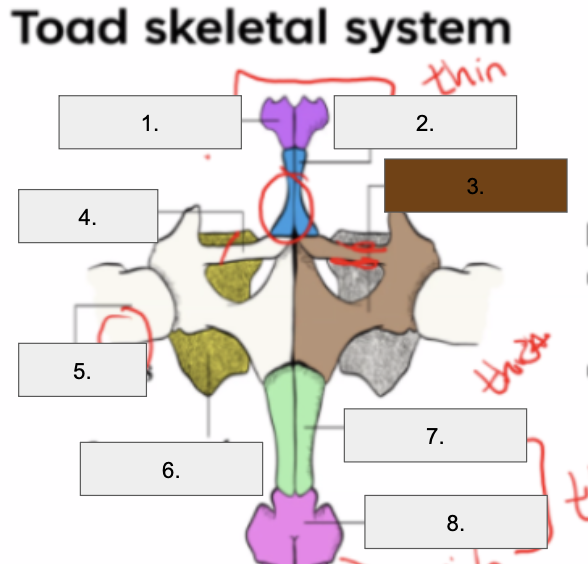
Procoracoid

Clavicle
Humerus

Suprascapula

Sternum

Xiphisternum

sacral vertebra
Ilium

Urostyle

Acetabulum
Ischium
Femur

Tibio-Fibula

Astragalus

Calcaneum

Tarsals

Metatarsals

Phalanges

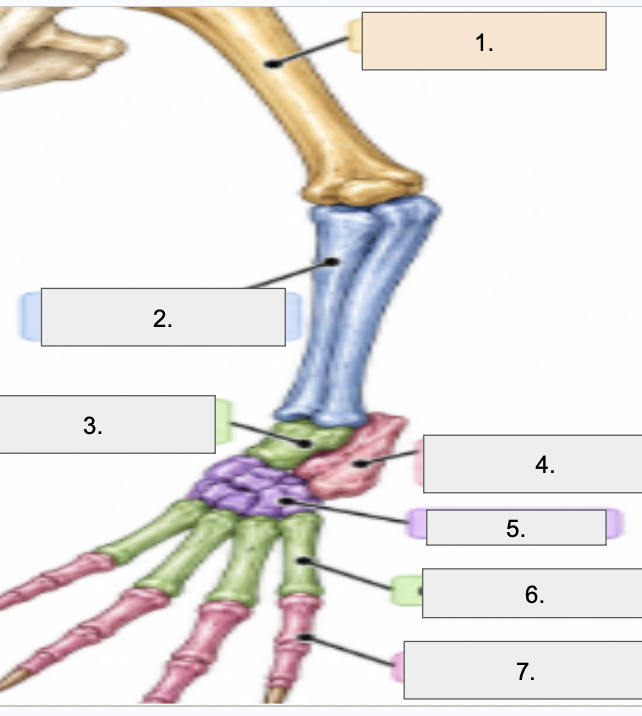
Humerus

Radio-Ulna
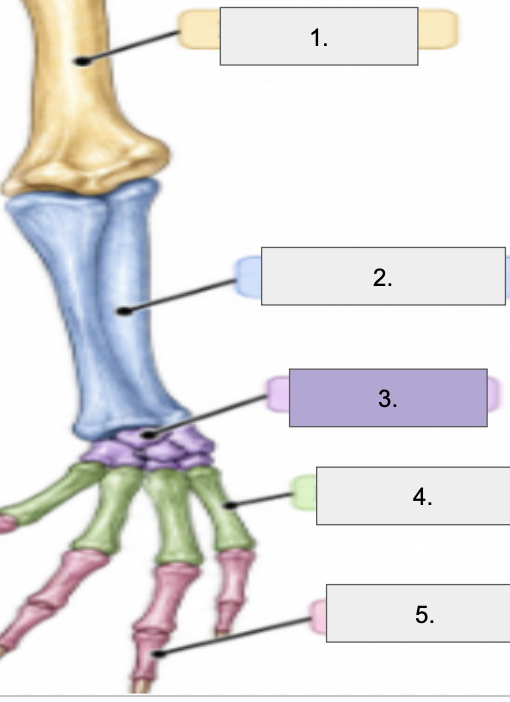
Carpals

Metacarpals
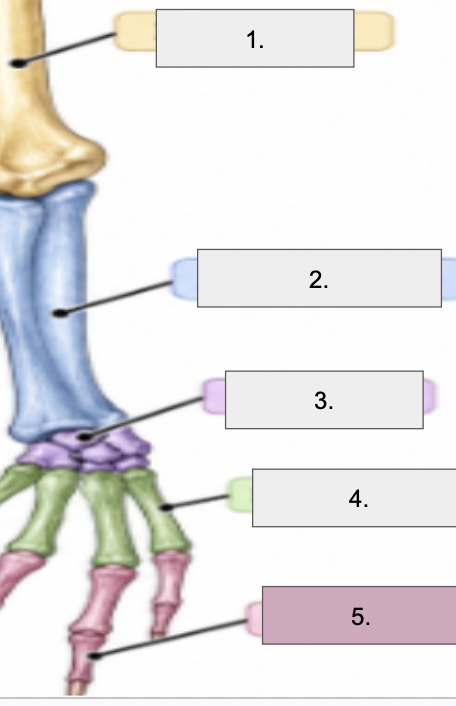
Phalanges
Skull
It protects the brain and sensory organs.
It is light and flattened to reduce weight for jumping.
It has a wide mouth structure for catching prey. (Maxilla)
Vertebral Column
It provides flexibility and shock absorption during jumping.
In frogs, the vertebral column is composed of 9 vertebrae, shorter than in other vertebrates.
It ends in a Urostyle, a fused bone that aids in absorbing powerful leaps. Vertebral Column
Urostyle - It cushions impact often; Shock-absorption jumping.
Pectoral Girdle (Shoulder Bone)
It supports the forelimbs and absorbs impact when landing.
Also aids in respiration and movement.
Pelvic Girdle (Hip Bone)
One half - Innominate bones
Pelvic Girdle - It is strongly built to support powerful hind limbs for jumping.
It connects to the urostyle for stability.
Forelimbs
it is supported by the pectoral girdle and are adapted for support and movement.
Bears four digits (4) and a Rudimentary Thumb called the Prepollex.
Hindlimbs
It is adapted for jumping and movement.
Bears five digits (5)and a Rudimentary Sixth Toe
called the Prehallux