Clinical Orthopedics 222 Exam 3 Special tests for wrist and hand
 Call Kai
 Learn
 Practice Test
 Spaced Repetition
 Match
 Flashcards
 Knowt Play
1/25

There's no tags or description
Looks like no tags are added yet.
26 Terms

Special tests
Finkelstein test
-how is this preformed
1.The patient sits or stands and forms a fist around the thumb. The tester stands with their proximal hand grabbing the patient’s forearm and the distal hand grasping the patient’s fist, with the patient’s thumb in the tester’s thenar eminence
2.While stabilizing the patient’s forearm, ulnarly deviate the patient’s wrist

Special tests
Finkelstein test
-what makes this test positive
Pain over the distal abductor pollicis longus and extensor pollicis brevis is a positive result indicating tenosynovitis of these tendons (De Quervain’s disease)

Special tests
phalen test
-how is this done
1.The patient sits or stands with the dorsal aspect of both hands in full contact so that both wrists are maximally flexed
2.The patient sits or stands with the dorsal aspect of both hands in full contact so that both wrists are maximally flexed

Special tests
phalen test
-what makes this positive
Numbness and parasthesia in the median nerve distribution of the fingers are a positive result indicating carpal tunnel syndrome

what is this
reverse phalen’s test

Tinel’s sign (at carpal tunnel )
-how is this preformed
The patient sits and the tester taps the volar aspect of the patient’s wrist over the area of the carpal tunnel

Tinel’s sign (at carpal tunnel )
-what makes this positive
Complaints of tingling, parasthesia, or pain in the area of the first 3 digits and the radial ½ of the 4th digit is indicative of median nerve compression (carpal tunnel syndrome)

Tinel’s sign (at carpal tunnel )
-positive result could indicate what
median nerve compression anywhere in UE, therefore we should also examine the elbow, shoulder, and neck

Valgus stress test
-how is this done
1.The tester maintains stabilization of the proximal bone between the thumb and forefinger, and grasps the distal bone
2.The tester provides a valgus force to the joint, creating a fulcrum while attempting to “gap” the joint

Valgus stress test
-what makes this test positive
Excessive gapping when compared to the uninvolved side may indicate a collateral ligament tear
-At the 1st digit this is indicative of gamekeeper’s thumb

Valgus stress test
-this can be done for what
individual digits as well as the valgus test can be done on the thumb to test for gamekeeper’s thumb
Tinel’s sign (at carpal tunnel )
-where can’t you do this at
you can’t do this for the radius as there is no tunnel
Upper Limb Tension Test 1 (ULTT 1)—Median Bias
-how is this done
The patient is positioned supine. The clinician depresses the shoulder girdle, abducts the humerus to approximately 110 degrees, supinates the forearm, and extends the elbow, wrist, and fingers to place stress through the median nerve. The sensitizers for this test are cervical spine side flexions either toward or away from the involved side.
Upper Limb Tension Test 2 (ULTT 2)—Radial Bias
The patient is positioned supine. The clinician depresses the shoulder girdle, extends the elbow, internally rotates the shoulder, pronates the forearm, flexes the wrist and fingers, and then abducts the shoulder to place stress through the radial nerve. The sensitizers for this test are cervical spine side flexions either toward or away from the involved side, or scapular elevation. Alternatively, a position consisting of scapular depression, shoulder internal rotation, elbow extension, forearm pronation, and wrist flexion with the addition of shoulder abduction 40 degrees and extension 25 degrees, wrist ulnar deviation and thumb flexion has been demonstrated to significantly provide greater tension of the radial nerve than any other tested position.50
Upper Limb Tension Test 3 (ULTT 3)—Ulnar Bias
The patient is positioned supine. The clinician extends the wrist, supinates the forearm, fully flexes the elbow, and depresses, externally rotates, and abducts the shoulder to place stress through the ulnar nerve. The patient’s wrist and fingers are then placed in extension. The sensitizers for this test are side flexion of the head and neck, both toward and away from the test side. A number of modifications to this test have been suggested including:
-Replacing the forearm supination with forearm pronation
-Replacing the combination of shoulder external rotation in abduction with internal rotation combined with horizontal abduction
Interventions
Manual
-PROM
-soft tissue mobilization
-joint mobilization
Exercise
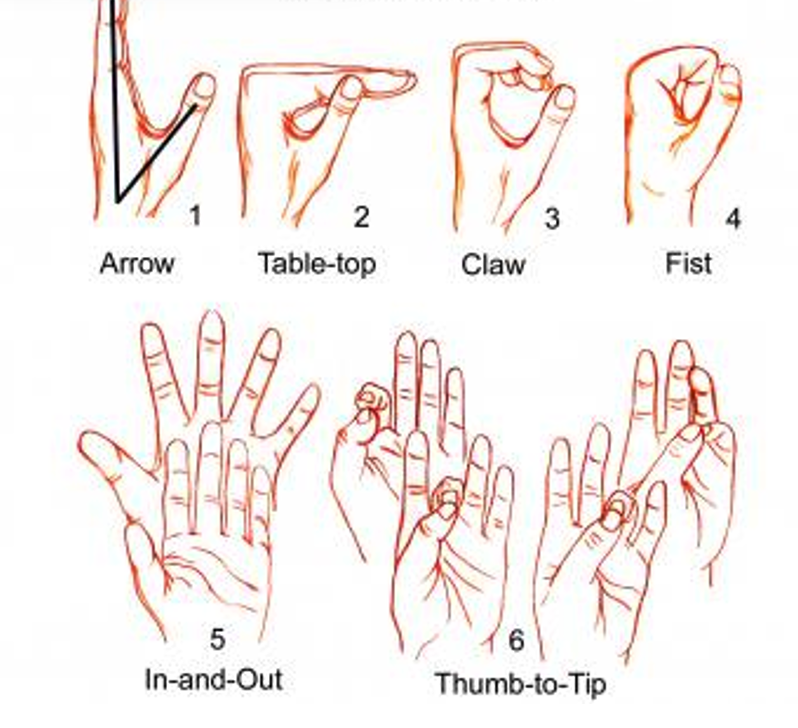
what is this
“six pack exercises”

Manual therapy
PROM
-Elbow
Flexion and extension

Manual therapy
PROM
-forearm
supination/pronation
flexion/extension
Radial/ulnar deviation
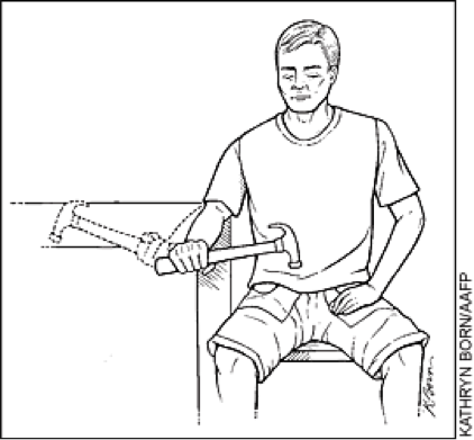
Stretching/PROM
Supination/pronation
-Forearm supination and pronation
hammer/wand
towel
Stretching/PROM
Supination/pronation
-wrist
Flexion
Extension
Radial deviation
Ulnar deviation
Stretching/PROM
Supination/pronation
-elbow
flexion and extension

what is this
therapy putty

what is this
finger web
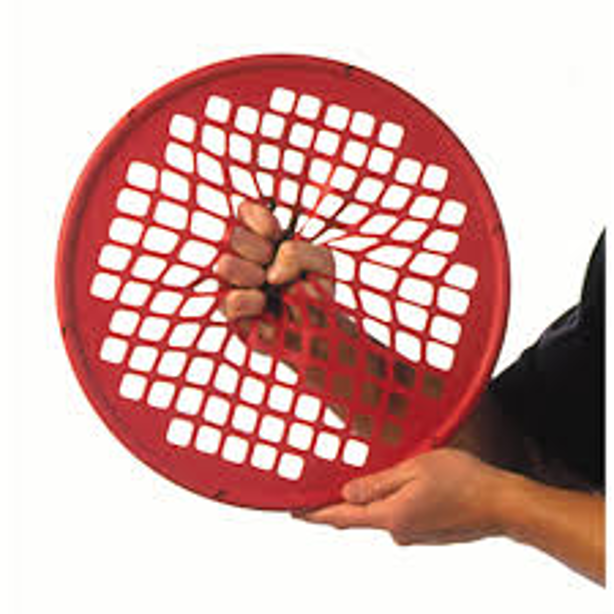
finger web
-stretching
Flexion
Extension
radial deviation
ulnar deviation

finger web
-Strengthening
Flexion
Extension
Abduction
Adduction