Language Psychology Exam 1
 Call Kai
 Learn
Learn Practice Test
 Spaced Repetition
 Match
Match Flashcards
 Knowt Play
1/28

There's no tags or description
Looks like no tags are added yet.
Name | Mastery | Learn | Test | Matching | Spaced | Call with Kai | Chat |
|---|
No analytics yet
Send a link to your students to track their progress
29 Terms
Core methods: Behavioral
ACCURACY
RESPONSE TIMES
READING TIMES
Neural
fMRI
EEG/MEG
PATIENT STUDIES
INTRACRANIAL RECORDINGS
TMS
fNIRS
Physiological
EYETRACKING
SKIN CONDUCTANCE
Behavioral: Accuracy
Advantages:
- easy! (able to collect accurary data in the classroom)
• directly measures behavior (able to ask questions about what people know, think, etc.)
• can be done almost anywhere
Limitations:
- requires measuring performance against some standard
• the underlying mechanism is unclear - the same task might be done in different ways
• people can fail for many different reasons
Example: Legalese (Case Study)
(to comply with the law, people should be able to understand it, but notably people find it hard to read including lawyers themselves)


Behavioral: Response Times
Also called reaction times
Clap if this animal lives in water
- identifying could be affected due to schema, recent experience/encounters, the animal sometimes living on land (and you think about that first), linguisics properties, social pressures, frequency (fish is more common, armadillo is less common)
Advantages:
- easy!
• can shed light on the mechanism (starting to talk about the how, not just the what)
underlying behavior
• can be done almost anywhere
Limitations:
- does not apply to tasks that are internally initiated
• requires comparing two competing
hypotheses that make different
predictions about response times
• can be hard to determine the source of the delay/speedup
Behaviorial: Reading Time
Advantages: easy-ish
• can shed light on the mechanism underlying language comprehension
• does not require an explicit task (other than reading)
Limitations: limited to reading times
• effects “spill over” onto
subsequent words - not always easy to analyze
• only an indirect measure of mechanism
example: congruent sentences quicker to read:

80 billion

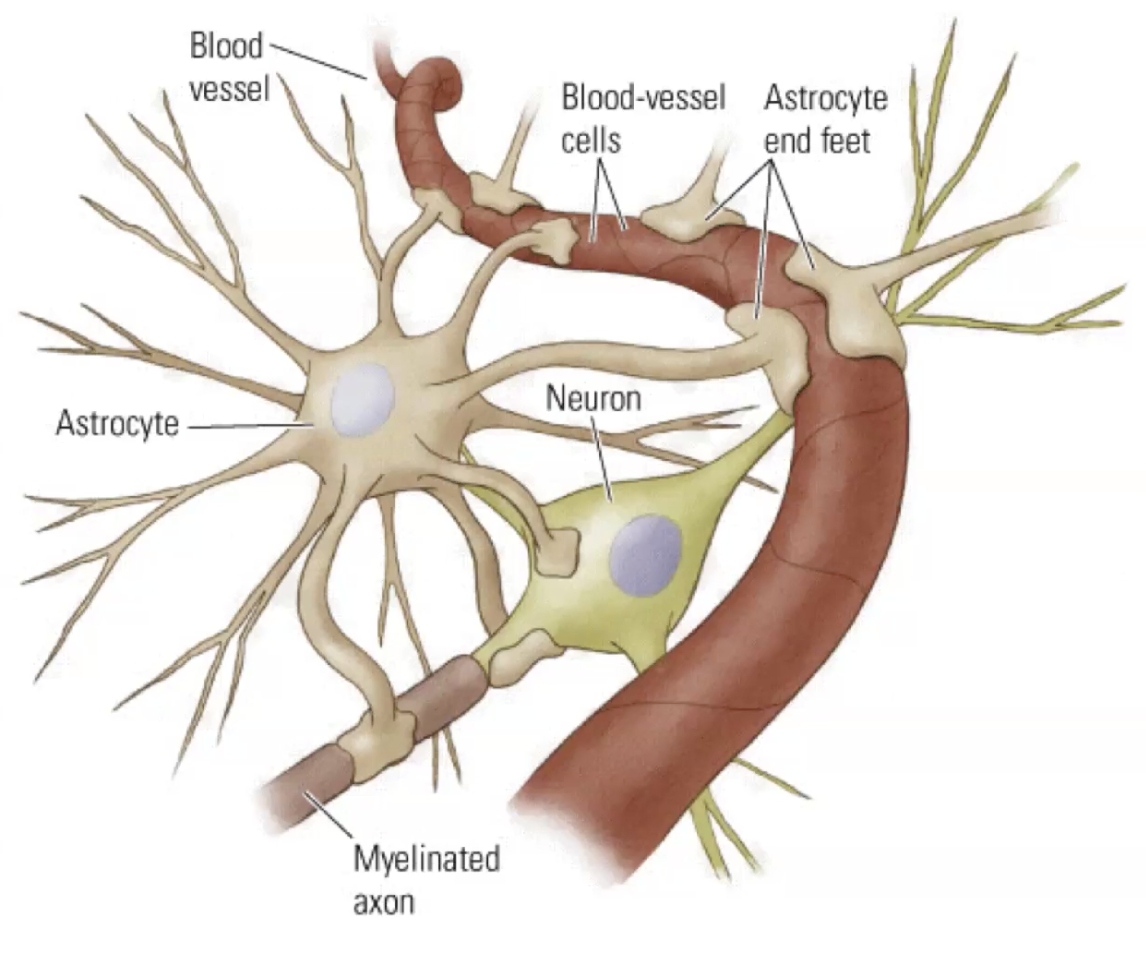
how many neurons does the brain have?
Axon
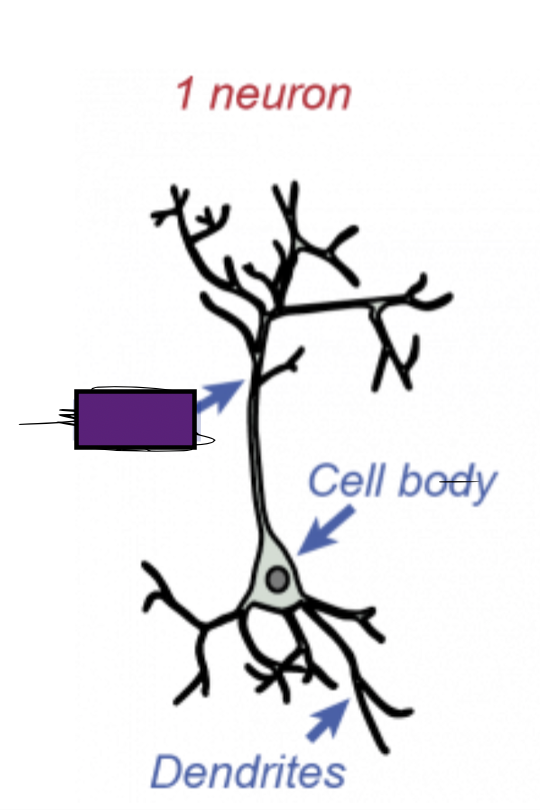
What is the missing part?
Celebral Cortex

FP
TO
multifaceted
the kinds of things we can talk about when talking about language is ____
Mind

according to the slides, we already have this technology in our ______
to know
Lets say you have two people and one person wants to express that the sky is blue. When they say “the sky is blue” that image will be engraved in the others head.
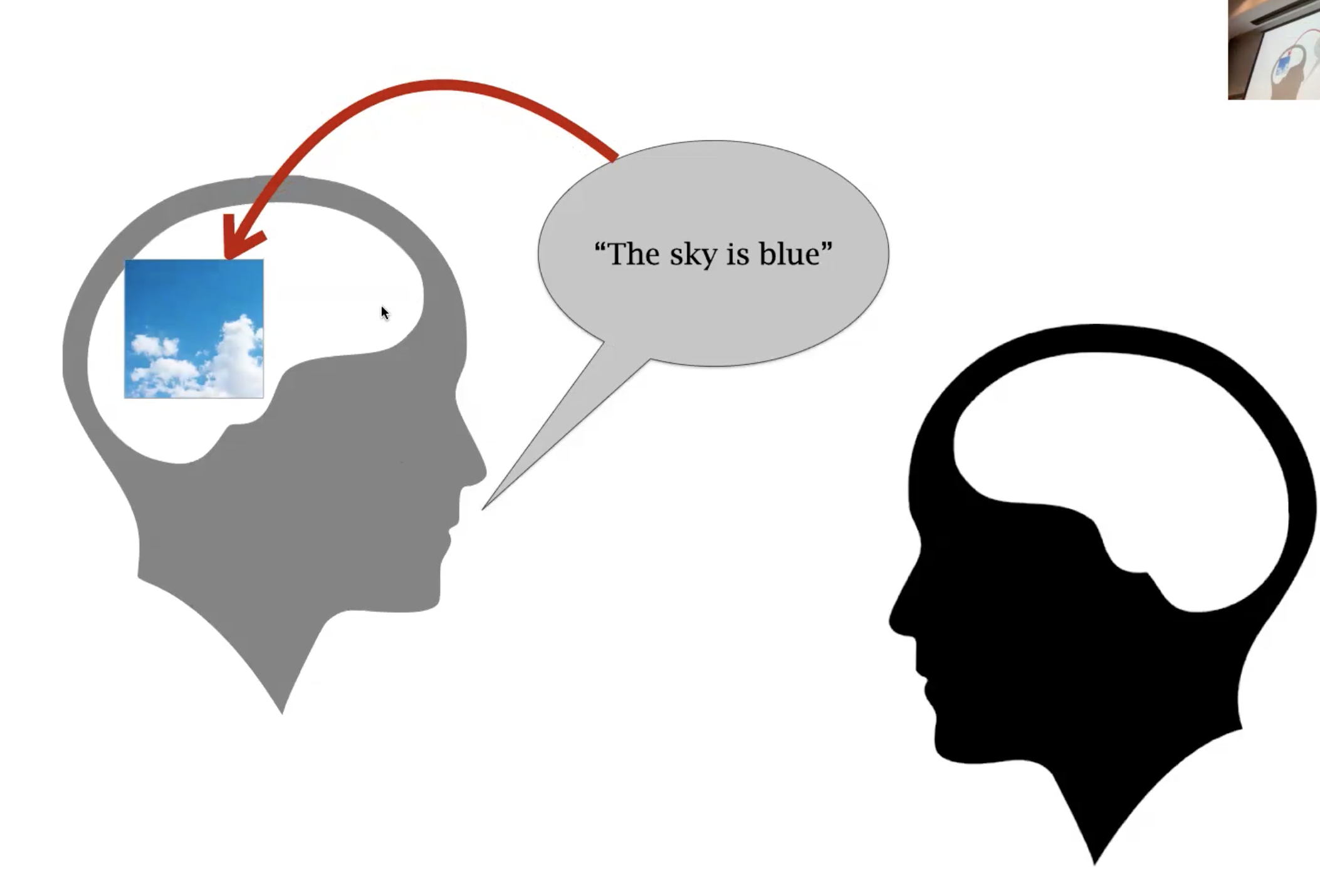
and you can also make inferences from it (i.e., if you’re both in Atlanta/the same location)
head
Language as a window into the mind:
Language allows us to figure out whats going on in another person’s ___

The Turing Test
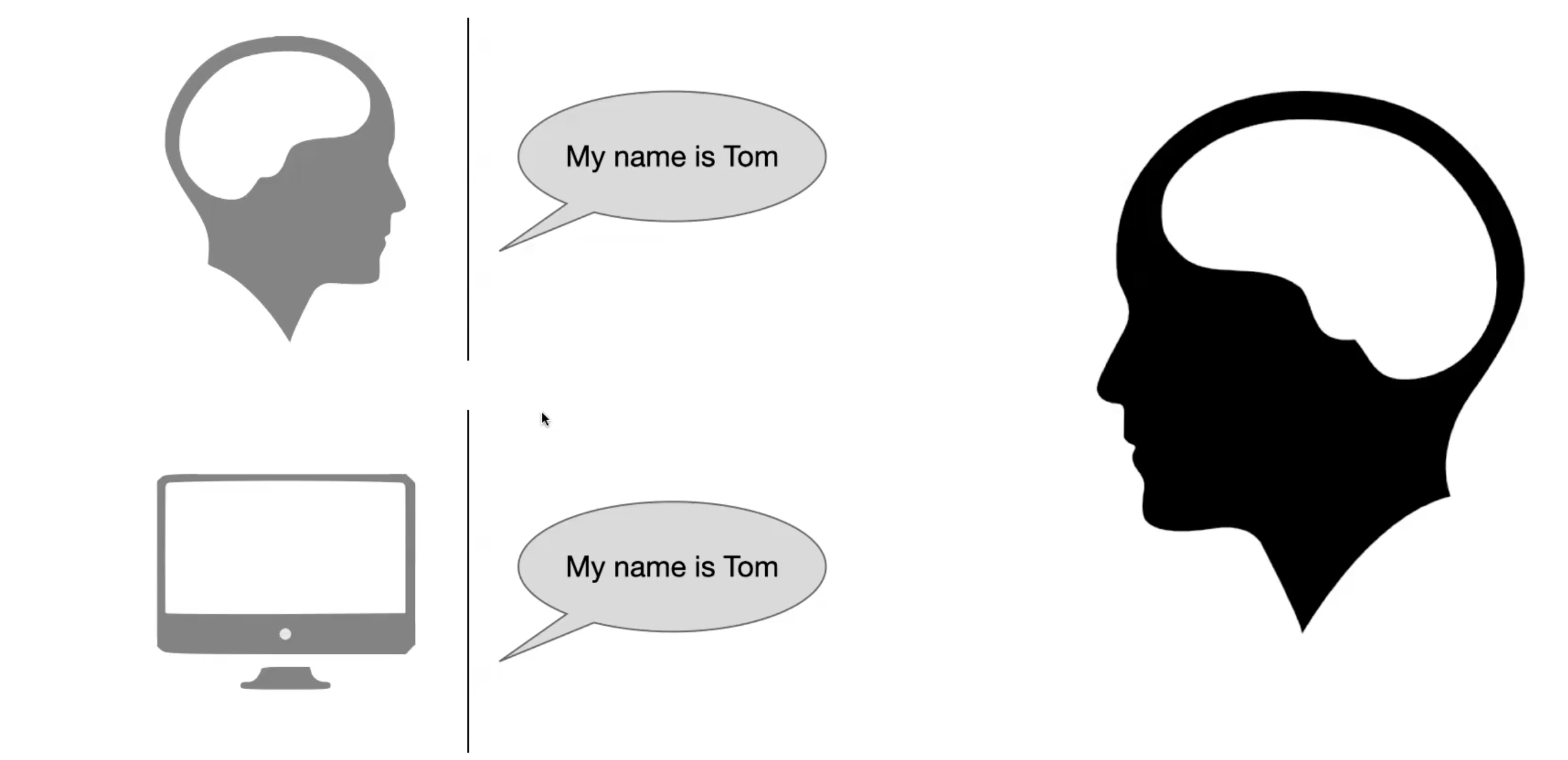
Alan Turing wrote a paper asking if machines could think. The ____ ____ is a thought experiment proposed by Alan Turing in his 1950 paper to see if a machine can chat well enough to fool a human into thinking it is also a person. If a human judge cannot tell the machine and human apart through text, the machine passes.
Today AI systems pass the turing test
Fallacy
good at language —> good at thought (being able to express yourself well doesnt mean you are correct) and bad at language —> bad at thought (being bad at expressing yourself, having an accent, etc.) is a ___
What this class is about
-pyschology of language processing
-neuroscience of language processing
-language and thought
-language development
-language disorders
language science (drawing on research papers and research studies)
we will examine research evidence supporting scientific claims
we will hear from experts in the field
we will read and interpret scientific plots
What this class is NOT about
formal linguistics
why languages are the way they are
ai models of language
evolution of language
communication
What features does language have?
The defining feature of language is _____
compositionality
What features does language have?
Structure: ________

means two completely different things
reference; displacement
What features does language have?
content: _____
(not self contained, linked to our reality; whatever we are referring to doesnt have to be present in our reality, it can be displaced in time or in space)

Productivity
building new sentences you have never heard before
Average english speaker’s vocabulary: 40k words (limited)
10 word sentences: 95 trillion understandable sentences.
15 word sentences: 931 quintillion
Examples of Productivity
Using old words in new ways, i.e., “Someone was having an allergy attack and sneezed his way into the hind end of a truck” (there is a lot more the sneezing is doing here, this is kinda like how authors write *in my opinion)
language allows us the bend the rules to communicate some kinds of meanings
I’m about to “new phone, who dis” my way out of this relationship
imperfect
Language communication is____
it is a hard problem
“Good enough” processing - fast but lossy
brain processing power is limited (its hard for us to keep too many words in mind verbatim)
Example: “the old man the boats” (is a full sentence)
“Lawyers Give Poor Legal Advice” (could have two different meanings)
“More people have been to Poland than I have”
Why study language?
Understanding what it means to be human
An important yet imperfect communication tool
A window into the mind
Uniqueness - only humans have language
Universality - all human cultures have language
Behavioral, Neural, Physiological
The three core methods we use to study human language processing can be categorized as:
Lexical; Conceptual
Case study: concepts
Behavioral - response times
Researches wanted to see what underlies our knowledge of things in the world (what kind of represenation of things in our mind allows us to access information like “what kind of animal lives under water?”
Popular view (_____ Model): you need to access the word —> the word then gives you access to the rest of the conceptual information. Predicts that there is going to be a delay in response time
The verbal form isnt privileged; carrot goes to the verbal form, the picture carrot goes to the image form, and then they both get shared to the conceptual form
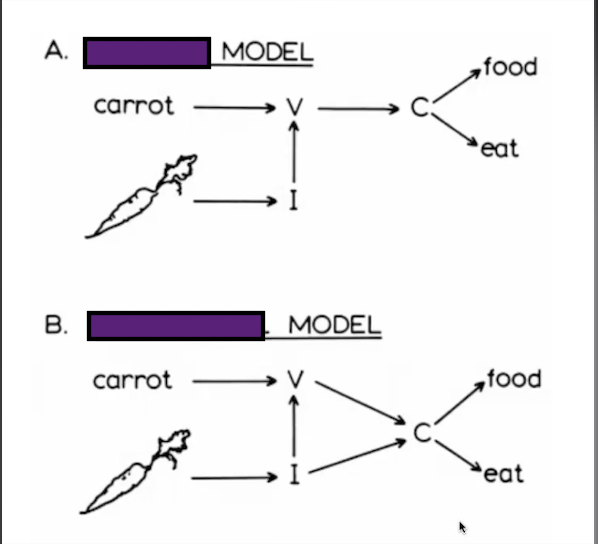
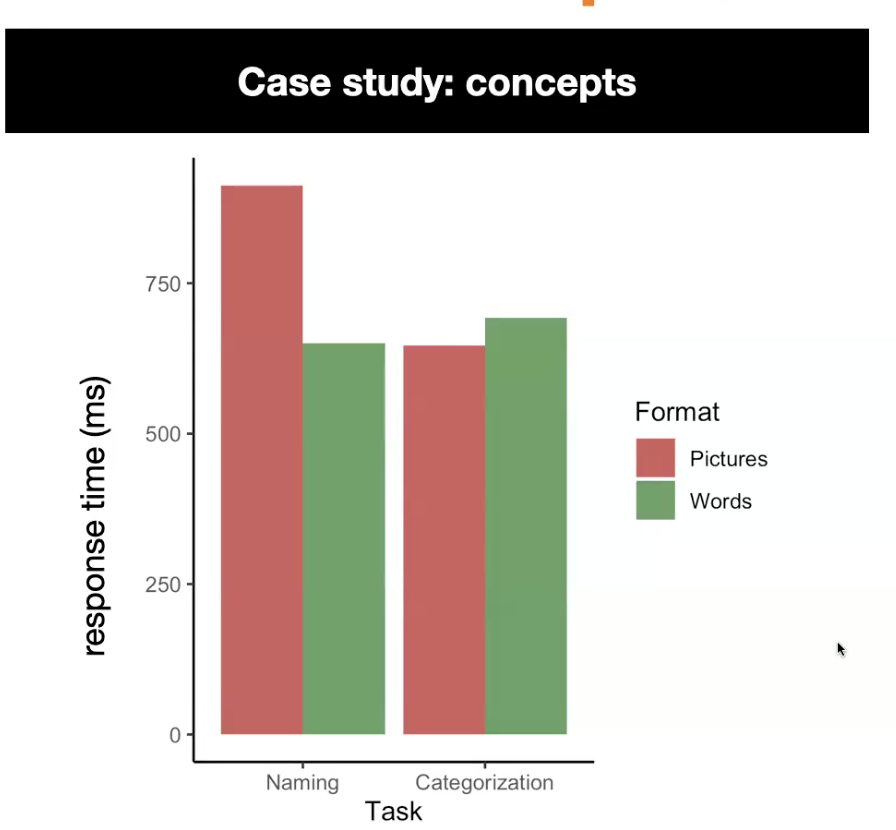
ruled out the lexical model (you need to access the lexical information when you name it, but not when you answer conceptual questions)
Neural: fMRI
MRI brain scans with mRI machines (recording brain activity, capturing brain signal, see what parts of the brain is responding when and how)
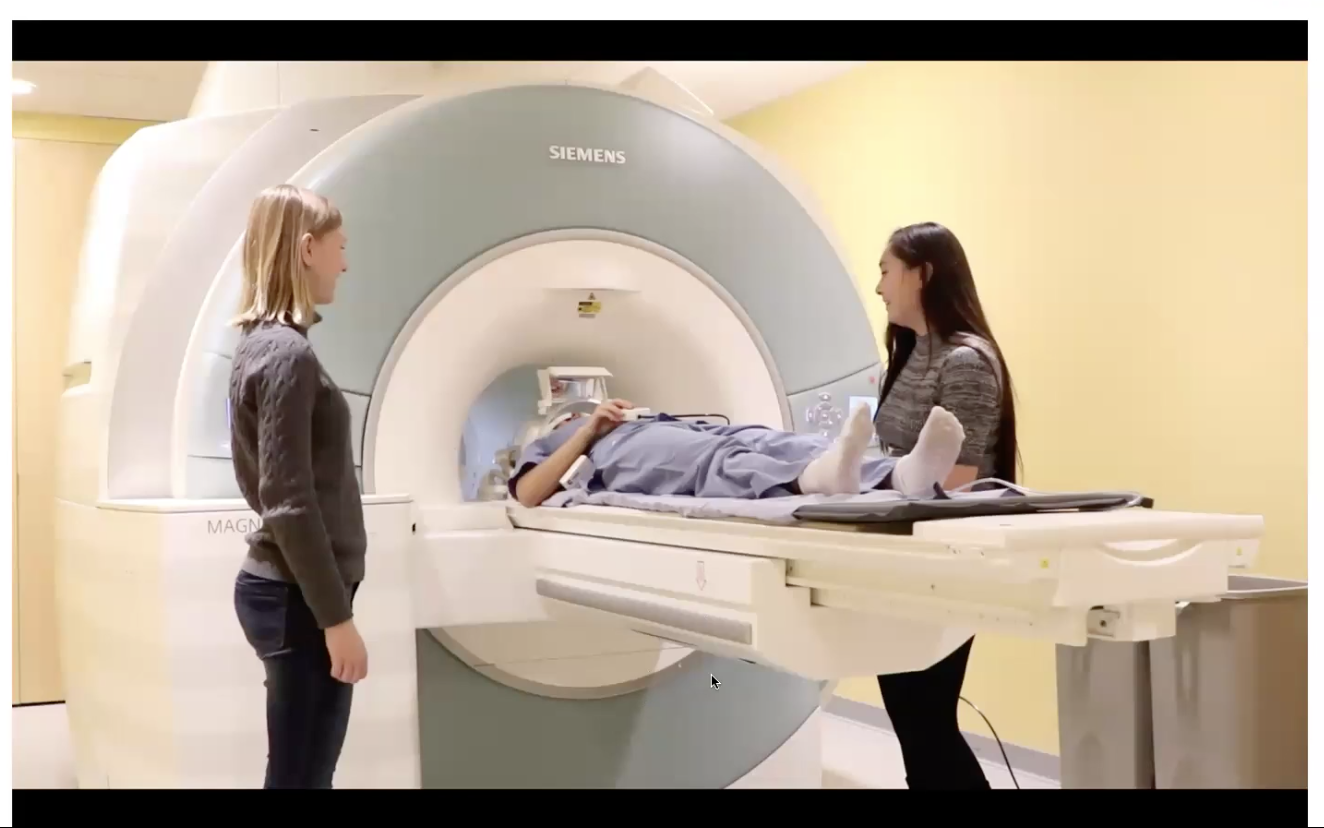

these can tell us a lot about language in the brain
Need 2 conditions to compare (just measuring the signal related to the blood flow does not tell us anything)

Advantages:
non invasive and safe
relatively good spatial resolution (mm’s)
can track mutiple processing stages at once
Limitations
indirect (measuring blood flow, not actual neurons firing)
bad temporal resolution
correlation, not causation (tasks might not casually be correlated to the brain activity)
expensive and not fully inclusive
fMRI; MRI
Difference between fMRI and MRI
- can look at brain activity over time is _____ while ____ is a structural image. fMRI measures the level of oxygenated blood flow in the brain
When neurons need more oxygen
Blood vessels dilate to bring more blood to the neurons
Oxygen binds to hemoglobin, which contains iron, which affects the magnetic field.
The MRI can detect these changes in magnetic field.