1.2 Atomic Theory
 Call Kai
 Learn
 Practice Test
 Spaced Repetition
 Match
 Flashcards
 Knowt Play
1/67

There's no tags or description
Looks like no tags are added yet.
68 Terms
What is smallest unit of matter ?
The atom
What did the Ancient Greeks learn in 490-460 BCE?
Believed that all the substances in the world were made from a combination of the fundamental elements- Earth, Air, Fire, Water
Democritus believed that matter was composed of tiny indivisible particles called Atomos (Greek for indivisible)
What did John Dalton learn in 1803?
“Dalton’s Atomic Theory”
1. Matter consists of definite particles called atoms
2. Each element is made up of its own type of atom
3. Each element has different properties
4. Atoms cannot be created, destroyed, subdivided
5. Atoms of two or more elements can combine in constant ratios to form new substances called compounds
What did J. J. Thomson learn in 1893?
Discovered the presence of particles within the atom
The atom is a positively charged sphere with negatively charged particles embedded within it (electrons)
Chocolate chip cookie!
What did Ernest Rutherford learn in 1911?
The atom must contain a relatively tiny positively charged centre called the nucleus
Nucleus is composed of positively charged particles called protons
Electrons are found in empty space
What did Niels Bohr learn in 1911?
Electrons exist in orbits/energy levels as they go around the nucleus
What did James Chadwick learn in 1932?
Discovered a dense, chargeless particle within the nucleus called the neutron
What was the main flaw in Rutherford’s model of the atom?
The unorganized view of the electrons spinning around the nucleus

“The electromagnetic spectrum puts all types of radiation in order based on-”
“-their wavelength”
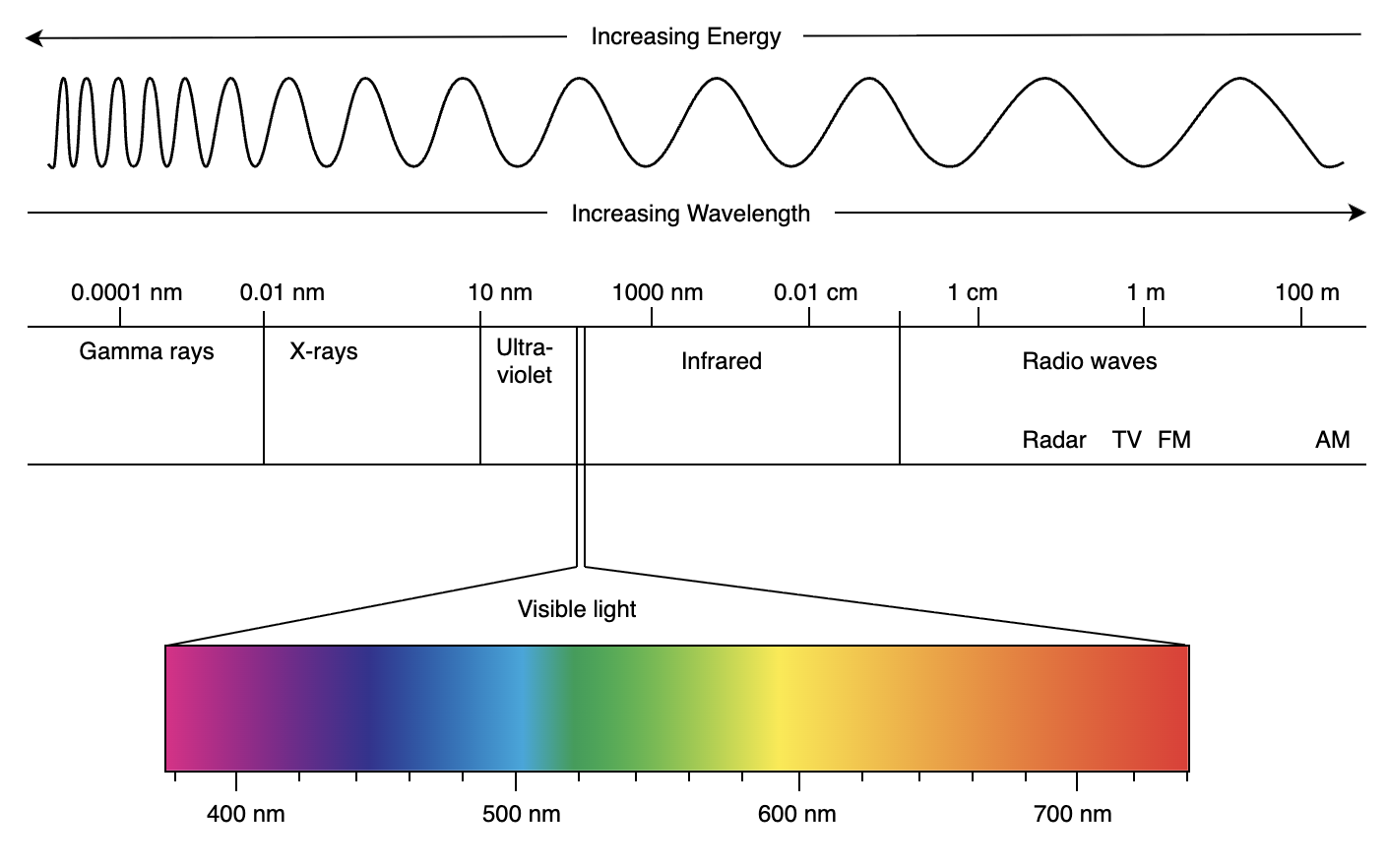
Can you see all types of electromagnetic energy? Give examples
No
Visible light (the light you see every day)
Radio waves, X-rays
The visible spectrum comprises what?
The colours seen when sunlight passes through a prism
When colours from a prism blur together in an uninterrupted sequence, this is called what?
Continuous
If you heat a sample of a pure element, what will you see?
A distinctive pattern of lines
Patterns are specific to the element
Describe light in relation to electrons
When electrons are excited they move from a lower energy orbit to a higher one. When it drops back, the atom releases energy in the form of light!
What is the name for the lowest energy state of a system like an atom?
Ground state
When different types of matter are burned at high temperatures, what’s cool about their flames?
Produce flames of different colours
Define flame test
Qualitative analysis technique
Helps to determine the presence of a particular metal in an unknown sample by exposing the sample to high temperatures
What colour is calcium?
Yellow
What colour is Copper?
Green
What colour is Lead?
Blue
What colour is Lithium?
Pink
What colour is Potassium?
Purple
What colour is Sodium?
Orange
What are 4 distinct properties elements have?
The colour of the flame produced in a flame test
The temperature at which it boils
The temperature at which is melts
Its density
The distinct properties elements have can be useful for what?
Can be used to identify unknown elements in an experimental setting
What is the melting point, boiling point, flame test result, and density of Potassium?
Melting point: < 100oC
Boiling point: > 700oC
Flame test: purple
Density: > 0.8 g/cm3
What is the melting point, boiling point, flame test result, and density of Lithium?
Melting point: < 200oC
Boiling point: > 1000oC
Flame test: pink
Density: < 0.61 g/cm3
What is the melting point, boiling point, flame test result, and density of Sodium?
Melting point: < 100oC
Boiling point: > 800oC
Flame test: orange
Density: < 0.1 g/cm3
What is the melting point, boiling point, flame test result, and density of Calcium?
Melting point: 842oC
Boiling point: 1484oC
Flame test: yellow
Density: 1.526 g/cm3
What is the maximum amount of electrons the first and second orbits are allowed to have?
First: 2
Second: 8
In what direction do you add electrons on the second and subsequent orbits?
Start at the top, proceed clockwise, then begin pairs
A pure sample of an element contains how many types of atoms?
One
Do all atoms in a pure sample of an element have the same number of protons?
Yes
Elements on the periodic table are arranged by their-
Atomic number
The atomic number of an element is equal to what?
The number of protons (and electrons) in one of its atoms
Atomic mass is the sum of what?
Protons + Neutrons
Define isotopes
Atoms that are the same element but have different masses because they have a different amount of neutrons
Compare the protons and neutrons of Nitrogen-14, Nitrogen-15, Nitrogen-16
Protons: same. All have seven protons
Neutrons: increases. Being with seven and increases by one
Does a change in the number of neutrons change the atomic number? What about the mass?
No
Yes
“The atomic number represents the number of _____ that the atoms has”
“-protons”
Does the number of protons remain seven in all isotopes of nitrogen?
Yes
“The most stable kind of atom is considered-”
“-electrically neutral”
What does ‘electrically neutral’ mean? This results in a net charge of what?
When an atom possesses an equal number of protons (+) and electrons (-)
Net charge of 0
If an atom possesses more or fewer electrons (-) than it does protons (+), what is it called?
An ion
Are ions electrically neutral?
No
“An ion is made by-”
“-adding or removing electrons (-) from an atom”

In standard atomic notation, label X, A, Z
X: the symbol for the element
A: the atomic number
Z: mass number

Describe what you see in standard atomic notation
N: the symbol for Nitrogen
7: the atomic number of Nitrogen
14: the mass number of Nitrogen

Describe what you see in standard atomic notation
F: Fluorine ion
9: atomic number
19: mass number
-1: means it has gained an electron (-)
In standard atomic notation, what do square brackets mean?
Indicate it’s an ion

In standard atomic notation, what does the +2 mean? Is this an ion?
Two electrons (-) have been removed
Yes
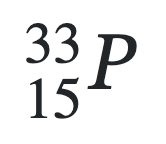
What is the standard atomic notation of Phosphorous-33?
With a stable atom, what is cool about protons, electrons, atomic number?
They are all the same number
Protons = Electrons = Atomic number
What is the formula to get the number of neutrons?
Atomic Mass - Atomic Number
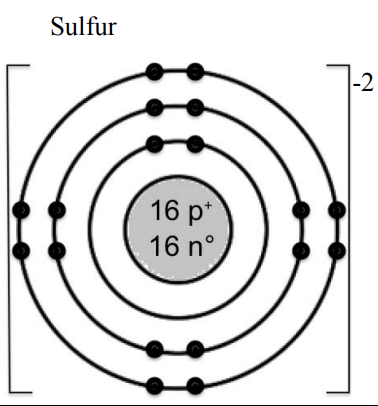
When drawing a Bohr-Rutherford diagram for an ion, what must you remember?
To put brackets around it with the number of gained or lost electrons
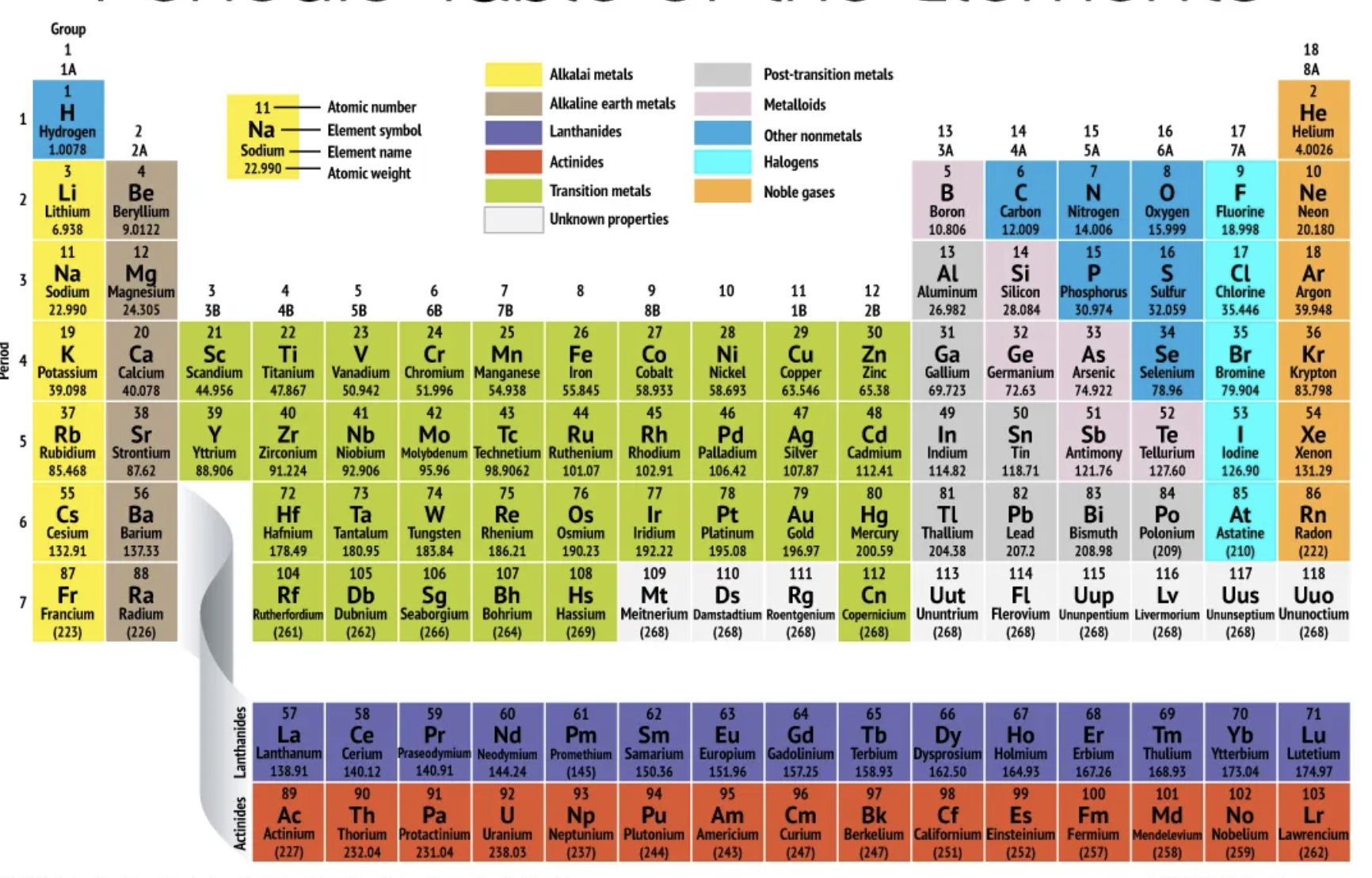
“The periodic table is mainly arranged in _____ (from left to right) in order of increasing number of _____”
“rows”
“protons”
In the periodic table, columns (vertical) can also be called what? What about the rows?
Families is vertical
Periods is horizontal
What makes fireworks launch into the sky?
A lift charge made of gunpowder rapidly burns and creates a massive rush of hot, expanding gases
What are fireworks packaged in?
Paper, pasteboard, cardboard tubes, cardboard spheres, sometimes plastic
What metals are used in fireworks? Why?
Strontium, Lithium for colours, Aluminum, Magnesium for flashes
To create specific colours, bright flashes, sparks, special effects
Define what authority means when evaluating sources of information
Considering who created the source
Reputation and background
Degree to which they’re experts in the field
Define what currency means when evaluating sources of information
When the source was created
Most recent is usually best
Sometime need to find a course from a particular time period
Define what integrity means when evaluating sources of information
Why the source was created
How evident these reasons are
What are their intentions
Define what relevance means when evaluating sources of information
How practical/applicable the information is to the research
Define what validity means when evaluating sources of information
Where the author gets their information
How accurate the information is
How well it’s supported