6.3 Weather - L1-6 Vocabulary
 Call Kai
 Learn
 Practice Test
 Spaced Repetition
 Match
 Flashcards
1/18

There's no tags or description
Looks like no tags are added yet.
19 Terms
Precipitation
Any form of water that falls from clouds and reaches Earth's surface.

Hailstone
Small pellets or balls of ice that fall from the sky as precipitation.

Weather Conditions
What the air is like at a given time and place.

Humidity
A measure of how much water vapor is in the air.

Temperature
A measure of the average kinetic energy of the particles in a sample of matter. How hot or cold something is.

Meteorology
The study of atmosphere and conditions that produce weather.

Wind gust
A very brief and significant increase in wind speed.
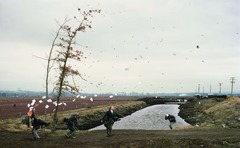
Wind speed
A measure of how fast the wind is blowing.

Climate
The average weather conditions in an area over a long period of time. For example, New Jersey's climate in the summer months is typically hot and sunny.

Absorption
When light is taken in by an object.

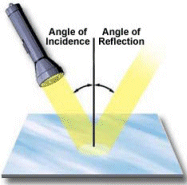
Reflection
When light bounces back off an object.
Conduction
The direct transfer of heat from one substance to another substance that it is touching.

Density
The relationship between the amount of matter (mass) in a sample and the amount of space it takes up (volume). D = M / V

Evaporation
This is the process by which a liquid changes to a gas. For example, water evaoporates from the ocean, entering the atmosphere as water vapor.

Condensation
The change of state from a gas to a liquid.

Convection
Process by which, as air is heated, the warmer part of the mass will rise and the cooler portions will sink.

Radiation
The transfer of energy by electromagnetic waves through the air without two objects touching. ie: getting heat from the sun

Kinetic Energy
How much energy a particle has due to how fast it is moving. ie: higher KE means faster and spread out particles

Closed System
A system in which no matter is allowed to enter or leave.
