Fungi Midterm 1
 Call Kai
 Learn
Learn Practice Test
 Spaced Repetition
 Match
Match Flashcards
 Knowt Play
1/119

There's no tags or description
Looks like no tags are added yet.
Name | Mastery | Learn | Test | Matching | Spaced | Call with Kai | Chat |
|---|
No analytics yet
Send a link to your students to track their progress
120 Terms
Opisthokonta are characterized by
posterior flagella, unites fungi with animals
Archaeplastida
plants, humans closer to fungi than we are to plants, hard to fight fungal disease since we are so similar
Fungi considered to be plants for a long time is wrong because
no chlorophyll, do not obtain food from water and CO2
Taxonomy
nomenclature of organisms, classification falls under here
Systematics
determination of evolutionary relationships among organisms
Nucleotide
nitrogenous base pair + sugar backbone + phosphate
DNA sequence
sequence of nucleotides, mtDNA (mitochondrial), nDNA (nuclear)
Genome
mtDA + nDNA
Saccharomyces cerevisiae example genome
baker/brewer’s yeast, 12.1 Mb (nDNA), or 85.9 kb (mtDNA)
Most fungal genomes are
between 10^7 and 10^8 Mb
Anomorph
asexual phase, imperfect stage
Telemorph
sexual phase, perfect stage
Holomorph
anomorph + telemorph
Central Dogman
transcription = DNA to mRNA, translation = mRNA to functional molecule
Imperfect fungus form old taxonomy
Penicillium species
Dilemma of one fungus two names (Trichoderma virens v Hypocrea virens)
one organism assigned two different scientific names, confusion, database redundancy
Trichoderma virens
asexual mitotic phase, green powdery mold used as biological control agent for plant pathogens
Hypocrea virens
sexual meiotic phase, fruiting bodies found on decaying wood
Ribosomal Gene Cluster
encodes 3 regions of ribosomal RNA (18S SSU, 58S & 28S LSU, internal transcribed spacers)
58S and 28S LSU
encodes RNA for large subunit
18S SSU
encodes RNA for small subunit
18S SSU, 58S & 28S LSU
more conserved by fungi and useful for phylogenetics
internal transcribed spacers
encodes nonfunctional RNA, less conserved, bar code DNA for identification of fungi (taxonomy/classification)
Tandem repeats
ITS sequence copies separated by non-transcribed spaces, increase gene counts for genetic work
PCR primers
short, single-stranded DNA/RNA initiate DNA synthesis
ITS1 & ITS4 primers
DNA primers to amplify ITS region
ITS1-F and ITS4-B
Basidiomycota specific ITS primers
Culture-dependent ID using ITS barcode
amplify ITS, sequence ITS and use it to search databases
culture-independent ID
same as dependent, extract all DNA & use high-throughput sequencing (HTS)
Operational Taxonomic Unit (OTU)
assigned grouping at any level of hierarchy, exact DNA sequencing
Environmental Molecular Operational Taxonomic Unit (eMOTU)
same as OTU, will not trace to any known culturable species
many lower fungi have
flagellated zoospores
Lower Fungi includes
opisthosporidia, blastocladiamycota, chytidiomyceta, zoopagomycota, mucoromycota

Opisthosporidia characterized by
microsporidia, xenoma: large, conspicuous spore-bearing structure
Opisthosporidia habitat
soil, freshwater and marine
Opisthosporidia characteristics
1300 described species all parasitic, many lack mitochondria, no glycolysis or ATP production
Blastocladiamycota habitat and characteristics
aerobic, freshwater and mud, soil

Blastocladiamycota morphologies
Nuclear cap (diagnostic feature)

Blastocladiamycota nuclear cap
membrane-bound assemblage of ribosomes surrounding nucleolus

Chytidiomyceta - Neocallimastigomycota
anaerobic, about 20 species, herbivore gut fungi
Chytidiomyceta - Neocallimastigomycota morphologies
Uni- and Polyflagellate: 10+ flagella in some cases, Lack mitochondria: degenerated to hydrogenosome
Without mitochondria, Neocallimastigomycota
co-opt cellular respiration of hosts, steal sugar factories
Chytidiomyceta - Chytridiomycota
about 1250 species, aerobic, freshwater, brackish, salt water, soil
Chytidiomyceta - Chytridiomycota morphologies
Thallus, Rhizoids, Zoosporangium (thallus modified to produce spores), Zoospore, discharge tube*
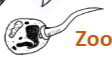
Zoospore
flagellated, motile spore
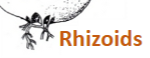
Rhizoids
hair-like structures used to root/anchor thallus to substrate
Thallus
multinucleate, spheroidal bodies
Discharge tube
thallus opening with a lid (operculate) or without a lid (inoperculate)
Mucoromycota
aerobic (many anaerobic), largely terrestrial, coprophilic (simple sugar sources), very few aquatic
Mucoromycota morphologies
Coenocytic, sporangiophore, sporangia, sporangiospore, zygospore, zygophore, zygosporangium*, aerial hyphae
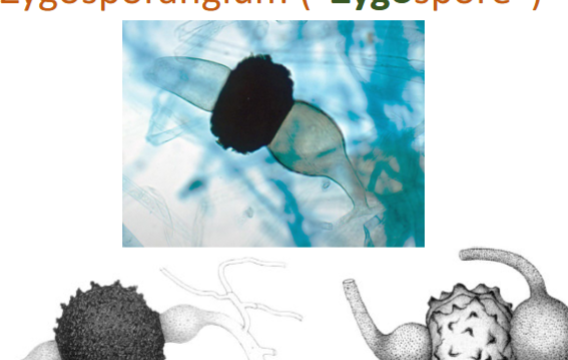
Zygosporangium
fused gametangia, swollen containing zygospores

Zygophore
branched aerial appendages that fuse

Sporangia
bulbous tips of sporangiophore that contain sporangiospores
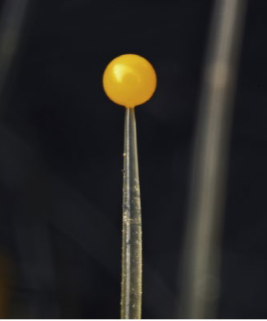
Sporangiophore
stalked aerial appendage that develops sporophore

Coenocytic
hyphae lacking septa, fluffy aerial hyphae
vesicles
large nutrient storage cells inside root cells
Mucoromycota (Glomeromycotina) Intraradical mycelium
nutrient exchange
Mucoromycota (Glomeromycotina) Extraradical mycelium
nutrient acquisition and transport
Mucoromycota (Glomeromycotina) characteristics
large spores (up to 800 micrometers), obligate symbionts, non-septate IRM and ERM hyphae, arbuscules diagnostic feature, <200 species, 90% all land plants form mycorrhizae
Mycrotrophic
obligate symbiont with fungi to grow
Slime molds
fungi adjacent, protists, found in forays
Water molds
oomycetes, protist, fungi adjacent, many plant pathogens
Higher fungi includes
ascomycota and basidiomycota
Ascomycota
largest phylum in fungi, more than 33,000 species named
Ascomycota general characteristics
anamorph and teleomorph phases
Ascomycota sexual phase (dikaryotic) - heterokaryotic phase
ascospores born inside Asci: sac (8 ascospores per ascus)
Characteristics of ascomycota anamorphic phase
homokaryotic, haploid, heterothallic, conidia
Ascomycota septal pore
central pore in hyphae that allows flow between cells
Homokaryotic
containing nuclei of a single origin, derived from single spores
heterothallic
different, compatible mating types
Homothallic
having no mating types

Conidia
asexual spores borne on stalks of conidiophores, diagnostic feature
Conidiophores
produces asexual, non-motile spores (conidia)

Ascomycota plasmogamy
fusion of hyphae, to merge cytoplasm and share nuclei, can be undergone by homothallic and heterothallic species
Characteritics of ascomycota teleomorphic phase
heterokaryotic, dikaryotic, diploid, ascoma, karyogamy, crozier
Ascoma
fruiting body formation with asci containing ascospores, diagnostic feature

Karyogamy
fusion of nuclei during dikaryotic phase

Crozier hook
tip growth that enables nuclei isolation during ascospore development
8 ascospores per ascus
produced by initial replication, meiosis I, meiosis II, and mitosis
Ascomycota – Subphylum Pezizomycotina
90% of ascomycota

Woronin bodies
type of microbody (mobile organelle)
Woronin body plug
densification of proteins that plug septal pore when hyphael cell on one side bursts

Cup-shaped apothecia spore dispersal
open during release

flask shaped perithecia spore dispersal
spores release through neck

spherical cleistothecia spore dispersal
outer layer disintegrates

droplet-like fissitunicate asci spore disperal
forced ejection
Lichen
symbiosis between filamentous fungi and algae or cyanobacteria
Mycobiont
fungal partner
Photobiont
algal or cyanobacterial partner

Cortex
outer layer of woven hyphae

Medulla
Inner layer of loose hyphae
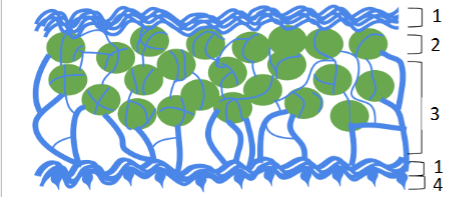
Rhizines
specialized hypha anchors
Budding yeasts
mother cells use buds formed along cell walls to accept daughter cells
Fission yeasts
cells use mitosis and division in the middle via septal wall formation to form two new cells
Basidiomycota
2nd largest group, 30,000 species
Basidiomycota characteristics
anomorph and teleomorph phases

Basidiospores
sexual phase borne on basidia with 4 per basidium
basidia
club shaped reproductive structure bearing basidiospores
dolipore septa
barrel shaped swelling around central pore

clamp connections
grow hyphal cells, keeps fungi dikaryotic