CNS, Cranial Nerves, & Spinal Nerves: Spinal Cord Structures
 Call Kai
 Learn
 Practice Test
 Spaced Repetition
 Match
 Flashcards
 Knowt Play
1/18

There's no tags or description
Looks like no tags are added yet.
19 Terms
conus medullaris
tapered, lowermost end of spinal cord

cervical spinal nerves
8 pairs; control movement and sensation in head, neck, shoulders, arms, and hands

cervical plexus
C1-C5; network of nerve fibers formed by anterior rami of upper cervical spinal nerves; sensory and motor groups

brachial plexus
C5-T1; threads through shoulder to upper extremities; provides critical motor and sensory function to shoulder, arm, and hands

thoracic spinal nerves
12 pairs; exit spinal cord through intervertebral foramina; provide movement, sensation, and autonomic control to chest, upper back, and abdominal regions

lumbar spinal nerves
5 pairs; transmit sensory and motor signals between CNS and lower body, abdomen, and pelvis
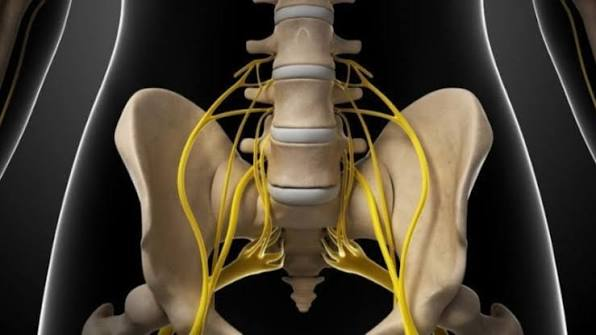
lumbar plexus
T12-L4; embedded within psoas major muscle; supply motor and sensation, and autonomic innervation to lower abdomen, pelvis, external genitals, and anterior/medial lower limbs

sacral spinal nerves
S1-S5; supply motor, sensory, and autonomic functions to lower body, pelvis, and internal organs
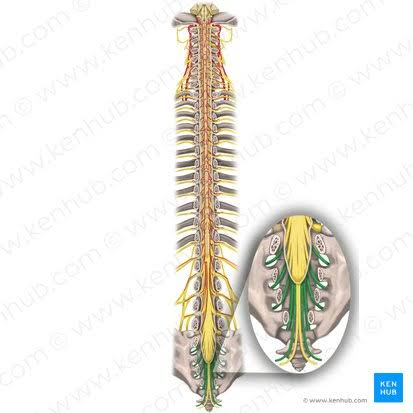
sacral plexus
L4-S4; control movement and feeling in pelvis, hips, and legs

coccygeal spinal nerves
1 pair (Co1); 31st and final pair of spinal nerves originating from conus medullaris of spinal cord; provides feeling and touch sensations to skin over tailbone and perianal region
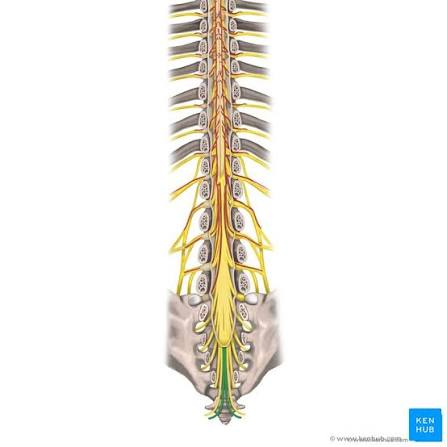
epidural space
outermost compartment of spinal cord; space between the dura mater and the wall of the vertebral canal

dorsal, ventral, and lateral horns
in gray matter forming butterfly shape; dorsal has incoming sensory axons to send information to brain; ventral has preganglionic sympathetic neuron cells that regulate smooth and cardiac muscle and glands; lateral has alpha and gamma neurons that send axons through ventral root to innervate skeletal muscle
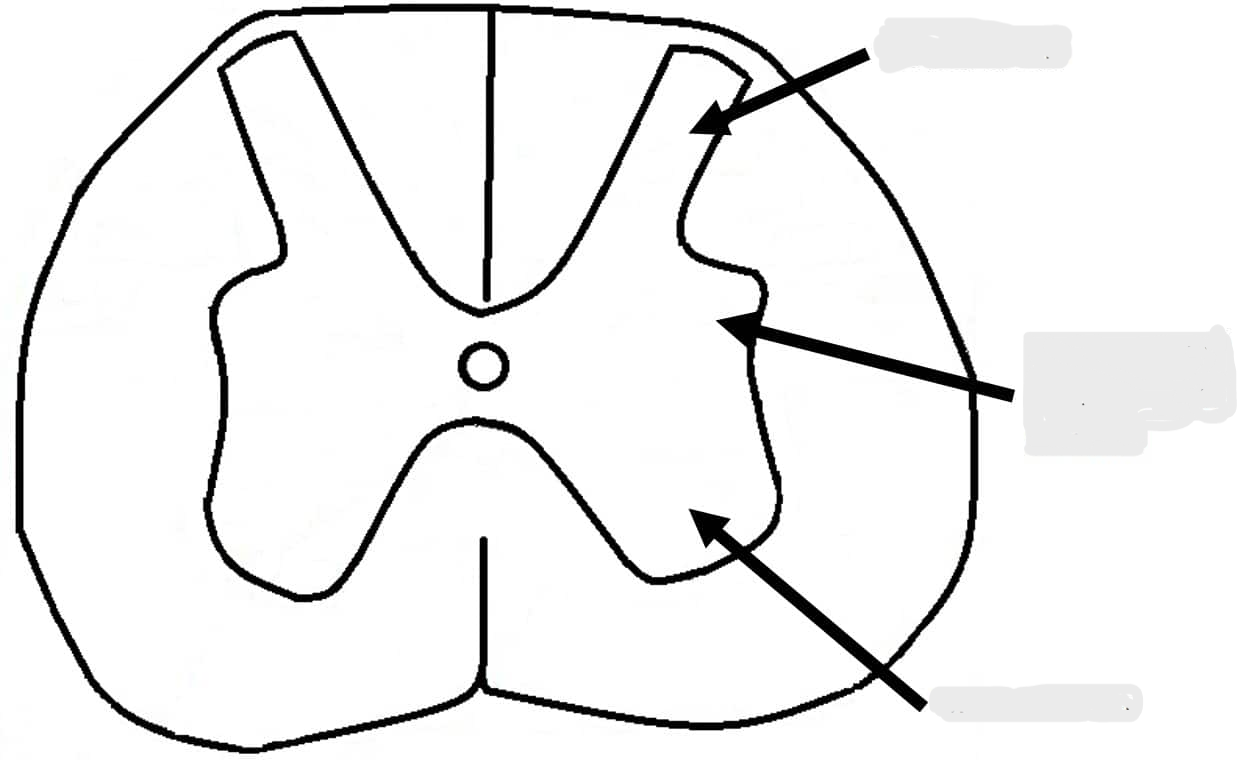
columns
3 functional funiculi; dorsal, ventral, lateral
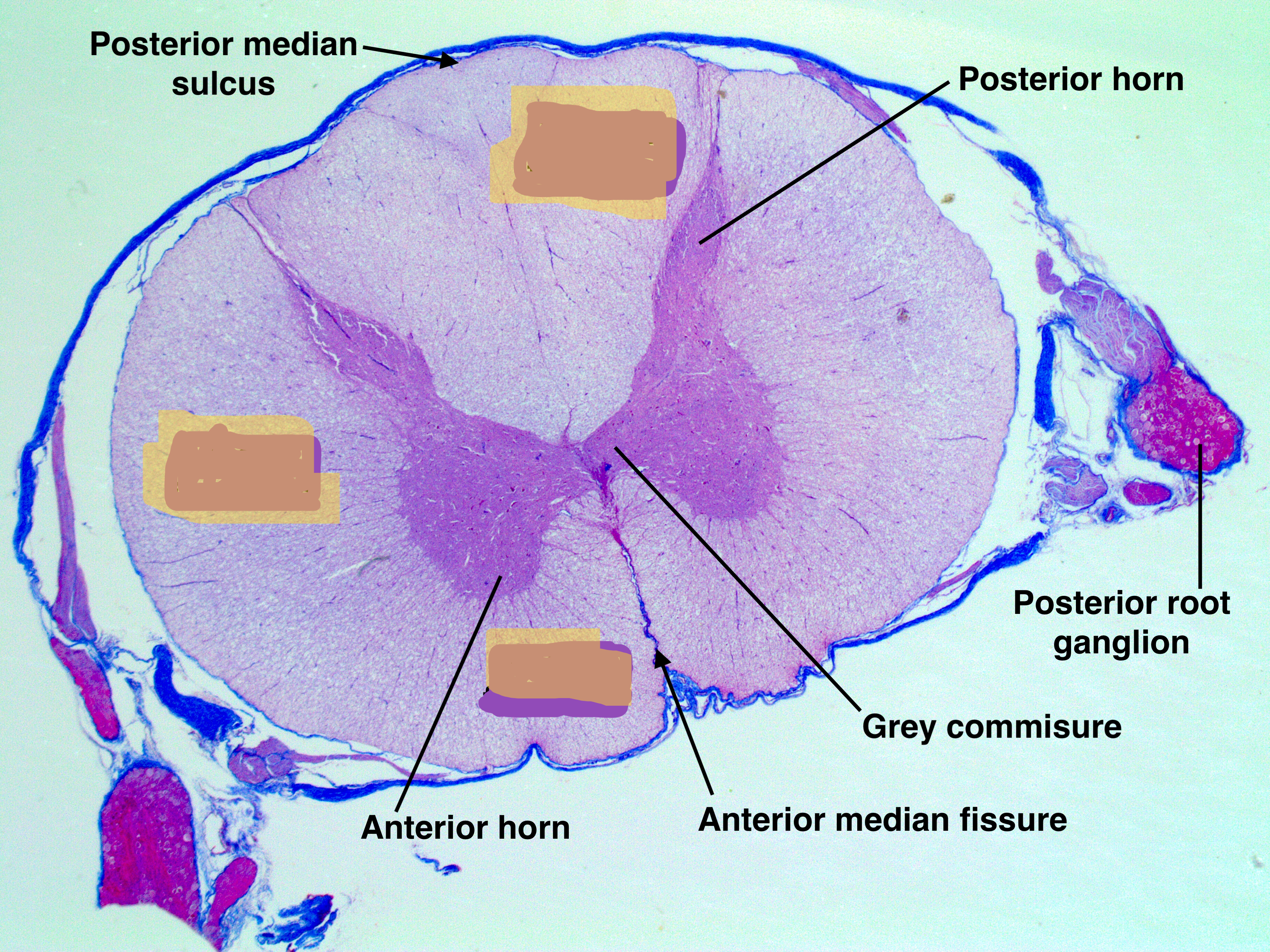
dorsal root
posterior nerve root emerging from back of spinal cord and carries afferent sensory information from body to CNS
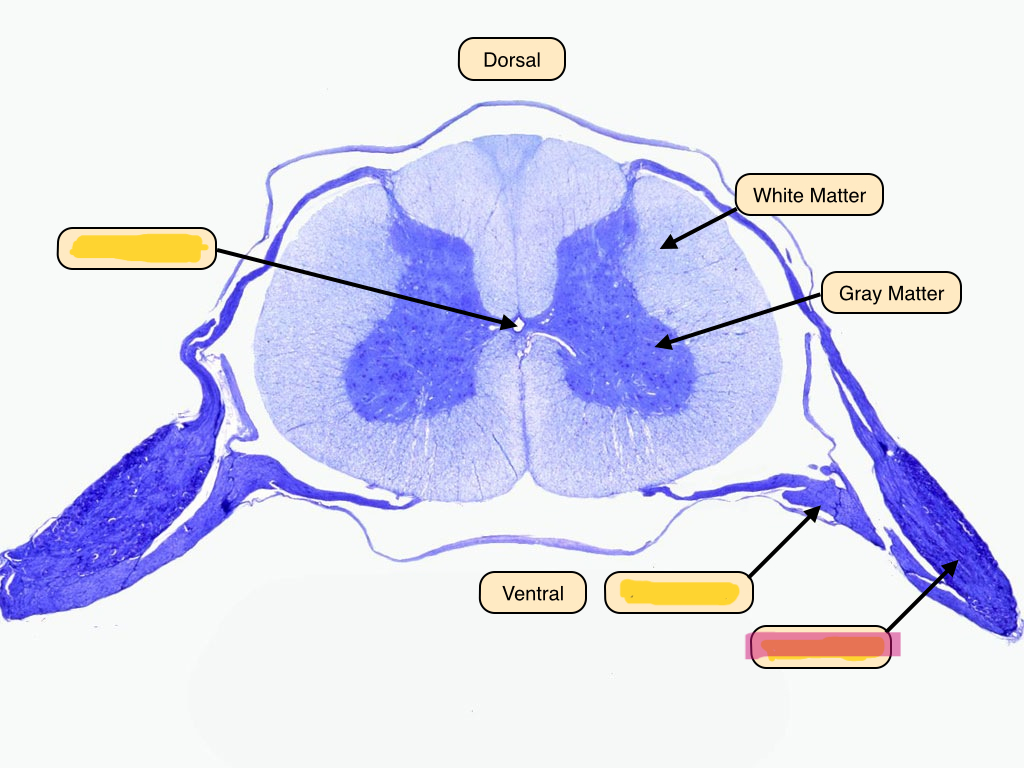
dorsal root ganglion
a nodule/swelling housing cell bodies of primary sensory neurons

dorsal rootlets
small bundles or nerve fibers that emerge from posterolateral sulcus of the spinal cord and merge to form a single dorsal root of spinal cord
ventral root
efferent pathway of spinal cord that carries motor signals from the CNS to the rest of the body

ventral rootlets
emerge from the ventrolateral sulcus of spinal cord, 2-9 makes ventral root
central canal
narrow, fluid-filled channel that runs the entire length of the spinal cord, connecting upward to the 4th ventricle of the brain
