BIOL 1510 Chapter 8
 Call Kai
 Learn
 Practice Test
 Spaced Repetition
 Match
 Flashcards
 Knowt Play
1/32

There's no tags or description
Looks like no tags are added yet.
33 Terms
Functions of nucleotides
energy (ATP and GTP)
enzyme cofactors (NAD+, NADP+, FAD)
second messengers (cAMP, cGMP)
storage of genetic information (DNA)
transmission of genetic information (RNA)
protein synthesis (tRNA and rRNA)
Nucleobase
Just the nitrogenous base
Nucleoside
sugar and pentose sugar
Nucleotide
sugar, pentose sugar, phosphate
pH of nitrogenous bases
neutral pH=7
What nucleotides are purines?
adenine, guanine
What nucleotides are pyrimidines?
cytosine, uracil, thymine
Adenine
Purine with NH2 group on top

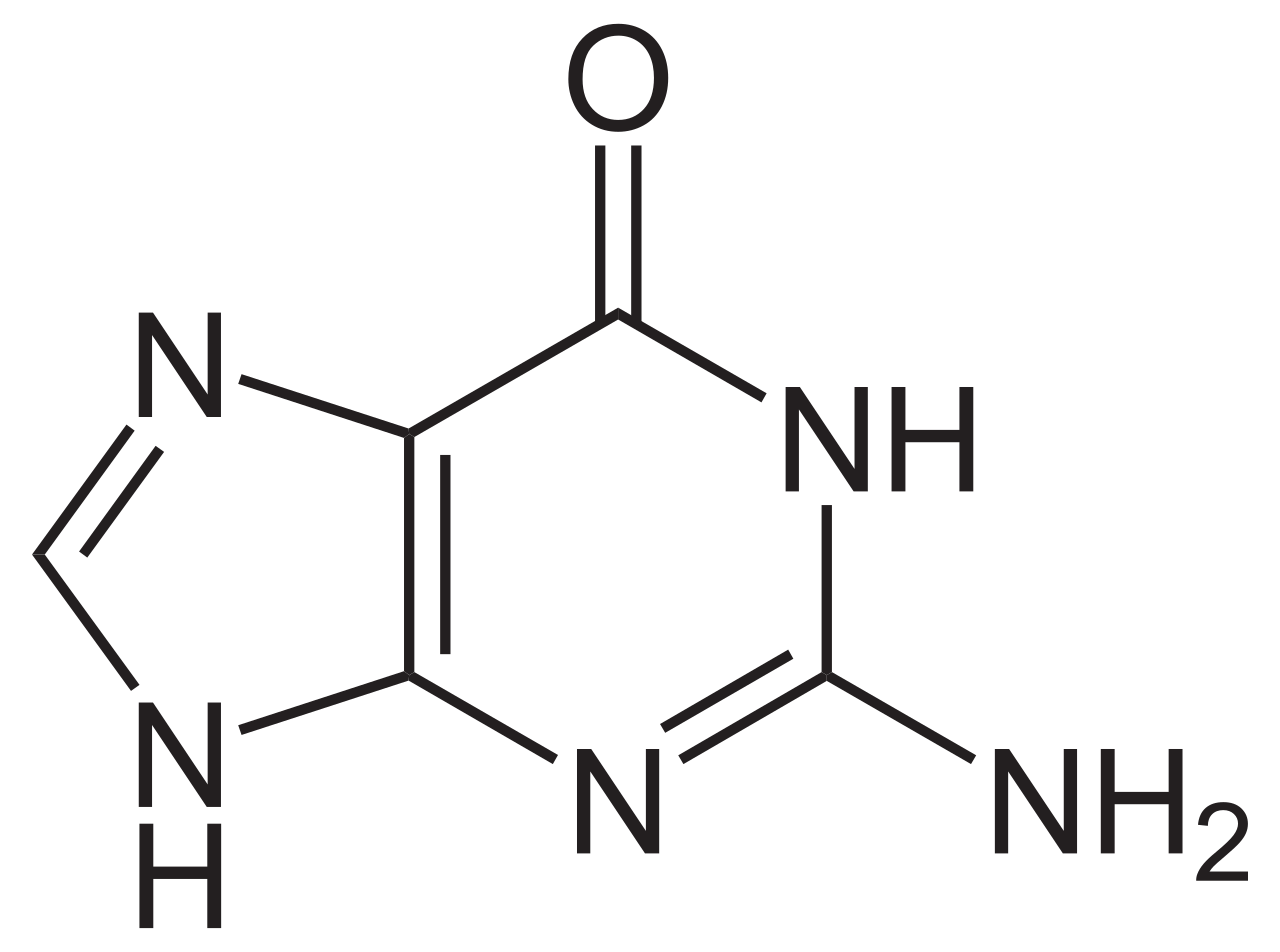
Guanine
Purine with carboxyl group on top
Cytosine
Pyrimidine with NH2 group on top

Uracil
Pyrimidine with carboxyl group on top

Thymine
Pyrimidine with a methyl and carboxyl group

Differences between DNA and RNA
thymine vs uracil
single stranded vs double stranded
deoxyribose vs ribose
Differences in nomenclature of DNA vs RNA single units
dNTP vs NTP
5’ end of DNA
Has the phosphate group
3’ end of DNA
Has the free OH
Phosphodiester bond
The bond between the phosphate group and the OH group on a sugar that links nucleotides together in one strand
What type of bond is responsible for base pairing?
H-bonds
What base pairing is stronger (AT or CG) and why?
CG because it has 3 hydrogen bonds as opposed to 2
Hershey Chase experiment
the experiment that helped determine that DNA was the genetic material
radiolabeled sulfur or nucleic acids in bacteriophages
allowed phages to infect bacteria
traced radioactive label and found that radioactivity was only passed in phages who’s nucleic acids were radiolabeled
How was DNA’s structure determined?
xray crystallography
What does the structure of DNA imply?
A way of copying DNA
if you know one strand you know the other one as well
Geometry of the two DNA strands
run antiparallel to each other
Palindrome sequence
A sequence which is repeated on the opposite strand in reverse

What type of 3D DNA structure do palindrome sequences lead to?
Hairpins→the DNA strand base pairs with itself
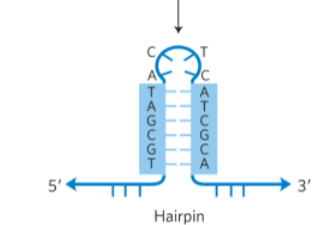
What are hairpin structures important for?
Signaling the end of transcription
Mirror repeat sequence
A sequence is repeated in reverse on the same strand

What 3D DNA structure do mirror repeat sequences lead to?
Cruciform

Denaturation
At high temperatures, the H-bonds break, separating the two DNA strands
Types of mutations DNA can undergo
deamination
depurination
crosslinking
Deamination
cytosine loses its NH2 group for a C=O group, becoming uracil. This leads to promiscuous binding
Depurination
The purine nucleotide base is lost and only the sugar and phosphate remain
Crosslinking
under the influence of UV, adjacent thymine residues can dimerize, leading to kinks in the DNA strand