Women - Intrapartum Care (EXAM2)
 Call Kai
 Learn
 Practice Test
 Spaced Repetition
 Match
 Flashcards
 Knowt Play
1/76

There's no tags or description
Looks like no tags are added yet.
77 Terms
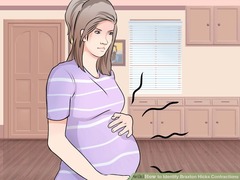
Braxton Hicks contractions
These occur throughout the pregnancy, they are intermittent and painless, stop with rest and position changes
- no cervical changes noted
- false labor
- uterus is a muscle and may contract without labor
- treat: rest and fluid
- sex may cause these
Lightening (lowering of presenting fetus into pelvis), bloody show, mucous plug, nesting
What are 4 common pre labor signs?
Mucous plug
the mass of mucous which occludes the cervix of the uterus during pregnancy and is discharged at the beginning of labor
- may indicate pre labor has begun
Lightening
the sensation of the fetus moving from high in the abdomen to low in the birth canal
- head settling in pelvic cavity, pressure
- happens during pre labor
Nesting
Preparing for motherhood
- urge to clean and organize
- overwhelming desire to get your home ready for your new baby
- may be sign of pre labor
weight, aging, progesterone, estrogen, prostaglandin
Theories for initiation of labor:
- No actual reason labor starts only possible reasons
- ______ of full-term uterus
- _____ of the placenta
- Possible decrease in ________ and increase in _________ levels
- Increase in _________ levels
- possible effect of fetal fibronectin (a protein that's believed to help keep the amniotic sac "glued" to the lining of the uterus)
artificial rupture of membranes (medically assisted)
What does AROM mean?
spontaneous rupture of membranes
What does SROM mean?
TACO
What is the acronym that helps to assess the characteristics of ROM?
time (when it happened), amount (big gush vs. slow leak), color (should be clear/yellow, red - bleeding, brown - meconium), Odor (musky is normal, shouldn't be malodorous)
Characteristics of ROM: what does the acronym TACO mean?
ferning, nitrazine paper
Due to the possibility of the mother urinating rather than ROM, what are 2 diagnosis tests to confirm that it is ROM?
Ferning
Microscopic appearance of amniotic fluid resembling fern leaves when the fluid is allowed to dry on a microscope slide
- crystals in shape of ferns confirming that it is amniotic fluid
- sterile speculum then swab vagina to test

Nitrazine paper
turns bright blue with alkaline amniotic fluid, turns pink with other fluids or stays yellow
- sterile speculum then swab vagina to test
alkaline
Why does Amniotic fluid turn nitrazine paper from yellow to bright blue?
penicillin (G)
Antibiotics are given if mom is GBS positive so to not infect baby, what is the first choice antibiotic?
- vaginal swab determines diagnosis
- GBS may not have been treated if mom came in with no/little prenatal care
persistent contractions, effacement, dilation
What are 3 True labor signs/symptoms?
regular, intensity
True labor s/s: (2)
- Contractions are persistent and ________ and increasing in _________
- these are contractions that are changing the cervix
softening, thinning
True labor s/s: (2)
- Effacement is the _________ & _________ of the cervical os
- normal: 1 inch thick
- 100% effaced: cervix is as thin as paper (repeated force from every contraction thins it)
opening, 10 centimeters
True labor s/s: (2)
- Dilation is the __________ of the cervical os
- contractions are now changing the cervix
- dilation is measured in centimeters
- Labor = dilation changing over time
- how many centimeters dilated when ready to push?
Cervical exam
During labor your examining for dilation, effacement, station of baby
- sterile gloves and lubrication
- also palpate babies head for fontanels and sutures

Station
Where babies head is relative to the maternal ischial spines
- Negative numbers before the spine
- 0 at spines
- Positive numbers after spine

anterior fontanel
Anterior soft spot of the fetal skull
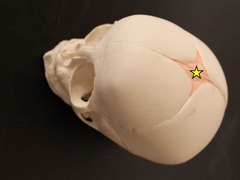
Posterior fontanel
back soft spot on fetal skull between parietal and occipital bone

baby in a posterior aspect (back of head on tail bone)
What may cause mom excessive back pain?
breech
What is not an ideal position for vaginal birth?
Frank breech, single footling breech, complete breech, shoulder presentation
What are 4 common breech positions?
Frank breech
The fetal legs are flexed at the hips and extend toward the shoulders; this is the most common type of breech presentation. The buttocks present at the cervix
Single footling breech
One leg presenting.
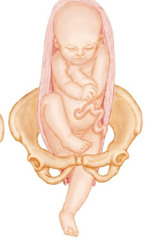
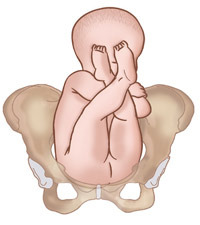
Complete breech
Fetus is sitting with legs crossed.

shoulder presentation
baby is in transverse position at delivery, must be turned

occiput
back part of the fetal skull

Anterior position
(Fetal position) baby is looking downward at tail bone, wanted for vaginal birth

Posterior position
(Fetal position) Baby is looking upward, occiput is on tail bone

Right Occiput Transverse (ROT)
(Fetal position) babys occupit to the right side of moms pelvis, baby is transverse

Left Occiput Transverse (LOT)
(Fetal position) occupit is against left ischial spine, baby is transverse

presentation
the manner in which the fetus appears to the examiner during delivery
- what's coming out first
- cephalic end/vertex (head)
Right Occiput Posterior (ROP)
(Fetal position) occupit to the right side of moms pelvis and also towards posterior surface of her pelvis

Left Occiput Posterior (LOP)
(Fetal position) occiput is toward the left side of moms pelvis but lies toward posterior surface of her pelvis

Right Occiput Anterior (ROA)
(Fetal position) babys occiput it to the right side of moms pelvis but also toward the anterior surface of the pelvis
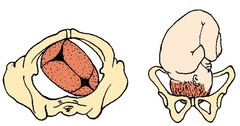
left occiput anterior (LOA)
(Fetal position) baby's occiput is to the left side of moms pelvis but also toward the anterior surface of the pelvis

maternal, fetal, pain, coach
Nurses role during Intrapartum: (4)
- Monitoring/assessment of _______ & _____ vital signs
- ______ management through comfort and medication
- Support laboring person
- Support family/_______ laboring person
0-3, 30-60, 4-7, intense, ROM, 7-10
Stage 1: Laboring - (6)
- longest part
- Latent phase: ___-___ cm, contractions mild-moderate, FHR assessed every ___-___ minutes, maternal vital signs, encourage mother to rest/relax/use distractions, emotional support to mother
- active phase: ___-___ cm, contractions more ______ & frequent, FHR q15-30 minutes, monitor maternal vital signs, comfort measures, pain medication PRN, _____ may occur, change in maternal mood
- transition phase: ___-___ cm, intense frequent contractions, increase in blood show, maternal anxiety, no pushing before 10 cm

every 30-60 minutes
During stage 1 of laboring, how often are fetal heart rates checked in the latent phase?
every 15-30 minutes
During stage 1 of laboring, how often are fetal heart rates checked in the active phase/transition phase?
transition phase
What phase of Stage 1 of laboring are there intense frequent contractions, increase bloody show, and dilation almost to 10 centimeters?

descent, perineal bulging, crowning, birth
Stage 2: Pushing - (4)
- 10cm to birth
- Latent phase: _______ of fetus, laboring down
- Active phase: _______ __________ & _________ (head visible), heavy bloody show (microtearing)
- Transition phase: _______
- vaginal birth unless mother or baby cannot tolerate it
- not having an epidural your body will tell you when to push

engagement and descent, flexion, internal rotation
What are the 3 cardinal movements/Maneuvers of labor that are internal?
(Hint: babies movements)
extension (fetal neck extends out), restitution/external rotation (neck turns back to realign with shoulders), expulsion (shoulder after shoulder and babies out)
What are the 3 cardinal movements/Maneuvers of labor that are external?
- can cause problems if these movements are happening
right after birth, 5 minutes after
When is the APGAR test done? (2)
- keep doing test until reaching a 7 or 8
absent,
Heart rate/pulse: What are the scores 0,1,&2 on APGAR? (3)
Absent, irregular, good crying
Respirations: What are the scores 0,1,&2 on APGAR? (3)
Flaccid, some flexion of limbs, active motion
Muscle tone/Activity: What are the scores 0,1,&2 on APGAR? (3)
None, grimace, vigorous cry
Reflex irritability/Grimace: What are the scores 0,1,&2 on APGAR? (3)
Pale blue, body pink and limbs blue, all pink
Color/apperance: What are the scores 0,1,&2 on APGAR? (3)
appearance, pulse, grimace, activity, respiration
What are the 5 characteristics of the APGAR test?
- all scored 0-2
- total of 10
seperation, delivery, repair
Stage 3: Delivery of placenta - (3)
- Placental birth, normally within 30 minutes after birth
- __________ of placenta, fundus to umbilicus, lengthening of umbilical cord, gush of blood
- ______________ of placenta
- ___________ of perineum, episiotomy

elevation of fundus to umbilicus, lengthening of umbilical cord, large gush of blood from vagina
During stage 3 of delivery the placenta, what are 3 signs the placenta is separating/delivering?
Non-pregnant status
Stage 4: Return to _______________ -
- Early changes
- Later changes
- Ex) uterus firming, body returning to normal
passenger, passageway, powers, position, psyche
What are the 5 factors affecting the labor process?
passenger
(5 factors affecting the labor process) fetus and placenta, is something slowing things down
passageway
(5 factors affecting the labor process) bony pelvis and birth canal, fracture? Fibroids?
Powers
(5 factors affecting the labor process) Contractions and pushing force
Position
(5 factors affecting the labor process) fetus in birth canal and maternal position during labor
- using gravity?
Psyche
(5 factors affecting the labor process) patient concerns impact labor
- anxiety
- specific doctor preference
first stage, second stage, blood glucose, GI motility, urinary retention
Psychologic Adaptations to Labor: (5)
- Cardiovascular system: Function increases 10-15% during ______ ______, 30-50% in ______ _____
- Metabolic changes: BMR increases, ____ _______ levels may decrease, ____ ________ slows
- Renal system: ______ __________ may occur
- Emesis
maternal, fetal, uterine
Fetal Adaptations to Labor:
- Normal cardiac rate and variations of rhythm should be maintained during labor
- Factors that may affect FHR:
- __________ position
- _______ position
- ________ contractions
- Placental reserves
- Medicaitions
- Preparation for spontaneous respirations
decrease fatigue, increase comfort, encourage gravity, increase maternal cardiac output
What are 4 benefits to laboring position changes?

poor blood flow through inferior vena cava
Why should the mother never lay supine after 20 weeks gestation?

Labor positions
Laboring/pushing with contractions & breathing between
- stretching perineum with each push

uterotonic meds
(Management of Involution) These are what kind of medications?
- Oxytocin
- Methylergonovine
- Carboprost
- Misoprostol
Involution
(def) Return of the uterus to a nonpregnant state after birth

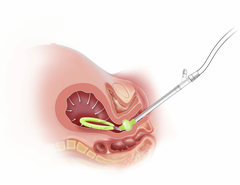
hemorrhagic meds (or devices)
(Management of Involution) These are what kind of medications/devices?
- Tranexamic acid
- Bakiri balloon
- Jada system
- Vistaseal
Fetal side of placenta
Shiny Schultz, blue

Maternal side of placenta
dirty duncan, red (was attached to uterus)

Velamentous insertion (of umbilical cord)
Cord is inserted into Chorioamniotic membrane before entering placenta
- may be noticed on ultrasound during pregnancy
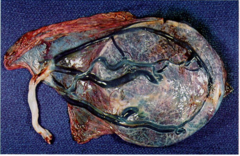
Battledore placenta
aka marginal insertion, cord insertion into the margin of the placenta
- may cause decreased blood flow

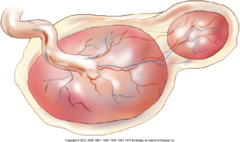
Succenturiate placenta
aka accessory lobe, one or more accessory lobes connected to the body of the placenta by blood vessels
- placental tissue formed away
- once birthed make sure all pieces/lobes are removed