Chem Standards
 Note
 Call Kai
 Learn
 Practice Test
 Spaced Repetition
 Match
 Flashcards
 Knowt Play
1/71

There's no tags or description
Looks like no tags are added yet.
72 Terms
Compound
Atoms of different elements combine in fixed ratios to form compounds with unique properties.
Mixture
Contains more than one element or compound not chemically bonded, retaining individual properties.
Homogeneous Mixture
Type of mixture with uniform composition. (particles distributed in a uniform manner)
Heterogenous Mixture
Mixture without a uniform composition
Mole
Fixed number of particles representing the amount of substance.
Relative Atomic Mass
Mass of an atom compared to C, expressed as Ar.
Molar Mass Units
g/mol
Empirical Formula
Gives the simplest ratio of atoms in a compound.
Limiting Reactant
Reactant determining the amount of product formed.
Theoretical Yield
Expected amount of product from a reaction.
Avogadro’s Law
Relates gas volumes to moles in chemical reactions.
Molar Concentration
Determined by solute amount and solution volume.
Mass Spectrometer
Determines relative atomic mass from its isotopic composition.
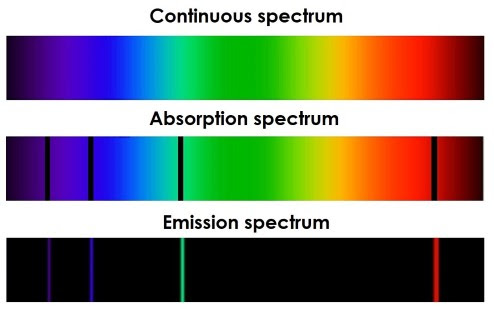
Emission Spectra
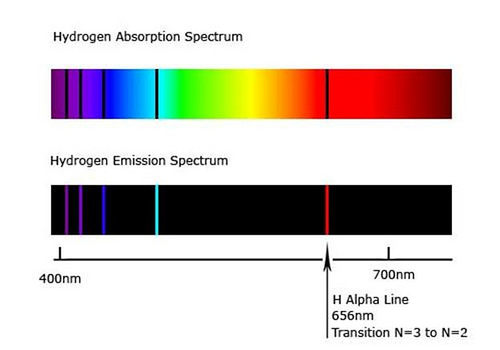
Produced when photons are emitted from atoms as excited electrons return to a lower energy level.
Line emission spectra of hydrogen
Provides evidence for the existence of electrons in discrete energy levels, which converge at higher energies.
Orbital
Has a defined energy state for a given electron configuration and can hold two electrons of opposite spin.
Periodic table groups
Vertical columns
Periodic table periods
Horizontal rows
Ionization energy and electron affinity trends (increasing)
Up, to the right
Atomic/ionic radius trends (increasing)
Down, to the left
Change in oxides across a period
Basic to amphoteric to acidic
Ionic bond
Bond formed from electrostatic attraction between oppositely charged ions.
Ionic bonds under normal conditions
Solids in a lattice formation
Covalent bond
Bond formed from electrostatic attraction from a shared pair of electrons and the positively charged nuclei.
Bond polarity
The difference in electronegativities in bonded atoms.
Network covalent bonds
Formed by carbon and silicon
Metallic bond
Bond formed from the electrostatic attraction between a lattice of positive ions and delocalized electrons. (strength depends on charge and radius of ions)
Alloys
Contain more than one metal and have enhanced properties.
Temperature
Average kinetic energy
Endothermic Rxn
Uses heat from surroundings
Exothermic Rxn
Releases heat to surroundings
Enthalpy change units
kJ/mol
Bond-forming takes or releases energy?
Releases
Bond-breaking takes or releases energy?
Takes
Average bond enthalpy
Energy needed to break one mol of a bond in a gaseous compound averaged over similar compounds
How does a catalyst affect the rate of rxn?
It takes an alternate path (shorter) to complete the rxn faster.
What is the reaction quotient (Q)?
It measures the relative amount of products and reactants during a reaction at a particular point in time.
Bronsted-Lowry acid
Proton/H+ donor
Bronsted-Lowry Base
Proton/H+ receiver
Amphiprotic Species
Act as a bronsted-lowry acid or base
pH = −log[H+(aq)] =?
[H+] = 10−pH
A change in one pH unit results in..?
A ten-fold change in hydrogen ion concentration
Strong acids and bases have..?
Higher conductivities
A strong acid is… and has…
A good proton doner and a weak conjugate base
A strong base is… and has…
A good proton acceptor and a strong conjugate base
Why is rain naturally acidic?
Due to dissolved CO2 (pH of 5.2)
What chemicals cause acid rain?
Nitrogen or sulfur oxides dissolved in water to become sulfuric or nitric acid.
Where do the oxides that cause acid rain come from?
Power plants burning fossil fuels to make electricity release sulfur dioxide or nitrogen oxide. Scrubbers in the power plants are a solution.
Gibbs free energy (G)
Relates the energy available from a chemical reaction to the change in enthalpy (ΔH), change in entropy (ΔS), and absolute temperature (T).
Entropy
Gas > liquid > solid under the same conditions.
Rate determining step (RDS)
The slowest step in a reaction sequence that determines the overall rate of the reaction.
Molecularity
The number of reactant particles participating in an elementary step of a reaction.
Rate constant (k)
Affected by temperature, determined experimentally, and its units depend on the overall order of the reaction.
Catalysts
Alter reaction mechanisms by introducing steps with lower activation energies.
Arrhenius equation
Relates the rate constant to the activation energy and temperature dependence.
Frequency factor (A)
Accounts for collision frequency with proper orientations in reactions.
Le Châtelier’s principle
Explains how changes in concentration affect equilibrium, related to the equilibrium law.
Equilibrium constant (K)
Measures the position of equilibrium, related to Gibbs free energy change (ΔG = -RT ln K).
Lewis acid/base
Acid accepts lone pairs, base donates lone pairs in reactions.
Dissociation constant (Ka, Kb)
Measure the strength of weak acids and bases.
pH curves
Characteristics of different acid-base combinations in terms of pH changes.
Buffer solution
Resists pH changes upon addition of acids or bases.
Voltaic cell
Generates EMF, cell potential (E°), and involves movement of electrons in a circuit.
Standard hydrogen electrode (SHE)
Reference electrode for measuring standard electrode potential (E°).
Electrolysis
Process where water can be oxidized at the anode and reduced at the cathode.
Nucleophilic substitution reactions
SN1 and SN2 mechanisms, rate-determining steps, and solvent preferences.
Electrophilic addition reactions
Involving electrophiles, Markovnikov’s rule, and major product prediction.
Electrophilic substitution reactions
Benzene reactivity towards electrophiles.
Reduction reactions
Conversion of carboxylic acids and ketones to alcohols using reducing agents.
Stereoisomers
Conformational and configurational isomers, including cis-trans, E/Z, and optical isomers.
Chiral carbon
Carbon atom bonded to four different atoms or groups.
Racemic mixture
Equal mixture of enantiomers, optically inactive.