PLTW HBS Make up of a Muscle & Building Muscle 1.2.2 - 1.2.3
 Call Kai
 Learn
Learn Practice Test
 Spaced Repetition
 Match
Match Flashcards
 Knowt Play
1/15

There's no tags or description
Looks like no tags are added yet.
Name | Mastery | Learn | Test | Matching | Spaced | Call with Kai | Chat |
|---|
No analytics yet
Send a link to your students to track their progress
16 Terms
Endomysium
Connective tissue surrounding a muscle fiber

Epimysium
covers the entire skeletal muscle

Perimysium
Connective tissue surrounding a fascicle

tendon
Connects muscle to bone

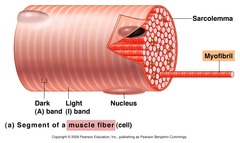
Muscle cell (fiber)
bundle of myofibrils

Myofibril
tightly packed filament bundles found within skeletal muscle fibers
6 muscle rules
1. must have 2 attachments and cross at least 1 joint
2. muscles always pull and get shorter
3. the attachment that moves is known as insertion and the stationary attachment is known as the origin
4. muscles that *decrease* the angle between ventral surfaces of the body are known as *flexors*; muscles that *increase* the angle are *extensors*
5. muscles work in opposing pairs
6. muscle striations point to the attachments and show the direction of pull
origin
attachment of a muscle that remains relatively fixed during muscular contraction
Insertion
The attachment of a muscle tendon to a moveable bone or the end opposite the origin
Brachialis
flexes forearm

triceps brachii
extends forearm
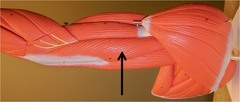
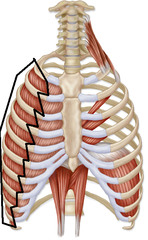
intercostal muscles
Muscles which move the rib cage during breathing
pectoralis major
Adducts and flexes humerus

pectoralis minor muscle
protracts and depresses scapula

flexor
a muscle that bends a part of the body, such as an arm or a leg

extensor
muscle that straightens a joint
