BYZANTINE ART in the "Second Golden Age" (Middle Byzantine)
 Call Kai
 Learn
 Practice Test
 Spaced Repetition
 Match
 Flashcards
 Knowt Play
1/9

There's no tags or description
Looks like no tags are added yet.
10 Terms
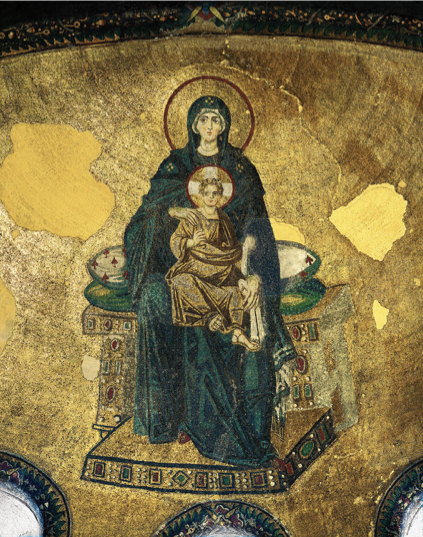
Apse mosaic with Virgin and Child enthroned from Hagia Sophia, Constantinople, 9th century;
Monomachus, south gallery of Hagia Sophia, early 11th century
Installed after the end of the iconoclasm and the triumph of the iconophiles
The Theotokos in the apse directly above the altar underscores Christ’s physical carnation and he could therefore be depicted in art
High in the semidome above the apse windows, Virgin and Child seem to be floating on light
Gold leaf causes light to seemingly dance around
Christ is a central figure, with his blue robes standing out against the gold background
Emperor Constantine offers him a purse of gold
Rulers wear jewel encrusted ceremonial regalia and imperial purple, links their gifts to divine favor
Rather than showing a narrative event, shows a timeless devotional image of pious rule

Monastery Church of the Theotokos and Katholikon, Hosios Loukas, Phokis, Greece, second
half of 10th and early 11th century
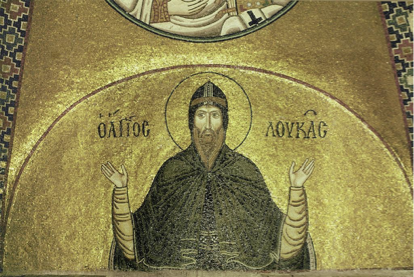
Monastery Church of the Theotokos and Katholikon, Hosios Loukas, Phokis, Greece, second
half of 10th and early 11th century
Mosaic of Hosios Loukas
depicts saint Hosios Loukas, whom the church was named after
Departure from classical realism and anatomical accuracy, focus on conveying spirituality
Elongated proportions, solemn expression, large eyes; strip away Earthly weight to convey inner spirituality
praying posture

Monastery Church of the Theotokos and Katholikon, Hosios Loukas, Phokis, Greece, second
half of 10th and early 11th century
Mosaic from the apse with the Virgin and Child Enthroned
Affirmed the legitimacy of icons after decades of destruction
Linked imperial authority with orthodox renewal
Expansive gold tesserae evokes heavenly light

Monastery church of the Dormition, Daphni, Greece, ca. 1100
Mosaic with Christ Pantokrator in the Dome
Unlike other representations, has a stern and judging look
both a savior and a fair judge
Uses gold and glass tesserae to create an effect of divine light

Monastery church of the Dormition, Daphni, Greece, ca. 1100
Mosaics with Annunciation and Baptism from two of the squinches
Placement on squinch transitions the earthly realm below with the heavenly
Annunciation: angel Gabriel announces to mary that she will give birth to Christ
Baptism: Jesus is baptized nude but the waters of the river conceal him. Soft, humanism compared to formal depictions.

Monastery church of the Dormition, Daphni, Greece, ca. 1100
Mosaic with Crucifixion
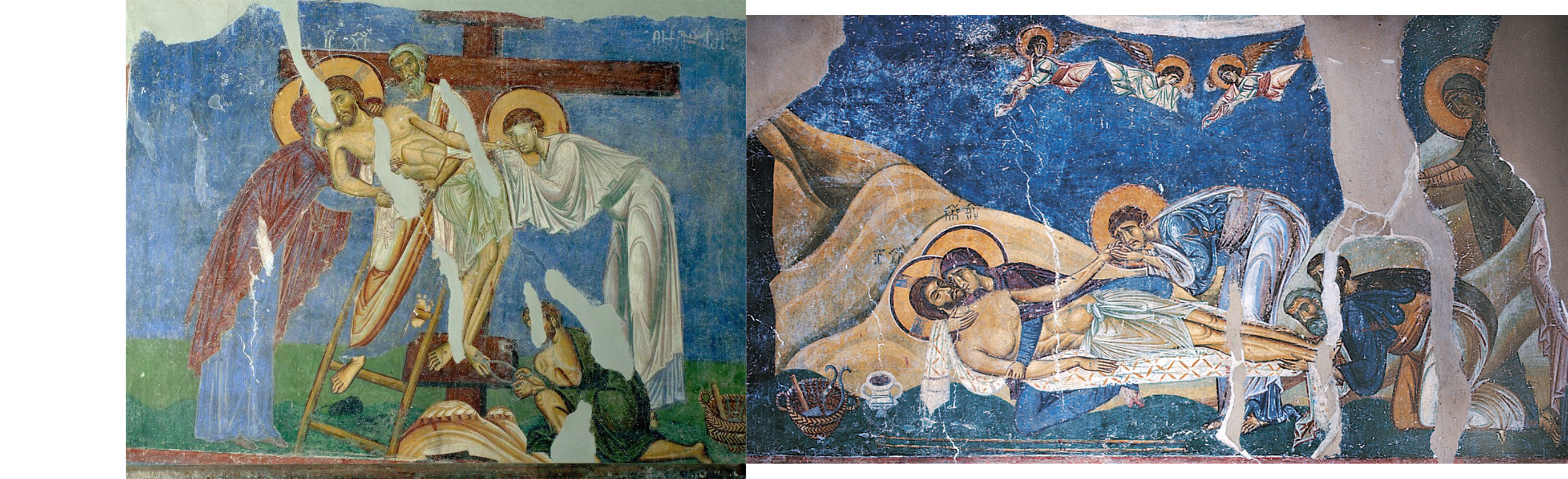
Frescoes from the church of Saint Panteleimon at Nerezi, Republic of North Macedonia, 1164
(commissioned by a member of the imperial family and painted by Byzantine artists)
Deposition and Lamentation
Grief is a central subject, shows tearful eyes and anguished postures
Narrative continuity between the two scenes
Shows the intimacy of human Christ, for example Christ over Mary’s lap
Hovering angels mirror human sorrow, bridging heavenly and earthly grief
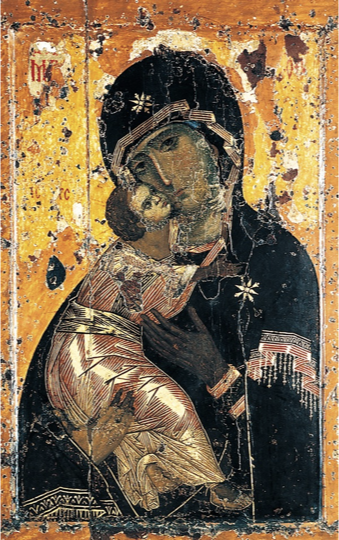
The Vladimir Madonna, tempera on wood, late 11th or early 12th century, now in the Tretyakov
Gallery, Moscow
Mary and the Christ Child press cheek to cheek in intimate maternal affection, while her sorrowful look foreshadows Christ’s Passion
Balances emotional warmth with refined linear grace

Paris Psalter, “David Composing the Psalms,” tempera on vellum, mid 10th century, Bibliothèque Nationale, Paris
Revives naturalistic forms inspired by earlier Greco-Roman art
Melody and Echo are personified
shading , contrast, and combination of landscape and architecture create depth