663 exam 1
 Call Kai
 Learn
 Practice Test
 Spaced Repetition
 Match
 Flashcards
 Knowt Play
1/170

There's no tags or description
Looks like no tags are added yet.
171 Terms
when do the three layers in development form? what are they?
around 18 days
From what layer does the neural plate develop?
ectoderm
when does the neural groove develop?
around 20 days
when does the neural tube form? from what structure?
around 22 days from the neural groove
what is disease
biological disruption that produces certain signs and symptoms
what is illness
how an individual experiences their symptoms and how their families respond
what is disability
impairment, activity limitations, or participation restrictions resulting from the health condition
personal, societal factors
external contextual factors to illness
disease-related impairments
demographic factors
built environment
social environment
political environment
internal contextual factors to illness
values, culture, beliefs
prior level of function, comorbidities, roles
personality: coping, resiliency, experiences
education
health literacy
financial resources
types of coping
emotion: feelings around the illness
appraisal: reframing how the situation is understood
problem: taking direct action, therapy, lifestyle choices
gray matter of the brain
outer layer
cell bodies that process input/controls output
white matter of brain
inner layer
myelinated axon tracts that communicate with other areas
types of fibers in the white matter
association:
runs within the same hemisphere
commissural fibers:
connect cortical areas of R and L hemispheres
projection fibers:
runs vertically, ascending and descending to and from the spinal cord
what structure separates the two hemispheres of the brain
falx cerebri
what structure connects the two hemispheres for communication?
corpus callosum
what separates the parietal and occipital lobes
parieto-occipital sulcus
what is the illness-constellation model
Illness affects the individual, family, and others
incorporates physical symptoms and the human response to the symptoms
The goal is to regain “normalcy”
4-stage process (uncertainty → wellness)
what are the 4 stages of the illness-constellation model
Uncertainty
disruption
striving to regain self
regaining wellness
uncertainty stage of the illness-constellation model
Individual detects/suspects signs of illness
Individual attempts to make sense of the symptoms
“something is wrong”
disruption stage of the illness-constellation model
Acknowledgement of the need for medical intervention
Relinquished control to others
loss of autonomy
Family begins to accept responsibility
patient may distance themselves
family become vigilant
household roles shift
striving to regain self stage of illness-constellation model
examines the past for why the illness occurred
attempts to make sense
begins to build identity amidst change
strives to preserve a sense of self
tells story again and again → process of meaning making
shift focus toward future
role renegotiation
regaining wellness stage of the illness-constellation model
Individual takes charge, trusts abilities
lives within their new limits
Therapy can highlight wellness and help with gaining independence
seeks closure and accepts consequences
family begins to monitor
what are the 5 stages of grief
denial
anger
bargaining
depression
acceptance
denial stage of grief
Conscious or unconscious protective response when someone first receives a diagnosis
Believes the diagnosis is a mistake/perpetuate a false reality
EARLY DENIAL IS NORMAL
PT's role is to help create alignment, be specific, reinforce key messages, and define what happened
anger stage of grief
Patient may lash out with frustration, resentment, and dry sarcasm
Directed anger toward others (place blame)
PT: maximize communication, identify source of frustration, keep patient informed → create trust and channel into motivation
bargaining stage of grief
postpone or distance from the reality of the situation
exhibits good behavior, makes up for perceived wrongdoing
“If I could just, then…”
PT: do not make promises you can’t keep, prepare patient for transitions, steady and consistent
depression stage of grief
feeling of loss of control, helplessness, withdrawn, no energy when the situation can no longer be ignored
person grieves for themselves
PT: find motivation for activities they care about
acceptance stage of grief
a feeling of ability or resignation
makes realistic expectations
the individual becomes an active participant in their lives
recognizes limits but sees opportunities for growth
structures in the diencephalon
thalamus
hypothalamus
subthalamic nucleus
epithalamus
structures in the brainstem
midbrain
pons
medulla
map out the general motor and sensory representations in the brain
medial → lateral
feet, legs, knee, neck, head, arm, face, mouth
primary motor cortex
controls movement execution
role of the premotor cortex
pre-movement planning
context-dependent action selection
role of the supplementary motor area
Programming of complex, sequential bimanual actions
internally generated actions or action-based memory
what are the functional areas of the frontal lobe
dorsal-lateral prefrontal and orbital cortex
frontal eye fields
broca’s area
role of the dorsal-lateral prefrontal and orbital cortex
working memory, abstraction, executive, and cognitive functioning, personality, response inhibition
role of the frontal eye fields
Voluntary saccadic eye movement
visual pursuit
broca’s area
Motor control of speech, articulation, and speech production
limbic system
Functions in processing emotions, declarative memory
links reward and motivation to behavior
survival instinct
primary somatosensory cortex
Processes sensory information
touch, pain, temperature, proprioception
posterior parietal cortex
sensory integration to coordinate spatial awareness, attention, and motor planning
Post-stroke depression risk factors
pre-stroke history
personality and coping
inadequate social support
high level of disability
younger age <68yrs old
post-stroke depression symptoms
Persistent sad or empty mood, hopelessness, pessimism
guilt, worthlessness, loss of interest, decreased energy, loss of pleasure
difficult concentrating, making decisions, sleeping, eating
thoughts of death, suicide
why does PSD matter for PTs
Reduced adherence to exercise plans
lower functional recovery and independence
increased caregiver burden + stress
higher risk of mortality
role of secondary somatosensory cortex
Processes higher-order tactile information
texture, shape, size, pain intensity
tactile memory
role of supramarginal gyrus
speech articulation and word sound/structure
object identification
working memory
spatial awareness and tool manipulation
role of angular gyrus
Understanding complex meanings, metaphors, and concepts
comprehension of written words and language
episodic memory and navigation
role of primary visual cortex
receives and processes visual input
orientation and visual stimuli
shape, form, location, and motion of objects
role of visual association cortex
interpretation of visual stimuli
object and face recognition
spatial processing
connects visual input to stored memory
functional areas in the temporal lobe
primary auditory cortex
wernicke’s area
parahippocampal gyrus and entorhinal cortex
hippocampus
role of the primary auditory cortex
process auditory information like pitch, volume, location
role of wernicke’s area
Comprehension of spoken and written language
role of parahippocampal gyrus and entorhinal cortex
Connection between cortical sensory areas and the hippocampus for memory storage
track order of events and temporal memory
maps physical space and navigation (context for memories - where/when)
role of the hippocampus
memory consolidation - short term to long term
what is a stroke
sudden onset of focal neurologic deficit resulting from cardiovascular disease
CVA
how does age impact stroke prevalence
increases with increasing age
most common form of stroke
ischemic stroke
what is a transient ischemic attack
temporary blockage in flow that fully resolves within 24hrs
what are ischemic strokes
blockages of flow from
thrombus: clot
embolus: dislodged thrombus
what type of stroke is more fatal
hemorrhagic CVA
ischemic stroke risk factors
hypertension, diabetes, high cholesterol
smoking, drug, alcohol use
irregular heart rhythm
lack of exercise, obesity
hemorrhagic stroke risk factors
hypertension
increasing age
black ethnicity
low LDL (important for vessel walls)
low triglycerides

identify the kind of stroke
ischemic

identify the kind of stroke
hemorrhagic
how are ischemic strokes managed
thrombolytics - 4.5 hrs after onset
intra-arterial thrombectomy - < 6 hrs after onset
other factors:
head of bed flat
IV fluids
permissive hypertension
how and why is cerebral perfusion maintained/increased
how: head of bed flat, IV fluids, permissive hypertension
to regain blood flow to the brain
how do hemorrhagic strokes present
progressive symptoms over 48-72 hrs
headache
nausea/vomiting
seizure
focal neurologic deficits
herniation symptoms
how is a intracranial hemorrhagic stroke mamanged?
blood pressure control
reverse coagulopathy - more clotting
intracranial pressure management
surgical management
posterior fossa decompression
removal of the occiput in case of potentially fatal brainstem compression
what can impact the neurological findings after a stroke
size of lesion
location of lesion
amount of collateral blood flow
symptoms of acute stroke
weakness
numbness
difficulty with speech
confusion
altered vision
ataxia
impaired gait
vertigo
headache
upper motor neuron syndrome
spastic paralysis
weakness depends o
athetosis
slow, involuntary, writhing movements of hands, feet, or face
UMN injury
signs of lower motor neuron syndrome
flaccid paralysis
muscle atrophy
hyporeflexia
positive = exaggerated normal functions
negative = diminished normal functions
positive UMN syndrome signs
spastic paralysis
hyperreflexia
altered muscle tone
athetosis
dystonia
emergence of primitive reflexes
negative UMN signs
fatigue
dyscoordination
impaired motor planning and control
most common location for an ischemic stroke
middle cerebral artery
left middle cerebral artery (MCA) syndrome symptoms
R hemiparesis
R sensory loss
aphasia
R visual field cut
L gaze pereference
right middle cerebral artery (MCA) syndrome symptoms
L hemiparesis
L sensory loss
neglect/anosognosia
L visual field cut
R gaze preference
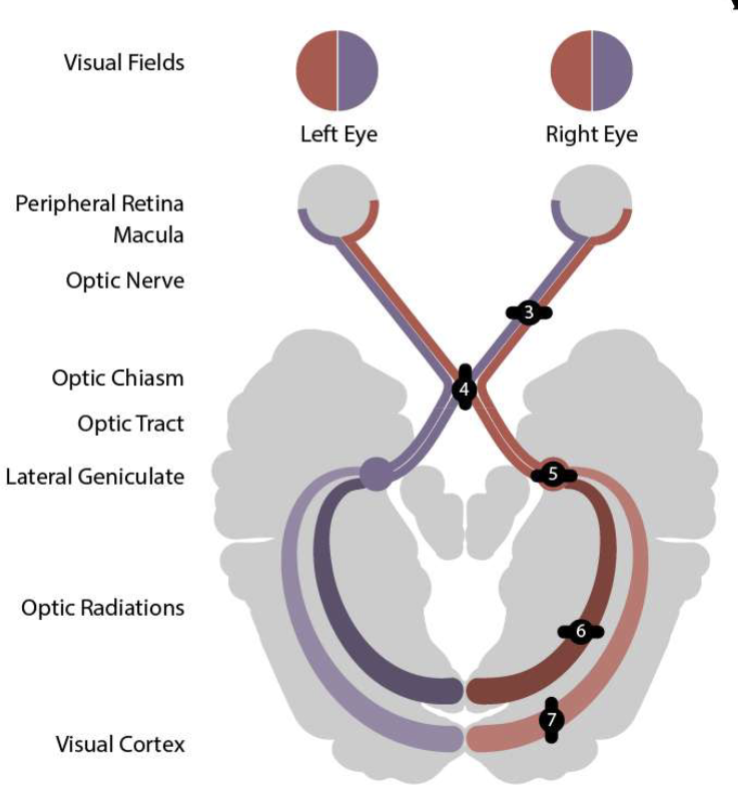
how is vision impacted with a lesion in the R optic nerce
monocular loss on the right
no vision from the R eye

how is vision impacted with a lesion in the optic chiasm
Bitemporal loss (loss of lateral aspects of both eyes)

what is anosognosia
complete unawareness of illness or condition
How is vision impacted by a lesion in the R lateral geniculate (after chiasm)
homonomous hemianopia
loss of L aspects of both eyes
what is ACA syndrome?
anterior cerebral artery syndrome
contralateral weakness - most prominent in the LE
contralateral sensory loss - most prominent in the LE
abulia
gaze preference - tendency or inability to lool toward one side
incontinence
what is abulia
severe lack of willpower, initiative motivation
characteristics of central PCA syndrome
visual field cut
thalamic involvement: weakness, sensory changes, anesthesia
hemiballismus
what is hemiballismus
Sudden, violent, involuntary flinging or writhing motions
seen in central PCA syndrome
characteristics of peripheral PCA syndrome
amnesia
alexia without agraphia
visual deficits
characteristics of basilar artery syndrome
altered mental status/sedation
cranial nerve deficits, weakness, anesthesia
pons: tetraplegia, coma, locked-in syndrome
cerebellar stroke characteristics
nystagmus
dizziness
nausea/vomiting
ipsilateral ataxia
how are hemorrhagic strokes described by?
depth and location
subarachnoid hemorrhage
bleeding into subarachnoid space
aneurysms and vascular malformations are most common
usually a transient BP rise
Susceptible to rerupturing and spewing of blood - potential hydrocephalus
most common subarachnoid hemorrhage sites
anterior communicating artery
posterior communicating artery
middle cerebral artery
lacunar CVA
characteristics are ischemic and hemorrhagic
pure motor, pure sensory, ataxic hemiparesis, clumsy, mixed sensory
name the 3 stages of stroke recovery
acute/early: attributed partially to spontaneous recovery (initially)
late
chronic
what contributes to spontaneous neurological improvements
reduction of edema
absorption of damaged tissue
improved vascular flow
damaged areas of brain circumvented
is age a factor in stroke recovery
no
what is a PTs main goal in the acute phase of stroke rehab?
mobilization
up and out of bed
centered around important mobility skills
get them home safely
what is motor control?
the ability to plan, execute, and adapt goal-directed movement
optimize accuracy, coordination, and efficiency
dependent on multiple symptoms
how is motor control observed?
by watching initiation, execution, and termination of a task
quality, coordination, and precision
compensations