GCU BIO 201 lab review guide exam 1
 Call Kai
 Learn
Learn Practice Test
 Spaced Repetition
 Match
Match Flashcards
 Knowt Play
1/188

There's no tags or description
Looks like no tags are added yet.
Name | Mastery | Learn | Test | Matching | Spaced | Call with Kai | Chat |
|---|
No analytics yet
Send a link to your students to track their progress
189 Terms
Explain how anatomy and physiology are related.
Anatomy studies the structure and shape of the body and physiology is the study of how the body works
surface anatomy
the study of exterior features
gross/macroscopic anatomy
the study of examining large, visible structures
regional anatomy
the study of body areas like the head, neck, or trunk
Systemic anatomy
the study of groups of organs working together like the skeletal system
Developmental anatomy
the study of the egg (embryology) to maturity
Clinical anatomy
medical specialties such as surgical anatomy
Microscopic anatomy
the study of examining cells and molecules
cytology
study of cells and their structures
histology
the study of tissues and their structures
cell physiology
processes within and between cells
organ physiology
functions of specific organs
systemic physiology
functions of an organ system
pathological physiology
effects of diseases
Name the levels of structural organization
CHEMICAL LEVEL-atoms to molecules.
CELLULAR LEVEL-organelles, protein filaments
TISSUE LEVEL-similar cells working together to form tissue.
ORGAN-the combo of tissues to form organs.
ORGAN SYSTEM LEVEL- the combo of organs that work together.
ORGANISM LEVEL-sum total of all structural levels working together resulting in a living object
Metabolism
the chemical reactions occurring in the cells and tissues of the body
Anabolism
BUILDING PROTEINS (USES ENERGY) synthesis of new molecules w/i the body's cells or tissues Ex: anabolic steroids= building muscle mass
Catabolism
BREAKING DOWN food, creates energy Ex: CAT-bolism CATS break things
Homeostasis
A tendency to maintain a balanced or constant internal state
intrinsic regulation/ autoregulation
automatic response in a cell, tissue, or organ
Extrinsic regulation
Responses controlled by nervous and endocrine systems EXTRA help
what are the 3 control systems involved in a maintaining homeostasis
receptor (sensor), control center (integrator), effector (muscle or gland)
receptor
Responds to changes in the environment (stimuli)
Sends information to control center
control center/ integrator
analyzes info and determines response
Effector
provides the means for the control center's response to the stimulus
positive feedback
Feedback that tends to magnify a process or increase its output ex: birth and blood clotting
negative feedback
response in which a stimulus initiates reactions that reduce the stimulus ex: shivering or regulating blood sugar
simple squamous epithelium
function: rapid diffusion or osmosis
found: lining of ventral body cavities, lungs, heart, blood vessels, cornea & capillaries

simple cuboidal epithelium
function: SECRETES & absorbs
found: GLANDS & DUCTS

simple columnar epithelium
function: ABSORBS and secretes
found: Leslie's Inside Stomach Gobbled Up Tons of Kidney Ducts:
Lines Intestines, Stomach, Gallbladder, Uterine Tubes, and Kidney Ducts or DIGESTIVE TRACT

pseudostratified columnar epithelium
function: secretion & mvmnt
location: Luke, Neil, & Troy, Broke Many Rules Today:
Lines Nasal, Trachea, Bronchi, and Male Reproductive Tract or RESPIRATORY TRACT

stratified keratinized squamous epithelium
function: protects
found: METRAVS: Mouth, Esophagus, Throat Rectum, Anal, Vagina and Skin

stratified cuboidal epithelium
Function: secretes and absorbs
Location: Sweat & salivary glands and Mammary glands

stratified columnar epithelium
function: secretion & absorbs
found: PEAMUS: Pharynx, Epiglottis, Anus, Mammary gland, Urethra, and SALIVARY GLAND DUCT

transitional epithelium
function: STRETCHES and recoils
location: UB & RU: Urine Blocks and Removes UTI's URINARY BLADDER
Stratified Non-keratinized Squamous Epithelium
function: protects & attacks against pathogens, & abrasion
found: METRAV: Mouth, Esophagus, Rectum, Anal, & Vagina

epithelial tissue
tightly packed cells that protects, absorbs, filtrates, excretes, secretes, & sensory reception
connective tissue
widely scattered cells that:
support and protect (bone/cartilage)
transport materials (blood)
energy storage (adipose)
defense (lymph)
muscle tissue
excitable and contractile tissues that contracts to cause movement
nervous tissue
Transmit electrical signals from sensory receptors and to effectors (muscles and glands) which control their activity
lumen
space within a tubular part or organ, such as the space within a blood vessel

Endocrine glands secrete
hormones into the blood
Exocrine glands secrete
products thru or into ducts
Eccrine or merocrine glands
secretes thru vesicles by exocytosis ex: pancreas or salivary gland
apocrine glands
involves the loss of cytoplasm ex: mammary gland
holocrine glands
secretes and destroys cell ex: sebaceous gland
Metaplasia
changing or alters from one type of mature tissue to another
Dysplasia
abnormal development of tissue
dense regular connective tissue
Location: tendons and ligaments
functions:conducts pull of muscles, reduces friction, b/w muscles and stabilizes positions of bones

dense irregular connective tissue
LOCATIONS: Capsules of visceral organs; periostea and perichondria; nerve and muscle sheaths; dermis
FUNCTIONS: Provides strength to resist forces applied from many directions; helps
prevent overexpansion of organs such as
the urinary bladder

elastic connective tissue
Function: expansion and contraction of organs, maintains pulsatile flow of blood through arteries; aids passive recoil of lungs following inspiration, stabilizes position of vertebrae & penis
Location: b/w vertebrae of the spinal column, ligaments supporting penis and transitional epithelia
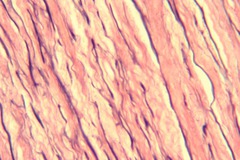
loose (areolar) connective tissue
location: deep into skin, & covered by the epithelial lining of the digestive, respiratory, & urinary tracts, b/w muscles, around joints, blood vessels, and nerves
function: cushions organs, provides support, but permits free mvmnt, phagocytic cells provide defense against pathogens

adipose connective tissue
location: under skin; around kidneys and eyeballs; within abdomen; in breasts & butt
function:provides padding & cushions shocks, reduces heat loss and stores energy

loose reticular connective tissue
location: Let Kids, Lick Nips & Bite More: liver, kidney, spleen, lymph nodes, & bone marrow
function: soft internal skeleton/framework

red blood cells
Blood cells that carry oxygen from the lungs to the body cells.

white blood cells
or leukocytes that help defend the body from infection & disease

Platelets
function in blood clotting

compact bone
cortical or dense tightly packed osteons form shaft of long bones

spongy bone
-Cancellous or trabecular bone
-Located in &ends of bones
where bone marrow is found

hyaline cartilage
location: b/w tips of ribs, & bones of sternum, covering bones surfaces @ synovial joints, supporting larynx, trachea, & bronchi,
function: provides stiff &flexible support and reduces friction b/w bony surfaces

elastic cartilage connective tissue
location: external ear, epiglottis, auditory canal, cuneiform cartilages of larynx
function: provides support but tolerates distortion w/o damage & returns to OG shape

Fibrocartilage Connective Tissue
location: pads w/i knee joint,pubic symphsis, and b/w intervertebral discs
function: resists compression, prevents bone-to-bone compact & limits mvmnt

cranial cavity

dorsal cavity

spinal cavity

thoracic cavity

Diaphragm

ventral cavity

abdominal cavity

abdominopelvic cavity

pelvic cavity

pleural cavity

pericardial cavity

Cephalon (cephalic)
whole head

Cervical
neck

acromial
shoulder

dorsum
back

Olecranal
back of elbow
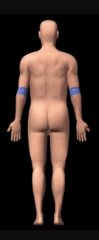
Lumbar
lower back

gluteus
butt

Popliteal
back of knee

sural
calf

calcaneal
heel of foot

plantar
bottom of foot

upper limb

lower limb

cranial

facial
entire face
oral
mouth

mental
chin

axillary
armpit

brachium
upper arm

Antecubital
front of elbow

Antebrachial
forearm

carpal
wrist

pollex
thumb

palmar
palm

digits
fingers, toes

coxal
hip

pubis
pubic
