Introduction + Endocrine System
 Call Kai
 Learn
 Practice Test
 Spaced Repetition
 Match
 Flashcards
 Knowt Play
1/170

There's no tags or description
Looks like no tags are added yet.
171 Terms
Levels of Organisation
Chemical, cellular, tissue, organ, system, organismmal

What plane is this?
Sagittal plane

What plane is this?
Coronal plane

What plane is this?
Transverse plane
Visceral
Associated with an organ
Parietal
Associated with the body wall

Which body cavity is labeled ‘2’
Dorsal cavity

Which body cavity is labelled ‘1’
Cranial cavity

Which body cavity is labeled ‘3’
Vertebral cavity

Which body cavity is labeled ‘4’
Thoracic cavity

Which structure is labeled ‘5’
Diaphragm

Which body cavity is labeled ‘6’
Abdominal cavity

Which body cavity is labeled ‘7’
Pelvic cavity

Which body cavity is labeled ‘2’
Vertebral cavity

Which body cavity is labeled ‘10’
Ventral body cavity

Which body cavity is labeled ‘9’
Abdomino-pelvic cavity
List the major endocrine glands
Adrenal/suprarenal, parathyroid, pineal, pituitary, thyroid
List the major endocrine organs
Adipose tissue, gonads, hypothalamus, pancreas
List the functions of the endocrine system.
Appetite and digestion, coping with diurnal variation and stress, growth and development, homeostatic regulation, reproductive functions, thermoregulation
General characteristics of hormones
Produced in response to stimuli, specific rates and patterns of secretion, operate within feedback systems, only affect cells with appropriate receptors
What releases hormones?
Endocrine glands
Water soluble hormone
Interact with membrane receptors to initiate signal transduction
Fat soluble hormone
Diffuse across the membrane via carrier (thyroid hormones) and non-carrier (steroids) mediated mechanisms
How do hormones induce change?
Activate membrane and/or cytoplasmic receptors
Categories of hormones
Amines, protein/glycoprotein, steroid
What disturbs homeostasis in thermoregulation
Decreased T3 and T4 concentrations in blood or low temperature
Which organ releases TRH
Hypothalamus
Where does TRH travel to
Anterior pituitary
Which organ releases TSH
Anterior pituitary
What releases T3 and T4
Thyroid gland follicles
Where does TSH travel to
Thyroid gland
Effect of increasing T3 and T4 hormones
Suppresses TRH and TSH production
Describe the oxytocin positive feedback loop
Brain stimulates pituitary to secrete oxytocin, oxytocin induces contractions, contractions cause release of prostaglandins, more oxytocin is secreted.
Tropic hormone
Hormones that target other endocrine glands and trigger them to secret their own hormones
Hypothalamus function
To secrete releasing factors and inhibitory factors to direct the production of hormones by the anterior pituitary
Hypophyseal portal system
System of blood vessels in the microcirculation at the base of the brain, connecting the median eminence of the hypothalamus with the anterior pituitary
Hypophyseal portal system function
To quickly transport and exchange hormones between the hypothalamus arcuate nucleus and anterior pituitary gland
How many hormones does the anterior and posterior pituitary produce/secrete
6, 2
Anterior pituitary tissue composition
Glandular
Posterior pituitary tissue composition
Neural tissues
Which cells release glucagon
Alpha cells
Which cells release insulin
Beta cells
Insulin effect on blood glucose levels
Decreases blood glucose levels
Glucagon effect on blood glucose levels
Increases blood glucose levels
Major functions of thyroid hormone
Increases metabolism and protein synthesis, influences growth and development in children
Negative feedback mechanism
Inhibits the further production of the associated releasing hormone or tropin by the hypothalamus or anterior pituitary, respectively
Functions of the thoracic cavity
Breathing, protection,
3 Regions of the thoracic cavity
Mediastinum, pleural cavities
How are the mediastinum and pleural cavities separated
Thin serous membranes
Which vertebra divides the superior and inferior mediastinum?
T4/5
Fibroserous sac position
Surrounds the middle mediastinum
Fibroserous sac function
Protection, anchorage, prevents overstretching, reduces friction of heartbeat.
Layers surrounding the heart
Fibrous pericardium, serous pericardium
Parts of the serous pericardium
Parietal layer, pericardial cavity, visceral layer
Arch of aorta positioning
Sits at level of sternal angle
3 Main branches of the arch of aorta
Brachiocephalic, common carotid, subclavian
Chambers of the heart
Right atrium, right ventricle, left atrium, left ventricle

Identify the highlighted feature
Pectinate muscles
Which features open the right atrium to the right ventricle.
Right atrioventricular orifice and tricuspid valve

What is this feature called?
Interatrial septum

What are the ear shaped extensions of the heart called?
Auricles

Name the feature highlighted orange
Papillary muscles
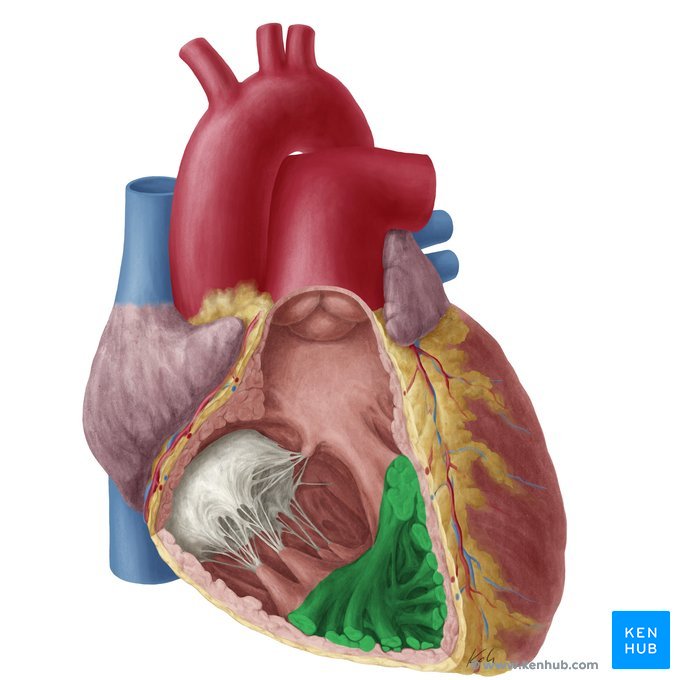
Name the feature highlighted green
Trabeculae carnae
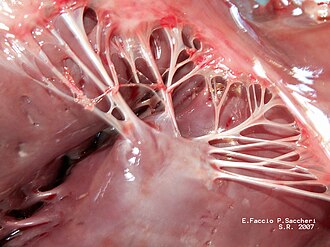
Name the white, stringy feature
Cordae tendineae

Name the feature highlighted green
Pulmonary valve

Name the feature highlighted green
Semilunar cusp
What prevents the refilling of the ventricle
Recoil of blood fills the pulmonary sinuses, closing the semilunar cusps
Describe the left atrium wall
Mostly smooth and thin, pectinate muscles only in left auricle
Which features open the left atrium to the left ventricle.
Left atrioventricular orifice and mitral (bicuspid) valve
Compare the left and right ventricles
Left ventricle has a much thicker wall

Name the feature highlighted green
Aortic valve
Layers of the heart wall
Epicardium, myocardium, endocardium
Myocardium
Thick muscular layer, the bulk of the heart, pumping action
Epicardium
Visceral layer of serous pericardium, thin connective tissue
Endocardium
Innermost layer of endothelium and thin connective tissue to provide smooth lining for chambers and valves

Name the feature highlighted green
Atrioventricular ring
Function of atrioventricular rings
Acts as an electrical insulator between atria and ventricles and prevents overstretching of valves.

Name the feature highlighted green
Left trigone

Name the feature highlighted green
Right trigone

Name the highlighted feature
SA node

Name the feature highlighted green
AV node
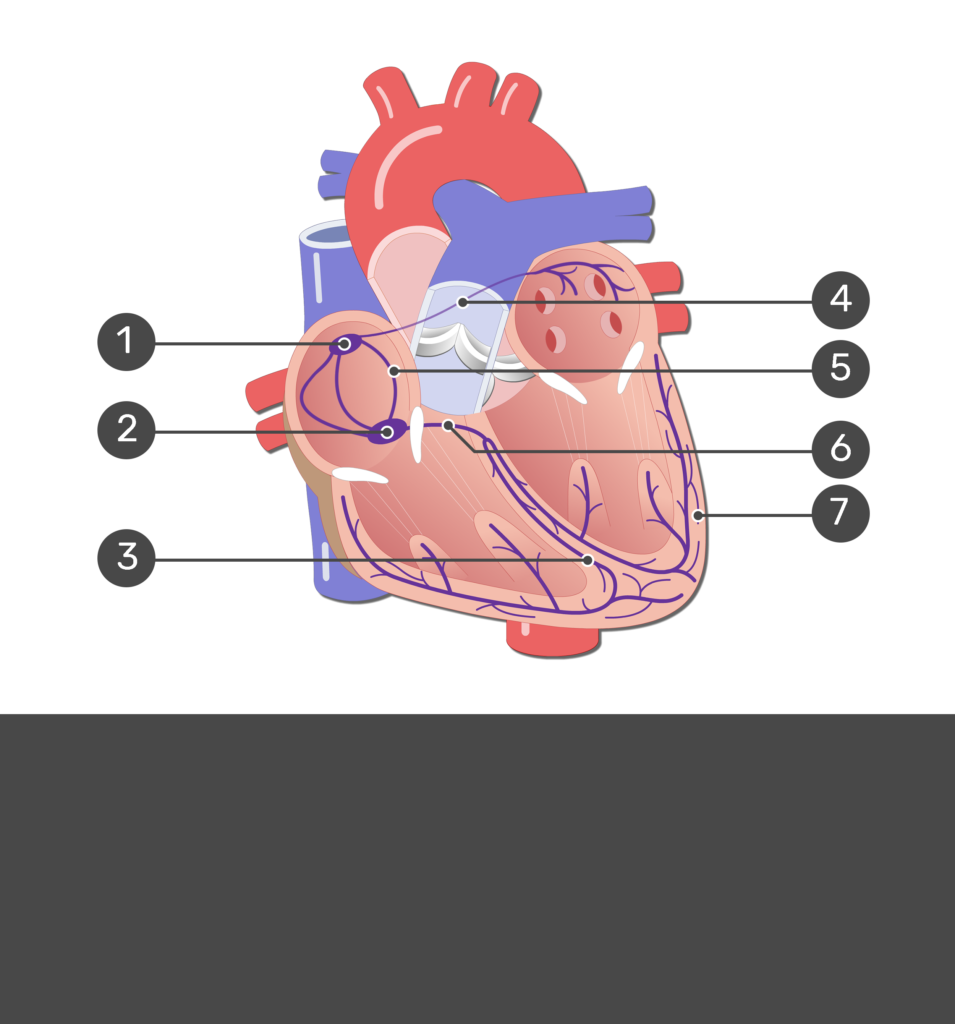
Name the feature labeled ‘6’
Atrioventricular bundle

Name the feature labeled ‘3’
Right bundle branch
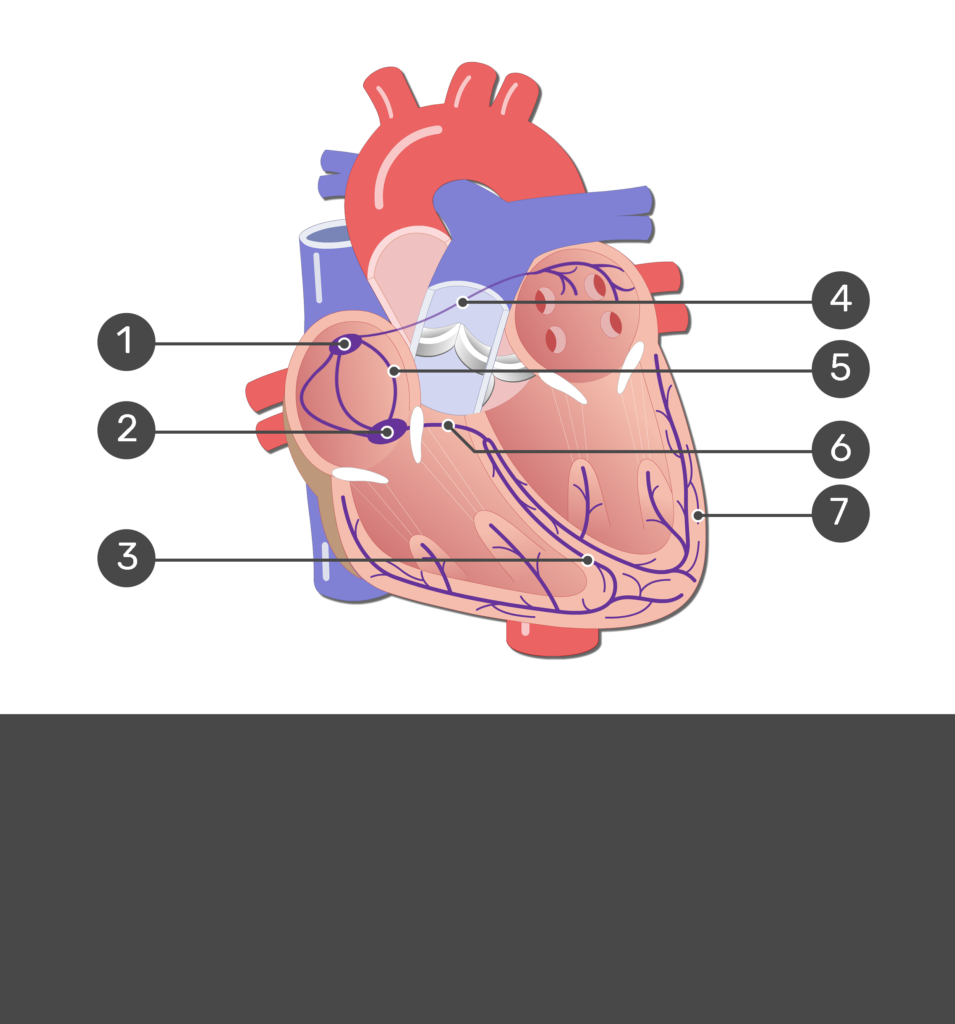
Name the feature labeled ‘7’
Purkinje fibres
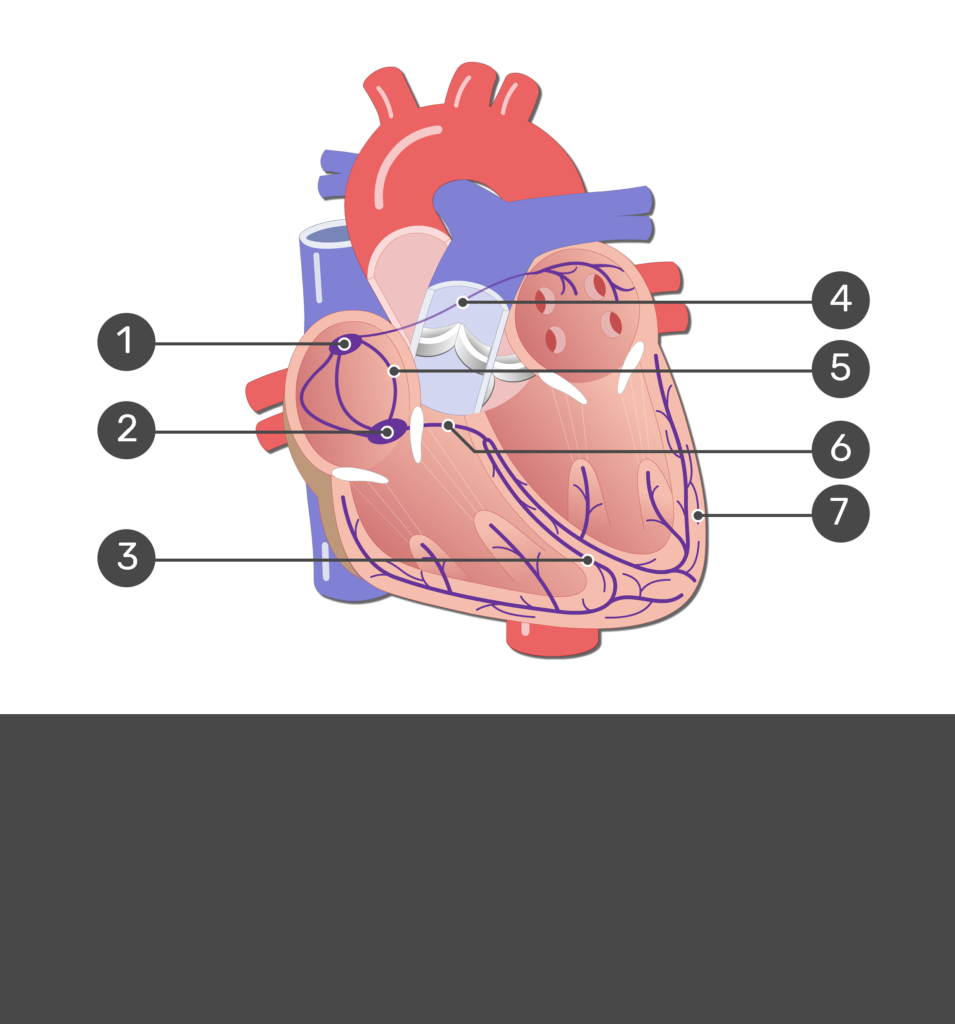
Name the feature labeled ‘5’
Internodal pathways
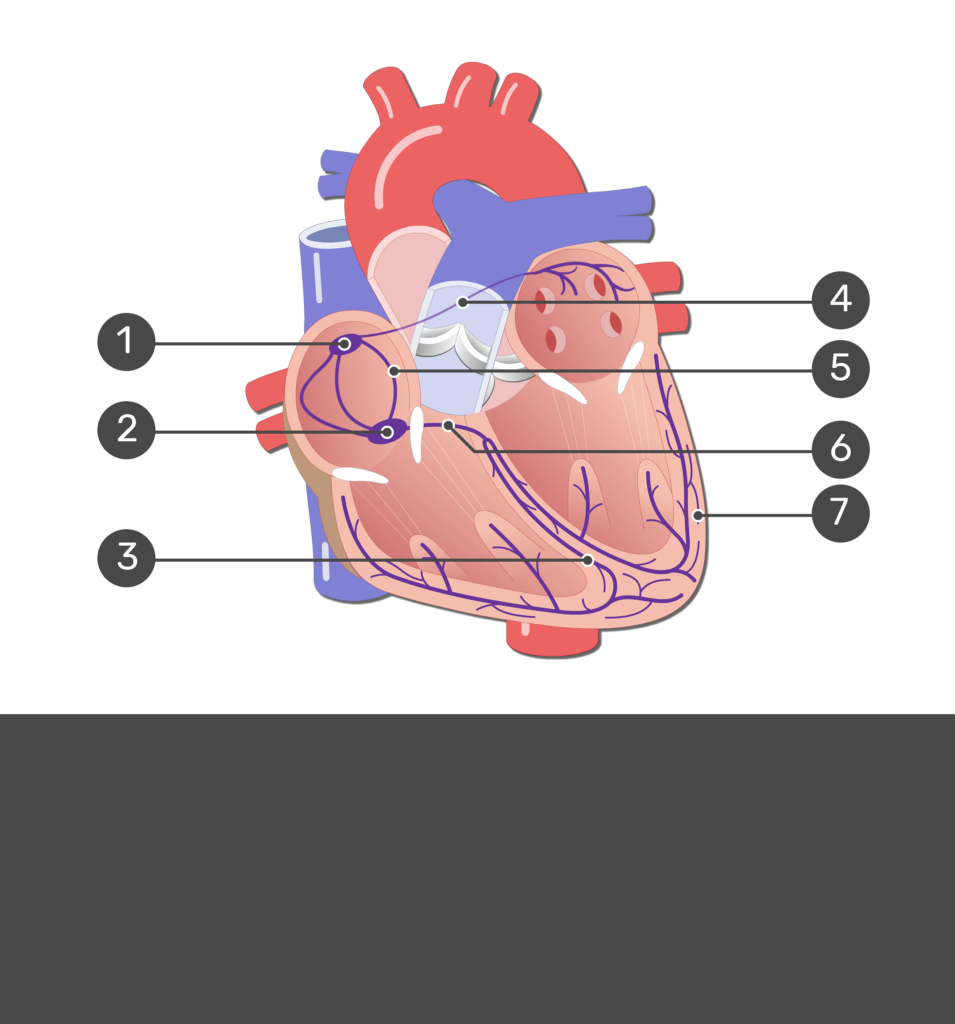
Name the feature labeled ‘4’
Fibre bundle

Name the feature labeled ‘B’
Left coronary artery

Name the feature labeled ‘C’
Right coronary artery

Name the feature labeled ‘F’
Anterior interventricular artery

Name the feature labeled ‘D’
Left circumflex branch

Name the feature labeled ‘E’
Posterior interventricular artery

Name the feature highlighted green
Coronary sinus

Name the feature highlighted green
Anterior ventricular vein

Name the feature highlighted green
Middle cardiac vein
Primary role of the circulatory system?
The distribution of dissolved gases and other molecules for nutrition, growth and repair to tissues and removal of metabolic waste products from tissues
Summarise blood composition %
55% plasma, <1% buffy coat, 45% erythrocytes
Composition of buffy coat
Leukocytes and platelets
Blood pH
Slight alkaline (7.4)
Average volume of blood in adult male
5-6L