Bible Exposition Study Flashcards
 Call Kai
 Learn
 Practice Test
 Spaced Repetition
 Match
 Flashcards
 Knowt Play
1/77

Earn XP
Description and Tags
A set of 50 fill-in-the-blank practice flashcards covering hermeneutical principles, biblical theology, and original language exegesis for PhD Bible Exposition exam preparation.
78 Terms
General hermeneutics refers to those rules which pertain to the interpretation of the __________.
entire Bible
Special hermeneutics refers to those rules which are developed with reference to __________ of Scripture, such as parables, prophecy, apocalypse, and poetry.
special parts
According to Ramm, hermeneutics stands in the same relationship to exegesis that a __________ stands to a game.
rule-book
While exegesis attempts to draw the original meaning out of the text, __________ is defined as 'a reading into' a text what the reader wants it to say.
Eisegesis
In the Hermeneutical Spiral, the __________ stage consists of reading and reflecting on the passage to get a flow of the main idea and key words.
inductive
In the Hermeneutical Spiral, the __________ stage consists of digging into historical context, grammar, and literary context through commentaries and dictionaries.
deductive
The term 'Grammatical-Historical' was first coined by __________ in 1788.
Karl A. G. Keil
In the Grammatical-Historical method, ascertaining the __________ refers to determining the specific usage of words as employed by an individual writer and/or prevalent in a particular age.
usus loquendi
Kaiser proposed a new name for the grammatical-historical process: the __________ method.
syntactical-theological
The term __________ refers to a 'fuller sense' that goes beyond the consciousness of the original author.
Sensus Plenior
According to Greidanus, the preacher must not settle for a descriptive analysis of a text at one stage of development, but must follow it through the whole Bible, from __________.
seed to plant to flower
According to the Holman Illustrated Bible Dictionary, the original author's meaning can never change because what the author meant is __________ in history.
locked

In the table comparing interpretive methods, the benefit of the Allegorical Method is looking for spiritual and __________ meanings other than the plain/literal meaning.
theologically significant
In Canonical Criticism, Brevard Childs argues that the canon of the Christian church is the most appropriate context from which to do __________.
Biblical Theology
Canonical Criticism differs from a purely historical-critical approach because it tends towards the __________ and practically eliminates the original historical context.
ahistorical
The danger of __________, or reading meaning into a text based on one's biases, is especially apparent in Reader-Response Criticism.
eisegesis
A __________ approach synthesizes textual data to organize Scripture within a fixed structure of reality without regard to timeline, whereas a diachronic approach studies accumulating theology through time.
synchronic
Evangelical theologian __________ used Speech Act Theory as an aid to understanding biblical discourse and developing the theological interpretation of Scripture.
Kevin J. Vanhoozer
In Speech Act Theory applied to Genesis 1, light came to be as a result of a distinctly divine speech act described as a '__________' that brings into being what it says.
generative
In the patristic era, Clement of Alexandria and __________ institutionalized the allegorical method in the late second and early third centuries.
Origen
The Antiochian school strongly emphasized the __________ meaning of the text, steering between Ebionite literalism and Alexandrian allegorization.
single
Biblical Introduction is also technically known as __________, which includes biblical archaeology, canonics, criticism, and hermeneutics.
Isagogics
While Systematic Theology correlates biblical information as a whole topically, Biblical Theology studies the Word of God in the way in which it was written: __________.
progressively

As shown in the comparison table, Covenant Theology teaches that faithful Israel is the church, whereas Dispensational Theology maintains a distinction between __________.
Israel and Church
Dispensationalism was popularized by __________, with later refinements, and emphasizes different stewardships of man under God.
C. I. Scofield
Progressive Dispensationalism, developed in the 1980s, interprets the first and second comings of Christ through the lens of '__________' hermeneutics.
already/not yet
Unlike Baptist covenant theology which emphasizes continuity in the Decalogue, __________ stresses discontinuity, arguing the Sabbath was fulfilled and abrogated in the new covenant.
progressive covenantalism
The three essential components of a valid biblical type are correspondence, historicity, and __________.
escalation/eschatology
A __________ approach to Old Testament interpretation refers to the idea that all Old Testament history, laws, and prophecy find their end or goal in Jesus.
Christotelic
A __________ is defined as an unsought, transient manifestation of a divine being or of God to man.
Theophany
A preincarnate appearance of Christ in the Old Testament, such as the commander of the army of the Lord in Joshua 5:13–15, is known as a __________.
Christophany
In the study of redemptive history, the German term __________ is used to designate salvation history as normative history.
Heilsgeschichte
__________ eschatology refers to the belief that God's future for the world has already begun to come forward to meet us in the present.
Inaugurated
Genesis 3:15 is commonly regarded as the __________, meaning the 'first gospel' given within the very shadows of Eden.
Protoevangelium
The concept of __________ refers to the use of an individual representation to stand for the whole group or human race, such as 'seed' in Genesis 3:15 or Adam in Romans 5.
Corporate Solidarity
A __________ is a nesting literary structure in which concepts are repeated in reverse order (A−B−B′−A′).
Chiasm
The book of Deuteronomy follows the mid-second millennium B.C. covenant treaty structure known as a __________ treaty, characteristic of the Hittite kings.
Suzerain-Vassal
Wisdom literature in the Old Testament represents God primarily as __________ rather than as Redeemer.
Creator
Scholars categorize the reflection on theological problems of suffering in Job and Ecclesiastes as 'higher wisdom,' while Proverbs is categorized as __________ wisdom.
lower or practical

According to the legal comparison chart shown, Legal Apodictic law, exemplified by the Ten Commandments, leaves no room for loopholes and serves as a __________.
Target to aim at
In rabbinic hermeneutics, the Seven Middot of __________ established the rules by which oral law was derived from written Scripture.
Hillel

According to the Brown-Driver-Briggs Lexicon entry shown, the Hebrew root Dāḇār is used as a divine communication in the form of commandments, prophecy, and words of help __________ times.
394
The Hebrew term __________ refers to a Kinsman-Redeemer who acts to redeem land, buy relatives out of slavery, marry a deceased brother's widow, or avenge blood.
gā'al

As shown in the table, speaking of future events as fulfilled in the moment because God sees the end from the beginning, even if complete fulfillment occurs later, is called __________.
Prophetic Foreshortening
The Septuagint (LXX) was produced beginning around 280 B.C. in the city of __________, Egypt.
Alexandria
The legendary Jewish account claiming that 72 elders translated the Septuagint under King Ptolemy Philadelphus is preserved in the Letter of __________.
Aristeas

As defined in the Greek syntax table, the __________ Aorist emphasizes the beginning of an action or entrance into a state/condition, as seen with Esigēsen in Acts 15:12.
Ingressive/Terminative
A word that occurs only once in the biblical corpus or a given body of literature is known to exegetes as a __________.
Hapax Legomenon
In expository preaching, the three essential components of a sermon Big Idea are the Subject, the Complement, and the __________.
Purpose
The German form-critical concept of __________ refers to the original 'life setting' of a text, such as a Psalm or prophetic oracle.
Sitz im Leben

What does the Hebrew word Adam (aw-dawm’) mean?
man; mankind; humankind; proper name
Gen. 2:7 “The LORD God formed a man from the dust of the ground.”
Refers to both males and humanity as a whole. The name Adam reflects both the substance and color of the earth since the word is closely related to adamah meaning ground and adom, meaning red.

What does the Hebrew word Adonai (ad-o-nai’) mean?
lord; master; sovereign
Exodus 4:10 “Moses said to the LORD, ‘Pardon your servant, Lord.’”
Adonai acknowledges that a superior is worth reverence. It is more formal than God’s personal name, YHWH, and appears in the same passage with YHWH, with Adonai translated “Lord” and YHWH translated “LORD”.

What does the Hebrew word Aman (aw-man’) mean?
believe; trust; have faith
Genesis 15:6 “Abraham believed the LORD, and he credited it to him as righteousness.”
Aman means knowing something is so true that it is worth changing your life. It is a belief that is filled with substance, causing a person to act sacrificially.

What does the Hebrew word Amen (aw-mane’) mean?
surely; so be it; truly
Psalm 89:52 “Praise be to the LORD forever! Amen and Amen.”
A common ending for prayers meaning “let it be” or “surely”. It is related to Aman, and is an affirmation of true belief. In the Old Testament, it can be used to emphasize a blessing or a curse. In New Testament Greek, amen serves as the final word in the Bible: “The grace of the Lord Jesus be with God’s people. Amen.” Rev. 22:21
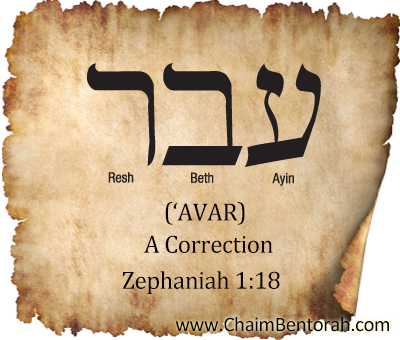
What does the Hebrew word Avar (aw-var’) mean?
pass through; cross; pass over; transgress
Numbers 14:41 “Moses said, ‘Why now are you transgressing the command of the LORD, when that will not succeed?’”
Avar often involves people moving from one place to another , but it can also mean to “disobey” or “violate” God’s law. When a person sins, the “cross over” God’s law.

What does the Hebrew word Barak (baw-rak’) mean?
bless; kneel
Psalm 29:11 “The LORD blesses his people with peace.”
A blessing often means an intangible good gift - a state or an attitude of goodness, humility and kindness allowing someone to experience God’s love and provision rather than a material possession.

What does the Hebrew word Berith (ber-eeth’) mean?
agreement; covenant
2 Kings 17:15 “They rejected his decrees and the covenant he had made with their ancestors.”
It is a serious commitment, carrying intense weight. In the OT, each party would cut an animal in two and walk through the pieces, thereby “cutting a covenant” as if to say, “let this happen to me if I break this covenant.” When God covenanted with Abram, God alone walked through the pieces, and, even though Israel broke God’s covenant, Jesus’ body was broken to right their wrong.

What does the Hebrew word Chazah (khaw-zaw’) mean?
see; behold; percieve; gaze
Psalm 27:4 “This only do I seek:… to gaze on the beauty of the LORD.”
Describes prolonged gazing upon something present physically or within a vision. Often describes contemplating God’s majesty and activity in creation.

What does the Hebrew word Davar (daw-var’) mean?
word; deed; thing; speech
Isaiah 2:3 “The law will go out from Zion, the word of the LORD from Jerusalem.”
Davar can mean both “a thing”, “a single word”, or “a thought unit”. “The word of the LORD” can mean a series of messages spoken through a prophet or all God’s teachings and instructions in total.
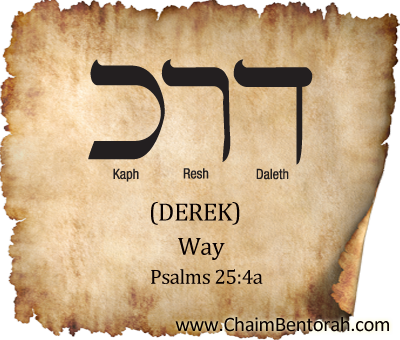
What does the Hebrew word Derek (deh’-rek) mean?
way; road; journey
Psalm “As for God, his way is perfect.”
Derek can mean both a literal road or be used figuratively in the context of following God’s statutes. God’s “way” is symbolic of a path that guides people to a meaningful life.

What does the Hebrew word Gaal (gaw-al’) mean?
redeem; buy back
Psalm 106:10 “From the hand of the enemy [God] redeemed them.”
In the OT, if someone settled a debt by selling land or giving up a family member as a slave, another family member could buy back what was sold. This happened when God redeemed the Israelites from Egypt and Boaz bought back his family’s land and Married Ruth. Jesus redeemed mankind from sin’s destruction through His death and resurrection: Christ redeemed us from the curse of the law by becoming a curse for us, for it is written: “Cursed is everyone who is hung on a pole.” Galatians 3:13

What does the Hebrew word Halak (haw-lak’) mean?
go; walk; live
Psalm 106:10: “You have delivered me from death… that I might walk before God in the light of life.”
To walk is associated with a person’s way of life. When David speaks about walking with God in Psalm 56:13, he speaks of living life with God - communicating with him and being aware of His presence.

What does the Hebrew word Halal (haw-lal’) mean?
praise; boast
Jeremiah 20:13: “Sing to the LORD! Give praise to the LORD.”
Halal is the root of Hallelujah. The u sound indicates it is an instruction for everyone to praise, and the jah sound is a form of God’s personal name, YHWH. Hallelujah means “All of you praise the LORD.”
What does the Hebrew word Hata (haw-taw’) mean?
miss (a mark); sin
2 Samuel 24:10 “David… said to the LORD, ‘I have sinned greatly in what I have done.”
Hata literally means “to miss the mark,” as in archery; but in the OT, it is usually used in the sense of missing the standard of God’s commands. In English Bibles, Hata is often translated as “sin”. When people fall short and miss the mark of God’s instructions, it damages their relationship with him.

What does the Hebrew word Hen (hane) mean?
favor; grace
Genesis 6:8: “Noah found favor in the eyes of the LORD.”
This kind of favor often comes as relief from a bad situation. Hen is a gift that is not deserved, and it also brings healing or hope, such as when Boaz shows favor to Ruth when she is in need. Hen is also the basis of the name Hannah, adding meaning to the story of God graciously granting Hannah the gift of Samuel, the son she had so diligently prayed for (1 Sam. 1). Hen is also sometimes paired with concepts such as rescue and strength. In the OT, when a person asks for hen, it often conveys asking for someone to provide protection.

What does the Hebrew word Hesed (heh’-sed) mean?
covenant love; dependable kindness; loyalty
Psalm 23:6: “Surely your goodness and love will follow me all the days of my life.”
Hesed is God’s love for his people. It is not just a feeling that can change or go away; it is a pledge that God makes to those who follow him. Boaz also shows Ruth hesed by allowing her to glean barley and wheat from his fields.
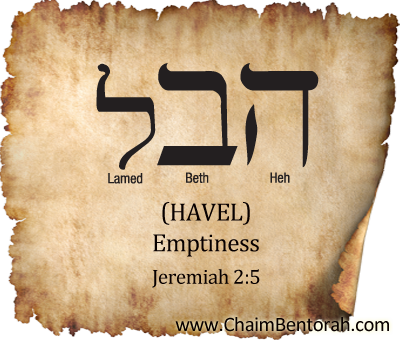
What does the Hebrew word Hevel (heh’vel) mean?
vapor; breath
Proverbs 21:6: “A fortune made by a lying tongue is a fleeting vapor and a deadly snare.”
Hevel is often translated as “futility,” “vanity,” or “meaningless,” especially in Ecclesiastes; but the more literal meaning is a vapor, a wisp, or something that does not last. It is not that the author of Ecclesiastes is trying to communicate that life is completely futile, but instead that life on this earth quickly passes away.

What does the Hebrew word Hokma (hok-maw’) mean?
wisdom; skill
Psalm 111:10 “The fear of the LORD is the beginning of wisdom, all who follow his precepts have good understanding.”
Hokma means more than acquiring facts or knowledge. Wisdom involves choosing God’s ways. The Bible makes it clear that God himself is the source of wisdom: “The LORD gives wisdom; from his mouth come knowledge and understanding” Proverbs 2:6

What does the Hebrew word Kaphar (kaw-far’) mean?
atone; cover; forgive
Isaiah 6:7: “Your guilt is taken away and your sin atoned for.”
Atonement can be thought of as “at-one-ment.” It is the moment when something that is broken is put back into one piece again. Where there is atonement happening in the Bible, God is restoring his relationship with his people. Words related to kaphar include kaporet - the word covering on the Ark of the Covenant (the “mercy seat”) - and Yom Kippur, the Day of Atonement (Lev. 16), when sacrificial blood was sprinkled on the kaporet to atone for Israel’s sins.
What does the Hebrew word Kavod (kaw-vode’) mean?
glory; honor; weight
Isaiah 6:3: “Holy, holy, holy is the LORD Almighty; the whole earth is full of his glory.”
Kavod is usually associated with God’s glory and is used to explain his presence. When the Bible uses Kavod in relation to people, it refers to how much they are respected. Kavod is a kind of seriousness that involves power, authority, social standing, and honor.

What does the Hebrew word Lev (layv) mean?
heart; mind; will; inner self
Proverbs 4:23: “Above all else, guard your heart, for everything you do flows from it.”
People associate the words heart with emotions like love and head with thinking. In Hb, lev refers to a person’s feelings as well as their mind and willpower. To “guard your heart” includes protecting your mind from unwholesome things.

What does the Hebrew word Mashiach (maw-shee’-akh) mean?
messiah; annointed one
1 Samuel 2:35: “They will minister before my anointed one always.”
Mashiach is a person chosen by God for a specific purpose. The word is sometimes used as a description of priests, kings, prophets, or Israel as a nation since God chose it to make his name known. Often God’s chosen ones were anointed, or smeared, with olive oil - a symbol of God’s presence and power. Many places in Scripture also use mashiach to refer to the ultimate King and Deliverer promised by God. His name - Jesus the Messiah - is not revealed until the NT.

What does the Hebrew word Mishpat (mish-pawt) mean?
judgment; decision; justice
Isaiah 1:17: “Learn to do right; seek justice. Defend the oppressed. Take up the cause of the fatherless; plead the case of the widow.”
Mishpat is often translated judgment or justice, but rather than implying a negative meaning, it implies fairness: Proper judgment leads to a just, or fair decision. People can be flawed when they try to judge, but God’s judgments are always correct and lead to justice.
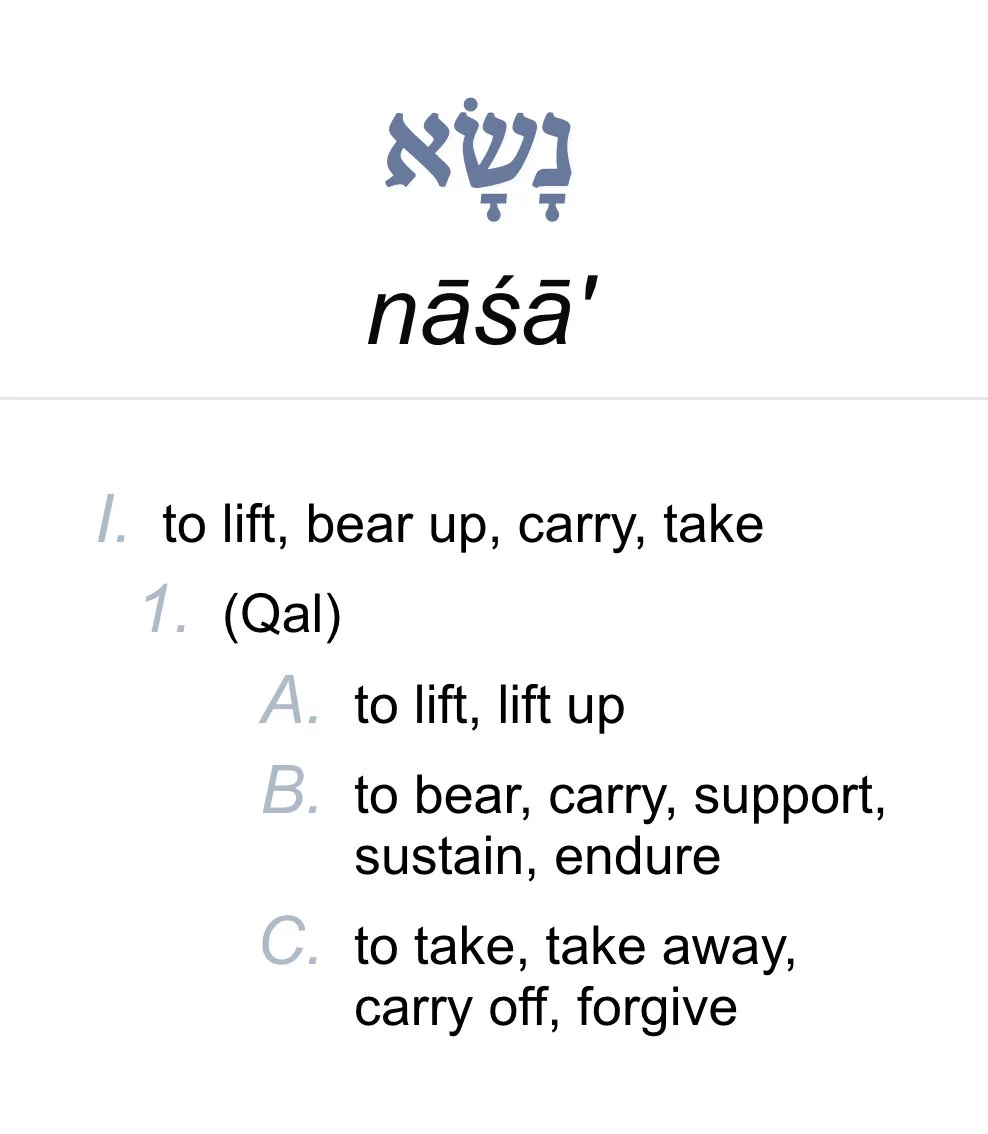
What does the Hebrew word Nasa (naw-saw’) mean?
carry; bear; lift; take; forgive
Psalm 25:18 “Consider my affliction and my trouble, and forgive all my sins.”
Nasa can refer to carrying physical objects, but it also communicates the idea of carrying, or bearing, less tangible things. A noteworthy example is that NASA can be used in the context of God’s forgiveness. When God forgives people, he is graciously choosing to carry their heavy load of sin so they are no longer weighed down by it.

What does the Hebrew word Natsal (naw-tsal’) mean?
deliver; rescue
Psalm 31:15: “My times are in your hands; deliver me from the hands of my enemies.”
Natsal is the military term for bringing back someone who was captured in enemy territory. In the psalms, the the authors speak of God delivering them, they are explaining that God has helped them escape from the danger of their enemies. In the New Testament, this concept takes on a new meaning when Jesus delivers his followers from the enemies of sin and death.
What does the Hebrew word Nephesh (neh’-fesh) mean?
living being; life; soul; person; throat; neck
Deuteronomy 6:5: “Love the LORD with all your heart and with all your soul and with all your strength.”
Nephesh, which is often translated as “soul,” means a person’s entire being - that which makes someone alive. Obeying the command to love God with “all your soul” means showing love for him by gladly submitting to his will in every aspect of life.
What does the Hebrew term Pasha (Paw-shah’) mean?
Rebel; transgress
Jeremiah 2:29: “Why do you bring charges against me? You have all rebelled against me,” declares the LORD.”
Pasha involves expansion and often communicates a sense of breaking away. When God's people sin by choosing to break away from him, it creates distance in their relationship in the same way that continually wronging a spouse creates distance over time.
What does the Hebrew term Qadosh (holy; separated; set apart) mean?
Holy; separated; set apart
Leviticus 20:26: “You are to be holy to me because I, the LORD, am holy, and I have set you apart from the nations to be my own.”
Because God is holy, people sometimes think this word means "perfect." But in the Bible, qadosh is more about being separated for a unique purpose. For example, God is set apart from his creation; the tabernacle was qadosh because it was God's dwelling place; and God's people are qadoshnot because they have earned special status, but because God has set them apart for the purpose of making him known to the world.