Solar System & Planetary Motion Test Study Guide
 Call Kai
 Learn
 Practice Test
 Spaced Repetition
 Match
 Flashcards
 Knowt Play
1/122

There's no tags or description
Looks like no tags are added yet.
123 Terms
Which two planets in our solar system have no moons?
Mercury & Venus
Which item flies through our solar system and is considered a small rock?
meteoroid.
An item that flies around the Sun and consists of rock, dust, metal, AND ICE is called a(n)…
comet.
Which 4 planets are the 'gas giant' planets?
Jupiter, Saturn, Uranus, Neptune
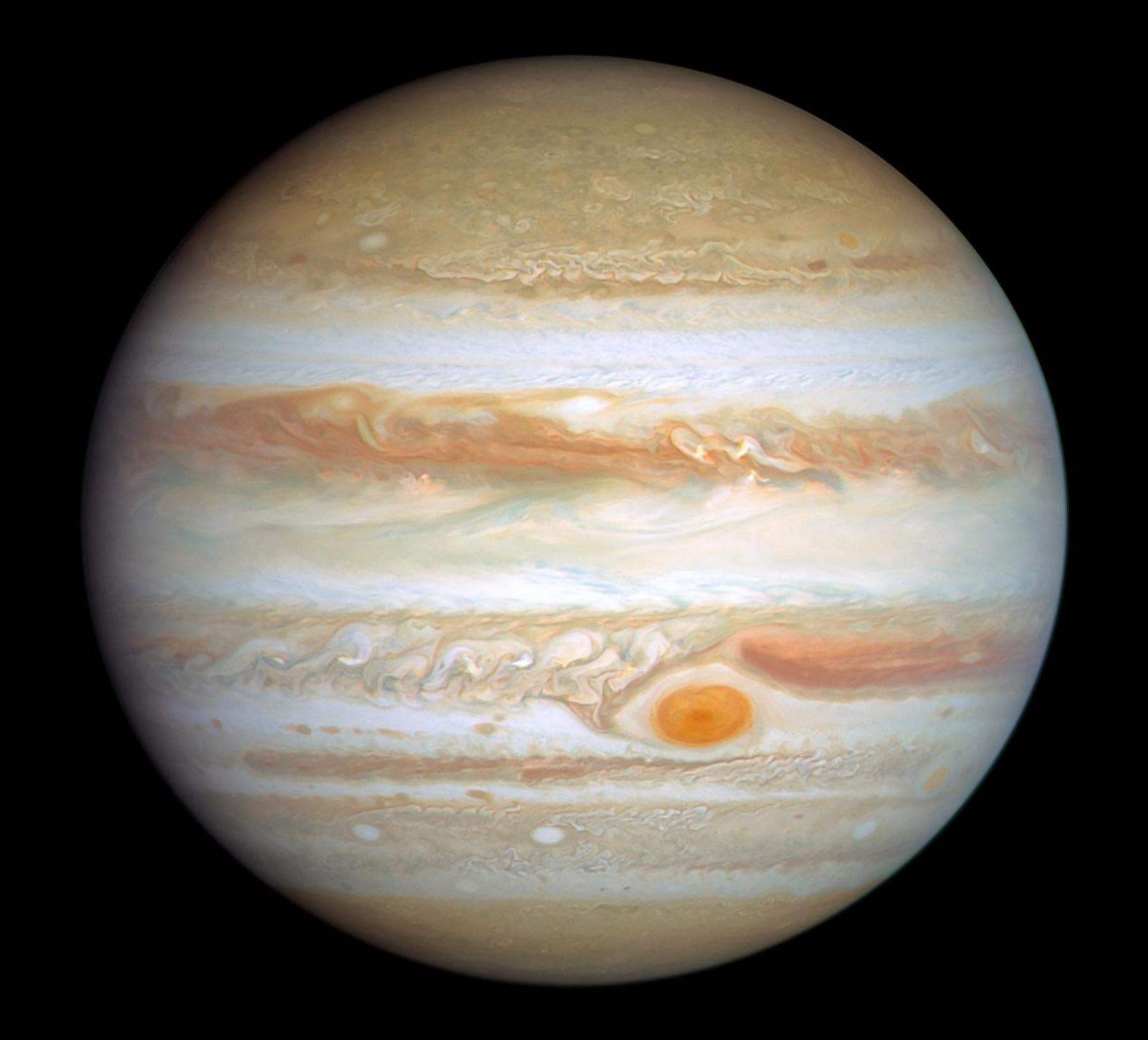
Which planet is pictured?
Jupiter

The name of Pluto's largest moon is…
Charon.
Which planet is the hottest?
Venus
Which item is a small rock that lands on the surface of Earth?
meteorite
Olympus Mons is found on…
Mars
Which planet is Saturn's "size partner"?
Jupiter
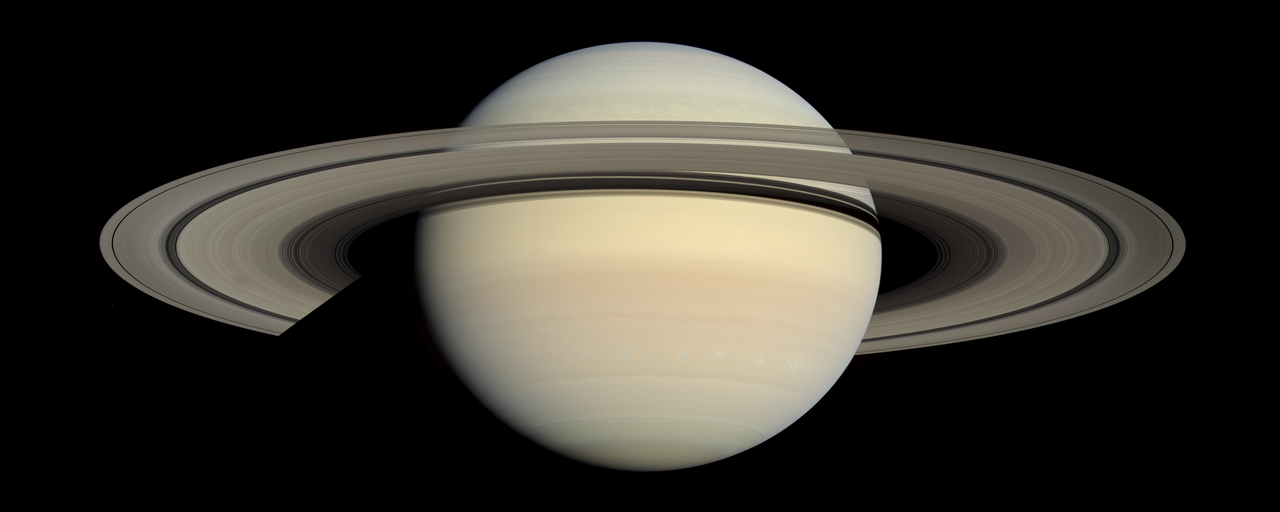
Which planet is pictured?
Saturn
Which planet is 3rd from the Sun?
Earth
How much of the universe is visible from Earth?
About 5%
Which planet has a day that is longer than its year?
Venus
Which item is a small rock that flies through Earth's atmosphere?
meteor.
If you could smash together all of the asteroids in our solar system it would form a rock about the size of…
the Moon.
Ceres, Pluto, Makemake, Haumea, and Eris are all examples of…
dwarf planets.
You would find the Oort Cloud…
surrounding the solar system.
Which planet in our solar system could float on water?
Saturn
Which 4 planets are the terrestrial, or "rocky", planets?
Mercury, Venus, Earth, Mars
Neil Armstrong was the first person to walk on the moon. Who was the second?
Buzz Aldrin
Water and/or lava may have created _______________ on Mars.
channels
Which planet is the coldest?
Neptune
Which item flies through our solar system and is considered an enormous rock?
asteroid.
Which planet has the most moons?
Saturn
Which planet is Earth's "size partner"?
Venus
The 'Great Red Spot' is a huge storm found on which planet?
Jupiter
Which diagram accurately shows the distances between the planets in our solar system?
Line 4
Which planet in our solar system has the fastest winds?
Neptune

Which planet is pictured?
Neptune
Phobos & Deimos are the two moons of…
Mars.
In 2012, Voyager I became the first man-made object to ever…
leave the solar system.
An ASTRONOMICAL UNIT (AU) is the average distance between the Sun and Earth. Which element has the symbol Au?
Gold
If the Sun were a bowl you could fit all 8 planets from our solar system inside approximately ________ times.
600
The Sun is approximately 91% _________________.
hydrogen
Which planet is Mars's "size partner"?
Mercury
Scientists have identified more that 1,600 major volcanoes or major volcano features on the planet _____________.
Venus
Which planets are likely to have rings, be large, be made of gas, and have many moons?
The 4 planets furthest from the Sun
One ASTRONOMICAL UNIT (AU) is the average distance between the Sun and Earth. On average, that distasnce is approximately __________ miles.
93 million
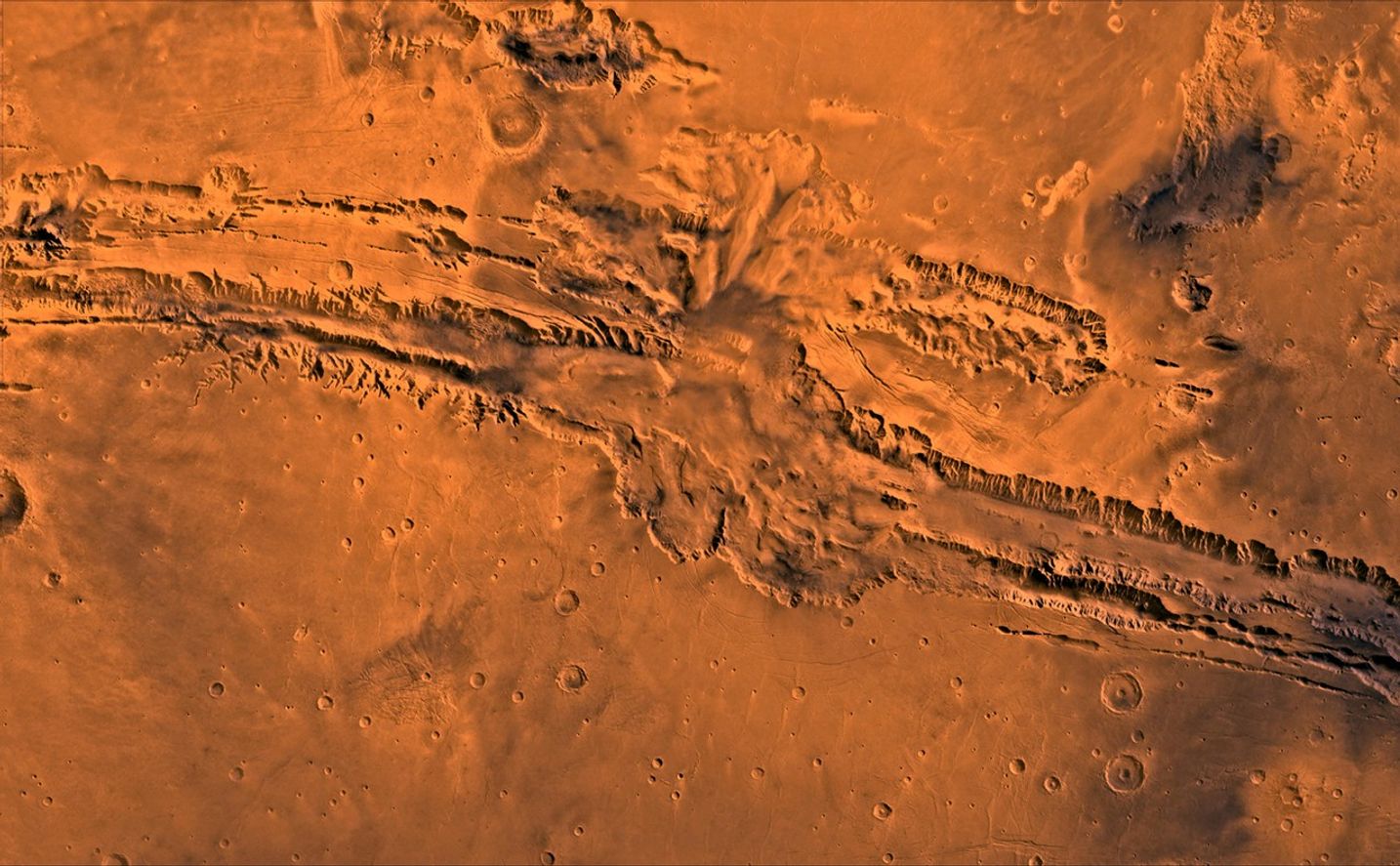
Valles Marineiris is the…
largest canyon in the solar system.

Which planet is pictured?
Earth

Olympus Mons is the…
highest/largest volcano in the solar system.
Which of the items listed below is likely to have a tail?
Comet
The __________ is a system consisting mainly of the layers of gases that surround Earth.
astmosphere
If Jupiter were a glass bowl, and Earth was the size of a gumball, how many Earths would fit inside Jupiter?
Approximately 1300
NASA has sent 5 rovers to Mars. The most recent rover is named…
Perseverance.
Which planet is Neptune's "size partner"?
Uranus
In Marvel fiction, Thanos is from the moon Titan. Which planet does the moon Titan orbit?
Saturn
Two objects - at 15 and 10 kg - sit 5 m apart. What is their gravitational force in Newtons? Neglect Big G.
6 n
Planet Kehrt takes 16.3 sidereal years to orbit it's star. How far is the planet (in AUs) away from it's star?
6.43 AUs
Planet Ceiling God is 5.5 Au's from its star. What is the time of its revolution?
12.9 sidereal years
The force between two objects is 20 N. What is the new force if we 1/2 one of the masses and cut the distance to 1/3?
90 N
The force between two objects is 10 N. What is the new force if we double both masses?
40 N
The force between two objects is 24 N. What is the new force if we triple the distance?
2.67 N
If it is summer in the Northern hemisphere, what season is it in the Southern hemisphere?
Winter
Miranda is studying the planet Neptune. Miranda wants to know how long a year is on Neptune. Which question should Miranda ask to find out the length of Neptune’s year?
How long does it take Neptune to orbit the sun
Which direction does the Earth rotate?
Counterclockwise
Neither hemisphere is tilted toward or away from the sun
Equinox
True or False: The moon DOES NOT give off its own light.
True
What percentage of sunlight is always striking the moon's surface?
50%
We see different moon phases because . . .
The moon orbits the Earth
Waning means . . .
Shrinking
Waxing means . . .
Growing
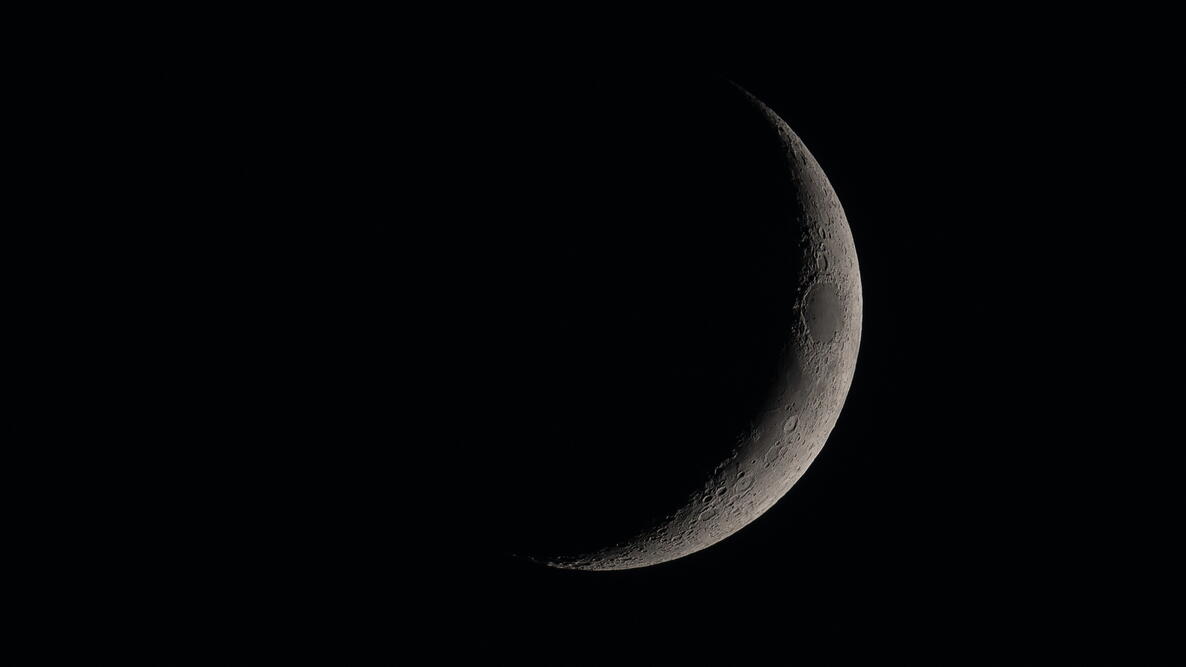
What moon phase is this?
New Moon

What moon phase is this?
Waxing Crescent

What moon phase is this?
First Quarter

What moon phase is this?
Waxing Gibbous

What moon phase is this?
Full Moon

What moon phase is this?
Third Quarter
What direction does the moon revolve around the Earth?
Counter-clockwise
Light on the right is getting bright describes . . .
Waxing
Light on the left has been stolen by a theft describes . . .
Waning

What moon phase is this?
Waning Crescent

What moon phase is this?
Waning Gibbous
What effect does the Moon's gravity have on the earth?
It causes the tides
Gravity pull things ____ earth
toward
The ___ mass an object has, the greater its gravitational pull.
more
What is a satellite?
an object in orbit
What two things impact the gravitational force of an object?
mass and distance
Whose theory of gravity helped explain WHY planets orbit the sun?
Newton
Which is NOT a law of planetary motion?
Planets orbit in circular patterns.
The shape of Earth's orbit is called
an ellipse
The only planet that rotates on it side is………
Uranus
Which of the following best describes the shape of planetary orbits, according to Kepler?
Elliptical
What is Kepler's 2nd Law?
A line segment joining a planet and the Sun sweeps out equal areas in equal time intervals.
Kepler's Second Law
states that an imaginary line from the sun to a planet sweeps out equal areas in equal time intervals
Kepler's First Law
The orbit of each planet around the Sun is an ellipse with the Sun at one focus.
Kepler's Third Law
States that the square of the ratio of the periods of any two planets is equal to the cube of the ratio of their average distances from the Sun.
The Earth spinning on its own axis is called
rotating
The shape of Earth's orbit is called
an ellipse
The Earth travels fastest when it is _____ to the sun.
closest to
The movement of the Earth around the Sun is called
revolution
It takes about ____ for the Earth to spin once about its axis.
1 day
The imaginary line the Earth spins around is called its
axis
The ___ two objects are, the less their gravitational pull on each other.
farther
______ is an attractive force that pulls objects towards the center of the Earth
Gravity
The ___ mass an object has, the greater its gravitational pull.
more
What has gravity? Everything with
mass
The Earth is a ____ planet.
rocky
Revolution
one complete trip along an orbit