Lecture 24: Lophotrochozoans II (Phylum Mollusca)
 Call Kai
 Learn
 Practice Test
 Spaced Repetition
 Match
 Flashcards
 Knowt Play
1/24

There's no tags or description
Looks like no tags are added yet.
25 Terms
Phylum Mollusca
100,000 species in 8 classes
true coelom (mesodermal origin)
tube within a tube body plan
several advanced systems
no asexual reproduction
marine, freshwater, terrestrial (snails)
Mollusca defining traits
rasping organ in mouth (radula)
mantle that secretes shell
muscular foot for locomotion
complete respiratory system with gills or lungs (snails and slugs)
circulatory system with a heart
ciliary tracts
Embryonic development
triploblastic
coelomate
protostomes
spiral cleavage
schizocoely
Head-foot
contains feeding, locomotory, and cephalic organs (sensory)
functions using muscular action
Visceral mass
contains digestive, circulatory, respiratory, and reproductive organs
functions using cilia
Mantle
protective structure, formed by two folds of skin
encloses a space between the mantle and body wall (mantle cavity)
secretes the shell
Radula
acts like a conveyor belt for food on the mouth
used in a variety of ways
present in all molluscs except bivalves
Gills
organs specialized for gas exchange
found in the mantle cavity
Circulatory system
open: blood is not entirely contained within blood vessels
cephalopods are the exception
enters open areas in some parts of body
less efficient at supplying oxygen to all tissues
common in slow-moving animals
Class Gastropoda
70,000 species; snails, limpets, sea hares, nudibranchs, slugs, whelks
if present, shell is single piece
sluggish, sedentary animals
undergo torsion and coiling
have single nephridium (excretory system), circulatory and nervous systems
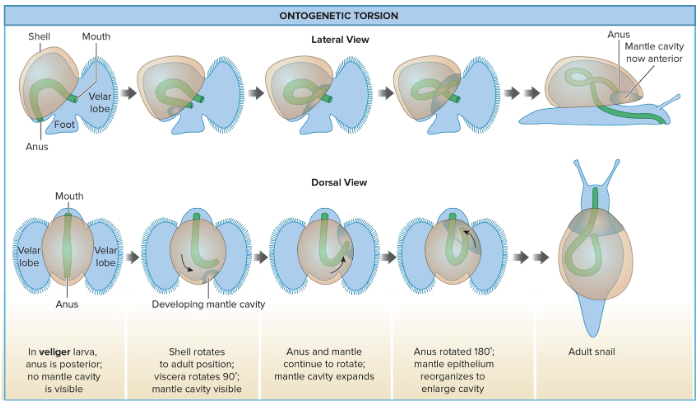
Torsion in Gastropods
two main outcomes:
foot retractor muscle contracts and pulls the shell and viscera 90 degrees counterclockwise - anus moves to the right side of the body
mantle cavity develops on the right side of the body
Coiling in gastropods
A. ancestral planospiral shell
B. apex of shell drawn out, making shell more compact
C. shell moves upward and posteriorly (helps balance the shell from being off to the side to being evenly distributed)
D. shell shifted over body for better weight distribution, loss of gill, atrium, and kidney on compressed right side
Feeding and respiration for gastropods
most are herbivores, but many are carnivores
radula (hole in a shell)
some use cilia or mucous for food capture
usually one efficient gill or lung
image is how fouling was fixed

Reproduction for gastropods
dioecoius - some can be hermaphroditic
fertilization internal
many produce offspring encapsulated in egg cases or capsules
Nudibranchs
show detorsion (no shell formation)
camouflage
warning coloration
co-opt nematocysts from cnidarians
feed on sponges and concentrate their toxins
Class Bivalvia
mussels, clams, scallops, oysters
two shells
many are filter feeders (no radula)
no head (reduced cephalization)
most marine
open circulatory, excretory, respiratory systems present
Form and function of Bivalvia
dorsal ligament for opening and adductor muscles for closing
shell is laterally compressed
posterior edges of mantle modified into openings for water (siphons)
Feeding for Bivalvia
gills highly modified for filter feeding
cilia for water flow over two gills
mucous ensnares food which is passed along grooves to mouth
Locomotion of Bivalvia
food is extended between the valves, blood is pumped causing it to swell and act as an anchor
some bivalves are sessile, secrete cement or threads
oysters, mussels
valves are used for swimming in scallops
Reproduction of Bivalvia
most dioecious, some hermaphroditic, some oysters change sex
broadcast spawners
external fertilization
one oyster can release millions of eggs per spawning
larvae: trochophore → veliger → settles as spat
freshwater mussels: glochidia larvae ride on fish gills
Class Cephalopda
all marine (high salinity) and carnivorous
giant squid is largest invertebrate known
shell reduced in many, absent in octopus
foot highly modified and moved toward head
locomotion by jet propulsion through central funnel (siphon)
modified mantle and foot
Two jobs of bivalve gills
feeding and respirating
Form and function of Cephalopoda
no cilia on gills, use contraction of muslces in the mantle wall to draw water in
closed circulatory system with accessory hearts near a pair of gills
brain largest of all invertebrates; complex eyes
visual communication
excellent eyesight
most have ink gland for defense
separate sexes, copulation, no larval stage
Reproduction of Cephalopoda
separate sexes; courtship often used color displays
male’s modified arm transfers sperm packets
large, yolk-rich eggs; direct development with no larval stage
many species breed once and die; octopus mothers stop feeding to guard eggs
Communication in Cephalopoda
chromatophores
pigment cells in the skin
expand and contract to induce color changes
for camouflage, alarm or courtship displays
cuttlefish, octopuses and squid all have chromatophores