Ocular Pharmacology
 Call Kai
 Learn
 Practice Test
 Spaced Repetition
 Match
 Flashcards
 Knowt Play
1/75

There's no tags or description
Looks like no tags are added yet.
76 Terms
drops
solutions, suspensions, emulsions
-short duration of action
-administer a lot
-easy application
-minimal lubricant effect
gel
liquefy on contact with corneal surface
-medium length of action
-administer medium amount
-easy application
-lubricating
ointments
paraffin based can be toxic to anterior segment (avoid in corneal or scleral perforations)
-prolonged duration of treatment
-low frequency of admin
-hard application
-lubricating
if applying drops, how many drops should be applied at a time
1 drop
-average volume of single drop is 50 and only 20-30 is retained on ocular surface, only one drop should be applied at time. excess will spill over eyelids or be drained by nasolacrimal apparatus, increasing potential for systemic absorption and side effects
recommended min number of mins that should be left between admin of different topical eye drops
5 mins
-avoids drug dilution, flooding lacrimal lake or accelerating nasolacrimal drainage
positioning for topical drug admin

fusidic acid (isathal
-bacteriostatic, mainly G+ve bacteria
-first line for minor ocular surface infections
-good intraocular penetration
-licensed
-1-2x daily
-too narrow spec for corneal ulcers in brachy

chloramphenicol
-broad spec bacteriostatic
-prophylaxis for corneal ulcers and ocular surgery, bacterial conjunctivitis
-good intraocular penetration
-drops QID, ointment BID
-low toxicity to corneal epithelium so good for ulcers

ofloxacin and ciprofloxacin
-broad spec bactericidal
-infected/melting corneal ulcers
-good intraocular penetraation
-no licensed
-at least QID
-some staphs and streps resistant

gentamicin
-broad spec bactericidal
-infected/melting corneal ulcers
-poor penetration
-licensed
-drops, at least TID
-epitheliotoxic to corneal epithelium; may be irritant

chlortetracycline
-bacteriostatic, broad spec inc chlamydophila and mycoplasma
-feline chlamydial conjunctivitis
-poor penetration
-licensed
-QID
-previous study suggested may shorten healing time of SCCEDs but not enough evidence to support

beta lactamase penicillin and cephalosporin
-infection of eyelids, orbit and globe
-perioperative prophylaxis
-broad spec bactericidal

clindamycin
-bacteriostatic, spec inc anaerobes and protozoa
-toxoplasma gondii induced uveitis in cats and dogs
-use at 25ml/kg/day in divided doses for feline toxoplasmosis

doxycycline
-bacteriostatic, broad spec inc chlamydophilia and mycoplasma
-feline conjunctivits caused by chlamydophila
-3 week course to eradicate organisms
issue with doxycycline
-enamel discolouration in young animals
-can cause oesophagitis so give with food or syringe water after
sulphonamides
-bacteriostatic broad spec
-rise of KCS due to toxic effect on lacrimal gland may or may not be reversible
-monitor STT if using

enrofloxacin e.g. baytril
-bactericidal broad spec
-narrow therapeutic index in cats. can cuase permanent blindness at higher dose due to retinal toxicity
-avoid in cats

anti viral eye drugs used for
-feline herpes virus
-virostatic not virucidal so need regular application when used topically
ganciclovir
Virgan
-most effective
-use QID
-anti viral
aciclovir 3% ointment
zovirax
-alternative topical drug much cheaper but questionable efficacy
-use 5 times daily
-anti viral
famciclovir
-tablet or oral paste
-recommended dose currently 90mg/kg PO BID
-expensive
-anti viral
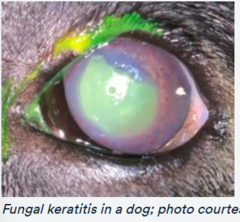
anti fungals
-uncommon in UK but sometimes cause melting ulcer
-more common in horse
-reconsitute alternative formulation
anti collagenases
used to treat melting ulcers by inhibiting enzymes involved
-applied every 1-2 hours for 24 hours then gradually reduced
serum as anti collagenase
-broad spec
-same or other animal
-take blood inot plain or serum gel blood tuves and leave to clot
-spin down and extract serum
-keep in fridge for week or fridge for 6 months
n acetylcysteine for anti collagenase
-available as stromease
-in vitro antimicrobial activity but lack of clinical trials
-less broad spec than serum
-keep one week opened, no fridge
prednisolone
-corticosteroid
-inhibit arachidonic acid formation so anti inflam action and immuno suppressive at high dose
when to use prednisolone
-anterior uveitis and used peri operatively for cataract surgery
-not in corneal ulceration
dexamethasone
-corticosteroid
--inhibit arachidonic acid formation so anti inflam action and immuno suppressive at high dose
when to use dexamethason
-immune mediated ocular surface disease inc chronic superficial keratitis in dog and eosinophilic keratoconjunctivitis in cats
-contraindicated in corneal ulceration
ketoroiac
-NSAID
-inhibit COX pathway, anti inflam
ketoraic used fro
-treat and prevent intraocular inflam particularly usefil if corticosteroids contraindicated
-epitheliotoxic so may delay corneal ulcer healing but safer than topical corticosteroid
ciclosporin
-calceurin inhibitor
-reduce t lymphocyte activation so immunosuppressive effects prevents immune mediated destruction of lacrimal tissue in KCS
ciclosporin used for
-licensed for canine KCS and chronic superficial keratitis
-safe in presence of corneal ulcer
-poor corneal penetration
potential local side effects of topical corticosteroids
-exacerbate collagenolysis and/or facilitate infection hence generally contraindicated in presence of corneal ulceration
-chronic use may result in lipid deposition in cornea
-PUPD, hepatopathy
NSAIDs
-indications is analgesia for painful ocular conditions and post op use
-control of intraocular inflam
corticosteroids
-usually used for first line therapy if need immunosuppression
-oral prednisolone most common
aqueous production of eye
-by ciliary processes
-diffusion, ultrafiltration, active secretion
drainage of aqueous humour
mostly by uveal trabecular meshwork
anti glaucoma drugs work by either
-reduce production of aqueous humour by ciliary body
-increasing outflow of aqueous humour from eye
licensed anti glaucoma drugs for dogs and cats
none
drugs to increase outflow of aqueous humour
-prostaglandin analogues
-latanoprost
-travoprost
drugs that reduce aqueous humour formation
carbonic anhydrase inhibitors
-dorzolamide
beta blocks
-timolol
prostaglandin analogues
-BID
-drug of choice for emergency glaucoma and post op ocular hypertension
-chronic glaucoma
-avoid in acute lens luxation and if uveitis
brinzolamide (carbonic anhydrase inhibitor)
-BID-QID
-any type glaucoma
-no contraindications
dorzolamide
carbonic anhydrase inhibitor
-BID-QID
-any glaucoma
-first choice in cats
beta blockers
-timilol
-BID-QID
-any glaucoma
-potential for bradycardia and hypotension
what drug used in this eye
prostaglandin analogue as marked miosis

prostaglandin analogues should be used with caution if uveitis present, why?
inflam mediators which can disrupt blood ocular barrier so may worsen pre existing inflam
other contraindications for prostaglandin analogues
anterior lens luxation
-trap lens in anterior chamber
how to make anti glaucoma drugs better
combie with eachother
osmotic diuretics for glaucoma
side effects too large
lacromimetics
-conjunction with lacrimostimulant
-tear sub should mimic trilaminar tear film
-decisions based on disease factor and patient and owner
lipid based intments
-contain lanolin, petolatum and/or mineral oil
-prevent tear film evaporation
-excellent corneal retention so longer duration of action
-mimic lipid layer of tear film
-can blur vision
mucomimetics (gels)
gels containing polyacrylic acid
-replaces aqueous and mucin layers of tear film
-easy to apply gel, lasts 4-6 hours, use 2-6x daily
viscoelastics
drops containing hylauronic acid
-replaces both aqueous and mucin layer of tear film
-contain hylauronic acid
-excellent corneal retention
-easy to apply drops, last 4-6 hrs, use 2-6x daily
aqueous tear sub
cellulose polymers that ahve short duration of action
-not for KCS
-good to deliver drugs
example of aqueous tear sub
hypromellose
example of mucinomimetics
-ocry gel
-viscotears liquid gel
viscoelastics examples
-hyloforte
-remend corneal repair gel
lipid based eye gel examples
-lacrilube
-xailin night
mydriatics
-dilate pupil
-need to examine lens and fundus
-treat anterior uveitis and aid intraocular surgery
cycloplegics
-relax ciliary body musculature
-relieve painful ciliary spasm assoc with anterior uveitis and help reduce formation of posterior synechiae (adhesions)
atropine
-parasympatholytic
-potent cycloplegic effect
-treats anterior uveitis and maintain mydriasis
issue with atropine
-bitter taste
-reduce tear production
-increase IOP
tropicamide
-parasympatholytic
-diagnostic and exam purposes
issue with tropicamide
-mild increase in IOP
-less useful for uveitis as short duration of action and low cycloplegic effect
phenylephrine
-soympathomimetic
-helps achieve max mydriasis prior to cataract surgery
-diagnose and localise horners syndrome
issue with phenylephrine
-systemic hypertension and bradycardia
which mmydriatic most effective at ttreating anterior uveitis
atropine
mydriatic to diagnose horners
phenylephrine
mydriatic used to dilate fundus for exam
tropicamide
which 2 conditions woul d atropine be contraindicated
glaucoma and KCS
local anaesthetics for eye
-act at sodium chennels to block afferent and efferent nerve impulses
topical local used for
-diagnostics
-minor surgical procedures
injectable local
orbital anaesthesia esp enucleation
-lignocaine
topical proxymetacaine
most common local