Urine Analysis (LAB)
 Call Kai
 Learn
 Practice Test
 Spaced Repetition
 Match
 Flashcards
 Knowt Play
1/203

Earn XP
Description and Tags
G1, G2, G3. G4
204 Terms
Each laboratory should have these 3 urinalysis procedures available (3)
centrifuging
reporting
Microscopic evaluation,
what are the standardized variables in microscopic urinalysis (6)
Volume of urine
Time and speed of centrifugation
Urine : sediment ratio
Drop size on slide
Coverglass application technique
Agreed number of fields to examine
what should be the centrifuge settings for urine (— mins, — rpm)
5 minutes
1500 rpm.
define Decant supernatant
fluid retained re-suspends the sediment
what stains are used in urinalysis (3)
New Methylene blue
Sternheimer-Malbin crystal violet
Safranin
Safranin aka
Sedi-stain
Procedure for staining a slide (4)
Add 1 drop of stain to the sediment after the specimen has been decanted,
remix sample
examine as usual.
You can also place 1 drop of stain and 1 drop of sample on a slide and then place the coverslip
This stain tends to precipitate in highly — urines obscuring visualization of formed elements.
alkaline
Sudan is often used to confirm the presence of — — that stain orange-red.
fat droplets
Gram Stain may be used to identify —
bacteria

what is A
supernatant

what is B
sediment
what is 10X for (2)
provides a general picture of the kinds of elements present,
used to identify and count casts.
what is 40X for (2)
provides greater cellular detail
used to identify and enumerate all other microscopic elements
when doing a microscopic urinalysis you should Mix — thoroughly with a pasteur pipet.
sediment
what is high power examination for (5)
yeast
bacteria
fat droplets
mucous threads
sperm.
Olds College Procedure for urinalysis (4)
Mix urine in sample cup.
Pour 5 mL urine into conical tube.
Centrifuge for 5 minutes at 1500 rpm.
Decant or pipette off the supernatant urine
define Decant
to gently pour a liquid from one container into another
Artifacts includes (7)
Meat or vegetable fibers from fecal contamination
Starch granules from gloves
Air bubbles
hair
Oil droplets from catheter lubricant
Fibers from clothing or towels
Plant spores
how to make a dry slide prep (5)
Prepare your sample in the centrifuge the same way you would for a wet prep slide.
Take 1 drop of sediment and place it on your slide and make a smear like you would for a blood smear.
Allow the sample to dry completely
Stain with Diff-Quik stain
Allow to dry and assess on 100X with oil.
define Line Smear Prep
you can also stop the “smear” with an abrupt line instead of ending with a feathered edge in order to get all the cells to cluster around this line
what are the 3 Automated Analyzers
SediVue Dx
Urine Sediment Analyzer
VETSCAN® SA Sediment Analyzer
what are the pros of Automated Analyzers (3ish)
More standardized testing procedures
Saves/stores images onto the file
Gentle centrifugation process - less likely to damage hyaline casts
what are the cons of Automated Analyzers (2ish)
AI interpretation is dependent on machine program and training
Images are all black and white - need to double check crystals that are coloured
The — cellular the cast is upon examination, the — time it was in the tubules after formation.
more, less
cellular casts means they were in the tubules for …
not very long
waxy casts means they were in the tubules for …
a long time

what is it (2)
crenated erythrocytes
erythrocytes
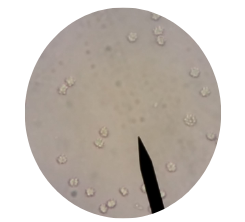
what is it (2)
Erythrocytes.
Crenated erythrocytes

what is it (2)
Regular erythrocytes
crenated erythrocytes

what is it
fatty droplets

what is the top image
fatty droplets

what is the bottom image
Erythrocytes

what is it
Squamous epithelial cell

what is it (3)
Regular erythrocytes
crenated erythrocytes
Squamous epithelial cell

what is the red
erythrocytes
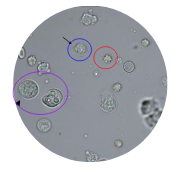
what is the blue
leukocyte
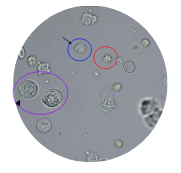
what is the purple
transitional epithelial cell
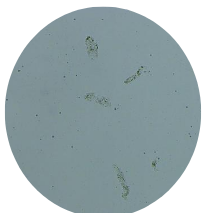
what is it
RBC cast

what is it
fatty cast

what is it
fatty cast

what is it (2)
Granular Cast
spermatozoa
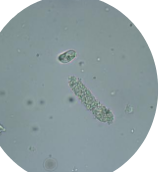
what is it
Granular Cast

what is it
waxy cast

what is it
waxy cast

what is it
hyaline cast
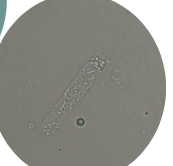
what is it
hyaline cast

what is red
waxy cast

what is purple
granular cast
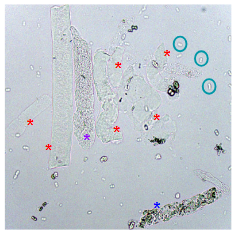
what is dark blue
cellular cast

what is teal
bacteria

what is S
Sheet of squamous epithelial cells

what is R
RBC
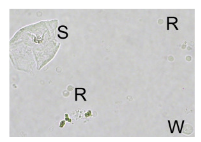
what is S
Rounded squamous epithelial cell
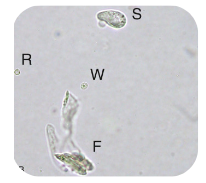
what is R
RBC

what is W
leukocyte
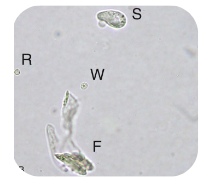
what is F
fiber artifact

what is S
Squamous epithelial cell
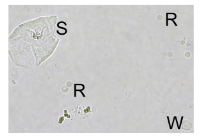
what is R
RBC

what is W
leukocyte

what is S
transitional epithelial cell

what is W
leukocyte
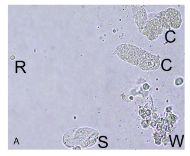
what is C
granular casts

what is S
Squamous epithelial cell
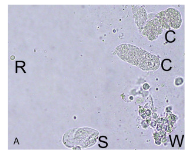
what is W
Aggregate of leukocytes

what is R
Erythrocyte
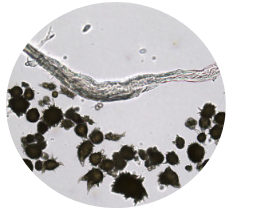
what is it
Ammonium biurate crystals
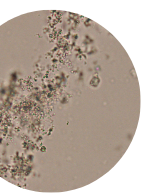
what is it
Amorphous Crystals
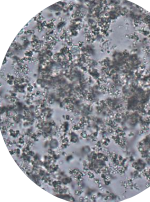
what is it
Amorphous Crystals

what is it
Bilirubin crystals
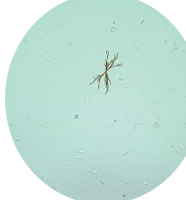
what is it
Bilirubin crystals

what is it
Calcium oxalate dihydrate crystal

what is it
Calcium oxalate dihydrate crystal
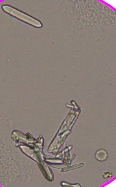
what is it
Calcium oxalate monohydrate crystals

what is it
Calcium oxalate monohydrate crystals
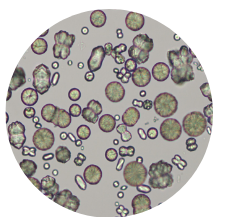
what is it
Calcium carbonate crystals
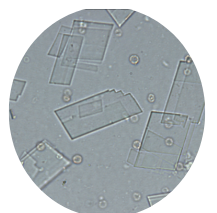
what is it
Cholesterol crystals
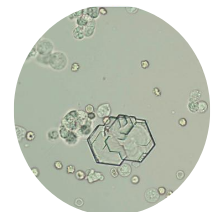
what is it
Cystine crystals

what is it
Triple phosphate “Struvite” crystals
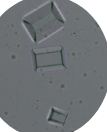
what is it
Triple phosphate “Struvite” crystals
define urine
ultra-filtrate of the plasma
urine Is continuously formed in the —.
kidneys
Prime function of the kidneys: (3)
retain essential substances needed by the body
eliminate waste products
Maintain a healthy balance of water, salts, and minerals in your blood
what are the 3 sections of urine examination (3)
physical
chemical
microscopic
what is under physical examination (3)
color
odor
density
what is under chemical examination (5)
protein
glucose
ketone
bilirubin
hemoglobin.
what is under microscopic examination (5)
epithelial cells
bacteria
erythrocytes
leukocytes
crystals
when is the best time for an owner to collect a urine sample
during the animal’s first urination in the morning
methods of urine collection (4)
midstream “free catch”
manual compression (expressed)
cystocentesis
catheterization
why is the first morning piss the best for urinalsys
most concentrated
what is the advantage of free catch collection
no risk of complication such as infection or trauma.
when getting a manual compression (expressed), If bladder is greatly distended, use extreme caution because …
risk of rupture
you can not do a manual compression (expressed) of the patient has any history of — —
bladder trauma
advantage of manual compression (expressed) for urine collection
no risk of infection in small animals.
what method of collection is required if we wish to do a bacterial culture (2)
cystocentesis
catheterization
why is it that Urine must be examined while it is fresh.
to prevent chemical, physical, and cellular changes that ruin test accuracy.
what happens when urine is left at room temp (2)
WBC’s are disintegrated
RBC’s are distorted
urinalysis should be performed within — hours of collection.
2 hrs
how long does OC allow urine to stay in the fridge for
6 hrs
If dipsticks are used the sample must be brought at … temperature before testing:
room