MGMT 363 EXAM TWO
 Call Kai
 Learn
 Practice Test
 Spaced Repetition
 Match
 Flashcards
 Knowt Play
1/21

There's no tags or description
Looks like no tags are added yet.
22 Terms
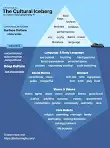
What is the cultural iceberg?
The idea that there are two types of visible culture: objective and subjective
Objective is what is outwardly shown
Subjective: Customs, Values, languages, how a culture operates from the outside
What are some misconceptions from the cultural business quiz?
In general Latin America, personal relationships are more important than corporate ones
The ‘Ok’ symbol is seen as vugular in Brazil, most notably in Latin America
In Germany, punctuality is taken quite seriously
Must understand the sports analogies and the ones they play
Thumbs is rude is Greece
Discuss Hofstede’s Cultural Dimensions
Six cultural dimensions that give glimpse of their culture
Power Distance: the way people in a society relate to each other
Low (Israel)
Power needs justification
Employees disargee with managers
Communication is informal and open door
High (Malaysia)
Hierarchal Order is natural and expected
Employees deter to authority
Communication is formal and title matter
Collectivism v. Individualism: how the society views the degree of independence within society
Collectivist (we, Panama)
Loyalty to in-group
Group Harmony and shared responsibility
Hiring/promotion may consider in-group loyalty and relationships
Team-based bonus structure
Individualistic (I, Netherlands)
Look after self and immediate family
Personal Achievement and autonomy
Hiring/Promotion based on merit and skills
Motivation towards achievement and sucess: what motivates people
Liking what you do (Swedan, Scanavidan countries)
Work it live
Resolve conflicts through compromise
Flexible work and parental leave
Consensus and cooperation are valued
More vacation days
Being the Best (Japan)
Live to work
Resolve conflicts through competition
Long hours= dedication
Performance is King
Why should gain a global perspective
Understand and accept other cultures
Think with complexity
Be open to new ideas, issues, and solutions
Learn from others
Gain comfort with ambiguity
Improve foreign language skills
Summarize Jacob Robinson’s speech and key takeaways
Dare to Dream
As you get older, you dreams die and become more realsitic
Dreams turn into what-if
Concede dreams
Dream crazy dreams
Operation out of imangination, not memory
How do you build a theme park
Raise money, 246 no’s before a yes
Disaster Grand Opening
Shark Thank
Walk with Elephants
Surrond yourself with bigger people
Network: just ask to meet with them, everyone wants to meet students
Elephants allow you to dream big
Discuss the fireside chat and key takeaways
a. Eliot Kerlin: Broad wing capital
i. BBA Finance, Pre-Med, Student Senate, Reformed Univest Ory Fellowship
ii. Interned at a HMO and saw that many people weren’t doctors, but working in business fields
iii. Saw many opportunities at May’s, and was happy for the connections there
iv. Worked at Merrill Lynch Investment Banking for two years, moved to private equity for 3 with Jupiter Partners
v. Got an MBA from Harvard Business School
vi. After, joined new Private Equity firm in Southlake (Insight Equity) in 2005
vii. Founded Broad wing Capital in 2022: “Enhancing companies, cultures, and communities”
1. Invested and raised $465M with 26 investments
viii. Gives back through a prison entrance program
ix. Key takeaway: People are an asset and worth investing in
b. Laurie Shults: Owner of LS strategy
i. MIS major, said she built her campaign for student body president with one conversation after another
ii. Started at Enron in 2001 with executive communications
1. She learned crisis management by having to deal with the Enron fallout, but was eventually terminated due to layoffs
2. During her time at A&M, she kept a business card from a peer who happened to be the CEO of pappas retreatants and became the VP of marketing
a. Credited this experience as an opportunity to learn from the best
3. Moved to Fuel (B2B oil/gas marketing firm) and then joined with a small oil/gas organization (Jones industrial Holdings)
iii. Key takeaway: creating balance in your life
c. Dan Clarke (CEO distinct Capital Group)
i. From Washington D,C and went to Texas A&M
1. States that his faith, family, and career started at Texas A&M
a. BBA Finance and MIS
2. During his time at A&M started career in management at Bain and Company (Investment Banking Management)
3. Moved to Private Equity (Carlye Group, Venture Capitalist, 7 years), which was quite intense with travel and hours. Clarke said even with the hours, it was worth it
a. Most notable case was in 2008 when he had the opportunity to turn around Blue Bird School Bus in three years and save them from bankruptcy
4. In 2013, he wanted to start a Private Equity firm with purpose, Distinct Capital
a. Servant- minded (partner companies, not acquired companies)
b. Created value by serving
c. Being close geographical increases relational capital
d. No debt to reduce business owner risk, and often takes minority positions
e. Prides themselves on flexible partnerships
d. Questions and Key points
i. Shoot for more than you think and harder than what you think you can do
ii. Sweat Equity is important, especially in the beginning of your career
iii. Your first two jobs define your career
iv. Think what you value
v. Businesses help societies
vi. Give up on job security and embrace change
vii. Work-Life Harmony
1. You cannot have it on, but having goals, attacking everyday aggressively, setting priorities, and having discipline means you can create balance
2. Find your north star and stick to it
3. There is no such thing as balance, you must have your priorities and work tirelessly to achieve them
viii. Working at Enron
1. It felt like going down with a sinking ship, affected the Houston economy in so many ways
ix. How do you get internships?
1. An internship is more than just experience, but a relationship and opportunity to have a mentor
2. ALWAYS be expanding your network, and it is usually larger than you realize, especially as a student.
x. When have you done ‘enough’
1. If materialistic: never, which is why you must have a north star
2. Relationships are always more fulfilling than money
xi. How do you stand out to employers
1. You cannot to traditional software, but you need to understand what they are looking for and use it.
2. Also untie your network and allow your relationships time to compound
Discuss Blake Willenborg’s HEB speech and key takeaways
I. Blake Willenborg
a. HEB culture is similar to Aggies (From the Outside looking in, you can’t understand it)
b. Being privately held has it’s competitive advantages
c. H-E-B does not have any ‘target demographics’ and competes against all retails
i. Meaning they have to excel on all fronts and serve ALL segments
d. Howard E. Butt: “At H-E-B, we’re a little, big company”
e. Manufacturing, Warehouse, Transportation
i. 14 Manufacturing Plants
ii. 19 Distribution centers ($1.2 Billion in Inventory)
1. New Temple Facility is the largest facility in North America
f. Working in digital because wants to be a great digital retailer before tech companies figure out groceries
g. Timeline of H-E-B
i. 1905: Florence Butt starts the first HEB store
ii. 1926: 2nd Store in Del Rio, Texas (first after five failed attempts)
iii. 1936: Started using the Harlingen Cannery
iv. 1949: 1st Food/Drug Store in corpus Chrisi
v. 1971: Charles Butt named President of HEB, valued at $221Million
vi. 1980: After 75 years, HEB achieved $1B in sales
vii. 1995: The creation of the Own Brand Product Line
viii. 2011: HEB established Read3, a program working to increase literacy
ix. 2013: Operation Appreciation, where partners-built homes for Veterans
x. 2015: The partner stock plan was launched
xi. 2016: The expansion of Curbside and the acquisition of favor in 2019
xii. 2021: Howard Butts III was named the new CEO
xiii. 2026: Roxanne Orsak was named President after Craig Boyan retired
h. HEB is in the people business, they just happen to sell groceries
i. People first mentality
ii. HEB thinks what is right for the customer and the partner, and knows that it will be good for the business
iii. Disaster Relief, Excellence in Education, Statewide Hunger Relief
iv. Quest for Texas Best: lifting people up and showcasing great products
i. Our Texas, Our future: conservation program
i. We live here, we love here, and we’re committed to protecting here
1. Diversion
2. Product
3. Energy
4. Community
What is strategic decision making
The most important aspect of business
Discuss the aspects of strategic managment
Strategic Management: Comprehensive and ongoing management process aimed at formulating and implementing effective strategies
A way of approaching business opportunities and challenges
You must understand the internal and external environment
Effective Strategies: Promote a superior alignment between the organization and its environment and the achievement of strategic goals
Strategic thinkers know alot and ask alot of questions, often needing a team to help truly understand all aspects of management
What are the components of stategy-
Distinctive competence: first thing that should be thought about when thinking about strategy. An organizational strength possessed by only a small number of firms
What do I do that creates value that others cannot do well
How do I create value
You must differentiate yourself
What are the levels of strategy?
Business-level: set of strategic alternatives from which a organization chooses as it conducts business in a particular industry or market
Corporate-Level: Set of strategic alternatives from which an organization chooses as it manages its operations simultaneously across several industries and several markets
How do you formulate and implement strategy?
Formulation: the set of process involved in creating or determining the strategies of the organization
Implementation: The methods by which strategies are operationizaed or executed within the organization
Focuses on the process through strategies are achieved
Hard put and not alot of theory, just have to do it
Think of the plans that you do not work at
Deliberate strategy: A plan of action that an organization chooses and implements to support specific goals
Emergent Strategy: A pattern of action that develops over time in an organization in the absence of mission and goals or despite mission and goals
How do you react with the world, most common
Involves allocating resources even through an organization has not explicitly choosen its strategies
Discuss SWOT and the fallacies of the program
Strengths, Weakness, Opportunities, Threats
People think they have to cram all messiness into four clean buckets
People tend to misuse SWOT by not understand their capabilities, resources, distinctive competence, and why
How do you evaluate an organization’s weakness
Competitive Disadvantage: A situation in which an organization is not implementing valuable strategies that are being implemented by competing organizations
Organizations with competitive disadvantage can expect to attain below-average levels of performance
Competitive Parity: creating same amount of value as my competition
Majority of business are in this space
Competitive Advantage: Creating a superior value into the market, having a greater level of performance
How to implement your strategy
Differentiation Strategy:
Marketing and sales must emphasize the high-quality, high-value, image of the organization’s products or services
Accounting and finance: control the flow of funds without discouraging the creativity needed to constantly develop new products and services to meet customer
Manufacturing: Emphasize quality and meeting specific customer needs, rather than simply reducing costs
Culture of the firm: Emphasize creativity, innovation, and response to customer needs
Overall cost leadership strategy
Marketing and Sales: Focus on simple product attribute and how they meet customer needs in a cost-effective way
Accounting and finance: Success depends on having costs lower than competitors, management should reduce costs whenever possible
Manufacturing: Emphasizes increased volume of production to reduce the per-unit costs of manufacturing
Culture: Focus on improving efficiency of manufacturing, sales, and other business functions.
How do you formulate corporate-level strategies
Diversification: number of different business that an organization is engaged in and the extent to which these businesses are related to one another
Single Product Strategy: a strategy in which an organization manufacturers just one product or service and sells it in a single
Advantage: A firm is likely to be very successful in manufacturing and marketing the product
Disadvantage: If the product is not accepted by the market or is replaced by a new one, the firm will suffer
Related diversification: a strategy is which an organization operates in several business that are in some way linked with one another
Advantages: introduces economic risk, reduces the overhead costs associated with managing any businesses, allows an organization to exploit its strengths and capabilities in more than just one business
Unrelated Diversification: A strategy is which an organization operates multiple businesses that are not logically associated with one another
Advantages: Business should be able achieve relatively stable performance over time, resource allocation
Disadvantage: Corporate-level managers do not know enough about the unrelated businesses to provide helpful strategic guidance or to allocate capital appropriately, organizations may be at a competitive disadvantage compared to those that use related diversification
How do you become a diversified dirm
Mergers and Acquisitions
Merger: The purchase of one firm by another firm of approx. the same size
Acquisition: The purchase of a firm by a firm that is considerably larger
What is strategic alternatives for international business
Home Replication Strategy: international strategy in which a company uses the core competency or firm-specific advantage it developed at home as it main competitive weapon in the foreign market that it enters
Multidomestic Strategy: international strategy in which a company manages itself a collection of relatively independent operating subsidiaries, each of which focuses on a specific domestic market
Global Strategy: International strategy in which a company views the world as a single marketplace and has as its primary goal the creation of standardized goods and services that will address the needs of customers worldwide
Transnational Strategy: international strategy in which a company tries to combine the benefits of global scale efficiencies with the benefits and advantages of local responsiveness
What are some important facts to think about the guest speakers
Jeff Schiffbond
Resistance, police sent email to not support, hospitalized due to stress, offical corn resource, off broadway fairy, saferway and wholefoods, ice cream company: Howdy Homemade
Laurie S
Enron, 2nd SBP
Dan/Elliot: Houston Boy Choir
Jacob Robinson:
Janitorial while wife working at big four
Katy Lane: CIBS, Culture is like an iceberg
Decision Making
The act of choosing one alternative among a set of alternatives
Don’t let them get your goat
Welch: “This must be your mother”
What are the decision making style
Directive:
Focuses on tasks and technical problems
Considers facts, rules, and procedures
Acquires information through hunches and by using short reports and limited data
Evaluates information by using institution, experience and rules
Has a low tolerance for ambiguity
Major criticism: Handles situations, not emotional, rigid, impersonal, simplistic, autocratic
Analytical:
Focuses on tasks and technical problems taking logistical choice
Considers every aspect of a given problem
Evaluates information through abstract thinking, avoid incomplete data
Has a high tolerance for ambiguity
Conceptual:
Focuses on people and broad aspects of problem
Considers many options and possibilities
Acquires information by using intuition and discussion with others
Evaluates information by integrating diverse data and applying judgetment
Has a high tolerance for ambiguity takes risks, and is very creative
Major criticism: Dilettantish, too idealistic, slow, indecisive, difficult to control
Behavioral:
Focuses on people and social aspects of the work situation
Considers the well being of others
Evaluates information by using feelings and instincts
Has a tolerance for ambiguity
Concerns: Too concerned about others, wishy-washy, can’t make hard decisions, can’t say no
What are some key takeaways from Geoff Kolander’s speech?
Decision-making is a muscle that needs to be strengthened
Was Chief Legal Counsel for 5 years, and then forced into CEO position for Citizens Inc.
After the founder died, there was a fight for control as well as a failed audit (old 1986 tax bill) and SEC investigation, and illegally selling in Brazil
How do you navigate that and move forward?
The story of Ernest Shackleton
Today is the father of tomorrow
Step into the Arena