biochem e3l2 glycolysis p2
 Call Kai
 Learn
 Practice Test
 Spaced Repetition
 Match
 Flashcards
 Knowt Play
1/6

There's no tags or description
Looks like no tags are added yet.
7 Terms
how do we get E out of dietary starch/glycogen?
how do we get E out of stored starch/glycogen?
glycolysis, but get converted to glucose mC at start of glycolysis pathway
dietary starch/glycogen → glucose + dextrans by hydrolysis rxns
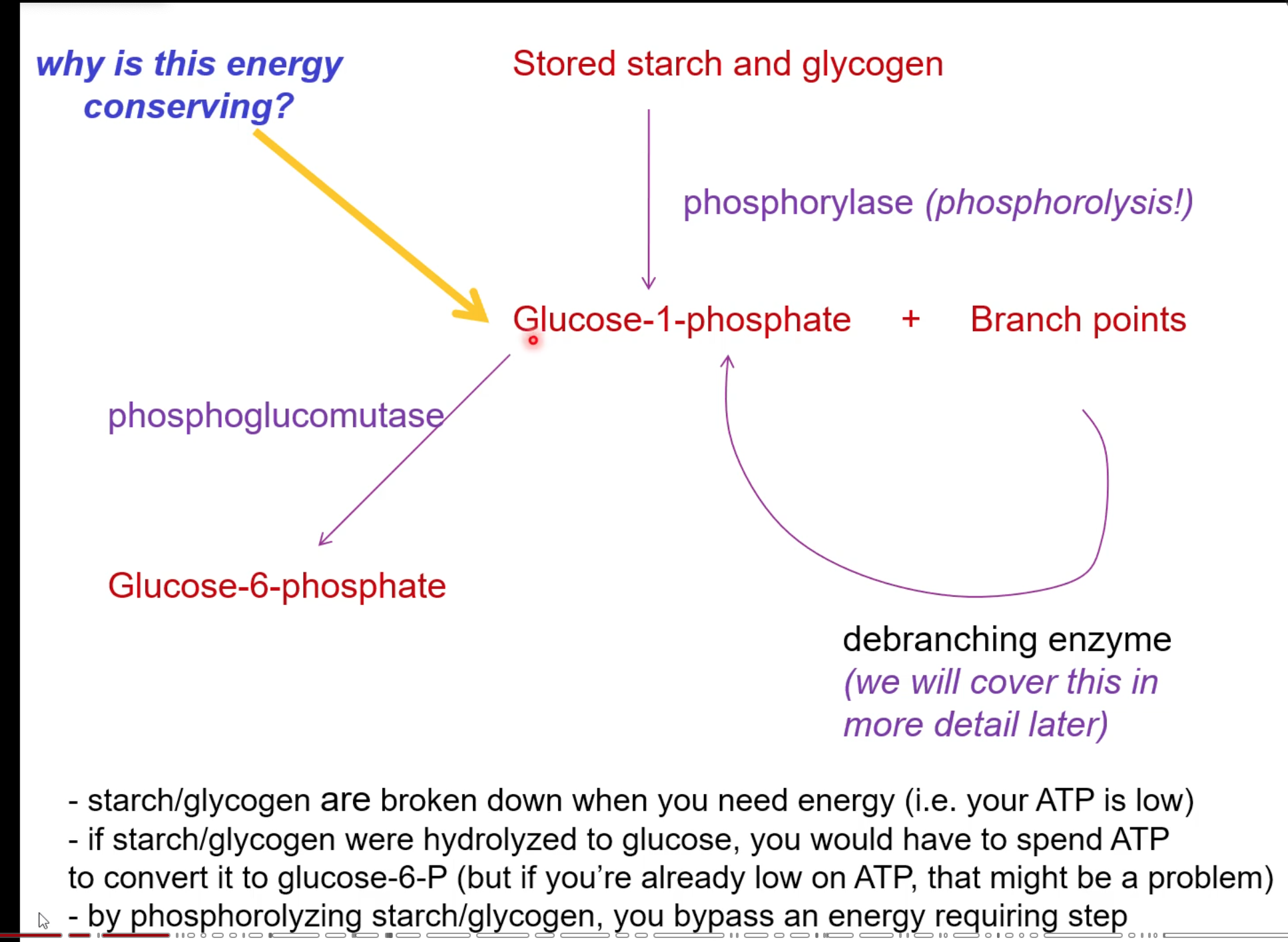
stored starch/glycogen → glucose 1-phosphate by phosphorolysis rxn → glucose 6-phosphate by a mutase
3 steps to start glycolysis from dietary starch/glycogen

4 steps to start glycolysis from stored starch/glycogen

difference b/t glucose/other sugars and glycogen net ATP yield?
why?
why is it important for glucose 1-phosphate to be energy conserving?
normal net ATP is 2 (2 in 4 out), glycogen net ATP is 3 (1 in, 4 out)
no ATP inputed to go from glycogen → glucose 1-phosphate → glucose 6-phosphate
stored starch/glycogen broken down in times of low ATP. would be problematic to need to hydrolyze starch/glycogen to glucose in times of low ATP bc hydrolysis takes ATP. phosphorolyzing starch/glycogen bypasses E requiring step
how do we get E out of other dietary sugars besides glucose (fructose, mannose, galactose, etc…)
when does net ATP from each change?
alternate dietary sugars get converted back to glucose with enzymes
just like glucose v. glycogen, net ATP depends on if the interconversion back to glucose takes requires ATP expenditure
sometimes needs E to push toward glycolytic pathway, sometimes doesn’t
2 fates of pyruvate after glycolytic pathway completion?
fermentation (anaerobic) = pyruvate → L-lactate
aerobic respiration = pyruvate → acetyl CoA
fermentation = (on first lectures flashcards)
aerobic respiration = 2 things what happens
“respiration” = ?
“aerobic” = ?
fermentation = (first lectures flashcards)
aerobic respiration = transporting pyruvate from cytoplasm to mitochondria, converting pyruvate into acetyl-CoA
respiration = taking e- and giving them to final e- acceptor
aerobic = final e- acceptor is O2
