U2: Metabolic Processes (SBI4U)
 Call Kai
 Learn
 Practice Test
 Spaced Repetition
 Match
 Flashcards
 Knowt Play
1/83

There's no tags or description
Looks like no tags are added yet.
84 Terms
Unit 2
Metabolic Pathways
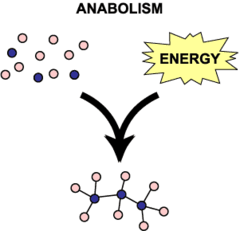
Anabolism
building larger molecules from smaller ones (EX. Building Muscle)
Catabolism
breaking down molecules into simpler products (EX. Cellular Respiration)

Metabolic Pathways
Many reactions that happen consecutively, includes many intermediates
Intermediates
Substances created in one reaction and used up immediately in another (EX. Pyruvate from glycolysis and used up immediately in link chain for Acetyl CoA)
Endergonic reactions
Reactions that requires energy to be absorbed to be able to take place (Photosynthesis)

Exergonic reactions
Reactions that release energy (Cellular Respiration)

What is the chemical formula of cellular respiration
Glucose + Oxygen = Carbon Dioxide + Water
C6H12O6 + 6O = 6CO2 + 6H2O
Where does Glycolysis occur
The cytoplasm

Is Glycolysis anaerobic or aerobic
Anaerobic (no oxygen required)
Glycolysis is a 10 step reaction the converts ______________ into two ________________ molecules
6 carbon glucose
3 carbon pyruvate
Glycolysis produces 4 _______ molecules (stage 7 & 10) but uses 2 _______ molecules (stage 1 & 3)
ATP
Glycolysis produces 2 ________ (stage 6) that will produce 3 ______ in the ETC
NADH
ATP
NAD+ is an electron carrier that is reduced to ________
NADH
NAD+ gains an ______ ion and two _______________ become NADH What type of reaction is this?
H+
electrons
Redox or oxidation-reduction reaction
Glycolysis: at stage 4-5 the 6 carbon glucose splits to from two _________
G3P
At stage 9 two ____________ molecules are removed
water
2 ___________ is produced at the end of glycolysis
Pyruvate
After the creation of pyruvate there are two possible pathways:
1. oxygen is present the _________ __________ _________ will occur
2.oxygen is not present, _______________ will occur
Citric Acid Cycle
Fermentation
Alcoholic fermentation
Produces ethanol and carbon dioxide in single celled organisms
NADH is oxidized back to NAD+
Produces 2 ATP

lactic acid fermentation
Produces Lactic acid in multicellular organisms (Causes cramping)
NADH is oxidized back to NAD+
Produces 2 ATP

Link Reaction
2 Pyruvate is converted to 3 Acetyl CoA by releasing CO2
An NADH for each pyruvate is made (2 NADH total)
Krebs cycle: FAD+ is reduced to ________ by gaining two _______ ions and two ______________
FADH2
H+
Electrons
Acetyl CoA enters the ________ ________ a 9 step process
Krebs cycle
Krebs cycle: For the 2 Acetyl CoA 4 _____, 6 ______, 2 ______, and 2 _______ molecules are produced
4 CO2
6 NADH
2 FADH
2 ATP
_______ is released at steps 4 and 5
________ is created at steps 4, 5, and 9
______ is created at step 6
________ is created at step 7
_______ is used up in step 8,
CO2 steps 4 and 5
NADH steps 4,5 and 9
ATP step 6
FADH2 steps 7
H2O steps 8
The ETC puts the electrons gained by ________ and _______ to work by driving protein pump channels
NAD+
FAD+
At the end of the ETC __________ _______ accepts 4 electrons and 4 H+ ions to produced 2H20
Oxygen gas
Electrons are lost by NADH and FADH2 and are passed through 6 channels and carrier proteins called _______________
Cytochromes

Cytochromes are embedded in the ________ _____________ of the mitochondrion and are known as complex I, complex II, coenzyme Q, complex III, cytochrome C, and complex IV
Inner membrane

Most ATP formed in the ETC is through ______________ ___________________ whereas the ATP produced in glycolysis and the Krebs Cycle was through
______________-_________ _________________
oxidative phosphorylation
substrate-level phosphorylation
Oxidative phosphorylation is the process that couples the oxidation of ___________ and __________ with the synthesis of _______ from ________
NADH and FADH2
ATP from ADP
the H+ gradient that is created is used by ______ ____________ to make ATP by ____________________
ATP synthase
Chemiosmosis
in the ETC, NADH is oxidized at complex ___ and FADH2 is oxidized at complex ___
complex I
complex II

The passage of ______ ions through ATP synthase and into the inner mitochondrial membrane provides the energy to phosphorylate ______ to ______
H+ ions
ADP to ATP
ATP yield
10 NADH: ____ ATP
2 FADH2: ____ ATP
Glycolysis: ____ ATP
Krebs cycle: ____ ATP
TOTAL YEILD (38 ATP)
10 NADH: 30 ATP
2 FADH2: 4 ATP
Glycolysis: 2 ATP
Krebs cycle: 2 ATP
where is phosphofructokinase used (2 places) and what is its function?
Used in Glycolysis and Krebs cycle when there is too much ATP, binds to allosteric site for ATP rendering it inactive
Is photosynthesis endergonic or exergonic? Anabolic or catabolic?
Endergonic
Anabolic
The light-dependent reactions uses ___________ and ____________ to produce ______________ and ______________ is released as a byproduct
Uses sunlight and water
Produces ATP and NADPH
Oxygen gas
The light-independent reaction uses _______ and __________ to produce _____________ and __________ ___________
Uses ATP and NADPH
Produces glucose and carbon dioxide
Photosynthesis occurs in?
chloroplast
Carbon dioxide enters the leave through what?
The stomata
The stomata are usually open during the _______ and closed during the _________
Day
Night
Water enters through the roots and is transported to the leaves via what?
The xylem
What is the main pigment in plants that absorbs light energy.
Chlorophyll
Where is chlorophyll located?
Thylakoids
Thylakoids are flattened interconnected disks that are stacked into structures called what?
Grana
surrounding the grana is a fluid-filled interior called the _________ it contains many enzymes needed for photosynthesis
Stroma
Chlorophyll absorbs _______ and ______ light and reflects ________ and ___________ light.
Red and Blue
Green and Yellow
There are two photosystems ___ and _____
I and II
Antenna chlorophyll gather light energy and funnel it to on chlorophyll called what?
The reaction center
Where does PSII get another electron from when it becomes positively charged and how?
From a water molecule with help from a water-splitting enzyme
How many times is this process done to from one oxygen gas molecule?
Four times
H+ ions remain in the __________ ____________ to be used later by the ______ ______________ proton pump
Thylakoid space
ATP synthase
PSII transfers the electrons one by to the the _________________ ______ ________________
Cytochrome b6-f complex
The cytochrome b6-f complex uses the released energy to pump more H+ ions from the _____________ into the ________________ ____________
Stroma into the thylakoid space (creates concentration gradient)
In the meantime PSI absorbs __________ ___________ and excites an _______________,
Light energy
Electron
At the end of PSI ________ is reduced to _________ by receiving an electron
NADP+ reduced to NADPH
ATP synthase pump H+ ions from the __________ ________ to the _________
Thylakoid space to the stroma
What is non-cyclic photophosphorylation?
Light is the original source of energy to create ATP
What is cyclic photophosphorylation?
Energy from chloroplasts producing more ATP if needed, instead of NADP+ receiving the last electron it is cycled back to the b6-f complex to produce more H+ ions
In the light independent reaction plants use the _______ and __________ created in the previous reaction to convert carbon dioxide into carbohydrates
ATP and NADPH
This anabolic reaction does not require __________ and can happen at any time.
Light
Calvin's cycle: six molecules of carbon dioxide produce two molecules of _________
G3P
The Calvin Cycle occurs in the __________
Stroma
The calvin cycle is divided into 3 phases: __________ ___________,_____________, _______ _______________
Carbon fixation, Reduction, RuBP regeneration
In the carbon fixation phase CO2 from the air is attached to the five-carbon molecule __________
RuBP
The six-carbon molecule is unstable and splits into two ________ molecules
PGA
The six-carbon RuBP is catalyzed by the _____________ enzyme
RuBisCO
In the reduction phase ________ and ____________ are used to create higher energy G3P molecules
ATP and NADPH
Two molecules of G3P are used to make six carbon __________ while the other ten G3P molecules are recycled in the regeneration of RuBP phase
Glucose
the Calvin Cycle must be completed ___ times to create one ___________ molecule
6
glucose
18 ATP in total (12 ATP for G3P and 6 ATP for RuBP) and 12 ________ must be used to create glucose
NADPH
6 ______ are also created in the reduction phase
H2O
The calvin cycle happens in _____ plants which constitute almost 90% of the plants on Earth
C3
RuBisCO is an essential enzyme for photosynthesis however it also has a binding site for _____________
Oxygen
___________ __________ and __________ complete for the same RUBisCO active site thereby reducing the efficiency of photosynthesis
Carbon dioxide
Oxygen
when oxygen reacts with RuBP it goes through another metabolic process called what?
Photorespiration
Plants that live in _____ and _____ conditions have evolved to reduce the amount of photorespiration
Hot and dry
There are two types of these plants ____ and ______ plants
C4 and CAM
C4 plants are able to pump and trap CO2 in specialized mesophyll cells with the help of the enzyme ______ _____________ this then makes it easier for RuBisCO to bond to ______ rather than ____
PEP carboxylase
CO2
O2
the Calvin Cycle then occurs in another type of cell the ________ ________ cell
Bundle sheath
In CAM plants _________ _________ only happens at night when the stomata can open to prevent water loss
Carbon fixation
Once the CO2 is fixed it is stored in large ___________ until daytime arrives for the light dependent reaction
Vacuoles