Energy systems
 Call Kai
 Learn
 Practice Test
 Spaced Repetition
 Match
 Flashcards
 Knowt Play
1/58

There's no tags or description
Looks like no tags are added yet.
59 Terms
what are the different forms energy can come in?
chemical energy
electrical energy
potential energy
kinetic energy
what is chemical energy?
found in foods; released during chemical reactions
what is electrical energy?
energy is stored and released by charged particles, human body uses electrical energy to pass impulse through the nervous system to cause muscle contractions
what is potential energy?
this energy stored within an object due to its position e.g. energy stored in the muscle tissues
what is kinetic energy?
energy that causes the movement of an object
what provides us with energy?
Food provides us with energy but we have to break it down in order to release ATP
what is ATP made up of?
1 adenosine molecule
3 phosphate molecules

how is ATP broken down to release energy?
to release energy that is held in the bonds between the 3 phosphate molecules in ATP, one of these bonds must be broken.
chemical reaction is catalyzed by ATPase, which splits the bond between the 3 phosphate molecules to produce ADP, 1 phosphate molecule and energy.
This is a chemical reaction

how long does ATP last?
2-3 secs
why do we have to resynthesise ATP?
we don’t have an endless supply
need it for energy in the future
how is ATP resynthesized and what type of reaction is it?
resynthesized by using energy to from a bond between a phosphate molecule and ADP
endothermic reaction
what are the 3 energy systems?
ATP-PC system
Glycolytic system
Aerobic system
what does the ATP-PC system resynthesise ATP from?
resynthesizes ATP from breakdown of phosphocreatine
what does the glycolytic system resynthesise ATP from?
resynthesizes ATP from the breakdown of glycogen
what does the aerobic system resynthesise ATP from?
resynthesis ATP from the breakdown of glycogen
what type of reaction is the ATP-PC system using (aerobic or anaerobic)?
anaerobic
what type of reaction is the glycolytic system using (aerobic or anaerobic)?
anaerobic or aerobic
what type of reaction is the aerobic system using (aerobic or anaerobic)?
aerobic
what is the chemical used in the ATP-PC system?
phosphocreatine
what is the chemical used in the glycolytic system?
glucose/glycogen
what is the chemical used in the aerobic system?
glucose/glycogen and fat
what is the site of reaction for the ATP-PC system?
cytoplasm
what is the site of reaction for the glycolytic system?
cytoplasm
what is the site of reaction for the aerobic system?
mitochondria
what is the controlling enzyme for the ATP-PC system?
Creatine kinase
what is the controlling enzyme for the glycolytic system?
Phosphofructokinase (PFK) - main one
Glycogen phosphorylase
what is the controlling enzyme for the aerobic system?
Acetyl Coenzyme A
PFK
GPP
lipase (if fats used)
what is the ATP yield for the ATP-PC system?
1 ATP
what is the ATP yield for the glycolytic system?
2 ATP
what is the ATP yield for the aerobic system?
38 ATP
what are the by products after using the ATP-PC system?
none
what are the by products after using the glycolytic system?
NaDH
lactic acid
what are the by products after using the aerobic system?
carbon dioxide
water
how long does the ATP-PC system last?
up to 10 seconds
how long does the glycolytic system last?
2-3 mins
how long does the aerobic system last?
forever
what intensity does the ATP-PC system work in?
highest intensity (explosive)
what intensity does the glycolytic system work in?
very high intensity
what intensity does the system work in?
low/moderate intensity
what happens when there the exercise is high intensity? (in terms of by products)
high intensity = no oxygen
pyruvic acid converted to lactic acid by lactate dehydrogenase
explain the sequence of how energy systems run through during exercise
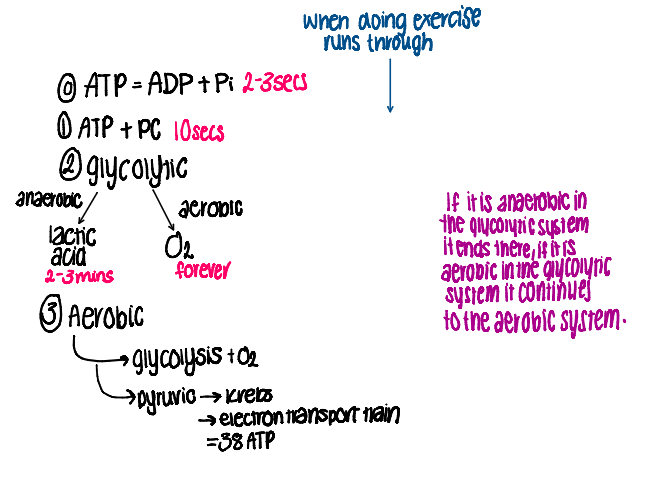
what does the enzyme phosphofructokinase (PKF) do in the glycolytic system?
as ADP + P levels rise PFK is released which catalyses the breakdown of glucose in the blood
what happens in the glycolytic system if the glucose levels are low?
glycogen (stored glucose in the muscle cells) is broken down by an enzyme called glycogen phosphorylase (GPP) to retain the concentration of glucose back in the blood
what happens in the glycolytic system (anaerobic)?
converts glucose into pyruvic acid
one mole of glucose produces 2 moles of ATP and produces a by-product called NADH
energy is unable to be continually extracted from pyruvic acid so an enzyme lactate dehydrogenase (LDH) is released converting pyruvic acid into lactic acid
what happens as lactic acid accumulates when using the glycolytic system anaerobically?
it inhibits enzyme activity from earlier processes, slowing the rate of ATP resynthesis, leading to fatigue and OBLA
what happens if oxygen is available in the glycolytic system?
in the final stage pyruvic acid is converted to acetyl CoA instead of lactic acid
this then enters the Krebs cycle of the aerobic energy system
when all stages are combined how many molecules of ATP are produced from the aerobic system? (and how many per each stage)
2 ATP from aerobic glycolysis
2 ATP from krebs cycle
34 ATP from electron transport chain
TOTAL: 38 ATP
which is the most effective energy system?
aerobic system
how many molecules of acetyl CoA does glycolysis produce per one molecule of glucose?
produces 2 acetyl CoA per 1 glucose
where does the krebs cycle occur?
the matrix of the mitochondria
what happens during the krebs cycle?
hydrogen is released and accepted by the hydrogen carried NAD and FAD
ATP is resynthesized
what does the krebs cycle produce per glucose molecule?
4 CO2
2 reduced FAD
6 reduced NAD
2 ATP
what happens the hydrogen produces in the krebs cycle?
transported by NAD and FAD to the electron transport chain
what happens at the electron transport chain?
hydrogen is split into ions and electrons
ions are transferred over the inner membrane of the mitochondria
electrons pass through a series of reactions which release energy and produce H20
the energy is used to resynthesise 34 ATP from ADP
why may some sports want to save glycogen stores? how is this done?
some sports like football and rugby may want to save glycogen stores for explosive moment as glycogen can be used for aerobic and anaerobic exercise
may use fats as a fuel for aerobic system during lower intensity exercise
enzyme lipase is released to breakdown fats into free fatty acids and glycerol where the free fatty acids can be converted to acetyl CoA and enter the krebs cycle
how is energy production during exercise determined?
determined by the duration and intensity of the exercise
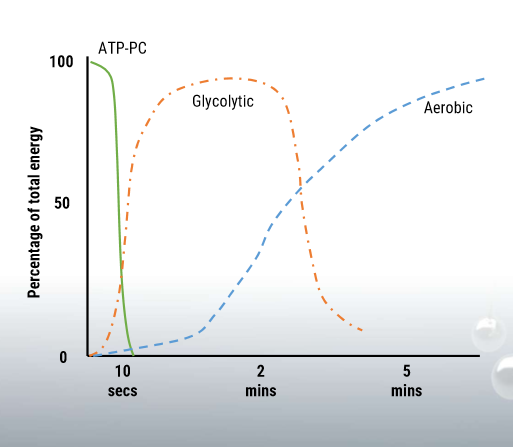
explain the graph
ATP - PC - provides energy during maximum intensity exercise for a short duration (up to 10 secs) e.g. a power lifter
glycolytic - provides energy during high intensity exercise for an intermediate period of time (2-3 mins) e.g. 200m sprinters
aerobic - provides energy during low intensity exercise which lasts for an extended period of time (3+ mins) e.g. marathon runners
what will those with a high anaerobic fitness be able to do?
exercise at high intensity for longer, due to greater stores of PC and an improved ability to handle lactic acid
what will those with high aerobic fitness be able to do?
will be able to support a greater intensity of exercise before relying on anaerobic glycolysis for energy