Thyroid Disorders - Giaquinto
 Call Kai
 Learn
 Practice Test
 Spaced Repetition
 Match
 Flashcards
 Knowt Play
1/72

There's no tags or description
Looks like no tags are added yet.
73 Terms
Describe TH
formed on thyroglobulin, iodinated tyrosine residues bine to form active TH bia Na+/I- active transport into the thyroid follicular cell.
blockers of transport: lithium, bromine, fluorine, thiocyanate, perchlorate, and pertechnetate
What is the diff between T4 and T3?
T4 is more abundant, secreted solely from thyroid gland
T3 is very little and is eventually converted to T4
What happens once TH is formed?
transport proteins in bloodstream such as TBG, TBPA, and albumin. Very high protein binding, but only unbound hormone is able to diffuse into the cells and eliciy a response/regulate TSH.
SEQ Control of TH
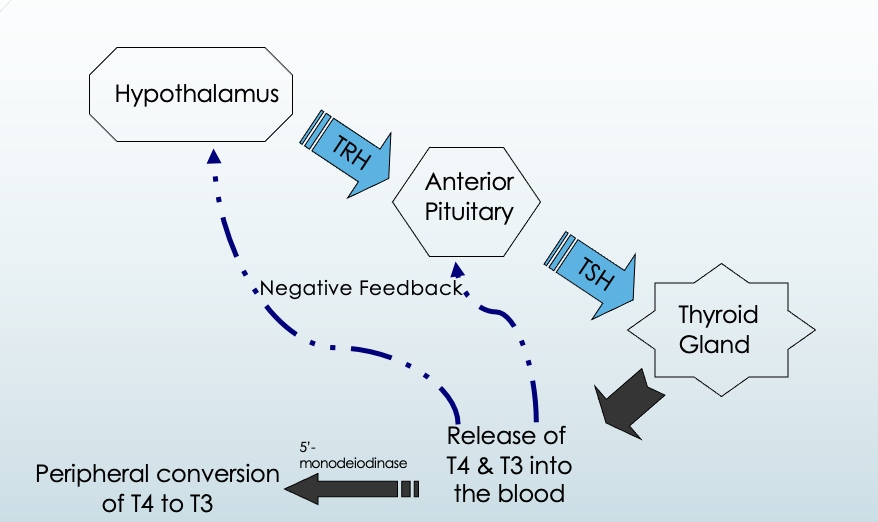
There are 5 thyroid tests that are relevant to hypothyroid/hyperthyroidism, including total T4, free T4, total T3,T3 resin uptake, and TSH. In hypothyroidism, which test levels increase above the normal range?
TSH (DEC total T4, free T4, total T3,T3 resin uptake)
There are 5 thyroid tests that are relevant to hypothyroid/hyperthyroidism, including total T4, free T4, total T3,T3 resin uptake, and TSH. In hyperthyroidism, which test levels increase above the normal range?
total T4, free T4, total T3,T3 resin uptake (TSH DEC)
What are the normal ranges for thyroid tests?
total T4: 4.5-12.5mcg/dL
free T4: 0.8-1.5ng/dL
total T3: 80-220 ng/dL
T3 resin uptake: 22-34%
TSH: 0.25-6.7mU/L
What factors influence thyroid function?
acute/chronic illness
stress
sleep
lifestyle
nutrition
medications
What can alter thyroid hormone secretion?
INC: iodide and amiodarone
DEC: iodide, amiodarone, and lithium
The antiarrhythmic drug amiodarone is partially released as free iodine after deiodination (200mg tab = 75mg iodine). It has a long half life of 50-100days. What are the thyroid disorders associated with amiodarone? What risks increase as a result?
induced hypothyroidism
induced thyrotoxicosis: AIT-I (pre existing thyroid disease); AIT-II (release of preformed hormone from damaged thyroid gland)
INC CV mortality, stroke, MI
female pt presents with nervousness, anxiety, palpitations, heat intolerance, and wt loss with increased appetite. pt has a family ho thyroid dysfunction, smokes, drinks. What condition does this patient most likely have?
hyperthyroidism, suppressed TH
female patient presents with nervousness, anxiety, palpitations, tremor, palpable goiter, heat intolerance, menstrual disturbances, wt loss, muscle wasting, diarrhea, INC appetite, fine hair, onycholysis, thryomegaly, and ocular signs (men can have clubbing gynecomastia). What condition does this patient possibly have?
thyrotoxicosis
REVIEW FEEDBACK LOOP

What is thyrotoxicosis? What are key diagnosis factors?
overexposure to T4/T3 or both
total T4 > 13.2mcg/L
TSH < 0.1mu/L
radioactive iodine uptake outside 10-30% range (see other flashcard)
What does an increased RAUI percentage signify?
Graves Disease
multinodular goiter
toxic adenoma
TSH-induced
selective pituitary resistance to T4
What does a decreased RAUI percentage signify?
Subacute thyroiditis
painless thyroiditis
exogenous TH
medication containing iodine
thyroid cancer
struma ovarii
inflammatory thyroid disease
What is grave’s disease?
an autoimmune reaction against the thyroid due to having thyroid stimulating antibodies that are direct against TSH receptor on thyroid gland
pt is confirmed to have exophthalmos, pretibial myxedema, acropachy. They have an enlarged thyroid that is 2-3x the normal size, and have a systolic bruit that can be heard over the thyroid gland. This condition may have spontaneous remissions.
This condition can be genetically inherited, where twins are very likely to both have it, it exists in family cloisters. It is also more common in women than men.
There is a disproportionate increase in T3 compared to T4.
What is this condition?
Grave’s disease
What are the management goals of hyperthryoidism? What are the general treatments
eliminate excessive thyroid hormone
minimize long term consequences of hyperthyroidism
Treatment: surgery, RAI, anti-thyroid medications
pt with hyperthyroidism has hot nodules in the thyroid that are overactive. What treatment is indicated?
radioactive iodine (RAI)
What are the pros and cons of RAI?
Pros: most cost effective, best for toxic nodules
cons: hypothyroidism, pregnancy CI
What are the pros and cons of surgery?
pros: rapid and effective, pregnancy safe
cons: invasive, nerve damage, costly, hypothyroidism
What are the pros and cons of anti-thyroid medications?
pros: non-invasive, low cost, low risk of hypothyroidism,
cons: low cure rate and ADE
pt with hyperthyroidism has a thyroid gland that is >80 grams, has severe opthalmopathy, and has already tried anti-thyroid medications but none are successful. What type of treatment is the patient a good candidate for? How is it prepared?
surgery; give methimazole until patient is euthyroid (6-8wks), then add iodide therapy w 500mg daily for 10-14days prior to surgery
pt is a surgery candidate for hyperthyroidism. The main treatment in preparation is methimazole. What is the alternative preparation?
PTU
pt is a surgery candidate for hyperthyroidism. What should you give them if they are tachycardic?
propanolol weeks ahead of surgery and continued for 7-10 days post surgery
may combine w iodide therapy for 10-14 days
Antithyroid drugs inhibit the organification of iodine into thyroglobulin and coupling. What is the preferred agent?
30-60mg methimazole (MMI) daily divide in TID.
allow 4-8 wks for reduction in thyroid levels
taper to maintenance dose of 5-30mg daily
Antithyroid drug inhibit the organification of iodine into thyroglobulin and coupling. What is the alternate agent?
Propylthiouracil (PTU)\
inhib peripheral conversion from T4 to T3
allow 4-8 wks for reduction in thyroid levels
taper to maintenance dose of 50-300mg daily
LIMIT USE
pt has hyperthyroidism but it also in their 1st trimester of pregnancy. What is the preferred agent?
PTU
Thioureas are used to induce permanent remission with continued therapy for 12-24 months. What makes a hyperthyroid patient a perfect candidate for thioureas? SLIDE 24
>40 yrs old
T4:T3 <20
small goiter <50g

What are common adverse effects from thioureas? Should you stop treatment?
cross reactions are most common
pruritic maculopapular rash± vasculitis: give antihistamines
arthralgias: within 6mo
fevers
benign transient leuopenia: continue therapy
agranulocytosis: STOP (common after 3 mo w high dose)
GI distress
hepatotox: only stop when liver elevations are SEVERE
acute pancreatitis due to methimazole
What is the MOA of iodides and when is onset?
moa: acute inhib TH release, TH biosynthesis, DEC size and vascularity of thyroid gland
onset: 2-7d reduced serum T4 and T3 (weeks), hormone synthesis continues after 1-2 weeks
When should you initiate potassium iodide in a hyperthyroidism patient?
SSKI 38mg iodide per drop; 3-10 drops QD in water/juice (vs Lugol’s solution 6.3mg iodide per drop)
7-14 days before surgery
3-7 days post RAI surgery
What are the adverse effects of iodides?
hypersensitivity: rashes, drug fever, rhinitis, conjunctivitis
saliary gland swelling
iodism: metallic taste, burn mouth/throat, sore teeth/gums, head cold, upset stomach/diarrhea, gynecomastia
What is an appropriate adjunctive therapy for symptoms of palpitations, anxiety, tremor, or heat intolerance from hyperthyroidism?
20-30mg propanolol po QID (beta adrenergic blocker) ;may be titrated to HR <90; doses up to 280mg
If propanolol is contraindicated, what is the alternative adjunctive therapy for for symptoms of palpitations, anxiety, tremor, or heat intolerance from hyperthyroidism?
diltiazem 60mg po Q6h to 120mg po Q8h to lower HR and BP
pt with hyperthyroidism has grave’s disease, toxic autonomous nodules, and multinodular goiter. What is the first line treatment?
RAI Iodine 131; give thiourea or beta blocker before RAI (stop 4-6 before RAI then restart 4 days post RAI)
T/F RAI may have long term toxicity and is absolutely contraindicated in pregnancy patients
True
Review Treatment Pathway

Review response to oral agents in hyperthyroidism

´35 year old woman presents with nervousness, anxiety, palpitations, heat intolerance, weight loss with increased appetite
´VS: 145/85 mmHg, 110 bpm, 23 rpm; 5’4” 110lb
´TSH < 0.1, FT4 22, TSAb are positive
SLIDE 35-44
pt presents with cold intolerance, weight gain, constipation, lethargy/fatigue, decreased energy, depression/loss of ambition, weakness, muscle cramps, coards/dry skin and hair, bradycardia, slow speech, hoarse voice, and galactorrhea(only in women). What condition does this patient have?
hypothyroidism
What is the difference between primary and secondary hypothyroidism?
primary (thyroid dysfunction: hashimotos, iatrogenic hypothyroidism (due to RAI), iodine def, thyroid hypoplasia, medications
secondary (pituitary/hypothalamus dysfunction)
pt presents with thyroid gland enlargement (or thyroid gland atrophy). Tests show they have antithyroid peroxidase antibodies. They have a family history of autoimmune thyroditis and they recently had a cell and antibody mediated thryoid injury. Whant condition does this patient have?
Hasimoto’s disease
pt recently underwent a total thyroidectomy 3 months ago. Within the first month after surgery, they experiences symptoms of hypothyroidism. Tests show that they have destructive amounts of radiation. What is this condition?
Iatrogenic primary hypothyroidism
pt immigrated to the US from central africa/northern asia. They present with goiter and have severe hypothyroidism and cretinism (mental/growth retardation). This is the most common cause of preventable mental deficiency. What might they have?
iodine deficiency
SLIDE 53 and 54
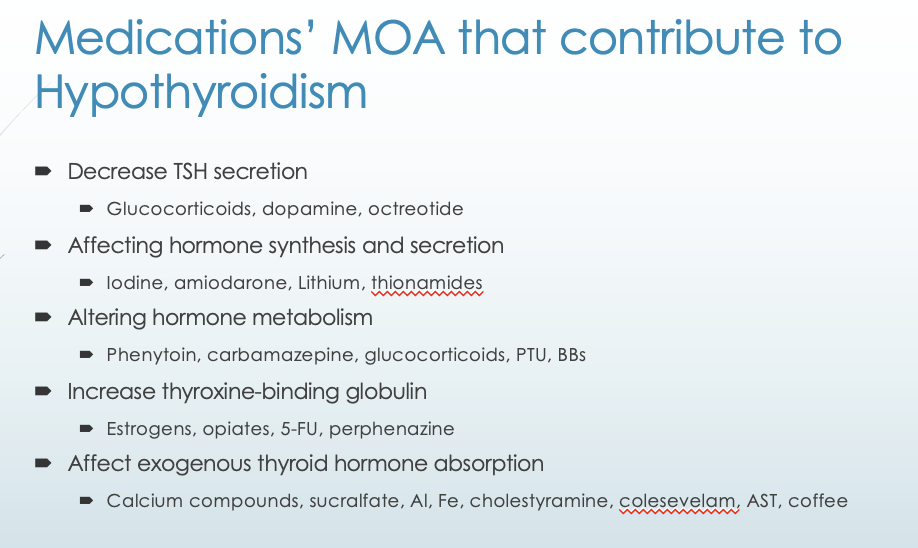
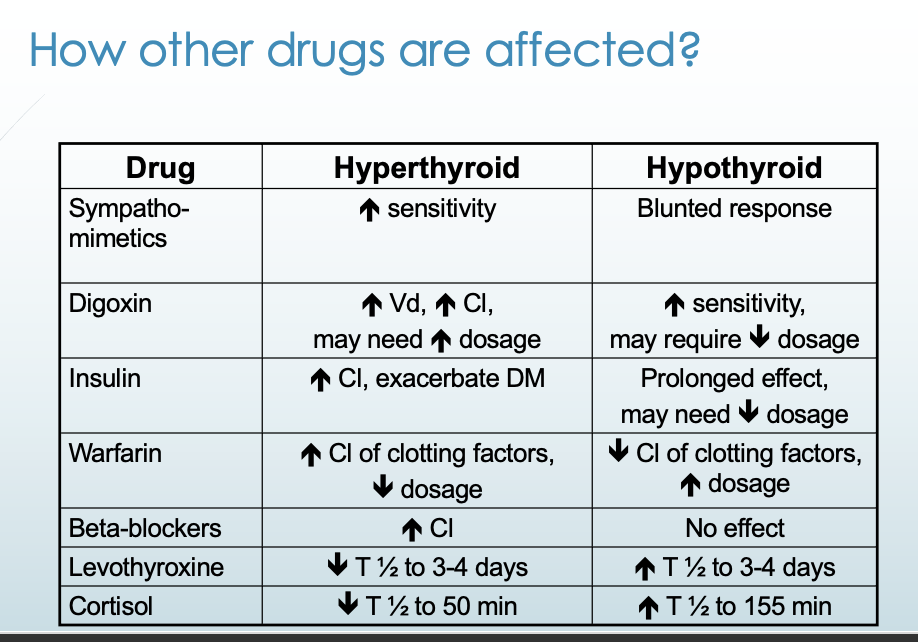
When evaluating primary hypothyroidism, what are the initial changes seen in thyroid tests?
rising TSH with normal T4, few symptoms
high TSH, low T4, T3 is often normal, symptoms develops
What are the goals of therapy for hypothyroidism?
restore normal TH con in tissues
symptomatic relief
prevent neurologic deficits in newborns and children
reverse biochemical abnormalities of hypothyroidism
What is the agent of choice for hypothyroidism? What are its advantages?
QD dosing Levothyroxine is synthetic, chemically stable, inexpensive, free of antigenicity, and has uniform potency, consistently converted from T4 ot T3, high bioaval
T/F Once levothyroxine is selected, therapeutic interchange is encouraged.
false; therapeutic interchange betwe T4 and TSH NOT linear so small changes in T4 causes big changes in TSH
Cholestyramine, ferrous sulfate, sucralfate, calcium supplements and other antacids, and dietary fiber, Espresso coffee, Acid suppression with histamine blockers or PPIs may cause absorption to decrease or increase?hypothyroidism therapy
decrease
What can inhibit conversion of T4 to T3?hypothyroidism therapy
amiodarone or selenium deficiency
what may cause an increased clearance of T4? hypothyroidism therapy
carbamazepine, rifampin, phenytoin
What is the average daily replacement dosage for hypothyroidism?
replacement hormonal therapy: 1.7mcg/kg/day
maintenance dose 125mcg
base off IBW
initiate low then titrate up: levothyroxine
What is the preferred treatment for hypothyroidism? What dose should elders and cardiac pts receive? What about healthy?
levothryoxine
elder/cardiac: initiate 12.5-25mcg/d, titrate dose by 25mcg
healthy: 50-100mcg/d titrate up by 12.5-25mcg
When should you re assess therapy for hypothyroidism?
every 4 wks, goal is to have TSH in normal range and normal T4
When converting from oral to IV, what should it be?
IV dose should be 50-75% of oral maintenance dose
CC hypothyroidism agents

What are the ADE of levothyroxine? WHat about natural products?
generally none; overdose leads to:
INC PAC
HF
Afib
Angina pectoris
MI
osteoporosis
natural products ADE: allergic rxn or idiosyncratic rxn
What are the treatment goals in pregnant pts with hypothyroidism?
TSH <1unit/mL and normal T4
levothyroxine dose needs 20-30% increase
usually happens week 8 of preg
if pt is undergoing post menopausal replacement therapy, what change should be made?
35% increase in dose
newborn pt has congenital hypothyroidism. What is important to consider?
full maintenance therapy should be initiated within 45 days of birth
10-15mch/kg/d
pt experienced hypothermia, advanced hypothyroid symptoms, delirium and coma, has deceased DTR, hyponatremia, hypoxia and hypoglycemia. What is this?
due long standing hypothyroidism that is untreated pt has myxedema coma
what is the first line treatment for a pt under myxedema coma?
IV levothyroxine 300-500mcg per day
then change to 75-100mch IV daily once stabilized and conscious until you are able to switch to PO
ALSO give hydrocortisone 100mg IV Q8h until adrenal suppression is ruled out
expect improvement within 24hrs
Who is at more risk for subclinical hypothyroidism? What does it look like in labs?
elderly and women; positive TSAb titer or prior to RAI therapy
elevated TSH, normal T4 and T3
How should you treat subclinical hypothyroidism?
CONTROVERSIAL: treat only if TSH >10 or have mild symptoms
levothyroxine 25-50mcg PO daily and monitor TSH for q6-8 wks
goal: TSH <3
If patient has long standing hypothyroidism, is elderly, cardiac disease, what do you give?
levothyroxine 12.5-25mcg PO daily
if a healthy patient has hypothyroidism what do you give?
levothyroxine 50-100mcg PO daily
if hypothyroid pt is treated but experiences toxicity what should you do?
maintain or decrease dosage until tolerated
THEN check T4, TSH after 6-8 weeks on the same dosage
assess if euthyroid/hypothyroid
If pt is treated for hypothyroidism and tolerates levothyroxine well, what should you do next?
INC dosage by 12.5-25mcg/day every month until 75-125mcg/day
THEN check T4, TSH after 6-8 weeks on the same dosage
assess if euthyroid/hypothyroid
If patient is euthyroid after therapy what should you do next?
maintain dosage, recheck in 3 months, then q6-12 mo
If patient still has hypothyroidism after therapy what should you do next?
increase by 25mcg q6-8weeks, re-eval FT4, TSH q6-8wks until euthyroid then space out follow up