3.3 to 3.5. Cell Membrane, Diffusion and Osmosis, &Active Transport
 Call Kai
 Learn
 Practice Test
 Spaced Repetition
 Match
 Flashcards
1/18

There's no tags or description
Looks like no tags are added yet.
19 Terms
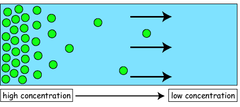
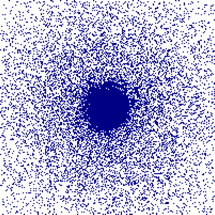
Diffusion
The movement of a solute from an area of HIGH concentration to an area of lower concentration.
Osmosis
The movement of WATER across a semi-permeable membrane through diffusion. From HIGH concentration of water to area of LOW concentration of water.
Passive Transport
The movement of materials through a cell membrane without using energy

Selectively Permeable
cell membranes that allows some substances to pass through, while others cannot

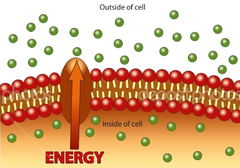
Active Transport
The movement of substances AGAINST the concentration gradient. Requires energy (ATP).
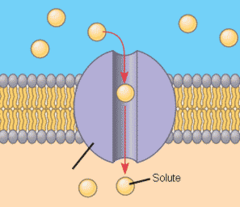
Facilitated diffusion
the transport of substances through a cell membrane along a concentration gradient with the aid of carrier proteins, the channel protein makes it EASIER (facil)
Endocytosis
When the cell membrane folds around large substances so they can ENTER the cell.
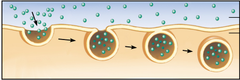
Exocytosis
When the cell membrane folds around large substances so they can EXIT the cell.
solute
The substance that is dissolved in a solution
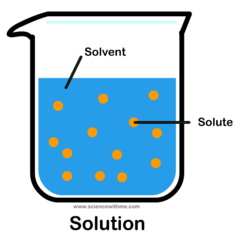
solvent
The substance doing the dissolving

concentration gradient
Difference in concentration of a substance from one place to another.
isotonic
Solution that has an equal concentration of solutes as another solution.
hypertonic
Solution that has a higher concentration of solutes as another solution.
hypotonic
Solution that has a lower concentration of solutes as another solution.
phospholipid structure
2 fatty acids, 1 glycerol, 1 phosphate group

lipid tails
the hydrophobic end of a phospholipid
phosphate head
the hydrophilic end of the phospholipid
Cholesterol
these molecules strengthen a cell membrane

protein channel
a protein that allows the transport of specific substances across a cell membrane