Pulmonary Conditions
 Call Kai
 Learn
Learn Practice Test
 Spaced Repetition
 Match
Match Flashcards
 Knowt Play
1/35

There's no tags or description
Looks like no tags are added yet.
Name | Mastery | Learn | Test | Matching | Spaced | Call with Kai | Chat |
|---|
No analytics yet
Send a link to your students to track their progress
36 Terms
Chostocondritis
coughing→muscle pain
Normal Respiratory Rate
adults→14-20 bpm
infants→up to 44 bpm
Tachypnea
rapid+shallow breathing

Hyperpnea/Hyperventilation
rapid+deep breathing

Kussmaul Breathing
systemic acidosis→compensatory overbreathing

Bradypnea
slow breathing
with/wihout increase in tidal volume

Cheyne-Stokes Breathing
periods of hyperpnea alternating with apnea

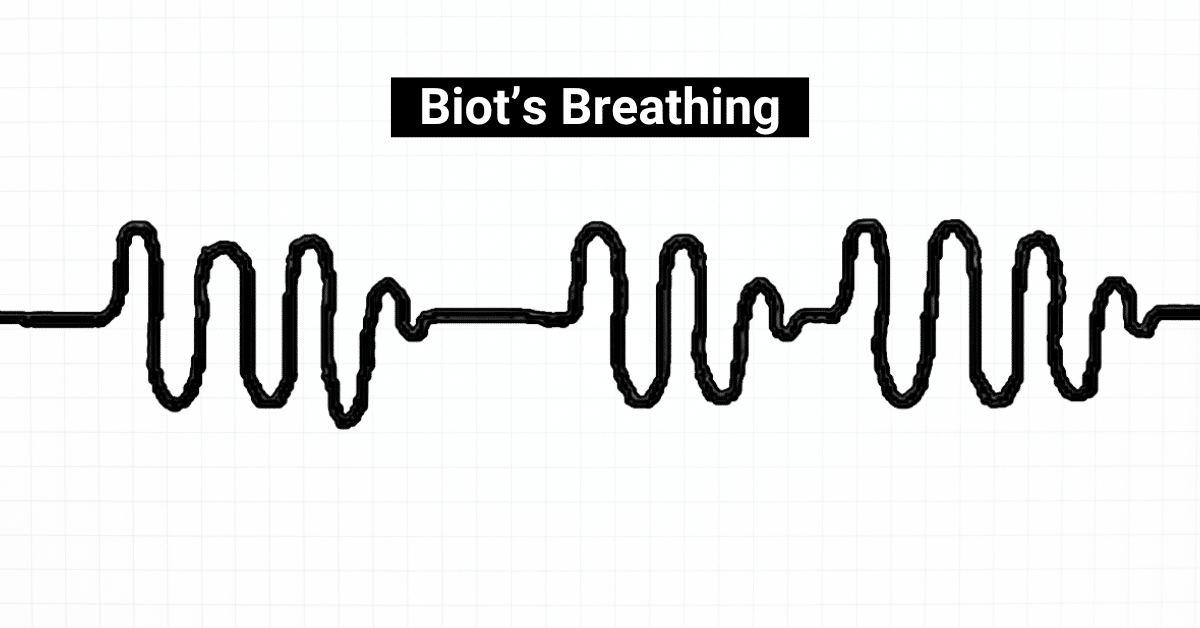
Ataxic Breathing/Biot Breathing
unpredictable irregularity
Sighing Respiration
hyperventilation syndrome

Obstructive Breathing
airway narrowing→prolonged expiration

Fremitus
palpable vibrations transmitted through bronchopulmonary tree to chest wall
more prominent in interscapular areas than lower lung fields
Flat Percussion
relative intensity→soft
relative pitch→high
relative duration→short
example of location→thigh
pathologic example→large plerual effusion
Dull Percussion
relative intensity→medium
relative pitch→medium
relative duration→medium
example of location→liver
pathologic example→lobar pneumonia
Resonant Percussion
relative intensity→loud
relative pitch→low
relative duration→long
example of location→healthy lung
pathologic example→simple chronic bronchitis
Hyperresonant Percussion
relative intensity→very loud
relative pitch→lower
relative duration→longer
example of location→usually none
pathologic examples
COPD
pneumothorax
Tympanitic Percussion
relative intensity→loud
relative pitch→high
relative duration→longer
example of location
gastric air bubble
puffed-out cheek
pathologic example→large pneumothorax
Vesicular Breathing
duration→inspiratory sounds last longer than expiratory sounds (inspiratory>expiratory)
intensity→soft
pitch of expiratory sound→relatively low
locations where heard normally→over most of both lungs

Bronchovesicular Breathing
duration→inspiratory sounds equal length to expiratory sounds (inspiratory=expiratory)
intensity→intermediate
pitch of expiratory sound→intermediate
locations where heard normally
anteriorly
often in the 1st+2nd interspaces
between the scapulae
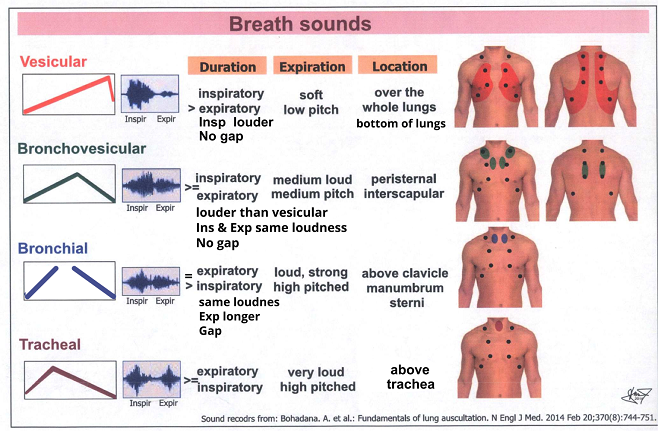
Bronchial Breathing
duration→expiratory sounds last longer than inspiratory sounds (inspiratory<expiratory)
intensity→loud
pitch of expiratory sound→relatively high
locations where heard normally→over the manubrium (larger proximal airways)

Tracheal Breathing
duration→inspiratory sounds equal length to expiratory sounds (inspiratory=expiratory)
intensity→very loud
pitch of expiratory sound→relatively high
locations where heard normally→over the trachea in the neck
Clubbing Indications
congenital heart dx (CHD)
interstitial lung dx (fibrosis) (ILD)
bronchiectasis
cystic fibrosis (CF)
lung abscess
lung cancer
Signs of Respiratory Distress
tachypnea (25+ bpm)
cyanosis/pallor
audible sounds of breathing (stridor)
accessory muscle use during breathing
shape of chest
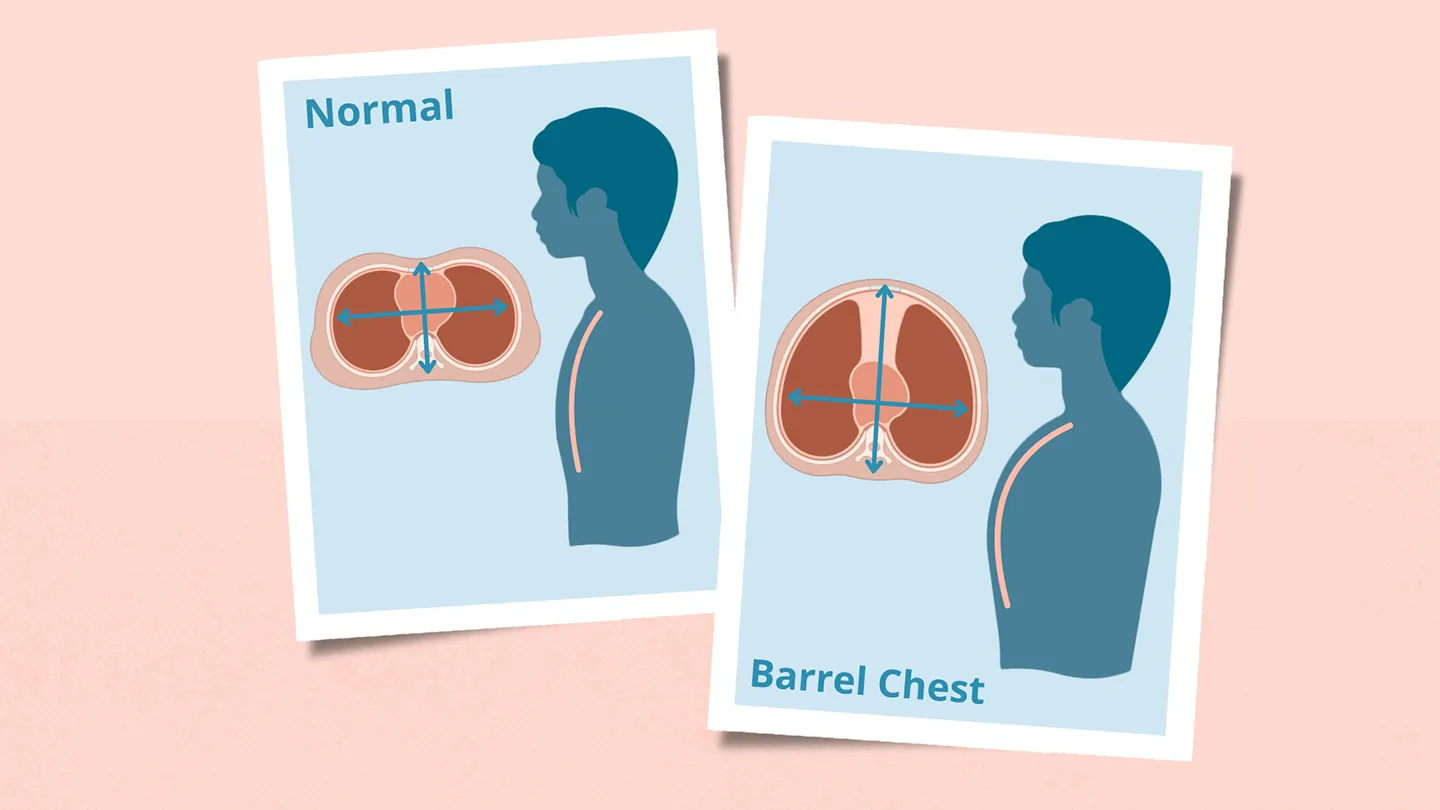
Barrel Chest
increased AP diameter (0.9+)
infancy+aging→normal
adults→I: COPD
Pectus Excavatum/Funnel Chest
depression in lower part of sternum
compression of heart+vessels→murmur
Pectus Carinatum/Pidgeon Chest
sternum displaced anteriorly→increases AP diameter
costal cartilage adjacent to the protruding sternum→depressed

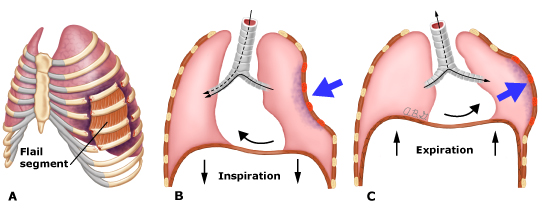
Traumatic Flail Chest
multiple rib fractures→cause paradoxical movements of the thorax
inspiration→decreased intrathroacic pressure→depression of injured area
expiration→injured area bulges outward
Thoracic Kyphoscoliosis
abnormal spinal curvature+vertebral rotation→deforms the chest

Skin Findings
sinus tracts
zoster rash
Stridor
audible+high-pitched inspiratory whistling
I: upper airway obstruction→urgent evaluation needed
-larynx
-trachea
Fine Crackles
physiology
small distal ariways deflated during expiration→pop open during inspiration→series of tiny explosions→thin secretions in the airways
characteristics
soft
high-pitched sounds
very brief
“velco being pulled apart”
intermittent
non-musical
brief
don’t clear with cough
location
commonly heard at lung bases
clinical relevance
interstitial pulmonary fibrosis
PNA
CHF
atelectasis
Course Crackles/Rales
physiology
movement of thicker fluid/air through fluid in small airways
characteristics
loud
discontinuous
low-pitched
explosive sounds
“slurping at the end of fountain drink”
inspiration or expiration
could clear with cough
location
commonly at lung bases
clinical relevance
PNA
bronchiectasis
interstitial lung fibrosis
CHF
Wheezing
physiology
movement of air thorugh bronchial airway narrowing
characteristics
continuous
high-pitched (hissing/shrill) musical sounds
inspiratory/expiratory/biphasic
location
single location
-orthroughout the per
clinical relevance
asthma
COPD
viral infxns/bronchiolitis
Rhonchi
physiology
narrowing of larger ariways
air through secretion in large airways
characteristics
continuous
low-pitched
“snoring” sounds
low+loud+harsher wheeze
location
typically heard throughout the pericordium
-inspiration
-expiration
-both
physiology
narrowing of larger airways
air through secretion in large airways
clinical relevance
PNA
bronchitis
Stridor
medical emergency→immediate intervention
physiology
airflow through narrowed upper airway
characteristics
continuous
high-pitch
harsh
“musical” sound
inspiration or biphasic
location
neck+central airways
loudest→over neck
can hear heart without stethoscope
clinical relevance
airway obstruction
tracheal stenosis 2/2 intubation
edema post-ET removal
epiglottitis
foreign body
anaphylaxis
Pleural Friction Rub
physiology
inflamed/roughened visceral pleura→slides against parietal pleura
characteristics
discontinuous
low-frequency
“grating” sound
non-musical
location
best heard→axilla+base of lungs
clinical relevance
pleurisy
PNA
PE
Mediastinal Crunch (Hamman Sign)
physiology
air enters into mediastinum→mediastinal emphysema (pneumomediastinum)
characteristics
series of precordial crackles synchronous with heartbeat
not with respiration
usually produces severe chest pain
location
left lateral position
clinical relevance
tracheobronchial injury
blunt trauma
pulmonary dx
recreational mxs
childbirth
rapid ascent from scuba diving
spontaneous