Cardiovascular System: Structure, Function, and Exercise Response
 Call Kai
 Learn
 Practice Test
 Spaced Repetition
 Match
 Flashcards
 Knowt Play
1/51

There's no tags or description
Looks like no tags are added yet.
52 Terms
What are the main components of the cardiovascular system?
The heart, blood, blood vessels, and blood flow.
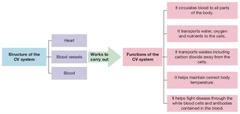
What is the role of the cardiovascular system in thermoregulation?
It regulates blood distribution through vasodilation and vasoconstriction.
What is the relationship between stroke volume, heart rate, and cardiac output?
Cardiac output is the product of stroke volume and heart rate.
What divides the heart into two pumps?
The septum.
What type of blood does the left pump of the heart contain?
Oxygenated blood.
What type of blood does the right pump of the heart contain?
Deoxygenated blood.
What is systole?
The contraction phase of the heart that forces blood out of the ventricles.
What is diastole?
The relaxation phase of the heart that allows it to fill with blood.
What is the cardiac cycle?
The sequence of events in the heart during one complete heartbeat, including systole and diastole.
What percentage of blood volume is made up of blood cells?
45%.
What is plasma?
The clear yellowish fluid that carries blood cells and nutrients.
What are the three types of blood vessels?
Arteries, veins, and capillaries.

What is systemic circulation?
The flow of oxygen-rich blood from the left side of the heart to the rest of the body.
What is pulmonary circulation?
The flow of oxygen-poor blood from the heart to the lungs and back.
What is the largest artery in the body?
The aorta.

What is the function of capillaries?
To facilitate the exchange of nutrients and waste between blood and body cells.
How do veins differ from arteries?
Veins have thinner walls and carry blood with lower oxygen content.
What is venous pooling?
The accumulation of blood in the veins, especially in the legs, when a person stops exercising suddenly.
What happens to capillaries during exercise?
They undergo vasodilation to increase blood flow.
How does blood circulate through the body?
From the heart to the lungs, back to the heart, then to the body and back to the heart.
What is the role of the coronary arteries?
To supply the heart muscle with oxygen and nutrients.
What assists the heart's chambers in filling effectively?
Gravity.
How long does it take for blood to circulate around the body at rest?
Approximately one minute.
What can cause a person to feel faint after standing still in hot weather?
Venous pooling can prevent adequate blood return to the heart.
What is the function of the vena cava?
To return deoxygenated blood to the right side of the heart.
What is the significance of the aorta in the cardiovascular system?
It distributes oxygen-rich blood from the heart to the body.
What happens to oxygen levels in blood as it travels from the heart to the lungs?
Oxygen levels increase as blood picks up oxygen in the lungs.
What is the primary function of blood?
To transport materials required for energy production and remove waste products.
What happens during vasodilation?
Blood vessels near the skin widen, increasing blood flow to the skin and allowing more heat to be lost.
What is vasoconstriction?
The narrowing of blood vessels to reduce blood flow to the skin, minimizing heat loss.
What is thermoregulation?
The maintenance of body temperature and the heat exchange between the body and the environment.
What is the normal core temperature range for humans?
36.5 to 37.5 degrees Celsius.
How does the cardiovascular system respond when body temperature drops?
It restricts blood flow to the skin and redirects it to internal organs to conserve heat.
What role does the hypothalamus play in thermoregulation?
It monitors body temperature and controls mechanisms like sweating and blood flow adjustments.
What is hyperthermia?
A condition where the body temperature rises above normal, often due to excessive heat exposure.
What is hypothermia?
A condition where the body temperature drops below normal, which can be dangerous.
What are acute responses to exercise?
Immediate changes in the cardiovascular system to meet the increased demands of the body during physical activity.
What happens to heart rate during exercise?
Heart rate increases to meet the greater oxygen demands of the muscles.
What is stroke volume?
The amount of blood ejected from the left ventricle into the aorta with each heartbeat.
What is cardiac output?
The amount of blood pumped from the heart into the arterial system per minute, calculated as Q̇ = HR x SV.

How does blood flow change during exercise?
Blood flow increases to working muscles and can be redirected to the skin for heat loss or to internal organs.
What is the effect of dehydration on blood volume during exercise?
Blood volume decreases due to fluid loss from sweating and evaporation.
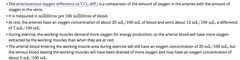
What is arteriovenous oxygen difference (a-VO2 diff)?
The difference in oxygen content between arterial and venous blood, indicating how much oxygen is used by tissues.
What is the relationship between exercise intensity and heart rate?
Heart rate generally increases linearly with exercise intensity.
What could happen if an athlete continues exercising in extreme heat?
They may experience heat-related illnesses such as heat exhaustion or heat stroke.
What physiological mechanisms help regulate body temperature during exercise?
Sweating, vasodilation, and increased blood flow to the skin.
What is the average resting heart rate for adults?
Approximately 72 beats per minute.
What is the maximum heart rate formula?
220 minus your age.
What happens to stroke volume during maximal exercise?
It increases to deliver more oxygen to working muscles.
How does humidity affect thermoregulation?
High humidity can impair the body's ability to cool down through evaporation of sweat.
What are the consequences of inadequate thermoregulation during exercise?
It can lead to decreased performance, fatigue, and potential heat-related illnesses.
What is the significance of maintaining homeostasis during physical activity?
It ensures optimal functioning of the body and its systems, particularly during exercise.