5.4 MedChem
 Call Kai
 Learn
 Practice Test
 Spaced Repetition
 Match
 Flashcards
 Knowt Play
1/62

There's no tags or description
Looks like no tags are added yet.
63 Terms
Thrombus (blood clot) consists of?
aggregated platelets + red blood cells + a mesh of cross-linked fibrin protein.
Diseases that involve a thrombotic condition?
Acute myocardial infarction
Valvular heart disease
Unstable angina
Atrial fibrillation
Surgical procedures
Contact activation pathway (intrinsic; used for maintenance of homeostasis)
involves sequential activation of factors FXII, FXI, and FIX.
Tissue factor (TF) pathway (extrinsic; caused by trauma)
TF glycoprotein is a major initiating factor of arterial thrombogenesis
Which are the 2 classes of oral anticoagulants?
Coumarin derivatives
1,3-Indandiones (rarely used clinically due to toxicities)
MOA of Coumarins: ________ converts glutamic acid (Glu) of Factors II, VII, IX, and X to ___________, which chelates Ca²⁺ to activate these factors.
γ-Glutamyl carboxylase (GGCX)
Gla (γ-carboxyglutamic acid)
Coumarin

Warfarin

___ is a cofactor of GGCX and is oxidized to vitamin K epoxide (KO).
KH₂
________ converts KO back to vitamin K and KH₂.
VKOR (vitamin K epoxide reductase)
Coumarin derivatives inhibit VKOR acting as ________
vitamin K antagonists
All coumarin derivatives are __________
water-insoluble lactones
For coumarin derivatives substitutions often occur on the __________
lactone ring (positions 3 and 4)
For coumarin derivatives the _______ makes the drug weakly acidic and allows the formation of ____________
4-OH group; water-soluble sodium salts
Warfarin is a racemic mix, ________ isomer being more potent than _______
S>R
Thrombin is a _________ converting fibrinogen → fibrin, catalyzing many coagulation reactions.
serine protease
Thrombin is the _______ of coagulation and amplifies its own production.
central effector
_____ is a naturally occurring anticoagulant preventing formation and extension of blood clots.
Heparin
Heparin is composed of _________ with alternating ____ and ______
- sulfated polysaccharides (5-30 kDa)
- N-acetyl-D-glucosamine
- uronic acid
mucopolysaccharides (MW 5-30 kDa, mean 15 kDa)
HMWH (unfractionated heparin)
4-6 kDa; selective, with improved PK/PD
LMWH (low molecular weight heparin)
Which are examples of LMWH?
Ardeparin, Dalteparin, Enoxaparin, Tinzaparin
Synthetic, highly sulfonated pentasaccharide; selective and improved PK.
Fondaparinux
MOA of Heparins: ________ inhibits clotting factors IIa, IXa, Xa, XIa, and XIIa by forming stable complexes.
Antithrombin (AT) III
MOA: Heparin binds AT-III, which causes a ____ and enhances its action 2000-fold
conformational change
LMWH predominantly inhibit _________
factor Xa
Which are the 3 Thrombin binding sites?
Exosite I (E1): fibrin binding site
Exosite II (E2): heparin binding site
Active site: flanked by 60- and γ-loops
Univalent DTIs
bind the active site
Bivalent DTIs
bind both E1 and the active site
Which are approved DTIs?
Hirudin (1909, not available)
Lepirudin (discontinued 2012)
Desirudin (2003)
Bivalirudin (2000)
Argatroban (2000)
Dabigatran etexilate (2010)
Small 65-AA protein from Hirudo medicinalis (leech)
Hirudin
Hirudin forms ________ with thrombin (ionic C-terminal interaction).
1:1 complex
Hirudin inactivates ____________
free and fibrin-bound thrombin.
Unlike heparin, DTIs _______ bind thrombin (no ATIII cofactor needed).
directly and reversibly
DTIs inhibit _______ (heparin inhibits IIa, IXa, Xa, XIa, XIIa).
only thrombin
Lepirudin and Desirudin:
- Bivalent DTIs binding active site + exosite I (E1).
- Nearly irreversible inhibition.
- Inhibit both free and fibrin-bound thrombin.
________ is a peptidomimetic that binds selectively to thrombin catalytic site (univalent, competitive).
Argatroban
Which Argatroban isomer is more potent?
S>R
Argatroban is a _________ of both free and clot-bound thrombin.
reversible inhibitor
Argatroban

Orally active prodrug of dabigatran (nonpeptidomimetic).
Dabigatran Etexilate
Dabigatran Etexilate
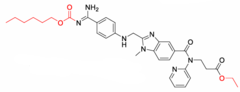
Reversible, benzamidine-based DTI, that binds to S1, S2, and partially S4 sites.
Dabigatran Etexilate
A. S2
B. S4
C. S1

Antiplatelet drugs focus on:
COX-1 inhibitors
PDE-3 inhibitors
P2Y receptor antagonists
GPIIb/IIIa receptor antagonists
COX-1 Inhibitors ______ induces platelet aggregation.
TXA₂
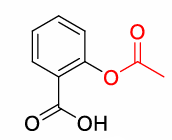
______ irreversibly acetylates COX-1 → blocks TXA₂ → inhibits aggregation for platelet lifetime.
Aspirin
Aspirin
_____ converts cAMP → AMP in platelets/vessels.
PDE3
PDE3 Inhibitors ______ → inhibit platelet aggregation + vasodilate.
↑ cAMP
Selective quinolinone derivative targeting PDE3A.
Cilostazol
Cilostazol

A. Prasugrel
B. Clopidogrel
C. Ticlopidine

P2Y1 and P2Y12 are activated by _______.
ADP
Ticlopidine, clopidogrel, and prasugrel are _________, which exhibit selective, ________ inhibition of ADP-induced platelet aggregation.
thienopyridines
irreversible
Thienopyridines are ____, and the ___ binds irreversibly to P2Y12 by forming a___________ in P2Y12, therefore blocking the binding of the agonist.
- prodrugs
- thiol
- disulfide bridge to a cysteine
Ticagrelor and Cangrelor are two _________ inhibitors of P2Y12.
reversible
Ticagrelor (Brilinta)

Cangrelor (Kengreal)

Ticagrelor binds reversibly to P2Y12 at a site distinct from the ADP-binding site and inhibits ADP signaling and receptor conformational change by ___________; ADP can still bind at its binding site.
"locking" the receptor in an inactive state
___________ have been developed to prevent fibrinogen binding and cross-linking, thereby inhibiting platelet aggregation.
GPIIb/IIIa receptor antagonists
The natural binding ligands for the GPIIb/IIIa receptor contain the _________ sequence.
Arg-Gly-Asp (RGD)
Which are the GPIIb/IIIa receptor antagonists available?
1. monoclonal antibodies {Arg-Gly-Asp (RGD) sequence]
2.synthetic peptides containing either the RGD or Lys-Gly-Asp (KGD) sequences
3. peptidomimetic & nonpeptide RGD mimetics.