SDL- Ferret Case
 Call Kai
 Learn
 Practice Test
 Spaced Repetition
 Match
 Flashcards
 Knowt Play
1/30

There's no tags or description
Looks like no tags are added yet.
31 Terms
History:
- 9month old intact jill ferret
- Gradually worsening lethargy over past 10 days
- Anorexia for 24hrs
- Housed with 5yr castrated male and 7month female who are normal
- Fed commercial dried ferret food and tinned cat food
Clinical Exam
- Pale MM
- HR 290
- RR 40
- Temperature 36
- Tarry black perianal faecal staining
- Prominent swollen volva
What is the problem list?
- Lethargy over 10 days
- Anorexia
- Pale MM
- Tachycardia
- High RR
- Hypothermic
- Tarry black faecal staining
- Prominent swollen volva
Write a differentials list based on the history and clinical signs?
- Hyperestrogenism
- Hyperadrenocorticism
- Insulinoma
- Ovarian neoplasia
- Hypoglycaemia
What immediate actions would you perform when presented with this ferret to stabilise them?
- Oxygen therapy
- IV fluids
- Active warming
- Monitor parameters
What diagnostics would you prioritise in this case if the owner was concerned about finances?
- Haematology
- Blood glucose levels
What diagnostics would you perform if the owner was not concerned about financials?
- Haematology and biochemistry (check for anaemia, thrombocytopenia and leukopenia)
- Abdominal ultrasound to assess adrenal glands
- Coagulation clotting times
- Serum hormonal assay of oestradiol

The owner consented to haematology and glucose tests and the results are shown. What is your primary diagnosis based on these results and why?
Hyperestrogenism
Shown by:
- Non regenerative anaemia
- Leukopenia
- Thrombocytopenia
how does hyperoestrogenism occur
Persistent oestrus causes high levels of oestrogen which suppress the bone marrow
If mating does not occur, females may develop aplastic anaemia with pancytopenia after a prolonged oestrus (generally up to 6 months).
The maintained production of oestrogen by the follicles causes this.
Hyperestrogenism may be secondary to prolonged oestrus in female ferrets (either intact or neutered with ovarian remnant), adrenal disorders, or, rarely, oestrogen-producing tumours
What is aplastic anaemia with pancytopenia?
Aplastic anaemia with pancytopenia = bone marrow failure causing a severe reduction in red cells, white cells (often neutrophils but any WBCs can be affected), and platelets
What treatment would you suggest to the owner?
- Whole blood transfusion due to anaemia and thrombocytopenia
- Ovariohysterectomy would be ideal but the ferret is a poor surgical candidate due to the anaemia and thrombocytopenia
- Use hCG to stimulate ovulation (can be repeated in 7 days if vulvar swelling has not gone)
- Provide supportive feeding
- If the thrombocytopenia is not improved with the blood transfusion place on broad spectrum antibiotics to prevent secondary infections
What would be the prognosis for this ferret?
Guarded to poor
why cant the deslorelin implant be used to treat hyperoestrogenism
Deslorelin is slow releasing-> so cant be used in an emergency situation, but can be used once stabilised and if don’t want to spay
Why is there a link between ovariohysterectomy and hyperadrenocorticism in ferrets?
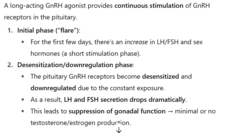
In ferrets, early neutering removes the gonads and their negative feedback on the pituitary, causing persistently high LH and FSH levels.
This chronic stimulation of LH receptors in the adrenal glands leads to adrenal hyperplasia or tumours, which begin producing sex steroids like oestrogen and androgens that the gonads would normally make.
What advice would you offer the owner on preventing this from happening in her other female ferret?
Recommend hormonal neutering with a long acting GnRH agonist (Deslorelin implant) or can mate with a vasectomised male
How would deslorelin prevent or treat adrenal disease causing hyperoestrogenism in ferrets?
Suppressing LH release → removing the stimulus for adrenal hyperplasia → reducing excess sex hormone production.
That's why deslorelin is both a contraceptive and a treatment for adrenal-associated endocrinopathy in ferrets.
What is hyperestrognism ?
oestrogen toxicity
when are transfusions in ferrets reccomended
when hct value lower than 25%
what are the causes of hyperestogenism ?
persistant oestrus - induced ovulatory, remain in oestrus until mated - over 1 month may lead to hyperestrogenism
adrenocortical disease, ovarian abnormalities - neoplasia, cystic disease, ovarian remnant syndrome
what are the clinical signs of hyperestrogenism ?
may be non-specific
- lethargy/ weakness
- reduced appetite
- pale mm, petechial or ecchymotic haemorrhages
- melena
- vulval swelling and discharge
- bilaterally symmetrical dorsal or flank alopecia
Acute signs of hyperestrogenism
sudden collapse
anorexia
Predisposition to hyperoestrogenism
an intact female jill that is reproductively active - typically over 3 years
breeding season - increasing photoperiods - late winter and spring
why can adrenocortical disease cause hyperestrogenism
when a jill is surgically neutered early - removing the gonads - loss of negative feedback in the hypothalamopituitary-gonadal axis, causing the pituitary gland to release high levels of gonadotropins that continuously stimulate the adrenal glands to produce sex hormones instead of cortisol
exposed to prolonged photoperiods
pthogphysiology of hyperestrogenism
prolonged exposure to oestrogen
- bone marrow suppression - blood cell formation
- secondary infection
- bleeding - prolonged clotting times
- androgenic hormone = affects hair growth cycle - alopecia
common client history of hyperestrogenism
- adult female - single sex household or alone
- usually associated with first oestrus
- or surgically neutered
considerations when treating hyperestrogenism
- bone marrow depression - anaemia, leukopenia, thrombocytopenia - range from mild-severe
- significant haemorrage - result from handling and diagnostic procedures
- medical stabilisation indiacted before surgery
How do you diagnose hyperoestrogenism ?
- clinical history
- identify anaemia, leukopenia, thromocytopenia pcv
Gross Autopsy of hyperestrogenism
- pale tissues
- petichial and ecchymotic haemorrhage
- subdural haematoma
- haemorrhage in GI tract
- uterine abnormalities
- enlarged adrenal glands
- ovarian abnormalities
what else could cause clotting disorders in ferrets ?
- rodenticide toxicity
- hepatic disease
- haemorrhage
- immune mediated
What could cause alopecia in ferrets?
- seasonal
- ectoparasites
- dermatophytosis
- mast cell tumour
Initial symptoimatic treatment for hyperestrogenism
- IV fluids
- whole blood transfusion - not blood groups
- nutritional support
reduce oestrogen levels
- hCG - once and then again in 7 days
treat concurrent disease
- abx
Long term treatment options for hyperestrogenism
Surgical: ovariohysterectomy Ovariohysterectomy.
Hormonal: deslorelin implant Deslorelin - need to be repeated at regular intervals depending on the dose/size of implant used.
advise to monitor return of vulval swelling, ie evidence of estrus, particularly during periods of increasing photoperiod. This would indicate loss of efficaciousness and would indicate a need to provide repeat administration.
Mating with a vasectomized male may be used to suppress estrus in females, which will induce ovulation with subsequent pseudopregnancy.
what risk does surgical neutering hold ?
- increased incidence of adrenocortical disease in ferrets.
- ovarian remnant - hyperestrogensim
-ga risks